
-
 Create
account -
 Build trading strategies
with no code -
 Validate
& Backtest -
 Connect exchange
& start earning
Algorithmic Strategies & Backtesting results for LIT
Here are some LIT trading strategies along with their past performance. You can validate these strategies (and many more) for free on Vestinda across thousands of assets and many years of historical data.
Algorithmic Trading Strategy: Follow the trend on LIT
Based on the backtesting results from October 19, 2022, to October 19, 2023, the trading strategy exhibited a profit factor of 1.08, implying a positive outcome. The annualized return on investment (ROI) stood at 8.09%, indicating a satisfactory performance. On average, the strategy held positions for around 1 week and executed trades at a frequency of 0.36 per week. There were a total of 19 closed trades over the designated period. Despite a winning trades percentage of 36.84%, the strategy managed to outperform the buy and hold approach, generating excess returns of 27.15%. These statistics suggest the strategy's effectiveness and potential profitability.

 LITUSDT

Choose another period and try again.
Algorithmic Trading Strategy: Long Term Investment on LIT
The backtesting results for the trading strategy from October 19, 2022, to October 19, 2023, reveal promising statistics. The strategy exhibits a profit factor of 2.92, indicating a favorable risk-to-reward ratio. The annualized return on investment stands at an impressive 46.12%, showcasing the strategy's ability to generate significant profitability within the given period. On average, trades are held for approximately one week, with a low frequency of 0.09 trades per week. Despite the small number of closed trades, the strategy has a remarkable winning trades percentage of 80%. Furthermore, it outperforms the buy and hold approach by generating excess returns of 72.6%, proving its effectiveness in optimizing investment outcomes.
LITUSDT
Choose another period and try again.
LITUSDT (Litentry) Trading Strategies: A Comprehensive Guide
Introduction
Litentry (LIT) is a decentralized identity aggregation protocol that allows linking user identities across multiple networks. Trading LITUSDT (Litentry paired with USD Tether) can be highly rewarding due to its volatility and market dynamics. This comprehensive guide will explore effective trading strategies, the best indicators to use, and the optimal timeframes for trading LITUSDT.
Why Trade LITUSDT?
Trading LITUSDT offers several advantages:
- Volatility: Provides numerous trading opportunities.
- Liquidity: Ensures efficient order execution.
- Market Dynamics: Allows the application of various technical analysis tools.
Essential Indicators for Trading LITUSDT
Moving Averages (MA)
- Simple Moving Average (SMA): Helps in identifying the overall trend direction over a specific period.
- Exponential Moving Average (EMA): More responsive to recent price changes, useful for short-term trading.

Usage: Employ crossover strategies (e.g., 21-day EMA crossing above 55-day EMA signals a buy).
Relative Strength Index (RSI)
Measures the magnitude of recent price changes to evaluate overbought or oversold conditions.
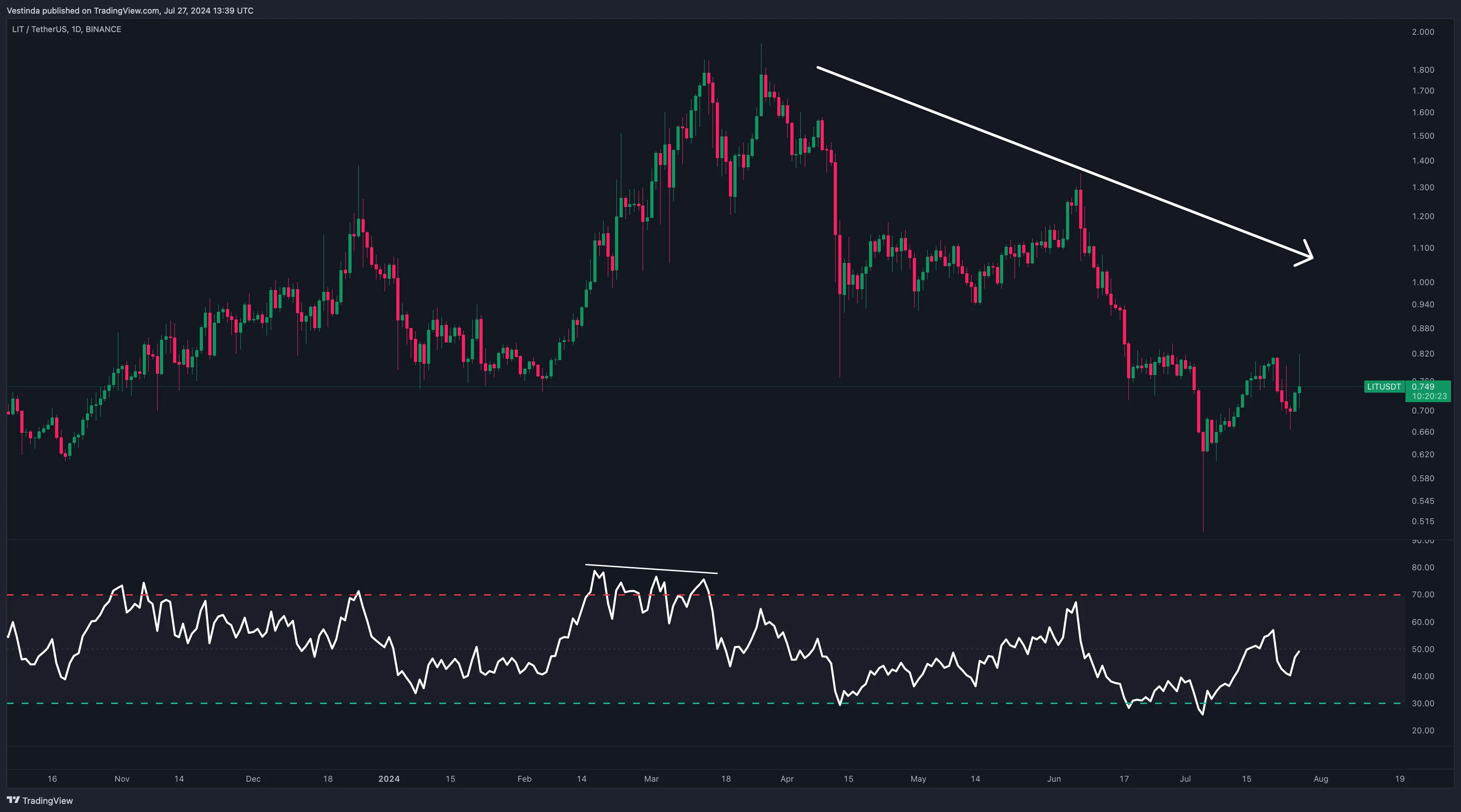
Usage: Identify potential reversal points; RSI above 70 indicates overbought, below 30 indicates oversold.
Moving Average Convergence Divergence (MACD)
Shows the relationship between two moving averages of a security’s price.
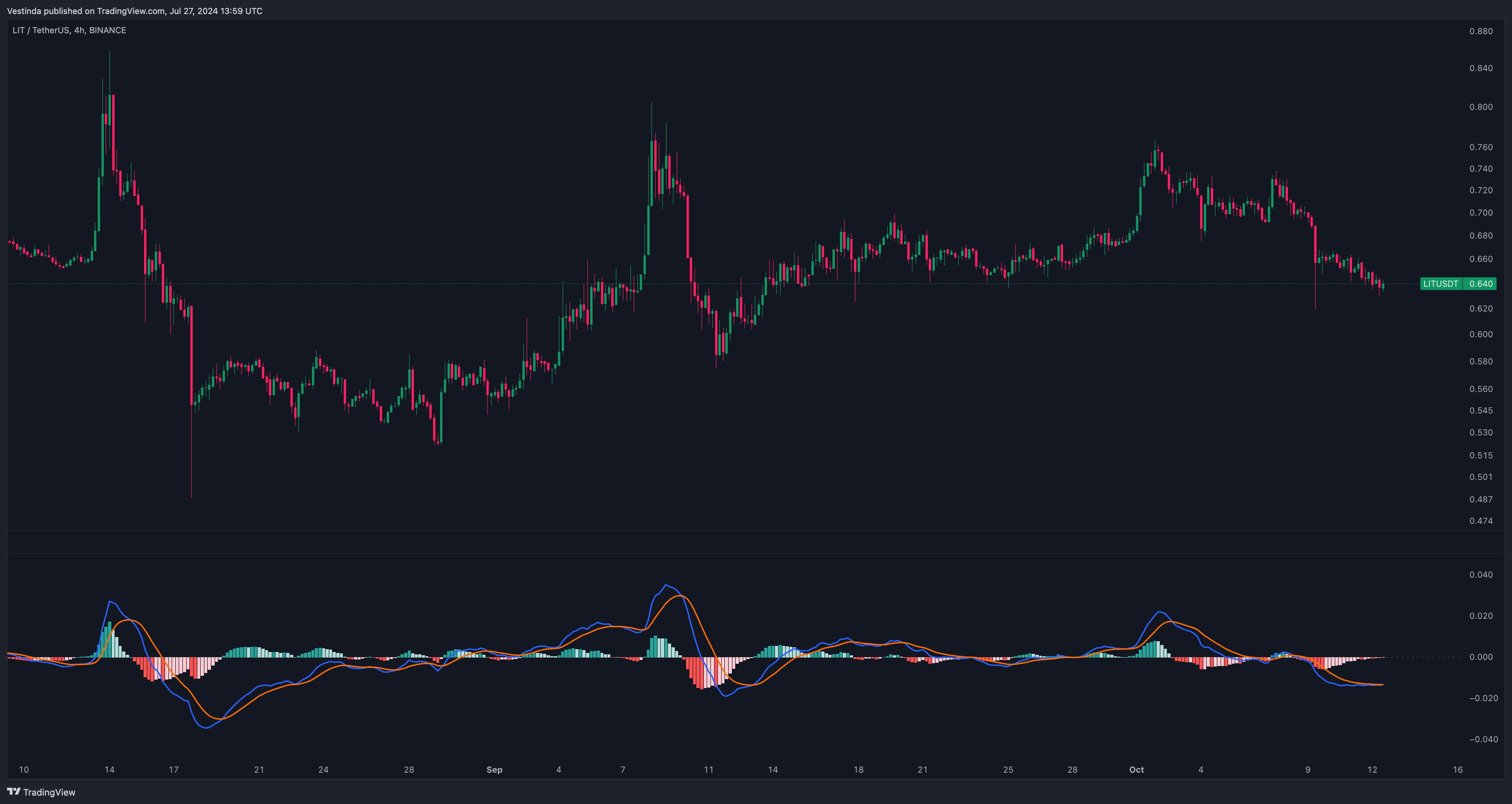
Usage: Identify bullish or bearish momentum; a MACD crossover above the signal line indicates a buy, below indicates a sell.
Bollinger Bands
Consist of a middle band (SMA) and two outer bands (standard deviations from the SMA).

Usage: Identify overbought and oversold conditions, predict potential price breakouts.
Fibonacci Retracement
Uses horizontal lines to indicate areas of support or resistance at the key Fibonacci levels before the price continues in the original direction.
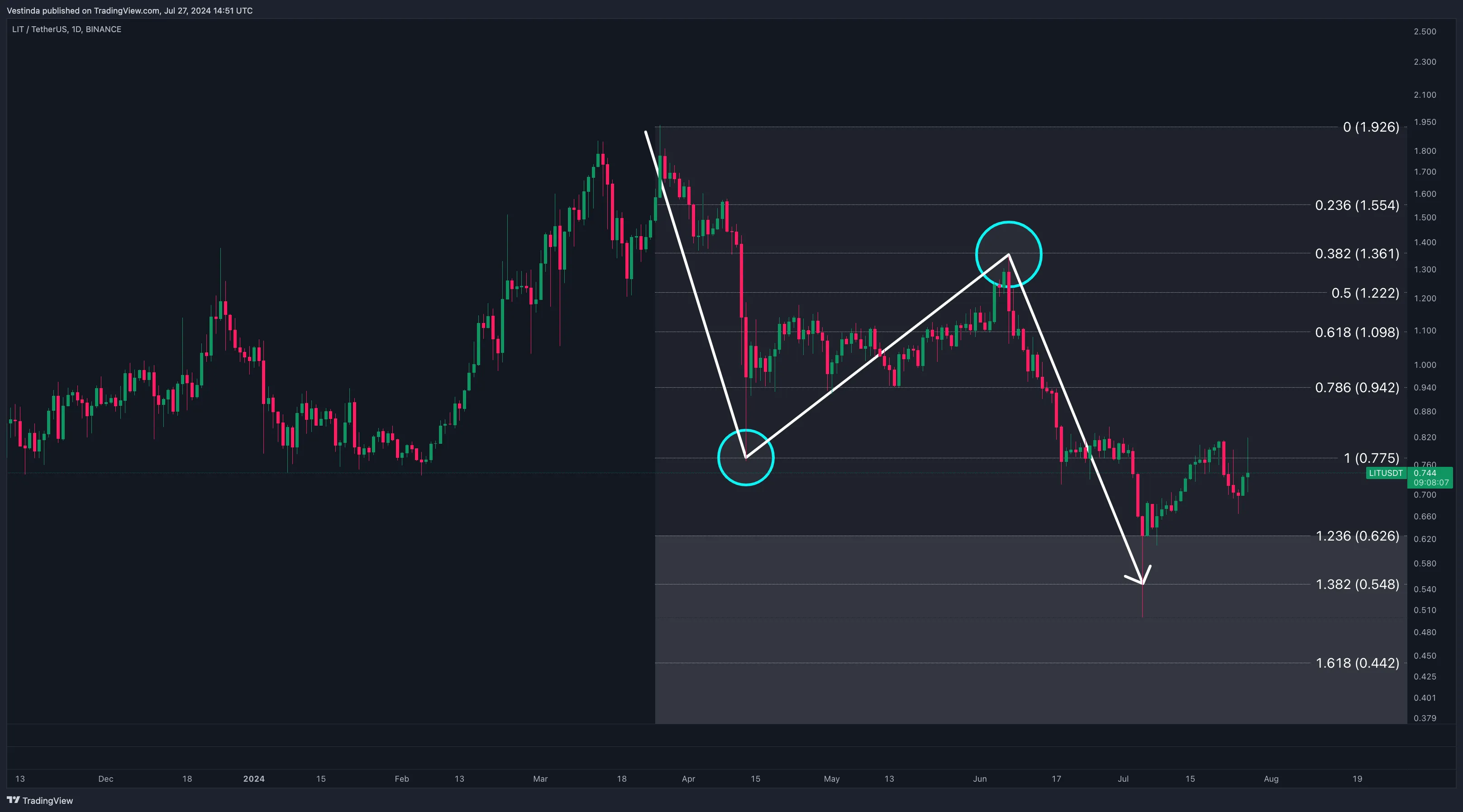
Usage: Identify potential reversal levels.
SuperTrend
A trend-following indicator that adjusts with price movement.
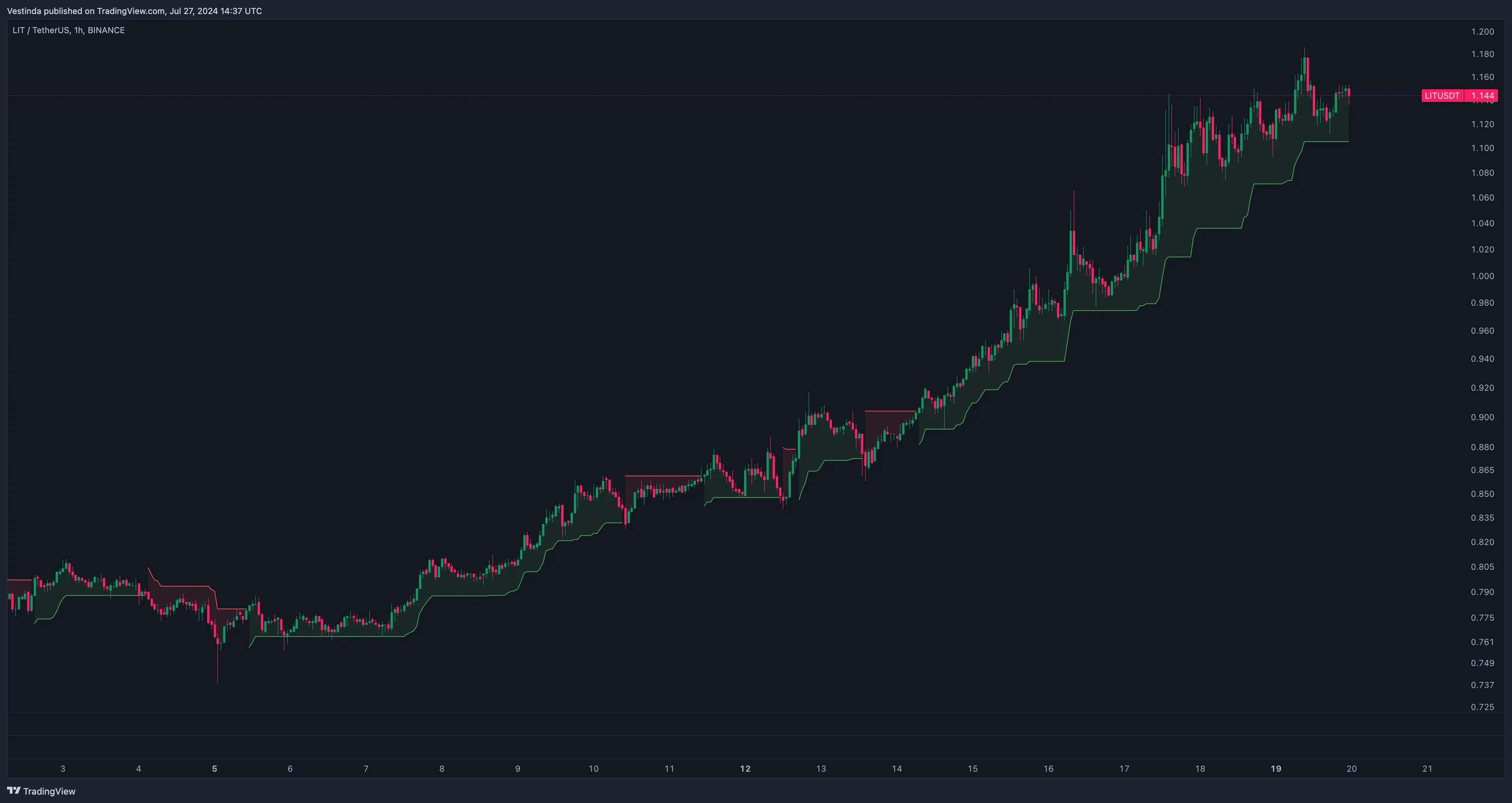
Usage: Indicates trend direction; green for uptrend, red for downtrend.
Best Timeframes for Trading LITUSDT
The optimal timeframe for trading LITUSDT depends on your trading strategy:
Short-Term Trading (Scalping & Day Trading)
1-minute to 15-minute timeframes: Ideal for capturing quick price movements.
Indicators: EMA, RSI, MACD, Bollinger Bands.
Medium-Term Trading (Swing Trading)
1-hour to 4-hour timeframes: Suitable for holding positions from a few days to a few weeks.
Indicators: SMA, EMA, MACD, SuperTrend.
Long-Term Trading (Position Trading)
Daily to Weekly timeframes: Best for long-term trends and holding positions for months.
Indicators: SMA, EMA, Bollinger Bands, Fibonacci Retracement.
Developing Your LITUSDT Trading Strategy
Define Your Goals:
- Decide whether you are focusing on short-term, medium-term, or long-term trading.
- Set specific profit targets and risk management rules.
Choose Your Indicators:
- Select indicators that align with your trading goals and timeframe.
- Combine multiple indicators to increase the reliability of your strategy.
Backtest Your Strategy:
- Use historical data to test your strategy and optimize its parameters.
- Adjust your strategy based on backtesting results to improve performance.
Implement Risk Management:
- Use stop-loss orders to minimize potential losses.
- Diversify your trading portfolio to manage risk effectively.
Monitor and Adjust:
- Continuously monitor your trading strategy's performance.
- Make necessary adjustments to adapt to changing market conditions.
Conclusion
Trading LITUSDT can be highly rewarding if you use the right strategies and indicators. By understanding the key indicators and optimal timeframes, you can develop a robust trading strategy that maximizes your chances of success.
Additional Resources
- Tools: TradingView for chart analysis, Vestinda for automated trading.
- Further Reading: Books and articles on advanced trading strategies.
- Video Tutorials: Step-by-step guides on setting up and using trading indicators.
LIT: An Innovative Crypto Asset
LIT is an exceptional crypto asset worth exploring. With its unique features, LIT stands out in the digital currency landscape. It is known for its fast and secure transactions, making it an attractive option for traders and investors. LIT utilizes advanced blockchain technology, providing transparency and immutability to its network. As a decentralized asset, LIT operates independently of any central authority, allowing for peer-to-peer transactions. Additionally, LIT offers scalability, enabling it to handle a high volume of transactions efficiently. Its underlying technology ensures the integrity of the asset and enhances trust among users. Overall, LIT presents an exciting opportunity for individuals seeking to participate in the crypto market while enjoying the benefits of a reliable and innovative digital asset.
Maximizing LIT Trading with Automation
Automated Trading Strategies for LIT
Automated trading strategies can be a game-changer when it comes to trading the crypto asset LIT. By leveraging technology, traders can execute trades automatically based on pre-defined conditions and signals. These strategies eliminate the need for constant monitoring and manual execution, allowing traders to take advantage of opportunities even when they're not actively trading.
One popular approach is the trend-following strategy. This strategy involves identifying the direction of the LIT price trend using technical indicators, such as moving averages. When the trend is bullish (upward), the automated system can initiate a buy order, and when the trend is bearish (downward), it can trigger a sell order.
Another strategy is mean reversion, which aims to capitalize on price reversals. The system identifies overbought or oversold conditions using indicators like the Relative Strength Index (RSI). When LIT reaches extreme levels, the system can initiate a trade in the opposite direction, expecting the price to revert to its average.
Risk management is crucial when employing automated trading strategies. Traders should define proper stop-loss and take-profit levels to protect their investments and limit potential losses.
Automated trading strategies offer several benefits, including removing emotional biases, reducing human error, and ensuring consistent and disciplined trading. However, it's important to continuously monitor and adjust these strategies to adapt to changing market conditions.
By embracing automated trading strategies, traders can enhance their LIT trading experience while maximizing their potential for profit and minimizing risks.
Safeguard Your LIT Trades with Stops
Using Stop Loss for Trading LIT
Implementing a stop loss strategy can be a smart move when trading the crypto asset LIT. A stop loss is a predetermined price level at which a trader automatically sells their LIT holdings to limit potential losses. It acts as a safety net, protecting traders from significant declines in the asset's value.
By setting a stop loss, traders can safeguard their investments and minimize the impact of unexpected market fluctuations. This helps to maintain discipline and prevents emotions from influencing trading decisions.
To determine an appropriate stop loss level for LIT, traders should consider factors like their risk tolerance, market volatility, and price patterns. Technical analysis indicators, such as support levels or moving averages, can assist in identifying suitable stop loss points.
It's crucial to place the stop loss order at a logical level below the purchase price, ensuring that it provides a sufficient buffer to accommodate market volatility. However, it should not be set too tightly, as this may lead to premature selling and potentially missing out on potential gains.
Regularly monitoring and adjusting the stop loss level is essential to adapt to changing market conditions. Traders should avoid moving their stop loss too close to the current price, as it may result in unnecessary stop-outs due to minor fluctuations.
In conclusion, incorporating a stop loss strategy when trading LIT is a risk management technique that can help protect investments and minimize losses. It allows traders to participate in the LIT market with a well-defined plan, promoting safer and more disciplined trading practices.
-
Track your
Crypto Portfolio -
Copy Crypto trading
strategies -
Build trading strategies
with no code
-
Backtest trading strategies
on Crypto, Forex, Stocks, etc. -
Demo Trading
Risk-free Paper Trading -
Automate trading strategies
with Live Trading
Frequently Asked Questions
Yes, technical analysis can be used in crypto trading. It helps predict price movements by analyzing historical data. Traders use charts and indicators to identify patterns and trends. By assessing factors like support and resistance levels, moving averages, and volume, they can make informed trading decisions. Technical analysis in crypto trading is popular because it provides insights into market sentiment. However, it is important to remember that no analysis method is foolproof and market conditions can change rapidly, so it's advisable to use a combination of technical analysis and fundamental analysis for better accuracy.
There are several automated trading strategies that can be used for LIT. One popular strategy is trend following, where trades are made based on the direction of the price trend. Another strategy is mean reversion, which involves trading against the current trend with the expectation that prices will revert to their average. Additionally, momentum trading can be employed, where trades are executed based on the strength of price movements. It's important to note that the effectiveness of these strategies can vary depending on market conditions, so it's recommended to backtest and adjust them accordingly.
The most popular trading strategy varies among traders and depends on their personal preferences and market conditions. However, one widely-used strategy is trend following. This strategy involves identifying and following the direction of the price trend. Traders look for patterns and use indicators to confirm the trend before entering trades. Trend following can be effective in capturing significant price movements and taking advantage of market momentum. While it may not work in all market conditions, many traders find it appealing due to its simplicity and potential for capturing substantial profits.
The best time to trade LIT depends on various factors, including market liquidity and volatility. Generally, the cryptocurrency market tends to be more active when major financial centers are open, such as during overlapping trading hours between different continents. Additionally, LIT may experience increased trading activity and price movement during news releases or significant market events. It's essential to analyze historical price patterns and trading volumes to identify peak trading times. Traders often prefer times when trading volume and liquidity are higher, as it can result in better trade execution and reduced price slippage.
Conclusion
In conclusion, trading strategies for LIT can be valuable tools for investors looking to navigate the crypto market. Whether it's utilizing quantitative trading, automated strategies, or implementing stop loss techniques, having a well-defined plan is crucial. By combining technical analysis, risk management, and market trends, traders can maximize their potential for profit while minimizing risks. It's important to stay updated on the latest market developments and adapt strategies accordingly. With the right knowledge and approach, traders can enhance their LIT trading experience, seize opportunities, and achieve their financial goals in the dynamic world of cryptocurrency.

Successful traders rely on backtesting to be profitable.
Be like them with our
Free Backtesting Guide