

Introduction
Cryptocurrency and money printing have become central topics in modern economic discussions. As governments continue to expand the money supply to address financial crises, cryptocurrencies like Bitcoin offer an alternative monetary system with a fixed supply and decentralized control. This article explores the relationship between cryptocurrency and money printing, highlighting how digital currencies are reshaping the global financial landscape.
Article summary
1. Understanding Cryptocurrency and Money Printing
At its core, money printing refers to the expansion of a country’s monetary base, often through central bank policies like Quantitative Easing (QE). Cryptocurrency, on the other hand, operates on a decentralized blockchain system, limiting its total supply and preventing unchecked inflation.
Key Differences Between Traditional Money Printing and Cryptocurrency:
- Money Printing: Centralized, infinite supply potential, prone to inflation.
- Cryptocurrency: Decentralized, finite supply (e.g., Bitcoin capped at 21 million).
- Outcome: Cryptocurrency serves as a hedge against fiat money devaluation caused by excessive money printing.
2. How Cryptocurrency Counters Money Printing Risks
Excessive money printing often leads to inflation or even hyperinflation, eroding purchasing power. Cryptocurrencies like Bitcoin are designed to counteract these risks through their finite supply and transparent monetary policies.
Benefits of Cryptocurrency in an Inflationary Economy:
- Acts as a store of value.
- Transparent supply mechanisms.
- Immune to government monetary policy changes.
The rise of Bitcoin and other cryptocurrencies during periods of aggressive money printing highlights their role as a financial safe haven.
Start earning 60% a year with automated trading Free Sign Up3. The Role of Money Printing in Modern Economies
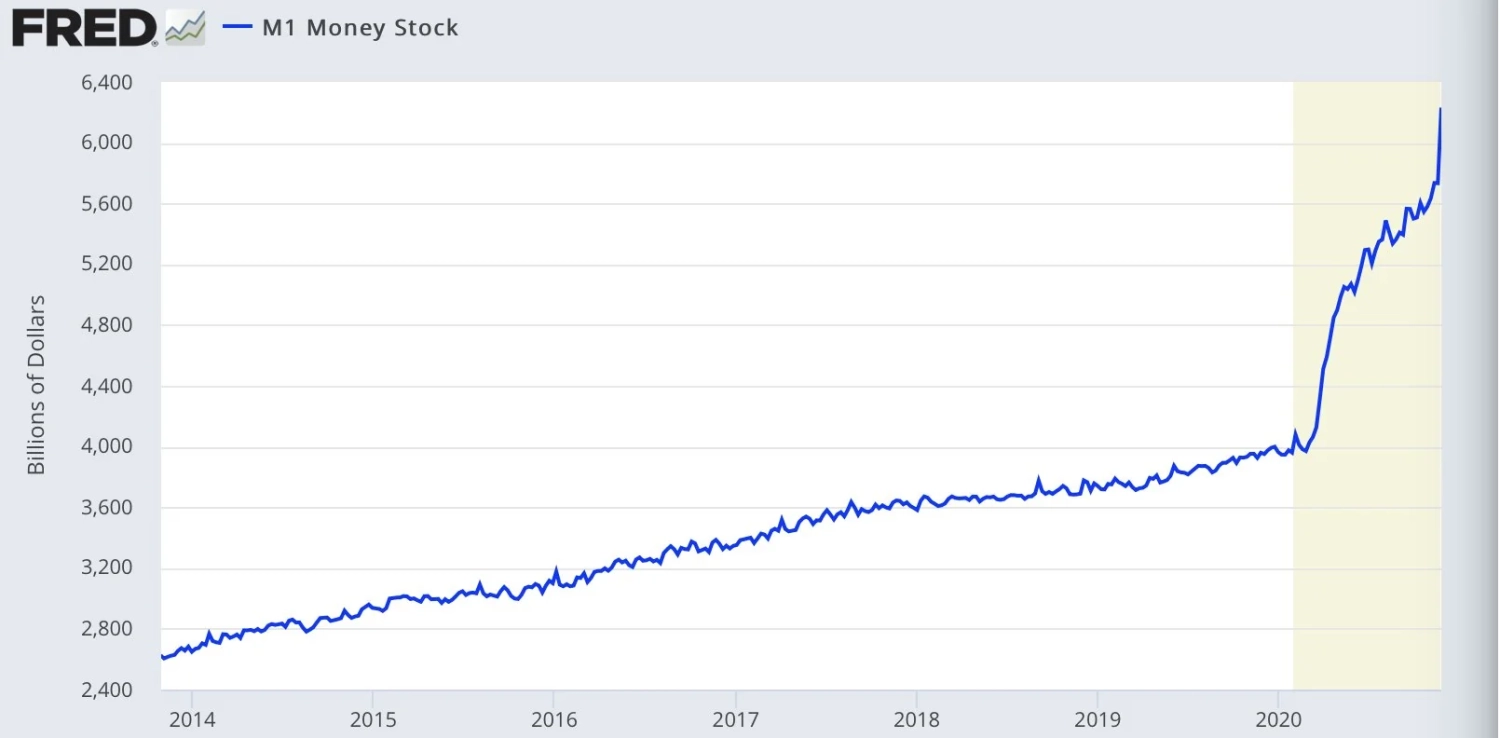 Governments resort to money printing during economic crises to inject liquidity into the financial system. However, this approach often comes with long-term consequences:
- Inflation: Rising prices reduce purchasing power.
- Debt Accumulation: Governments borrow heavily, increasing national debt.
- Economic Inequality: Asset bubbles benefit wealthy investors disproportionately.
Cryptocurrency and money printing are inherently connected, as digital assets are increasingly seen as an alternative to fiat currencies inflated by reckless monetary policies.
4. Cryptocurrency as ‘Schmuck Insurance’ Against Money Printing
Venture capitalist Chamath Palihapitiya once referred to Bitcoin as “schmuck insurance” — a financial safeguard against poor government decisions and unchecked money printing.
Why Bitcoin Stands Out:
- Fixed supply (21 million coins).
- Decentralized network with no central authority.
- Immune to fiat currency inflationary cycles.
Investors often turn to Bitcoin and other cryptocurrencies when trust in traditional monetary policies diminishes.
5. Fractional Reserve Banking vs. Cryptocurrency Systems
In traditional banking, money creation occurs through fractional reserve banking, where banks lend more money than they physically hold. In contrast, cryptocurrency operates on a transparent blockchain, ensuring all transactions are verifiable and immutable.
Key Differences:
- Fractional Banking: Creates money digitally via loans.
- Cryptocurrency: Supply governed by mathematical algorithms and consensus.
- Result: Cryptocurrencies prevent artificial monetary expansion.
Understanding these differences helps explain why cryptocurrency is increasingly viewed as a hedge against traditional monetary policies.
6. The Relationship Between Cryptocurrency and Quantitative Easing (QE)
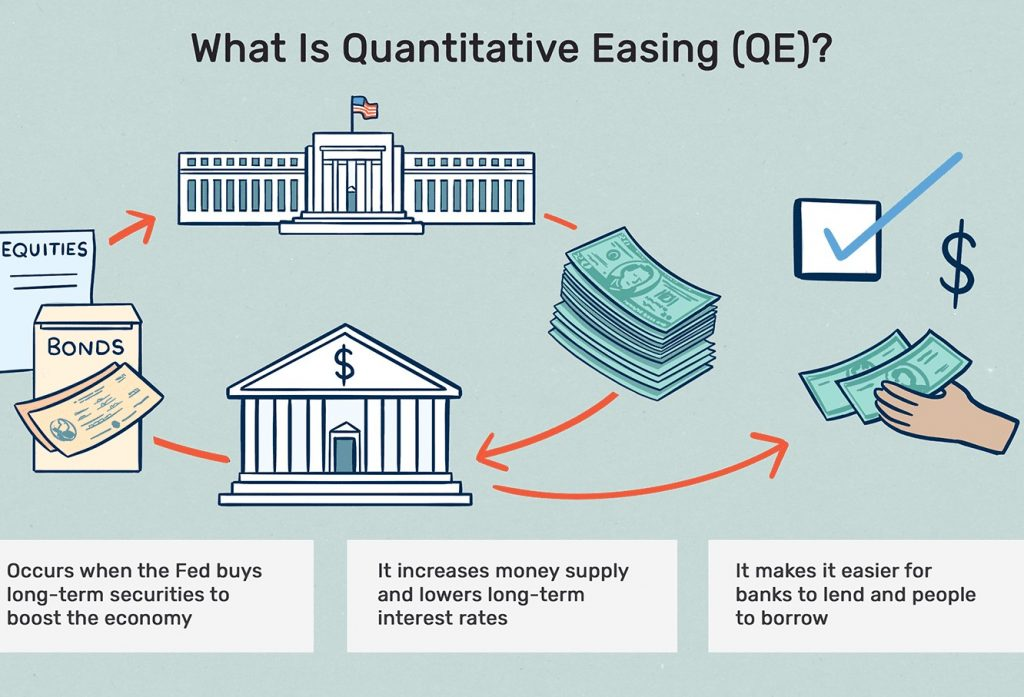 Quantitative Easing, a policy used by central banks to stimulate economies, involves purchasing financial assets to increase liquidity. However, this practice often drives asset bubbles and inflation.
Impact on Cryptocurrency Adoption:
- QE reduces trust in fiat currencies.
- Investors turn to Bitcoin and other cryptocurrencies as alternative stores of value.
- Cryptocurrency prices often surge during QE cycles.
The link between cryptocurrency and money printing becomes clearer when examining Bitcoin’s historical price surges during major QE programs.
7. Can Cryptocurrency Replace Fiat in a Money Printing Era?
While cryptocurrencies like Bitcoin and Ethereum are unlikely to completely replace fiat currencies, they are increasingly integrated into the financial system.
Future Scenarios:
- Governments may adopt Central Bank Digital Currencies (CBDCs).
- Cryptocurrency could become a parallel financial system.
- Hybrid financial models may combine crypto and fiat mechanisms.
The ongoing tension between cryptocurrency and money printing will define the future of global finance.
8. Final Thoughts
Cryptocurrency and money printing represent two opposing approaches to monetary policy. While fiat currencies rely on central authorities and unlimited supply mechanisms, cryptocurrencies offer a decentralized and finite alternative.
For individuals and investors, cryptocurrencies like Bitcoin serve as a hedge against the risks posed by excessive money printing and inflation. The ongoing evolution of monetary systems highlights the growing relevance of digital currencies in mitigating economic uncertainties.

With over seven years of experience in trading since 2017, I specialize in cryptocurrency markets while sharing insights through engaging content. Proud to rank among the top 100 most popular analysts on TradingView of all time, I bring a blend of expertise, passion, and actionable strategies to the trading community.