
-
Track your
Crypto Portfolio -
Copy Crypto trading
strategies -
Build trading strategies
with no code
-
Backtest trading strategies
on Crypto, Forex, Stocks, etc. -
Demo Trading
Risk-free Paper Trading -
Automate trading strategies
with Live Trading
Automated Strategies & Backtesting results for ETH
Here are some ETH trading strategies along with their past performance. You can validate these strategies (and many more) for free on Vestinda across thousands of assets and many years of historical data.
Automated Trading Strategy: Percentage Price Oscillations with ZLEMA and Shadows on ETH
Based on the backtesting results, the trading strategy displayed a profit factor of 1.07, indicating a slight profitability overall. Over the period from September 2, 2017, to October 11, 2023, an annualized ROI of 12.36% was achieved, showcasing a decent return on investment. The average holding time for trades was 1 day and 9 hours, suggesting a relatively short-term approach. With an average of 1.62 trades per week, the strategy remained active but not excessively frequent. The total number of closed trades reached 518, implying a consistent involvement in the market. The return on investment amounted to an impressive 77.25%, although the winning trades percentage was relatively low at 30.31%, indicating room for improvement.

 ETHUSDT

Choose another period and try again.
Automated Trading Strategy: Simple Linear Regression Trend Following with Mean Deviation and SL on ETH
The backtesting results for the trading strategy covering the period from November 20, 2018, to November 20, 2023, unveil a profit factor of 1.03, indicating a slight advantage in earnings. The annualized return on investment (ROI) stands at 0.54%, reflecting moderate profitability over the five-year period. On average, trades were held for approximately 13 hours and 14 minutes, implying a short-term approach. With an average of 0.48 trades executed per week, the strategy was not excessively active. Out of a total of 127 closed trades, the return on investment stood at 2.7%, suggesting modest gains. The winning trades percentage stands at 37.01%, illustrating a relatively lower success rate.
ETHUSDT
Choose another period and try again.
ETH (Ethereum) Swing Trading Strategies for Optimal Returns
Introduction
Swing trading Ethereum (ETH) is a popular approach for traders aiming to capitalize on medium-term price movements. This strategy leverages technical indicators and price action to identify opportunities over days or weeks. This guide explores effective swing trading strategies to maximize your returns while managing risks.
Why Choose Swing Trading for Ethereum?
- Balance Between Speed and Analysis: Offers more time for decision-making compared to day trading while capturing significant price swings.
- 24/7 Market Activity: Ethereum's constant trading environment provides ample opportunities for swing traders.
- Technical Predictability: ETH's price movements often adhere to technical patterns, making it suitable for swing strategies.
Core Swing Trading Strategies for Ethereum:
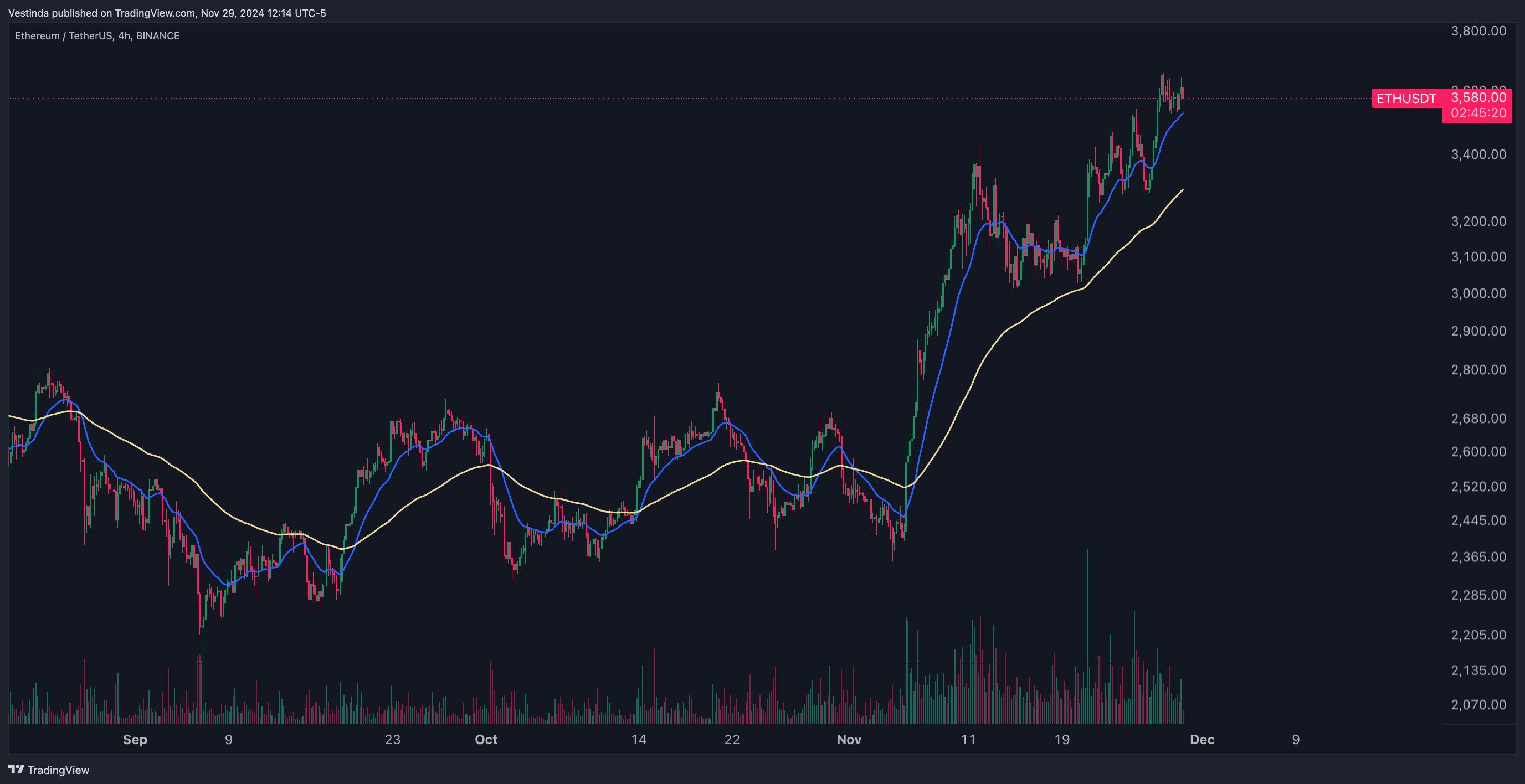
1. Trend-Following with Moving Averages:
- Concept: Identify and trade along Ethereum’s prevailing trend using moving averages.
- Setup: Apply a 20-period EMA (short-term) and a 100-period EMA (medium-term).
- Execution Rules:
- Buy Signal: Enter long when the 20 EMA crosses above the 100 EMA, and price remains above both.
- Sell Signal: Exit when the 20 EMA crosses below the 100 EMA, signaling a trend reversal.
- Enhancement: Use RSI to confirm momentum before entering trades.
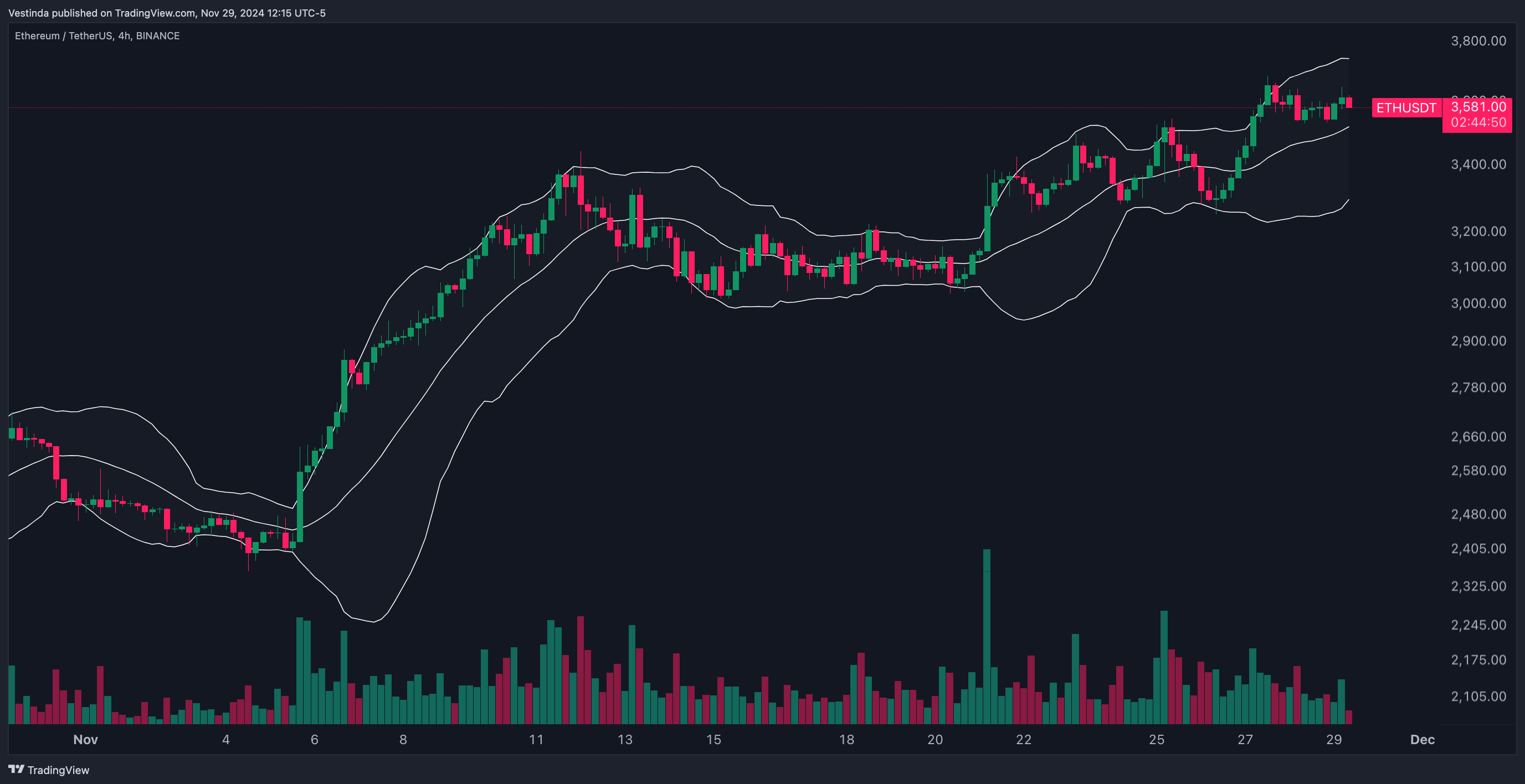
2. Breakout Strategy with Bollinger Bands:
- Concept: Detect and trade Ethereum’s breakouts from consolidation phases using Bollinger Bands.
- Setup: Apply Bollinger Bands with a 20-period SMA and standard deviation of 2.
- Execution Rules:
- Buy Signal: Enter long when ETH price breaks above the upper band with increasing volume.
- Sell Signal: Exit when price shows signs of exhaustion near key resistance levels.
- Enhancement: Use volume indicators to confirm the breakout’s strength.
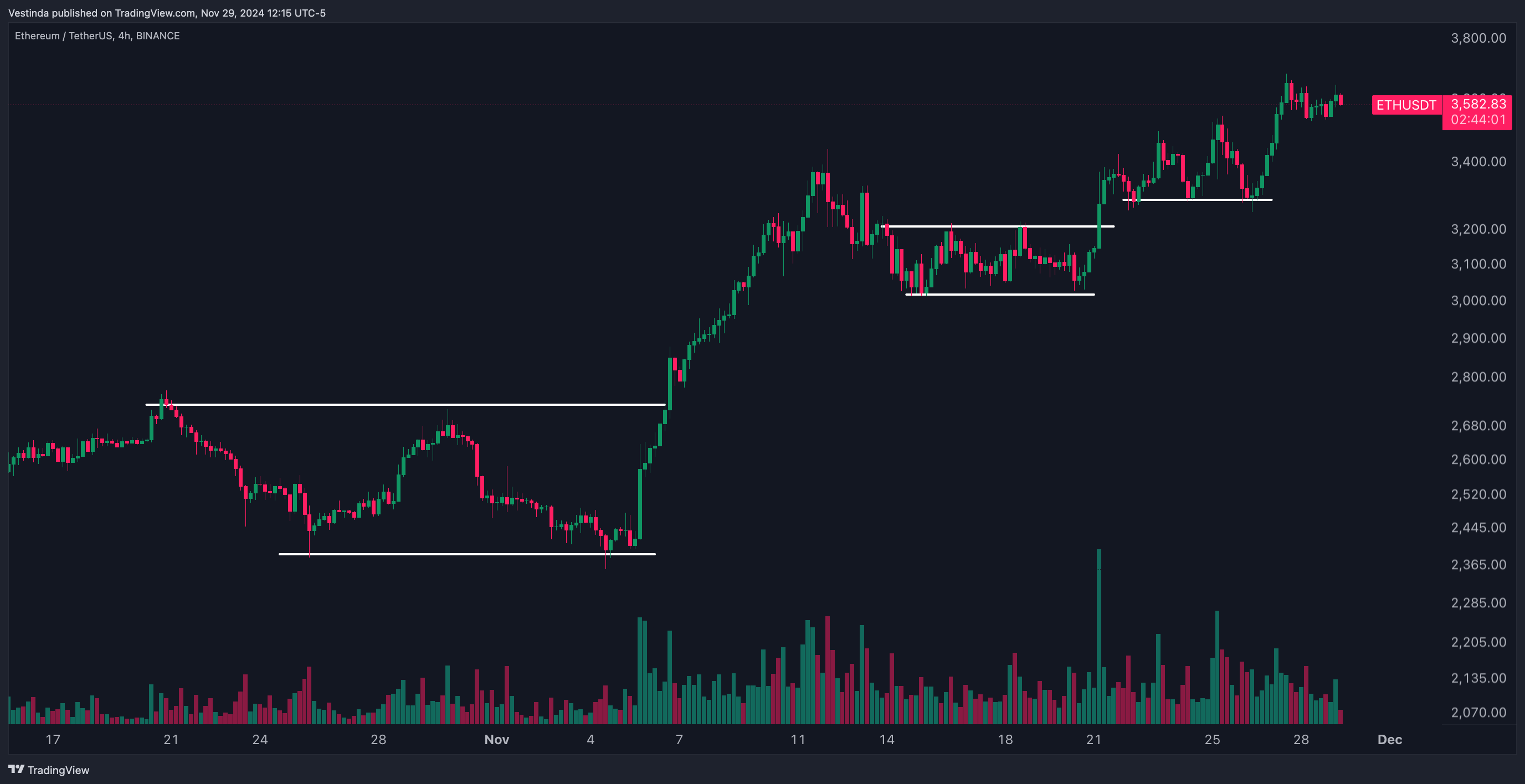
3. Support and Resistance Swing Trading:
- Concept: Trade ETH’s reversals near established support and resistance levels.
- Setup: Identify horizontal levels where price frequently reverses.
- Execution Rules:
- Buy Signal: Enter long near support with a bullish confirmation candle (e.g., hammer or bullish engulfing).
- Sell Signal: Enter short near resistance with a bearish confirmation candle (e.g., shooting star or bearish engulfing).
- Enhancement: Combine with Fibonacci retracement levels for stronger validation.
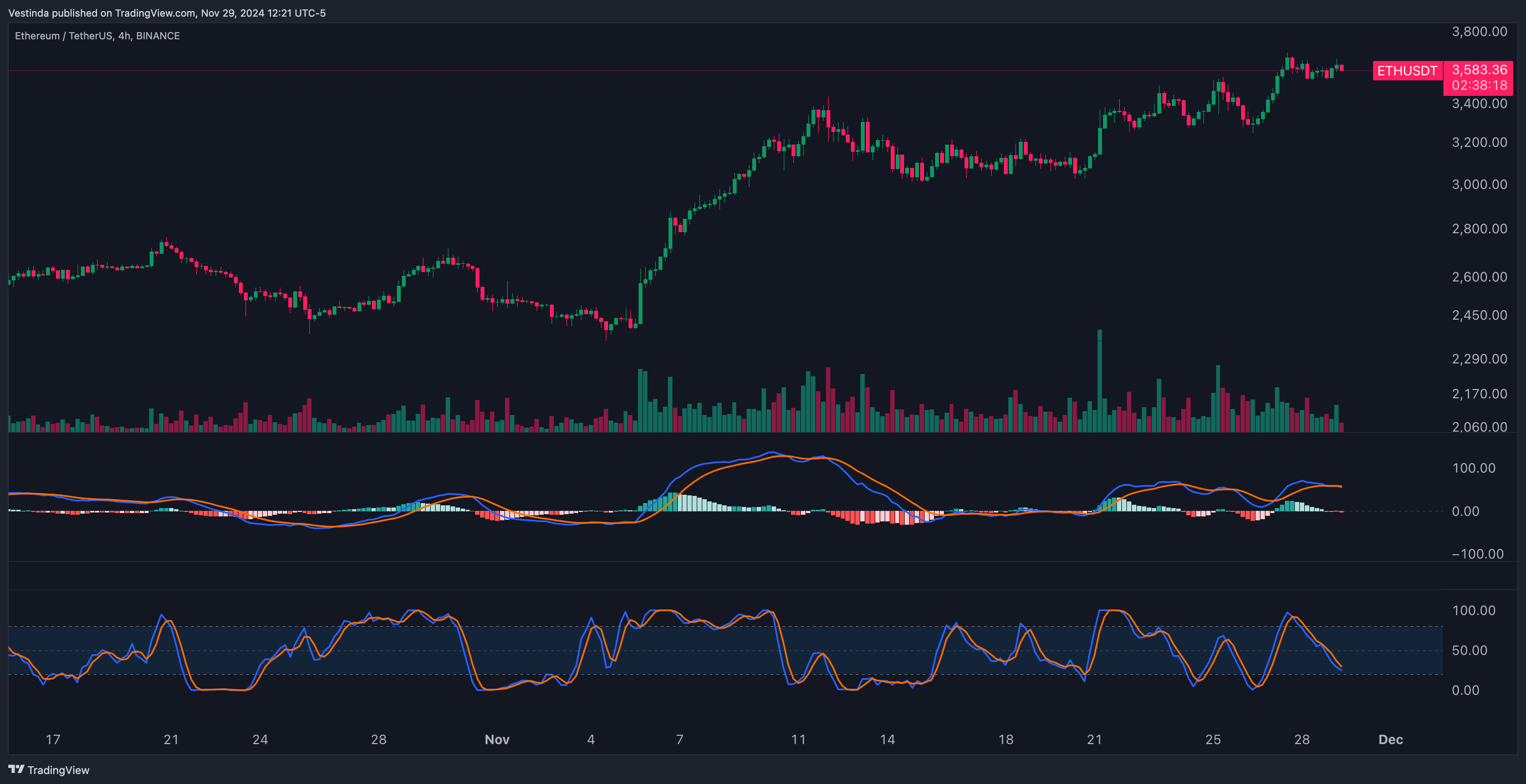
4. Momentum Trading with MACD and Stochastic RSI:
- Concept: Leverage momentum shifts to capture medium-term price swings.
- Setup: Apply MACD (12, 26, 9) and Stochastic RSI with a 14-period setting.
- Execution Rules:
- Buy Signal: Enter long when MACD shows a bullish crossover, and the Stochastic RSI crosses above 20.
- Sell Signal: Exit when MACD shows a bearish crossover or Stochastic RSI crosses below 80.
- Enhancement: Use higher timeframes (e.g., 4-hour or daily) for stronger signals.
Tips for Effective Ethereum Swing Trading:
- Combine Indicators for Confirmation: Example: Confirm a breakout with Bollinger Bands and volume spikes to reduce false signals.
- Use Multiple Timeframes: Analyze broader trends on the daily chart and refine entries on the 4-hour chart.
- Set Clear Entry and Exit Rules: Predefine criteria for taking trades to avoid impulsive decisions.
- Emphasize Risk Management: Use stop-loss orders to cap potential losses and trailing stops to secure profits.
Common Mistakes to Avoid:
- Overtrading: Focus on quality setups rather than chasing every price movement.
- Neglecting Risk/Reward Ratios: Ensure each trade offers a favorable risk-to-reward ratio (e.g., 1:2 or higher).
- Ignoring Market Context: Avoid trading against the broader market trend or during high volatility events.
Advantages of Swing Trading Ethereum:
- Reduced Stress: Fewer trades mean less time monitoring the market compared to day trading.
- Higher Profit Potential: Capturing medium-term swings often yields significant returns.
- Adaptability: Works well across various market conditions, including trends and ranges.
Conclusion:
Swing trading Ethereum offers a balanced approach to trading, enabling you to capitalize on significant price movements while maintaining a manageable trading pace. By employing strategies such as trend-following, breakout detection, and momentum trading, you can unlock Ethereum’s profit potential. Always backtest your strategies, manage risks diligently, and stay updated on market developments for consistent success.
Ethereum Swing Trading Profits - A Step-By-Step Guide
- Learn the basics of swing trading and understand the fundamentals of ETH.
- Develop a trading strategy based on technical analysis and market trends.
- Set up a brokerage account and deposit funds for trading.
- Identify potential entry and exit points for swing trades using indicators and chart patterns.
- Execute trades with discipline, following your strategy and risk management rules.
- Monitor your trades regularly and make necessary adjustments as per market conditions.
- Keep track of your trading performance and analyze your results for continuous improvement.
Leveraging Baseline Value for Optimal ETH Utilization
Using Baseline Value is a crucial strategy when investing in ETH. It helps determine the initial value of an asset, providing a reference point for future evaluations. By establishing a baseline value, investors can gauge whether an asset is overvalued or undervalued, making more informed purchasing decisions. This method takes into account various factors such as market trends, historical data, and fundamental analysis to calculate a fair value for ETH. By comparing the current market price to its baseline value, investors can identify potential opportunities for buying or selling. However, it's important to note that baselines are not foolproof and should be used in conjunction with other indicators and strategies to make informed investment decisions. Overall, using baseline value enables investors to have a clearer understanding of ETH's market worth and navigate the cryptocurrency market more effectively.
Retrospective Trade Review and Analysis
Reviewing and analyzing past trades is a crucial practice for any trader, especially in the cryptocurrency market. By examining previous trades, traders can identify patterns, trends, and potential mistakes that can inform future decisions. It allows them to evaluate their trading strategies and make adjustments accordingly. When reviewing past trades, it is important to assess factors such as entry and exit points, risk management techniques, and overall profitability. This analysis can help traders discover what works and what doesn't, maximize profits, and minimize losses. Furthermore, traders can learn from past trades to develop a clearer understanding of Ethereum's market dynamics and navigate it more effectively. Regularly reviewing and analyzing trades is an essential step towards becoming a successful trader in the ever-changing world of cryptocurrencies.
Swing Trading Succinct Chart Patterns for ETH
When swing trading, it is essential to understand the common chart patterns that can help identify potential buying or selling opportunities. One of the most widely known chart patterns is the Head and Shoulders pattern, consisting of three peaks, with the central peak (the head) higher than the other two (the shoulders). Another popular pattern is the Double Top, which indicates a potential bearish trend reversal. It occurs when the price reaches a peak, pulls back, and then rises again to a similar level before reversing lower. Conversely, the Double Bottom is a bullish reversal pattern where the price reaches a low, bounces back, and then goes down to a similar level before turning higher. These patterns can provide valuable insights for swing traders seeking profit opportunities in the cryptocurrency market, including ETH.
Optimal Allocation: Swing Trading ETH Profits
Position sizing in swing trading is crucial for managing risk and optimizing profits. By determining how much to invest in each trade, traders can protect their capital and maximize returns. A common strategy is to risk a certain percentage of the account on each trade, typically between 1% and 2%. For example, if a trader has a $10,000 account and decides to risk 1% on each trade, they would allocate $100 per trade. However, position sizing should also consider the volatility of the asset being traded. More volatile assets may require smaller position sizes to account for potential larger price swings. This approach ensures that traders can withstand market fluctuations and avoid large drawdowns in their account. Ultimately, position sizing is a key element in swing trading that allows traders to strike a balance between risk and reward.
Sophisticated backtesting is not only possession of high-esteemed hedge funds anymore.
Impressive Team and support, Backtesting engine with detailed reports, The Strategy builder.

Great purchase!
I have always manually invested in stocks and cryptocurrencies, but after studying Vestinda, I must say it has enormous potential.

Mature platform for trading
Pro: Easy to use, Nice UX, A lot of customization for strategies, Back testing is an awesome tool, can check any strategy in history.

Frequently Asked Questions
To make money swing trading crypto, traders capitalize on short-term price movements by buying low and selling high within a period of days or weeks. They analyze charts, patterns, and market trends to identify potential entry and exit points. Timing is crucial; traders aim to catch the upward swings in a crypto's price to maximize profits. Successful swing traders also employ risk management strategies, set stop-loss orders, and stay updated with news that may impact the crypto market. With discipline, technical analysis skills, and a clear understanding of market dynamics, swing traders strive to generate profits from fluctuating crypto prices.
Yes, brokers generally allow swing trading. Swing trading involves holding positions for a few days to a few weeks, usually taking advantage of short-term price fluctuations. Many brokers facilitate swing trading by providing access to various markets and trading instruments, including stocks, currencies, commodities, and indices. They offer tools and platforms that enable traders to analyze charts, set stop-loss and take-profit levels, and execute trades efficiently. However, it's important to note that brokers may have specific policies or limitations regarding swing trading, such as minimum account balances, margin requirements, or fees. Traders should carefully review a broker's terms and conditions before engaging in swing trading activities.
To incorporate fundamental analysis into ETH swing trading, consider examining key factors that can impact Ethereum's value. Keep track of industry news, technological developments, and regulatory updates related to cryptocurrencies. Assess Ethereum's market share and competition, evaluate its potential use cases, and analyze its adoption rate. Additionally, consider the overall sentiment towards cryptocurrencies and investor behavior. By combining this fundamental analysis with technical indicators, you can make more informed decisions in your ETH swing trading strategy.
To utilize the Williams %R indicator in ETH swing trading, start by monitoring the price movements of Ethereum. When the Williams %R reaches the overbought level (typically above -20), it suggests a potential reversal or price decrease, which could be an opportunity to sell. Conversely, when %R drops below the oversold level (usually below -80), it indicates a potential upward price movement or reversal, offering a buying opportunity. Combining this indicator with other technical analysis tools and market trends can help traders make informed decisions when swinging Ethereum. Remember to set stop-loss orders to manage risk and protect your investment.
There are several trading options available, each with its own level of profitability. However, it is difficult to pinpoint a single most profitable trading method, as profitability can vary depending on market conditions, individual skills, and risk tolerance. Some commonly profitable trading strategies include day trading, swing trading, and long-term investing. Day trading involves making multiple trades in a single day to capitalize on short-term market fluctuations. Swing trading aims to capture medium-term price movements, usually holding positions for a few days to a couple of weeks. Long-term investing focuses on buying and holding assets for an extended period to benefit from long-term market trends and compound growth. Ultimately, the most profitable trading approach relies on an individual's knowledge, experience, and ability to manage risks effectively.
Conclusion
In conclusion, ETH swing trading is a dynamic and profitable strategy for navigating the volatile world of cryptocurrency. By understanding the basics of swing trading and developing a solid trading strategy, traders can take advantage of short-term price movements within the larger trend of ETH. Utilizing technical analysis, chart patterns, and risk management techniques, traders can identify potential entry and exit points for their trades. Regularly reviewing and analyzing past trades allows traders to learn from their mistakes and improve their strategies. Familiarity with common chart patterns and proper position sizing enhances the trader's ability to identify profitable opportunities and manage risk effectively. With dedication and practice, ETH swing trading can unlock new opportunities and potential profits in the ever-evolving world of cryptocurrency.

Successful traders rely on backtesting to be profitable.
Be like them with our
Free Backtesting Guide