
-
100,000 available assets New
-
years of historical data
-
practice without risking money

Algorithmic Strategies & Backtesting results for ETH
Here are some ETH trading strategies along with their past performance. You can validate these strategies (and many more) for free on Vestinda across thousands of assets and many years of historical data.
Algorithmic Trading Strategy: MVWAP and VWAP Crossover on ETH
Based on the backtesting results statistics for the trading strategy from December 16, 2018, to December 16, 2023, the strategy has shown promising performance. The profit factor of 1.85 indicates that for every unit of risk taken, the strategy generated 1.85 units of profit. This signifies a positive risk-reward ratio. The annualized return on investment (ROI) of 314.9% demonstrates an impressive growth rate achieved over the specified period. The average holding time of 2 weeks and 6 days, along with an average of 0.19 trades per week, suggests a patient yet active approach. With a total of 50 closed trades, the strategy maintained a winning trades percentage of 50%. Overall, the return on investment amounted to a remarkable 1574.51%.

 ETHUSDT

Choose another period and try again.
Algorithmic Trading Strategy: Mass Index Crossover with RSI Entry on ETH
Based on the backtesting results statistics for the trading strategy from December 10, 2018, to December 10, 2023, several key observations can be made. The profit factor stands at 1.48, indicating that for every dollar invested, an average profit of $1.48 was generated. The annualized return on investment (ROI) is an impressive 18.03%, indicating consistent profitability over the tested period. The average holding time for trades was approximately 7 weeks and 4 days, suggesting a medium-term strategy. With an average of 0.04 trades per week, the strategy demonstrates cautious and selective trading behavior. The closed trade count amounts to 11, with a winning trades percentage of 45.45%. Overall, the strategy yielded a commendable return on investment of 90.17% during the tested period.
ETHUSDT
Choose another period and try again.
Mastering Scalping Techniques for Ethereum
Scalping is a popular trading strategy that involves making numerous trades over a short period to capture small price movements. In this article, we will delve into the scalping techniques for Ethereum, utilizing Fibonacci retracement levels, support and resistance levels, and multiple timeframe analysis. By combining these tools, traders can enhance their scalping strategies and improve their chances of success in the fast-paced crypto market.
Understanding Scalping in Cryptocurrency Trading
Scalping aims to exploit small price changes within the day. Traders who scalp seek to profit from quick price movements, often holding positions for just a few minutes or even seconds. This strategy requires a keen eye for market trends, quick decision-making, and the ability to manage risks effectively.
Fibonacci Retracement Levels
Fibonacci retracement levels are essential tools in technical analysis, helping traders identify potential reversal points in the market. These levels are derived from the Fibonacci sequence and are represented as horizontal lines on a price chart. The key Fibonacci retracement levels are 23.6%, 38.2%, 50%, 61.8%, and 100%.
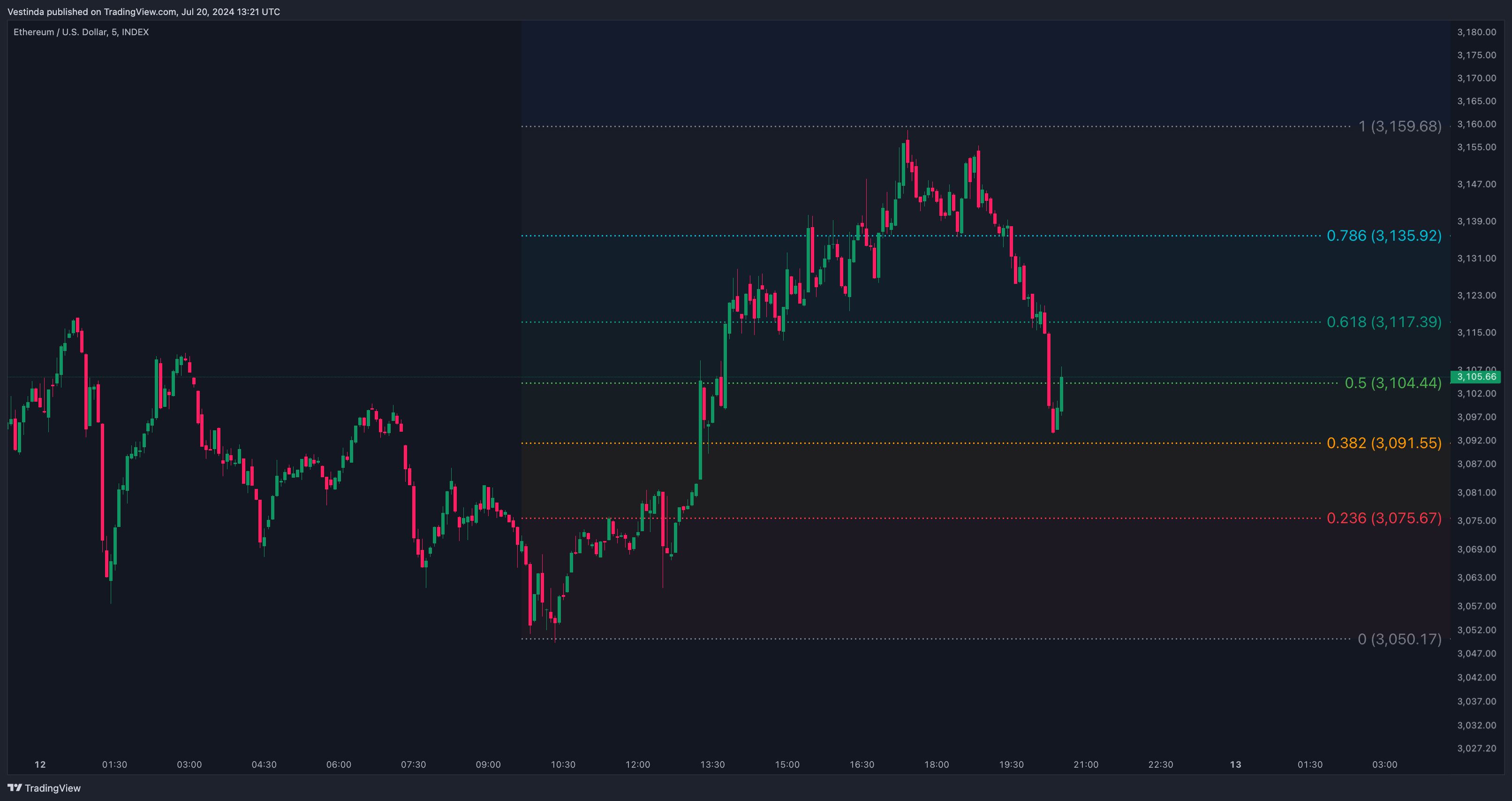
How to Use Fibonacci Retracement Levels in Scalping
- Identify a Trend: Determine the overall trend of Ethereum on a higher timeframe, such as the 1-hour or 4-hour chart.
- Plot Fibonacci Levels: On a smaller timeframe (e.g., 5-minute or 15-minute chart), plot the Fibonacci retracement levels from the recent high to the recent low in an uptrend or from the recent low to the recent high in a downtrend.
- Look for Confluences: Check for confluences where Fibonacci levels align with other technical indicators, such as support and resistance levels.
- Enter and Exit Trades: Use these confluences as potential entry and exit points. For instance, in an uptrend, if the price retraces to the 61.8% Fibonacci level, which also coincides with a strong support level, it could be a good buying opportunity.
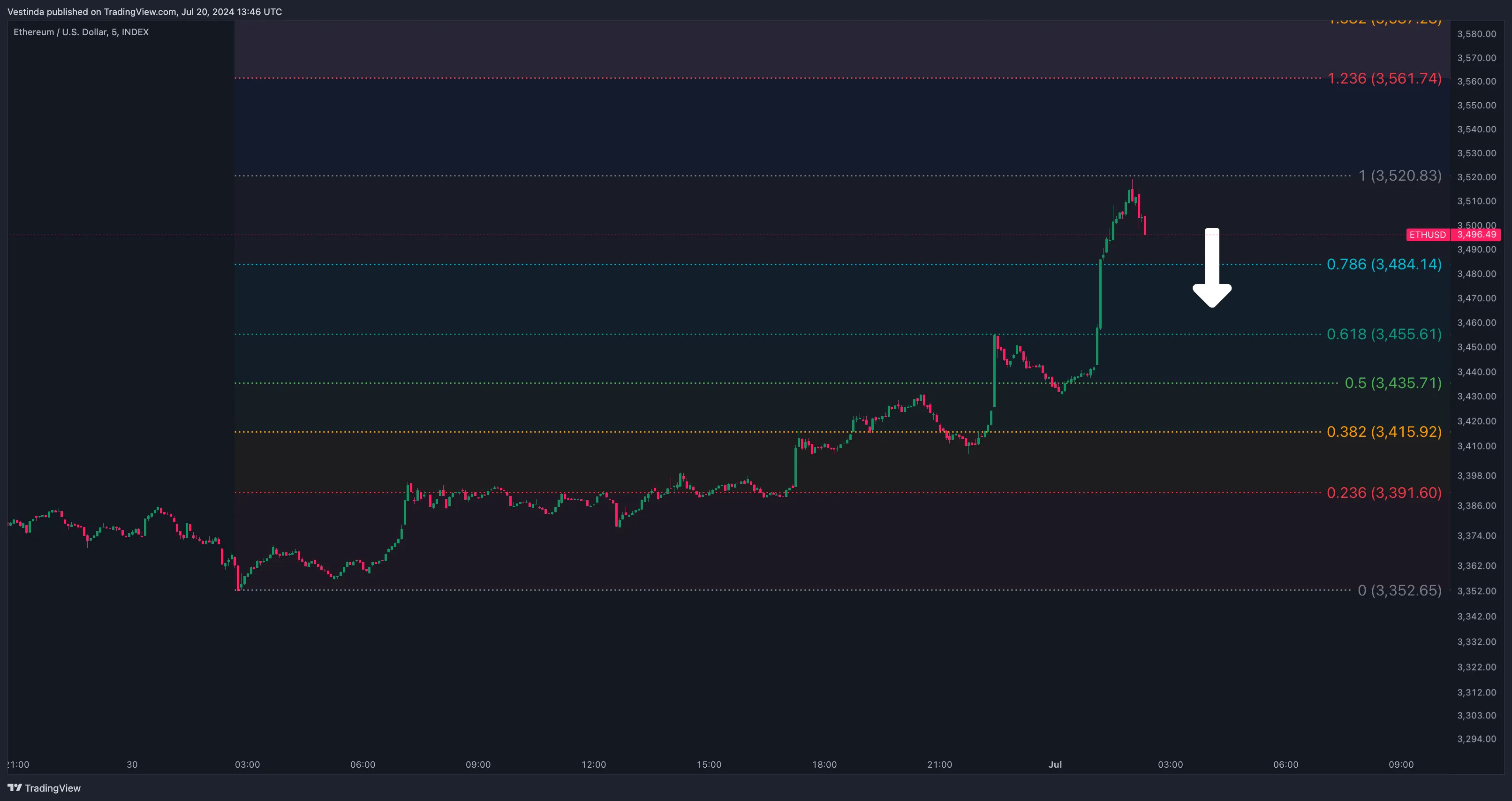
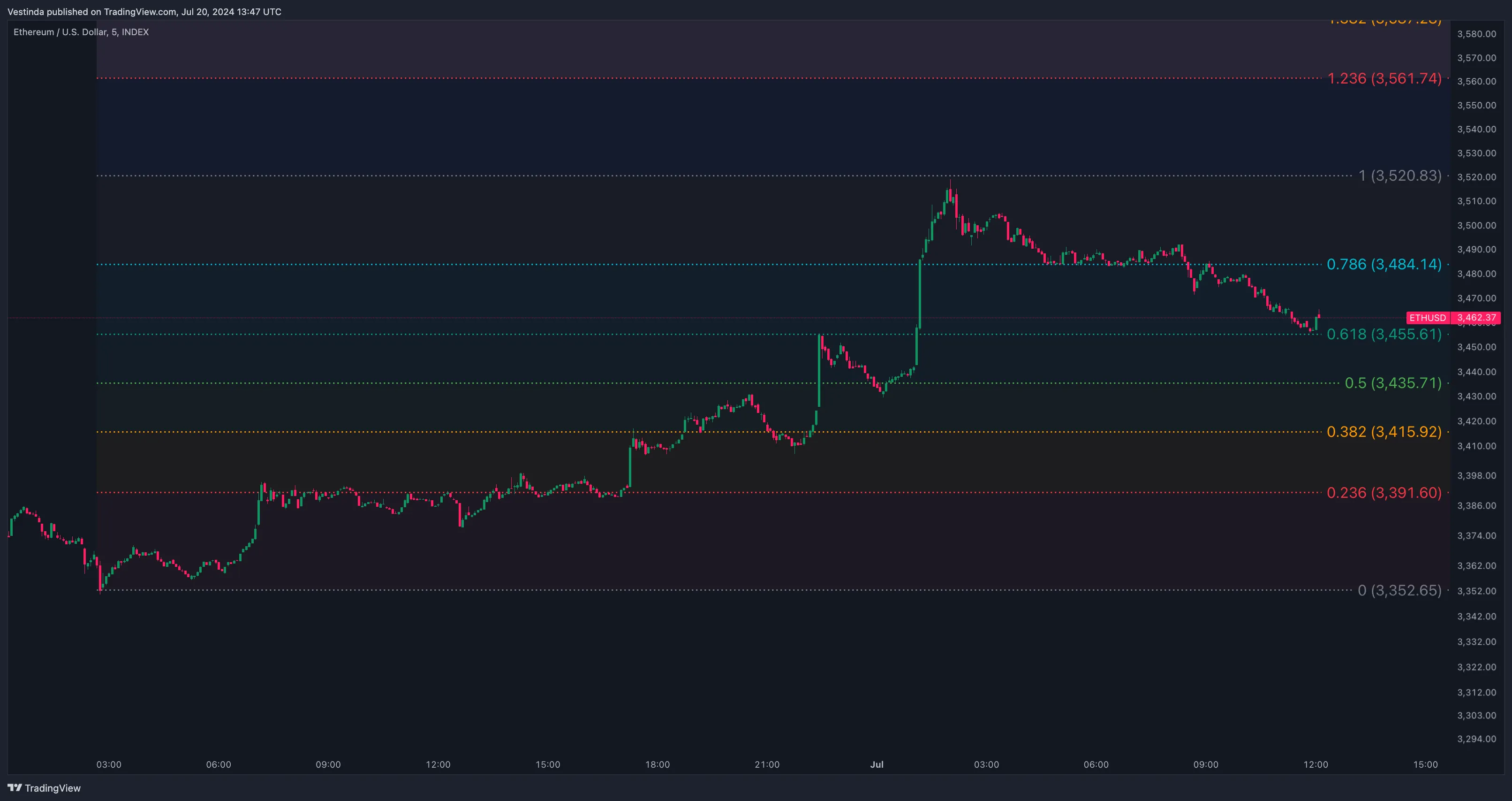
Support and Resistance Levels
Support and resistance levels are critical in scalping, as they represent key areas where the price is likely to reverse or consolidate. Support levels act as a floor for the price, preventing it from falling further, while resistance levels act as a ceiling, preventing the price from rising.

How to Identify Support and Resistance Levels
- Historical Price Data: Look for areas where the price has previously reversed or consolidated. These historical levels often act as future support and resistance.
- Psychological Levels: Round numbers (e.g., $1,800, $1,900) often act as psychological support or resistance levels.
- Volume Analysis: High trading volumes at certain price levels can indicate strong support or resistance.
Multiple Timeframe Analysis
Multiple timeframe analysis involves examining Ethereum's price action across different timeframes to gain a comprehensive view of the market. This approach helps traders align their scalping strategy with the overall market trend.
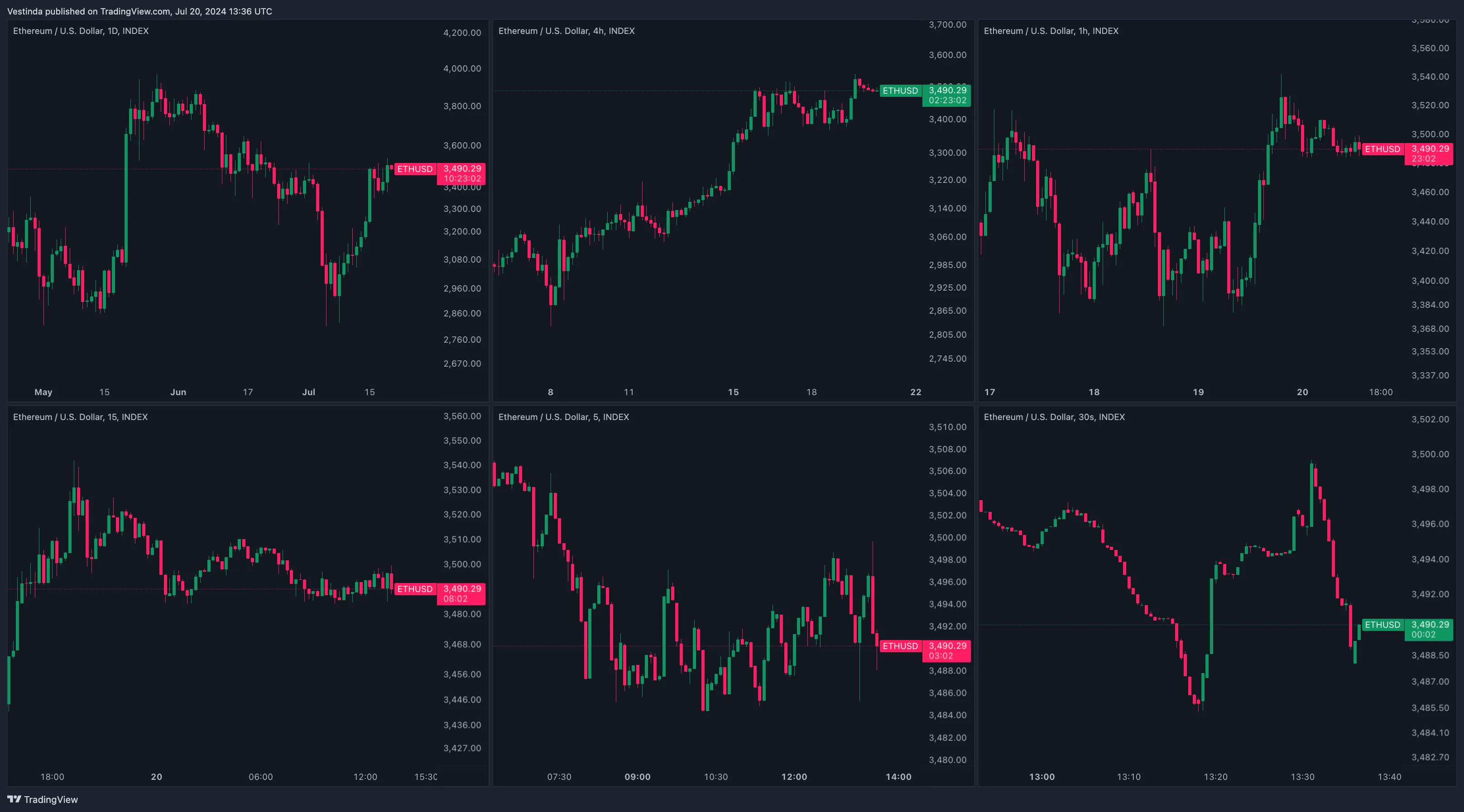
How to Perform Multiple Timeframe Analysis
- Higher Timeframe Analysis: Start with a higher timeframe (e.g., 4-hour or daily chart) to identify the overall trend and key support and resistance levels.
- Intermediate Timeframe Analysis: Move to an intermediate timeframe (e.g., 1-hour chart) to refine the trend analysis and identify potential entry and exit points.
- Lower Timeframe Analysis: Finally, use a lower timeframe (e.g., 5-minute or 15-minute chart) for precise entry and exit points based on the higher timeframe analysis.
Combining Fibonacci, Support/Resistance, and Multiple Timeframe Analysis
By combining these tools, traders can develop a robust scalping strategy for Ethereum:
- Identify the Trend: Use multiple timeframe analysis to determine the overall trend.
- Plot Fibonacci Levels: On a lower timeframe, plot Fibonacci retracement levels within the context of the identified trend.
- Identify Support and Resistance: Look for key support and resistance levels that align with the Fibonacci levels.
- Enter Trades: Enter trades at points where Fibonacci levels, support/resistance levels, and the overall trend align.
- Manage Risk: Set stop-loss orders just below support levels in an uptrend or just above resistance levels in a downtrend to manage risk.
How to Open a Trading Account and Deposit Funds for Ethereum Scalping?
Step 1: Choose and Create an Account on a Reputable Exchange
- Select an Exchange: Choose a reputable platform like Binance, Coinbase Pro, Bybit, or Kraken.
- Sign Up: Register by providing your email and creating a strong password. Verify your email through the link sent to you.
- Complete KYC: Upload a valid ID and proof of address to complete the Know Your Customer process.
Step 2: Secure Your Account
- Enable 2FA: Activate Two-Factor Authentication using an app like Google Authenticator or Authy.
- Set Up Security Questions: Some platforms may require additional security questions for extra protection.
Step 3: Deposit Funds
- Log In: Access your trading account.
- Deposit Funds: Go to the “Deposit” section, select the currency (cryptocurrency or fiat), and follow the instructions to deposit funds.
- For cryptocurrency, transfer from an external wallet to the provided address.
- For fiat currency, use the chosen payment method (e.g., bank transfer, credit card).
Step 4: Transfer Funds to Your Futures/Margin Account
- Navigate to Trading Account: Go to the futures or margin trading section of the platform.
- Transfer Funds: Move your deposited funds from the main account to the futures/margin account using the “Transfer” option and confirm the transaction.
With these steps completed, you're ready to start scalping Ethereum using the techniques discussed.
Weekend ETH Scalping: Weighing Advantages and Disadvantages
Scalping on weekends can be lucrative due to lower market activity and increased volatility. ETH is often paired with other digital currencies, making it an attractive option for weekend scalping. Pros of weekend scalping include potential for higher profit margins and the ability to take advantage of market inefficiencies. Additionally, scalping can provide quick trading opportunities, allowing for faster capital turnover. However, there are cons to consider. Risk levels may be higher during weekends, as market liquidity is lower, increasing the chances of slippage or unexpected price movements. Moreover, traders may encounter limited asset availability or lower trading volumes, which could make executing profitable trades more challenging. It is essential for traders to carefully analyze market conditions and develop a solid strategy to mitigate risks before engaging in weekend scalping.
Tapping Ethereum's Price Patterns: Micro & Macro
Scalping micro and macro trends in ETH price movements can be a profitable trading strategy. By closely monitoring short-term price fluctuations and long-term market trends, traders can capitalize on quick price movements within a bigger picture. It requires meticulous analysis of technical indicators, such as support and resistance levels, moving averages, and volume patterns. Additionally, keeping an eye on macroeconomic factors, such as regulatory changes, technological advancements, and investor sentiment, can help identify potential catalysts for price movements. Successful scalpers execute trades swiftly, aiming to profit from small price differentials multiple times throughout the day. However, it is worth noting the inherent volatility in the cryptocurrency market, requiring traders to exercise caution and implement risk management strategies. Overall, scalping micro and macro trends in ETH price movements demands keen observation and instant decision-making abilities for consistent profits.
Renko Chart Strategy for ETH Scalping
Scalping with Renko charts in ETH trading can be an effective strategy. Renko charts help identify trends by filtering out market noise and focusing on price movements. This simplifies the analysis process and allows traders to make quick decisions. With this approach, traders can take advantage of short-term price swings in ETH. By monitoring key support and resistance levels, traders can enter and exit positions at optimal times. Renko charts are particularly useful for scalping as they highlight trend reversals and provide clear entry and exit signals. However, it's important to stay vigilant and adjust strategies accordingly, as the cryptocurrency market can be volatile. Overall, using Renko charts can enhance the efficiency and accuracy of scalping in ETH trading.
Optimizing Oscillators for ETH Scalping.
Oscillators are powerful tools in ETH scalping, aiding traders in identifying overbought and oversold conditions. These indicators measure the price momentum and provide valuable insights into market trends. By analyzing oscillators like the Relative Strength Index (RSI) and Stochastic Oscillator, traders can pinpoint potential entry and exit points. They help in determining when an asset is likely to reverse its direction, guiding scalpers to make profitable trades. However, it's important to combine oscillators with other technical analysis tools, such as moving averages, to avoid false signals. Traders must also be mindful of market volatility and adapt their strategy accordingly. Oscillators serve as a valuable aid in ETH scalping, enabling traders to make swift and accurate trading decisions.
Sophisticated backtesting is not only possession of high-esteemed hedge funds anymore.
Impressive Team and support, Backtesting engine with detailed reports, The Strategy builder.

Great purchase!
I have always manually invested in stocks and cryptocurrencies, but after studying Vestinda, I must say it has enormous potential.

Mature platform for trading
Pro: Easy to use, Nice UX, A lot of customization for strategies, Back testing is an awesome tool, can check any strategy in history.

Frequently Asked Questions
There isn't a single scalping strategy that can be deemed as the most successful as it highly depends on market conditions, individual trading style, and risk tolerance. However, some popular scalping techniques include using tight stop losses, trading during high-volume periods, focusing on liquid markets, utilizing technical indicators like moving averages or stochastic oscillators, and combining multiple time frames for confirmation. Ultimately, it's crucial for scalpers to continuously adapt their strategy, stay disciplined, and manage risk effectively to achieve consistent success in this fast-paced trading approach.
No, a scalper is not necessarily a day trader. While both engage in short-term trading, there is a key distinction between the two. A scalper aims to make multiple small profits within minutes, profiting from small price fluctuations. On the other hand, a day trader may hold positions for hours, benefiting from broader intraday trends. While there may be some overlap in their strategies, not all scalpers can be considered day traders, as the time horizon and profit targets differ.
Yes, there are several rich traders in the world. Successful individuals such as George Soros, Warren Buffett, and Ray Dalio have accumulated vast wealth through their trading activities. These traders have demonstrated exceptional skills in analyzing and predicting market trends, enabling them to make profitable investments. However, it is important to note that trading involves significant risks, and not all traders achieve such incredible wealth. Successful trading requires a combination of expertise, experience, and a disciplined approach. So while there are rich traders, it's important to recognize that trading is not a guaranteed path to riches for everyone.
When scalping ETH, it is crucial to focus on short-term price movements and high liquidity. Implementing a combination of technical analysis indicators, such as moving averages and oscillators, can help identify optimal entry and exit points. Additionally, closely monitoring market news, trends, and order book depth can provide valuable insights for quick profit-taking opportunities. Traders should also consider setting tight stop-loss orders to manage risk effectively. Overall, a disciplined approach, adaptability to changing market conditions, and swift execution are vital for successful scalping of ETH.
Conclusion
In conclusion, ETH scalping is a popular trading strategy in the cryptocurrency market. By leveraging advanced algorithms, automation, and AI, traders aim to capitalize on short-term price fluctuations in the ETH market. Weekend scalping can be particularly lucrative, but it also comes with higher risks due to lower liquidity and limited asset availability. Scalping micro and macro trends in ETH price movements requires careful analysis of technical indicators and market factors. Renko charts and oscillators are useful tools in ETH scalping, helping traders identify trends, entry and exit points, and overbought or oversold conditions. However, it is crucial to exercise caution and implement risk management strategies due to the inherent volatility of cryptocurrencies.

Successful traders rely on backtesting to be profitable.
Be like them with our
Free Backtesting Guide