-
 Create
account -
 Build trading strategies
with no code -
 Validate
& Backtest -
 Automate
& start earning
Algorithmic Strategies & Backtesting results for AMD
Here are some AMD trading strategies along with their past performance. You can validate these strategies (and many more) for free on Vestinda across thousands of assets and many years of historical data.
Algorithmic Trading Strategy: Percentage Price Oscillations with KAMA and Shadows on AMD
The backtesting results for a trading strategy over the period from November 2, 2022, to November 2, 2023, showcase a profit factor of 1.08. This indicates a positive outcome, implying that gains slightly outweigh losses in the selected period. The annualized return on investment (ROI) stands at 4.01%, demonstrating a modest but steady growth over the analyzed timeframe. The average holding time for trades is approximately 6 days, suggesting a preference for longer-term positions. With an average of 0.4 trades per week, the frequency of trading is relatively low. Throughout the trading period, 21 trades were closed, resulting in a 33.33% win rate. Overall, these statistics illustrate a restrained yet profitable trading strategy.
 AMD
AMD

Choose another period and try again.
AMD (Advanced Micro Devices) Day Trading: Strategies and Tips for Success
Introduction
Advanced Micro Devices (AMD) is a leading semiconductor company that has become a favorite among day traders due to its high volatility and significant trading volume. With frequent price swings driven by both industry trends and broader market sentiment, AMD offers numerous opportunities for day traders to capitalize on short-term movements. In this guide, we’ll explore effective day trading strategies and tips specifically for AMD, helping you maximize your trading performance and achieve consistent success.
Why Day Trade AMD?
- High Volatility: AMD is known for its sharp price movements, often driven by earnings reports, industry developments, and broader market trends, providing ample opportunities for day traders.
- Liquidity: AMD’s large trading volume ensures tight bid-ask spreads and quick order execution, which are crucial for successful day trading.
- Market Sentiment: As a leading player in the semiconductor industry, AMD’s stock price is often influenced by market sentiment, making it responsive to news and events, which traders can exploit.
Key Day Trading Strategies for AMD
Breakout Trading
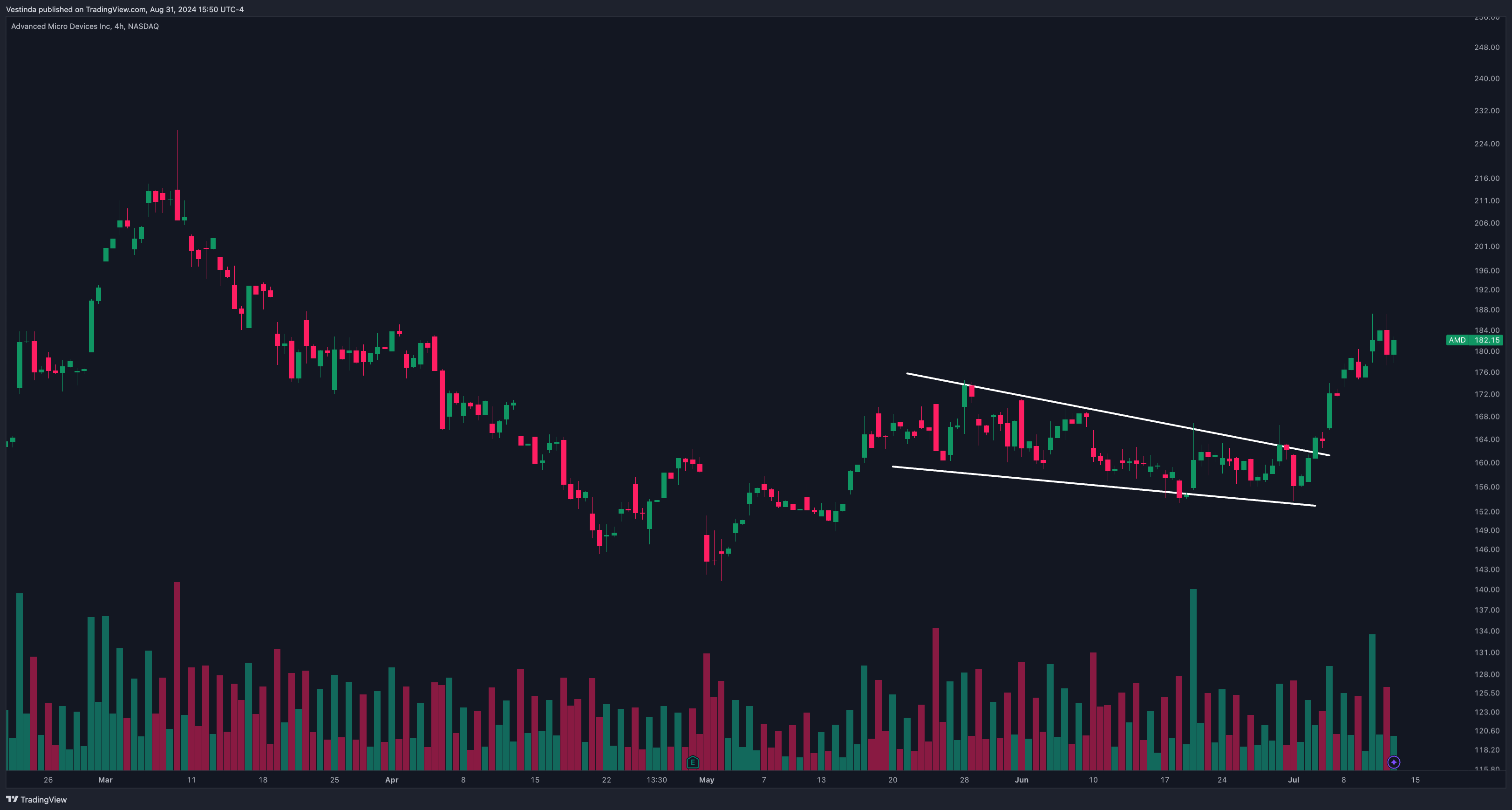
Concept: Identify key levels of support and resistance and trade the breakout when the price moves beyond these levels.
How to Implement:
- Chart Patterns: Focus on patterns like triangles, rectangles, and flags that signal potential breakouts.
- Volume Confirmation: Use volume as a confirming indicator; a breakout with strong volume suggests the move is likely to continue.
- Entry and Exit: Enter the trade when the price breaks out of the pattern, and set a stop-loss just below the breakout level. Exit the trade when the price reaches the next significant resistance or support level.
Momentum Trading
Concept: Trade based on the momentum of price movements, looking to capitalize on quick, strong moves in one direction.
How to Implement:
- Indicators: Use indicators like the Relative Strength Index (RSI) and Moving Average Convergence Divergence (MACD) to gauge momentum.
- Entry and Exit: Enter trades when momentum indicators confirm a strong move in one direction. Exit the trade as momentum begins to fade or when the price approaches a key support or resistance level.
Scalping
Concept: Focus on making numerous small trades throughout the trading day to capture minor price fluctuations.
How to Implement:
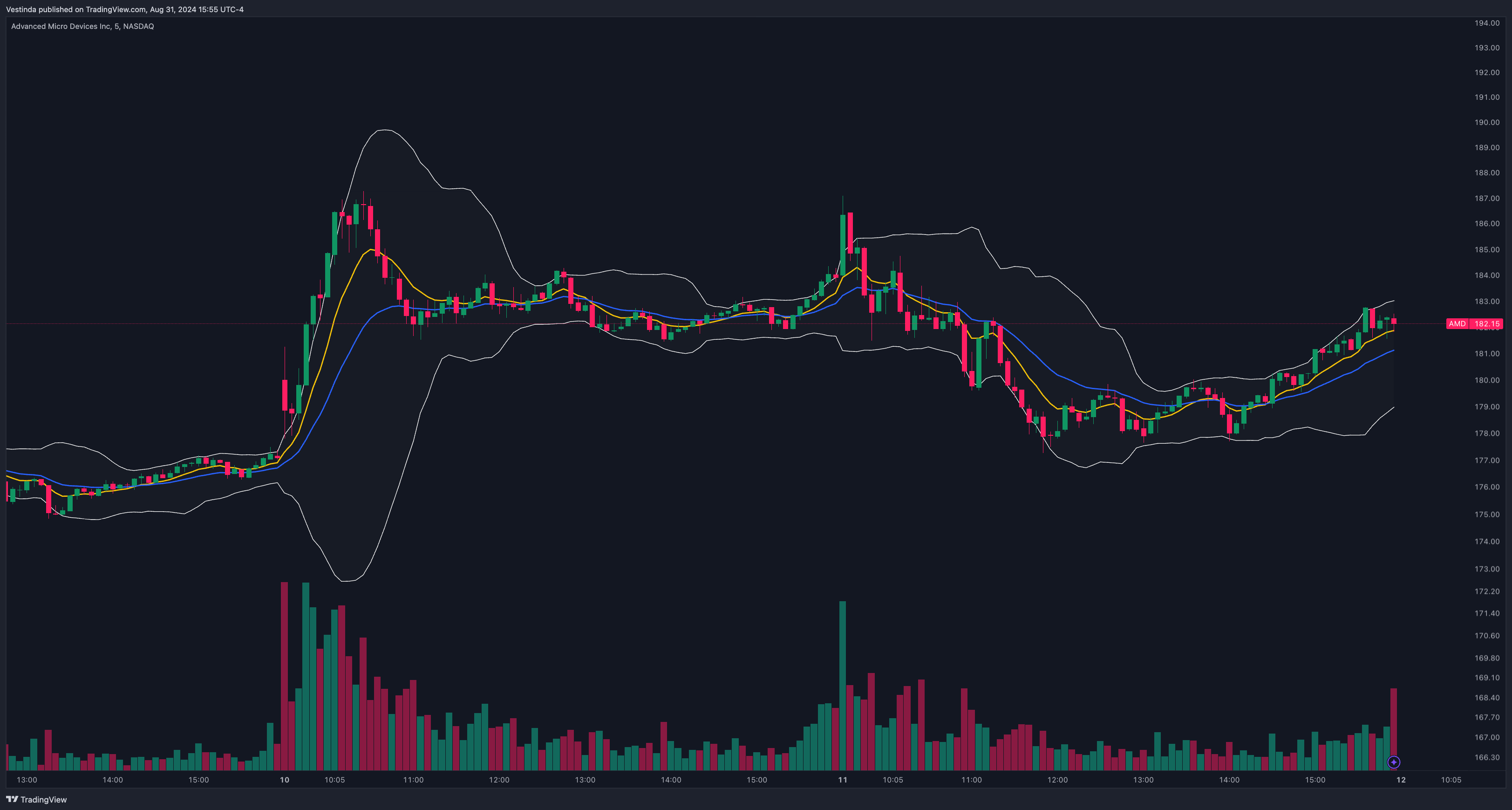
- Timeframes: Use 1-minute or 5-minute charts to identify quick entry and exit points.
- Indicators: Use a combination of moving averages (e.g., 9-period EMA and 21-period EMA) and Bollinger Bands to guide your scalping decisions.
VWAP Trading
Concept: The Volume Weighted Average Price (VWAP) is a key indicator for day traders, showing the average price of a security weighted by volume, which helps in identifying the true average price over the trading day.
How to Implement:
- Indicator: Apply VWAP to a 1-minute or 5-minute chart.
- Entry and Exit: Buy AMD when the price crosses above the VWAP from below, and sell when it crosses below the VWAP from above. This strategy is particularly effective in trending markets.
Tools and Indicators for Successful AMD Day Trading
Moving Averages
Why: Moving averages smooth out price data, helping you identify trends and potential entry/exit points.
How to Use: Apply short-term moving averages (e.g., 9-period and 21-period EMAs) to identify trends on intraday charts. Use crossovers as signals for entering and exiting trades.
Bollinger Bands
Why: Bollinger Bands help identify overbought and oversold conditions, providing entry points during periods of high volatility.
How to Use: Enter trades when the price touches the lower band in an uptrend or the upper band in a downtrend. Exit when the price moves back toward the middle band.
RSI (Relative Strength Index)
Why: RSI measures the magnitude of recent price changes to evaluate overbought or oversold conditions.
How to Use: Look for RSI levels below 30 (oversold) for potential buying opportunities, and above 70 (overbought) for potential selling opportunities.

Risk Management for AMD Day Trading
Position Sizing
Concept: Determine the size of each trade based on your overall risk tolerance and the distance to your stop-loss level.
How to Implement: Use a percentage of your trading capital (e.g., 1-2%) for each trade, ensuring that losses are kept within manageable limits.
Stop-Loss Orders
Concept: Use stop-loss orders to protect your capital and limit potential losses.
How to Implement: Set stop-loss levels below key support levels (for long positions) or above resistance levels (for short positions) to automatically exit trades that move against you.
Take-Profit Orders
Concept: Set take-profit levels to lock in gains when the price reaches a predetermined target.
How to Implement: Place take-profit orders at significant resistance levels in an uptrend or support levels in a downtrend to secure profits before the price reverses.
Tips for Successful AMD Day Trading
Focus on Key Market Hours
Why: The first and last hours of the trading day often provide the most liquidity and volatility, offering the best opportunities for day traders.
How to Implement: Concentrate your trading efforts during these peak hours to capture the most significant price movements.
Stay Informed
Why: AMD’s price can be significantly impacted by news related to the semiconductor industry, earnings reports, and broader market trends. Staying informed allows you to anticipate market moves.
How to Implement: Monitor news sources, earnings reports, and industry trends that may affect AMD’s stock price.
Avoid Overtrading
Why: Overtrading can lead to poor decision-making and increased transaction costs, which can erode profits.
How to Implement: Set a daily trade limit and stick to it, focusing on quality trades over quantity.
Tax Implications of AMD Day Trading
Day trading can be an exciting venture, but it's important to understand the tax implications. When selling stocks within a day, it's considered a short-term capital gain. These gains are subject to taxation at your ordinary income tax rate. However, the IRS allows traders to claim certain deductions, such as expenses related to your trading activity. Keeping accurate records of your trades is essential to ensure you report the correct information. Additionally, it's worth noting that the wash-sale rule applies to day trading as well. This means you cannot deduct losses from the sale of a stock if you purchase a substantially identical stock within 30 days before or after the sale. It's crucial to consult with a tax professional to navigate the complex world of day trading taxes and ensure compliance with the regulations.
Mastering Day Trading: Essential Starting Guidelines
Day trading can be a lucrative endeavor for those who are willing to put in the time and effort to learn the ropes. To start day trading, you will need to first educate yourself on the basics of the stock market and trading strategies. It's important to choose a reliable online broker that offers low fees and a user-friendly platform. Research and analyze stocks before making any trades, and consider starting with a small amount of capital to minimize risk. Develop a solid trading plan that outlines your goals and risk management strategies. Keep up with market news and trends, and be prepared for the emotional rollercoaster that comes with day trading. Remember, success in day trading takes time and practice, so persevere and be patient with the learning process.
Unmasking Advanced Micro Devices (AMD)
AMD, short for Advanced Micro Devices, is a multinational semiconductor company headquartered in Santa Clara, California. Founded in 1969, AMD designs and manufactures computer processors, motherboards, and graphics cards. With a focus on providing high-performance and energy-efficient products, AMD has become a significant player in the tech industry. The company's processors, known as AMD Ryzen CPUs, offer competitive performance for both gaming and professional applications. AMD's graphics cards, such as the Radeon series, are popular among gamers for their excellent performance and value. In recent years, AMD has released groundbreaking products, like the Ryzen Threadripper CPUs and the Radeon RX 6000 series graphics cards, which have received widespread acclaim from both critics and consumers alike. As a key competitor to Intel and NVIDIA, AMD continues to innovate and bring exciting technologies to the market.
AMD Day Trading: Optimal Strategies for Success
When day trading AMD, it is important to have a well-defined strategy in place to maximize profits and minimize risks. One effective strategy is to closely monitor technical indicators such as moving averages, volume, and relative strength index (RSI) to identify potential entry and exit points. Additionally, staying updated with news and announcements related to AMD can provide valuable insights into the company's performance and market trends. Traders should also pay attention to overall market conditions and industry trends, as they can significantly impact AMD's stock price. Managing risk is crucial, so setting stop-loss orders and adhering to them is a wise approach. Furthermore, it is essential not to let emotions dictate trading decisions and to have a clear plan in mind before entering any trade. Successful day trading of AMD requires discipline, attentiveness, and adaptability to changing market conditions.
Sophisticated backtesting is not only possession of high-esteemed hedge funds anymore.
Impressive Team and support, Backtesting engine with detailed reports, The Strategy builder.

Great purchase!
I have always manually invested in stocks and cryptocurrencies, but after studying Vestinda, I must say it has enormous potential.

Mature platform for trading
Pro: Easy to use, Nice UX, A lot of customization for strategies, Back testing is an awesome tool, can check any strategy in history.

Frequently Asked Questions
The number of times you can trade AMD in a day primarily depends on your trading platform and account type. As a general guideline, most retail investors with a standard brokerage account are subject to the pattern day trading rule, which limits them to a maximum of 3 day trades within a rolling 5 trading day period. However, if you have a margin account or qualify as a "pattern day trader," you may be able to make unlimited day trades. It's crucial to consult your broker or read their policies to determine the specific regulations that apply to you and your account.
No, you do not necessarily need $25,000 to day trade AMD. The pattern day trading (PDT) rule in the United States requires traders to maintain a minimum account balance of $25,000 if they execute more than three day trades within a five-day trading period. However, if you have a smaller account balance, you can still day trade AMD or any other stock as long as you limit your trades to three within that period. It's important to be aware of and adhere to the regulations imposed by your country's financial authorities when engaging in day trading.
Traders make millions by using various strategies and techniques in the financial markets. They analyze market trends, economic indicators, and company data to identify profitable opportunities. Successful traders have strong risk management skills to minimize potential losses and maximize gains. They may engage in day trading, where they buy and sell securities within a single day, or invest in long-term positions. Traders also utilize leverage and derivatives to magnify their returns. It requires extensive knowledge and experience to accurately predict market movements and execute trades effectively, leading to the potential for substantial profits.
Yes, it is possible to make $100 a day with stocks, but it largely depends on various factors such as the amount of capital you are willing to risk, your trading strategy, market conditions, and the level of expertise you have in stock trading. Making consistent profits in stock trading requires careful analysis, risk management, and a disciplined approach. It is essential to note that while some traders can achieve this goal, others may not. It is advised to thoroughly research and educate oneself before venturing into stock trading to increase the chances of success.
$1000 might not be enough to day trade effectively. Day trading requires sufficient capital to cover potential losses and maintain a diverse portfolio. With only $1000, it's difficult to manage risk and properly diversify investments. Commissions and fees can also eat into this small amount quickly. It's advisable to have a larger amount of capital, ideally $25,000 or more, to meet minimum requirements for day trading and mitigate risks.
It is extremely difficult to consistently live off day trading due to the inherent risks involved. Day trading involves making frequent and rapid trades in the financial markets, aiming to profit from small price fluctuations. However, the majority of day traders end up losing money due to factors such as emotional decision-making, lack of proper risk management, and the unpredictability of the markets. Furthermore, day trading requires significant time, research, and skill, making it unsustainable for most individuals as a sole source of income. It is advisable to approach day trading as a supplementary source of income rather than relying solely on it to meet financial needs.
Conclusion
In conclusion, day trading AMD stocks can be an exciting and potentially lucrative venture for traders of all experience levels. By studying market trends, utilizing technical analysis tools, and practicing with paper trading simulations, traders can develop effective strategies for capitalizing on AMD day trading signals. It is important to consider factors such as intraday chart patterns, volatility, and the use of day trading software and tools. Traders should also be mindful of the psychological aspects of day trading, as well as the potential benefits of scalping techniques. With careful research, preparation, and adherence to a solid trading plan, traders can navigate the world of day trading AMD and seize the endless possibilities it offers.

Successful traders rely on backtesting to be profitable.
Be like them with our
Free Backtesting Guide