

Article summary
Introduction
Cryptocurrency, while being one of the most revolutionary and lucrative investments of the last decade, has also been marred by security vulnerabilities. Some of the largest cryptocurrency hacks have exposed significant flaws in blockchain ecosystems, leading to billions of dollars in losses and shaking investor confidence. Understanding these hacks provides valuable lessons for investors and developers alike, emphasizing the need for robust security measures in this fast-evolving space.
This article delves into the history of the largest cryptocurrency hacks, explores how they occurred, and provides insights into protecting digital assets in an increasingly risky landscape.
The Largest Cryptocurrency Hacks
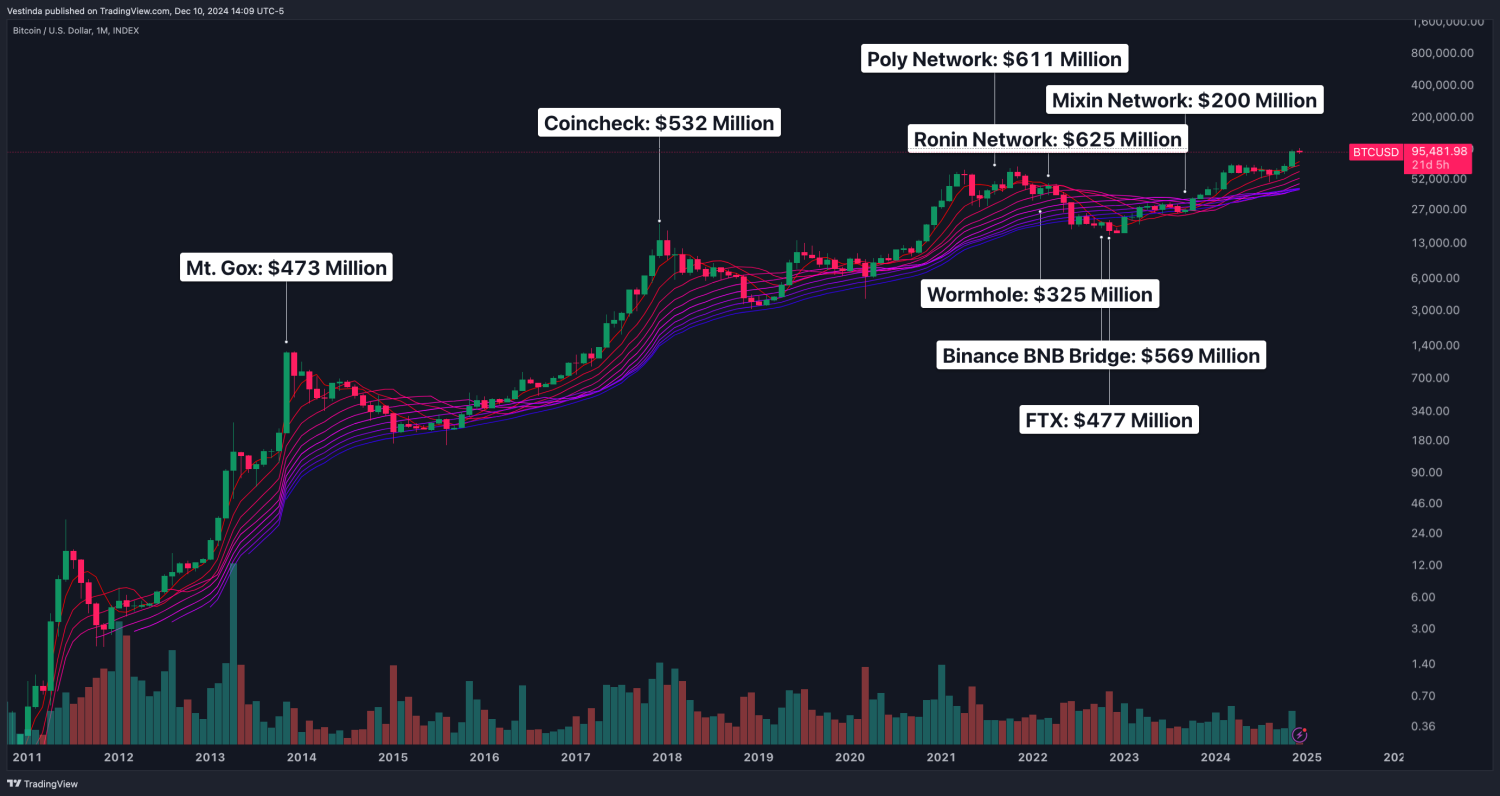
 1. Ronin Network: $625 Million (March 2022)
The largest crypto hack to date targeted the Ronin Network, which supports the Axie Infinity blockchain gaming platform. Hackers exploited vulnerabilities in the network’s infrastructure. As a result, they stole $625 million worth of Ether and USDC. The Lazarus Group, a North Korean state-backed hacking collective, was linked to the theft.
2. Poly Network: $611 Million (August 2021)
A hacker exploited a smart contract vulnerability in the Poly Network, stealing over $600 million. Surprisingly, the hacker returned most of the stolen funds, claiming the hack was conducted “for fun” or as a challenge.
3. Binance BNB Bridge: $569 Million (October 2022)
Hackers exploited a flaw in Binance’s BSC Token Hub, creating and withdrawing 2 million Binance Coins (BNB). Moreover, the incident highlighted the vulnerabilities of cross-chain bridges and smart contracts
4. Coincheck: $532 Million (January 2018)
Coincheck’s hot wallet was compromised, leading to the theft of $532 million worth of NEM coins. This hack underscored the risks of storing large amounts of cryptocurrency in online wallets rather than secure offline storage.
Start earning 60% a year with automated trading Free Sign Up5. FTX: $477 Million (November 2022)
FTX, once a leading crypto exchange, was hacked on the same day it filed for bankruptcy. $477 million was siphoned from user wallets, further exacerbating the fallout from the platform’s collapse.
6. Mt. Gox: $473 Million (2011-2014)
In addition, Mt. Gox, a pioneer crypto exchange, suffered multiple attacks, losing 650,000 bitcoins between 2011 and 2014. At its peak, Mt. Gox processed 70% of all Bitcoin transactions. Its downfall highlighted the critical need for stringent exchange security measures.
7. Wormhole: $325 Million (February 2022)
The Wormhole bridge, which connects Solana to other blockchains, was breached due to a GitHub vulnerability. Hackers drained $325 million, emphasizing the risks associated with decentralized finance (DeFi) platforms.
8. Mixin Network: $200 Million (September 2023)
Mixin Network’s cloud service provider was hacked, resulting in the theft of $200 million worth of assets. This incident showcased how external dependencies can compromise blockchain networks.
Key Lessons from Largest Cryptocurrency Hacks
- The Importance of Cold Storage
Hot wallets, while convenient, are prone to hacking. Therefore, using cold storage can significantly reduce risks for long-term holders. - Smart Contract Vulnerabilities
Many hacks, including those on Poly Network and Binance’s BNB Bridge, exploited flaws in smart contract code. Similarly, regular audits and rigorous testing are essential for securing blockchain projects - Centralized vs. Decentralized Systems
While decentralized platforms provide autonomy, they often lack the security infrastructure of centralized systems. Balancing these approaches is key to mitigating risks. - Investor Awareness
Users should be cautious of platforms with poor security track records and ensure they diversify their holdings across multiple platforms and wallets.
Closing Thoughts
Cryptocurrency remains a promising but volatile asset class. As the industry grows, so too do the risks of hacks and theft. Developers, exchanges, and investors must prioritize security to protect assets and rebuild trust in the market. Lessons from these major hacks underscore the importance of robust protocols, regular audits, and personal vigilance.

With over seven years of experience in trading since 2017, I specialize in cryptocurrency markets while sharing insights through engaging content. Proud to rank among the top 100 most popular analysts on TradingView of all time, I bring a blend of expertise, passion, and actionable strategies to the trading community.