
Dive into the world of digital currencies. Discover cryptocurrencies, their volatile markets, innovative uses, and the underlying blockchain technology driving this financial revolution.

Have you ever wondered how prices for assets are determined in finance? Enter the fascinating world of price discovery—a process that lies at the heart of every financial market. Price discovery is the mechanism through which supply and demand forces interact to establish the equilibrium price for an asset. In this comprehensive guide, we’ll delve into the intricacies of price discovery and explore how it functions across various markets. From understanding the factors influencing price movements to dissecting the role of market participants, this article will unravel the mysteries of price discovery and shed light on its significance in shaping market dynamics. Let’s embark on a journey to uncover the inner workings of price discovery and its profound impact on the financial landscape.

What is price discovery?

Price discovery is the process through which the equilibrium price for an asset is determined in the market. It involves the interaction of supply and demand forces, where buyers and sellers negotiate to establish the prevailing market price. Price discovery occurs across various financial markets, including stocks, bonds, commodities, and cryptocurrencies, and plays a pivotal role in shaping market dynamics. Factors such as market sentiment, economic data, news events, and investor behavior influence the price discovery process. Market participants, including individual traders, institutional investors, and market makers, contribute to price discovery through their buying and selling activities. Overall, price discovery serves as a mechanism for markets to efficiently allocate resources and reflect the collective assessment of asset values by market participants.

How does price discovery work?

Price discovery is a fundamental process that lies at the core of every financial market, driving the determination of asset prices. It functions through the dynamic interplay of supply and demand forces, where buyers and sellers interact to establish the equilibrium price for an asset. Several key components contribute to the workings of price discovery:

  1. Market Participants: Price discovery involves a diverse array of market participants, including individual investors, institutional traders, market makers, and arbitrageurs. Each participant brings their own perspectives, preferences, and information to the market, influencing buying and selling decisions.
  2. Order Flow: The continuous flow of buy and sell orders from market participants forms the backbone of price discovery. Market orders, limit orders, and stop orders contribute to the depth and liquidity of the market, facilitating price movements.
  3. Market Clearing: Through the matching of buy and sell orders, markets reach a state of equilibrium where supply equals demand. This equilibrium price, known as the market-clearing price, reflects the collective assessment of asset value by market participants at any given moment.
  4. Information and News: Price discovery is heavily influenced by information flow and news events. Economic data releases, corporate earnings reports, geopolitical developments, and central bank announcements can all impact market sentiment and drive price movements.
  5. Arbitrage and Efficiency: Arbitrageurs play a crucial role in price discovery by exploiting price discrepancies between different markets or asset classes. Their actions help ensure market efficiency and contribute to the convergence of prices across markets.

Overall, price discovery is a dynamic and ongoing process that adapts to changing market conditions and new information. It serves as the mechanism through which markets efficiently allocate resources and reflect the collective wisdom of market participants regarding asset values.
What is future price discovery?

Future price discovery refers to the process of determining the expected future price of an asset, typically through the trading of futures contracts. Futures contracts are derivative financial instruments that obligate the buyer to purchase (or the seller to sell) a specified asset at a predetermined price on a future date. Market participants’ expectations of future supply and demand dynamics determines futures price as well as factors such as interest rates, dividends, and carrying costs.

Future price discovery involves the aggregation of information, expectations, and sentiments of market participants about the future performance of the underlying asset. It provides valuable insights into market sentiment and expectations regarding future asset prices, allowing investors and traders to hedge against price fluctuations and speculate on future price movements.

Market participants use various tools and techniques to analyze and interpret future price discovery, including technical analysis, fundamental analysis, and sentiment analysis. Additionally, market liquidity, trading volumes, and open interest in futures contracts play crucial roles in facilitating efficient future price discovery.

Future price discovery is essential for investors, traders, and market participants to make informed decisions and manage risk effectively in financial markets.

What is the difference between price discovery and price determination?

Price discovery and price determination are both essential concepts in economics and finance, but they represent distinct processes in the determination of asset prices.

Price discovery refers to the mechanism through which the market determines the equilibrium price for an asset based on the interaction of supply and demand forces. It is a dynamic process that occurs continuously in financial markets as buyers and sellers negotiate and execute transactions. Price discovery involves the aggregation of information, expectations, and preferences of market participants, leading to the establishment of a market-clearing price. Factors such as order flow, market sentiment, news events, and investor behavior influence the price discovery process. Price discovery is inherently decentralized and occurs across various trading venues, including exchanges, over-the-counter markets, and electronic trading platforms.

Price determination, on the other hand, refers to the broader process of setting prices for goods, services, or assets in the economy. While price discovery focuses specifically on asset prices in financial markets, price determination encompasses a wider range of factors and mechanisms that influence prices in different markets. Price determination includes both market-based mechanisms, such as supply and demand dynamics in competitive markets, as well as non-market factors, such as government regulations, subsidies, and interventions. In addition to financial markets, price determination occurs in various markets, including goods and services markets, labor markets, and real estate markets. Unlike price discovery, which is primarily driven by market forces, price determination may involve government policies, industry regulations, and other external factors that affect pricing decisions.

What does the price discovery measure?

Price discovery measures the process through which market participants determine the equilibrium price for an asset based on the interaction of supply and demand forces. It reflects the collective assessment of asset value by market participants at any given moment. Price discovery encompasses several key aspects:

  1. Market Sentiment: Price discovery gauges the prevailing sentiment of market participants, including their optimism or pessimism about the future prospects of an asset.
  2. Information Flow: It incorporates the impact of new information and news events on market prices, as market participants react to economic data releases, corporate earnings reports, geopolitical developments, and other relevant information.
  3. Supply and Demand Dynamics: Price discovery assesses the balance between supply and demand for an asset, determining the level at which buyers and sellers are willing to transact.
  4. Market Efficiency: It evaluates the efficiency of the market in incorporating available information into asset prices and ensuring that prices accurately reflect fundamental value.

Price discovery serves as a vital mechanism for markets to efficiently allocate resources and reflect the collective wisdom of market participants regarding asset values.
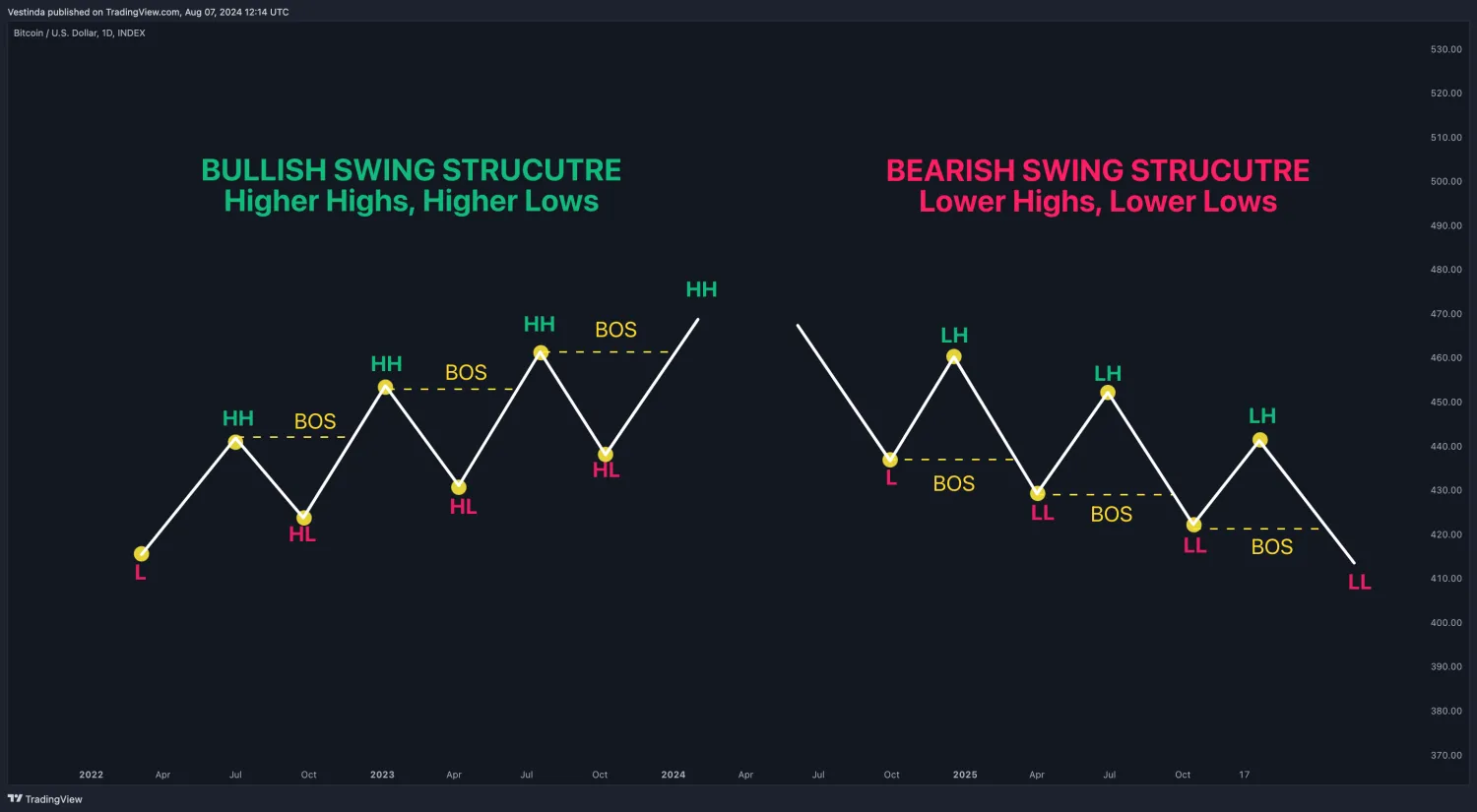
Have you ever wondered how traders identify key turning points in the market and capitalize on them for profit? One of the essential concepts in technical analysis that enables traders to do just that is the break of structure.

A break of structure occurs when the market price breaches a significant level of support or resistance, signaling a potential shift in market sentiment and trend direction. In this comprehensive guide, we’ll delve into the intricacies of break of structure trading, exploring its definition, significance, and practical applications.

From understanding the anatomy of a break of structure to mastering entry and exit strategies, this article will equip you with the knowledge and skills needed to trade breakouts successfully. Let’s embark on a journey to unlock the secrets of break of structure trading and harness its potential for profit.

What is a break of structure (BOS)?

A break of structure in trading refers to a significant movement in price that breaches a key level of support or resistance on a chart. This breach signifies a shift in market sentiment and often indicates the beginning of a new trend or the continuation of an existing one. In technical analysis, identifying breaks of structure is crucial for traders as they provide valuable insights into market dynamics and potential trading opportunities.

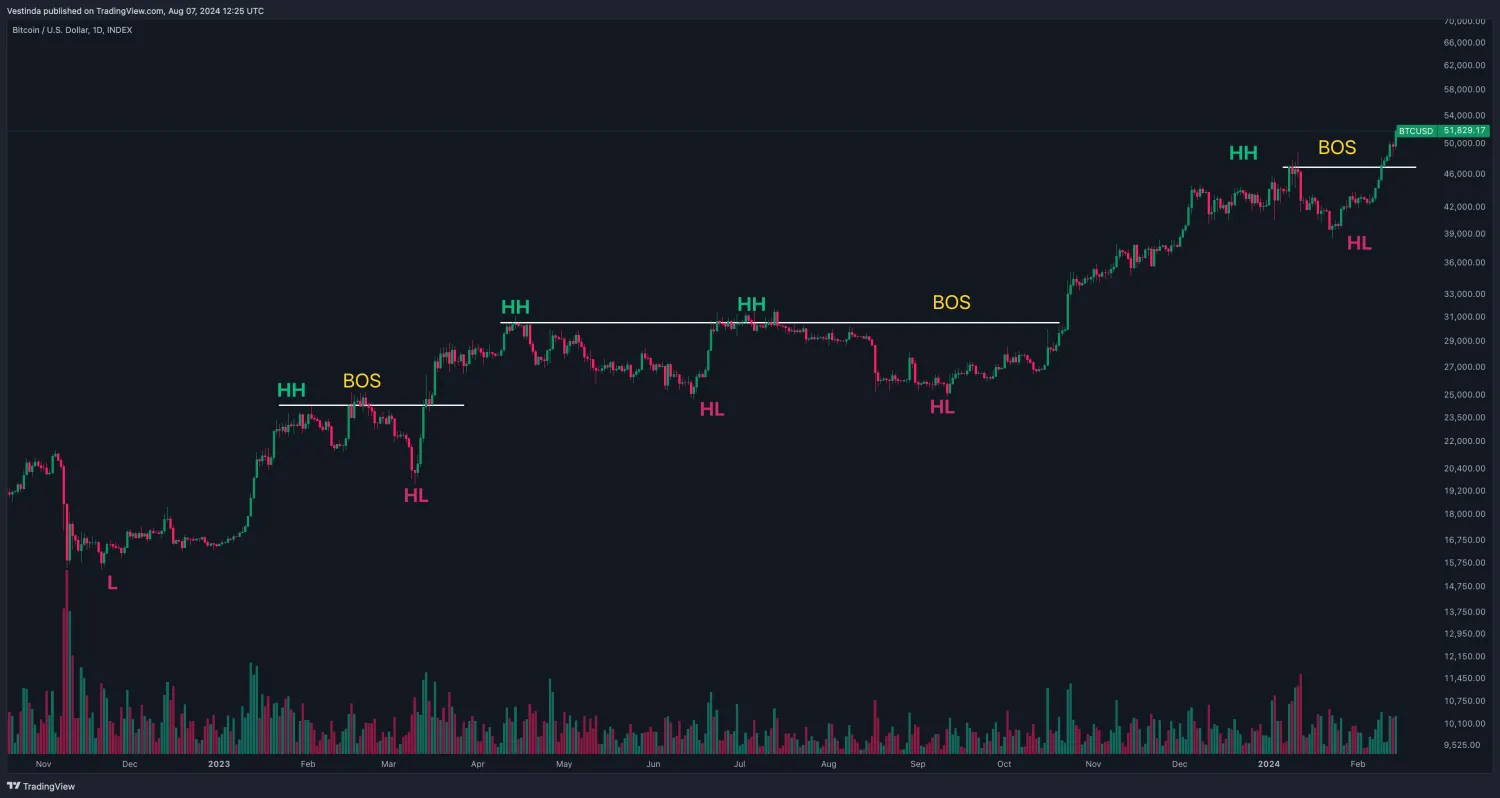
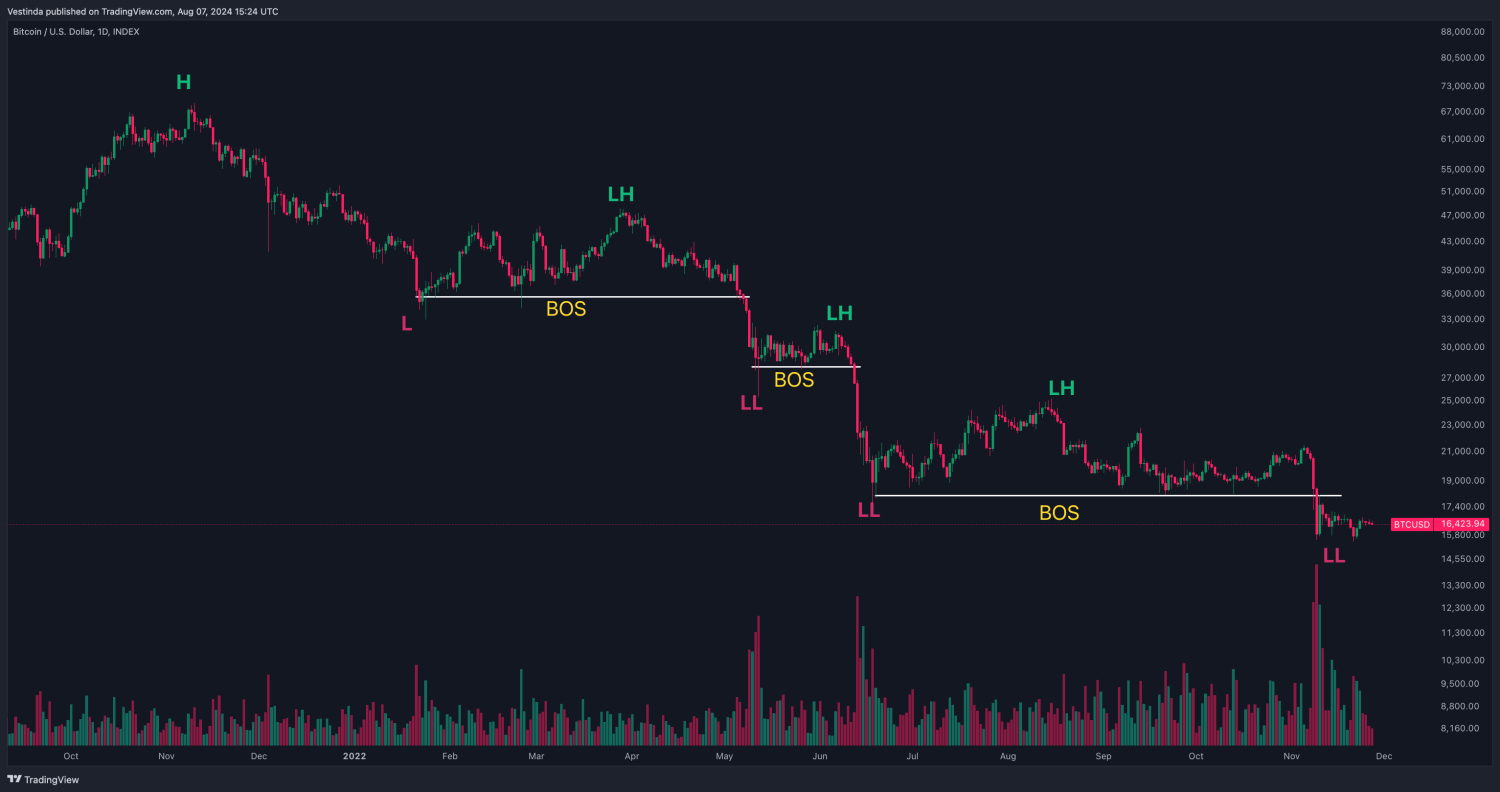
A break of structure typically occurs when the price surpasses a previous swing high or low, confirming a change in the balance of supply and demand. Traders use this information to enter positions in anticipation of further price movement in the direction of the breakout.

What is the break of structure entry?

The break of structure entry is a trading strategy that involves entering a trade when the price of an asset breaks through a significant level of support or resistance on a chart. Traders identify break of structure entry points as potential opportunities to capitalize on shifts in market sentiment and trend direction. When the price breaches a key level of support, it indicates that selling pressure has overwhelmed buying interest, potentially signaling a downtrend.

Conversely, a break above a resistance level suggests that buying pressure has overcome selling interest, potentially indicating an uptrend. Traders often use technical indicators, such as trendlines, moving averages, or chart patterns, to confirm break of structure entry signals and determine optimal entry points for their trades. This strategy allows traders to enter positions early in a new trend, maximizing profit potential while managing risk.

Examples

Bullish Break of Structure:

Scenario: The market is in an uptrend, and the price breaks above a resistance level.

Action: Traders may enter long positions upon confirmation of the breakout, ideally on a retest of the broken resistance, now acting as support.

Bearish Break of Structure:

Scenario: The market is in a downtrend, and the price breaks below a support level.

Action: Traders may enter short positions upon confirmation of the breakdown, ideally on a retest of the broken support, now acting as resistance.

How to identify a break of structure

Identifying a break of structure in trading requires a comprehensive approach that integrates multiple factors and considerations. Here’s an in-depth exploration of the steps involved:

  1. Identify Key Levels: Start by conducting thorough technical analysis to identify significant levels of support and resistance on the price chart. These levels are pivotal areas where historical price action has encountered obstacles or reversals. Traders often employ various tools and techniques, such as trendlines, Fibonacci retracements, pivot points, and moving averages, to pinpoint these critical levels accurately.
  2. Observe Price Action: Once key levels are identified, closely monitor price action as the market approaches these levels. Pay attention to the behavior of price movements, such as the speed, momentum, and intensity of price changes, as they interact with support or resistance zones. Look for signs of strength or weakness in the price action, such as bullish or bearish candlestick patterns, breakouts, or breakdowns.
  3. Volume Confirmation: In addition to analyzing price action, consider the accompanying trading volume during the breakout or breakdown. Significant increases in trading volume accompanying the price movement indicate heightened market participation and conviction behind the breakout. High trading volume acts as validation of the break of structure, confirming the likelihood of a genuine shift in market sentiment and trend direction.
  4. Retest: Following the initial breakout or breakdown, anticipate a potential retest of the broken level. A successful retest occurs when the price returns to the previous support or resistance level and validates it as a new level of support or resistance. Traders view a successful retest as a confirmation of the break of structure, providing an opportunity to enter positions with improved risk-reward ratios.
  5. Confirmation Signals: Utilize a diverse array of technical indicators and tools to validate the strength and reliability of the break of structure. These indicators may include trend-following indicators (e.g., moving averages), momentum oscillators (e.g., Relative Strength Index or RSI), volume-based indicators (e.g., On-Balance Volume or OBV), and chart patterns (e.g., flags, triangles, or head and shoulders patterns). Confirmation signals help traders assess the robustness of the break of structure and make well-informed decisions regarding entry or exit positions.

What is a change of character in trading (CHOCH)?

A change of character in trading (CHOCH) refers to a shift in market behavior or price action that indicates a transition from one market phase to another. This change is often characterized by a noticeable alteration in the way prices move, volume dynamics, or the behavior of market participants. Traders use CHOCH to identify potential turning points in the market, such as the end of a trend or the beginning of a new one. Recognizing CHOCH allows traders to adapt their strategies accordingly, whether it involves adjusting positions, entering new trades, or managing risk. Common indicators of CHOCH include significant shifts in volatility, the emergence of new patterns or chart formations, or changes in the balance between buying and selling pressure.

What is the difference between break of structure and change of character?

A “break of structure” in trading typically refers to a specific event where the price breaches a significant level of support or resistance on a chart. This breach often signifies a shift in market sentiment and can indicate the potential beginning or continuation of a trend. Traders actively look for break of structure points as potential entry or exit opportunities, depending on their trading strategy.

On the other hand, a “change of character” denotes a broader shift in market behavior or dynamics. It’s not necessarily tied to a single event like a break of structure but rather encompasses a series of changes over time. These changes could include alterations in trading volume, volatility, or the behavior of market participants. A change of character often signals a transition from one market phase to another, such as the end of a trend or the beginning of a new one. Traders monitor changes of character to adapt their strategies accordingly and capitalize on evolving market conditions.

Why is break of structure important?

The break of structure is crucial in trading because it provides valuable insights into shifts in market sentiment and trend direction. By identifying key levels of support and resistance and monitoring breakouts or breakdowns, traders can anticipate potential changes in market dynamics. A break of structure often signifies the beginning or continuation of a trend, allowing traders to enter positions in alignment with the prevailing market momentum.

Moreover, breakouts or breakdowns can offer high-probability trading opportunities with favorable risk-reward ratios. Additionally, successful validation of a break of structure through volume confirmation and retests enhances the reliability of trading signals, enabling traders to make well-informed decisions. Overall, understanding and effectively utilizing break of structure analysis can significantly enhance a trader’s ability to navigate the markets and capitalize on profitable trading opportunities.

How do I trade with Bos?

Trading with Bos (Break of Structure) involves identifying key support and resistance levels on a price chart. Look for a clear pattern where the price breaks below (in the case of a bearish Bos) or above (in the case of a bullish Bos) these levels, indicating a potential trend reversal or continuation.

Confirm the Bos with additional technical indicators like moving averages, trendlines, or momentum oscillators to validate the strength of the breakout. Enter the trade after the Bos is confirmed, placing stop-loss orders below support (for bullish Bos) or above resistance (for bearish Bos) to manage risk. Target profit levels can be set based on the distance from the breakout point to the next significant support or resistance level, ensuring a favorable risk-to-reward ratio for the trade.

Master Break of Structure with Vestinda 

Ready to capitalize on market breakouts? Break of structure is a powerful strategy, but perfecting it requires practice. Backtest your breakout plans using historical data on Vestinda’s platform. Refine entry and exit points, and gain confidence before deploying your strategy live. Vestinda empowers you to master break of structure and seize market opportunities. Sign up today and unlock your trading potential!

Ever found yourself impulsively jumping into a trade, driven by fear of missing out (FOMO in trading) on potential profits, only to regret it later? You’re not alone. FOMO in trading is a common psychological phenomenon that can lead to impulsive and irrational decisions, often resulting in losses. In this guide, we’ll explore the ins and outs of FOMO in trading, uncovering its causes and consequences. We’ll delve into strategies to overcome FOMO and maintain a disciplined approach to trading. From understanding the psychology behind FOMO to implementing practical tips and techniques, this article will equip you with the knowledge and tools to conquer FOMO and trade with confidence. Let’s dive in and take control of our trading decisions.

What is FOMO in trading?

FOMO in trading, or Fear of Missing Out, is a powerful emotional response that drives investors to make impulsive and often irrational decisions in the financial markets. It occurs when traders see others profiting from a particular asset or market movement and fear that they will miss out on potential gains if they do not act quickly. FOMO can lead traders to enter trades hastily without conducting proper analysis or risk assessment, resulting in buying assets at inflated prices or chasing market trends without a solid strategy. This psychological phenomenon can amplify market volatility and increase the likelihood of losses. Understanding and managing FOMO is essential for traders to maintain discipline, stick to their trading plan, and avoid succumbing to emotional impulses that can jeopardize their financial goals.

How do you beat FOMO in trading?

Let’s have a look at how to beat FOMO in trading:

Stick to your trading plan and strategy, avoiding impulsive decisions

One of the most effective ways to beat FOMO in trading is by sticking to your trading plan and strategy. A well-defined trading plan outlines your entry and exit criteria, risk management rules, and overall trading approach. By following your plan consistently, you can avoid making impulsive decisions driven by FOMO. When faced with the temptation to chase a hot market or enter a trade hastily, refer back to your trading plan to remind yourself of your predetermined strategy. This can help you stay disciplined and focused on your long-term trading goals, rather than succumbing to short-term emotional impulses.

Practice patience and discipline, waiting for clear entry signals

Patience and discipline are crucial qualities for successful traders, especially when combating FOMO. Instead of rushing into trades at the first sign of potential opportunity, practice patience and wait for clear entry signals that align with your trading strategy. This may involve waiting for specific technical indicators or confirmation signals to validate your trade idea. By exercising patience and discipline, you can avoid the emotional urge to jump into trades prematurely and increase the likelihood of making well-informed decisions based on objective analysis.

Set realistic profit targets and risk management rules to avoid chasing profits

To mitigate the effects of FOMO, it’s essential to set realistic profit targets and implement effective risk management rules. Establishing profit targets helps you avoid the temptation to chase profits by taking profits too early or letting winning trades run too long. Similarly, implementing risk management rules, such as setting stop-loss orders and adhering to position sizing guidelines, can help limit potential losses and protect your capital from impulsive trading decisions driven by FOMO. By having a clear plan for managing both profits and losses, you can trade with greater confidence and reduce the emotional impact of FOMO.

Focus on long-term goals rather than short-term market fluctuations

Another effective strategy for overcoming FOMO in trading is to focus on your long-term goals rather than short-term market fluctuations. While it’s natural to feel tempted to chase short-term gains in response to market movements or news events, it’s important to maintain perspective and remember your overarching trading objectives. By keeping your long-term goals in mind, you can avoid getting caught up in the hype of short-term market trends and make more rational, level-headed decisions that align with your overall trading strategy.

Avoid comparing yourself to others and their trading successes

Comparing yourself to others and their trading successes can exacerbate feelings of FOMO and lead to irrational trading decisions. It’s important to remember that every trader has their own unique journey and trading style, and what works for one person may not necessarily work for another. Instead of comparing yourself to others, focus on your own progress and development as a trader. Celebrate your successes, learn from your mistakes, and continuously strive to improve your skills and knowledge. By focusing on your own journey and staying true to your trading plan, you can overcome FOMO and trade with greater confidence and clarity.

Take breaks from trading to maintain perspective and reduce emotional bias

Taking breaks from trading is essential for maintaining perspective and reducing emotional bias, especially when dealing with FOMO. Continuous exposure to market movements and trading activity can lead to heightened emotions and impulsive decision-making. By stepping away from the screen and taking breaks at regular intervals, traders can gain a fresh perspective on their trading activities and avoid making rash decisions driven by FOMO. These breaks allow traders to recharge mentally, reflect on their trading strategies, and approach the markets with a clear and focused mindset.

Use limit orders to predefine entry and exit points, reducing emotional decision-making

Limit orders are a valuable tool for traders looking to combat FOMO and reduce emotional decision-making. By predefining entry and exit points with limit orders, traders can remove the temptation to chase market prices or enter trades impulsively. Limit orders allow traders to set specific price levels at which they are willing to buy or sell an asset, providing a disciplined approach to trading. By sticking to predefined entry and exit points, traders can avoid making emotionally-driven decisions based on short-term market fluctuations and adhere to their trading strategy with greater consistency and discipline.

Keep a trading journal to track and analyze your emotions and decisions

Maintaining a trading journal is an effective way to track and analyze emotions and decisions, providing valuable insights into trading behavior and patterns. By documenting each trade, including entry and exit points, reasoning behind the trade, and emotional state at the time, traders can identify recurring patterns and tendencies that may be influenced by FOMO. Analyzing past trades and emotions can help traders gain a better understanding of their strengths and weaknesses, allowing them to develop strategies for managing FOMO more effectively. Additionally, a trading journal serves as a valuable tool for accountability and self-reflection, helping traders stay disciplined and focused on their long-term trading goals.

Surround yourself with a supportive trading community for accountability and perspective

Surrounding yourself with a supportive trading community can provide accountability and perspective when dealing with FOMO. Engaging with other traders who share similar goals and challenges can offer valuable insights, encouragement, and support. A supportive trading community can help keep traders accountable for their actions, provide feedback on trading strategies, and offer perspective during moments of uncertainty or doubt. By connecting with like-minded individuals, traders can share experiences, learn from each other’s successes and failures, and navigate the complexities of the market with greater confidence and resilience.

Remember that missing out on one trade does not define your overall success as a trader

It’s important to remember that missing out on one trade does not define your overall success as a trader. FOMO can often lead traders to believe that every missed opportunity is a failure, but this mindset is counterproductive and unrealistic. Trading is a marathon, not a sprint, and success is measured over the long term. It’s natural to experience occasional losses or missed opportunities, but what ultimately matters is your ability to maintain discipline, stick to your trading plan, and learn from your experiences. By adopting a growth mindset and focusing on continuous improvement, traders can overcome FOMO and achieve sustainable success in the markets.

Conclusion

In conclusion, overcoming FOMO in trading requires a combination of self-awareness, discipline, and effective strategies. By sticking to a trading plan, practicing patience, and using tools like limit orders and trading journals, traders can mitigate the emotional biases that often lead to impulsive decisions. Surrounding oneself with a supportive trading community and remembering that missed opportunities do not define overall success can also provide valuable perspective and encouragement. Ultimately, mastering FOMO is a journey that requires ongoing effort and reflection, but by implementing these strategies, traders can trade with greater confidence, clarity, and resilience in the face of market volatility.

Are you tired of falling victim to rug pulls in the cryptocurrency market? Rug pulls, where developers abandon a project and disappear with investors’ funds, are unfortunately common occurrences in the crypto world. In this guide, we’ll explore strategies to help you identify warning signs of a potential rug pull before investing your hard-earned money. From assessing project transparency and developer credibility to analyzing tokenomics and community engagement, we’ll cover essential factors to consider when evaluating a coin. Join us as we delve into the intricacies of rug pull prevention and equip you with the knowledge to make informed investment decisions. Whether you’re a seasoned trader or new to the crypto space, understanding how to spot a coin prone to rug pulls can save you from financial losses and frustration. Let’s dive in and uncover the secrets to safeguarding your investments.

What is a rug pull?

A rug pull refers to a deceptive practice in the cryptocurrency market where the developers of a project abruptly abandon their creation and vanish with investors’ funds. Typically, rug pulls occur in decentralized finance (DeFi) projects or new cryptocurrency tokens, where the developers have control over the project’s smart contracts or liquidity pools. The term “rugpull” originated from the idea of pulling the rug out from under investors, leaving them with worthless tokens or lost investments. In a rugpull, developers often execute coordinated actions to drain liquidity from the project, causing the token’s value to plummet. This deceitful tactic can result in substantial financial losses for investors who trusted the project and invested their money, highlighting the importance of conducting thorough due diligence before investing in any cryptocurrency project.

How do you know if a coin is a rug pull?

Here are some key ways on how to identify a rugpull:

Lack of transparent information about the project’s team and development roadmap

One of the telltale signs of a potential rug pull is the absence of transparent information about the project’s team and development roadmap. Legitimate cryptocurrency projects typically provide detailed profiles of their team members, including their backgrounds, expertise, and prior experiences. Additionally, they often outline a clear roadmap that outlines the project’s goals, milestones, and timelines for development. In contrast, rug pulls may lack such transparency, with anonymous or unverifiable team members and vague or nonexistent development plans. Investors should exercise caution when considering investments in projects that do not provide transparent information about their team or roadmap, as this lack of transparency raises red flags about the project’s legitimacy and intentions.

Sudden and significant price fluctuations without corresponding news or updates

Another warning sign of a potential rug pull is sudden and significant price fluctuations in the absence of any corresponding news or updates about the project. While cryptocurrency prices are inherently volatile, abrupt and unexplained price movements can indicate market manipulation or insider trading. In some cases, rug pull operators may artificially inflate the price of a token to attract investors before executing their exit strategy and crashing the price. Investors should be wary of projects experiencing sudden price spikes without any fundamental developments or announcements, as these price movements may be indicative of a rug pull in progress.

Unusually high token supply controlled by a small group of addresses

Projects with an unusually high token supply controlled by a small group of addresses should raise suspicion among investors. In a rug pull scenario, the project’s developers or early investors may hold a significant portion of the token supply, allowing them to manipulate the market and control the price. This concentration of ownership can lead to price manipulation tactics such as pump and dump schemes, where insiders artificially inflate the price of the token before selling off their holdings and causing the price to crash. Investors should carefully scrutinize the token distribution model of a project and be cautious of projects where a small group of addresses holds a disproportionate amount of tokens.

Inconsistent or vague whitepaper with unrealistic promises of high returns

A whitepaper serves as a foundational document for cryptocurrency projects, outlining their goals, technology, and tokenomics. However, in the case of a rug pull, the whitepaper may be inconsistent or vague, with unrealistic promises of high returns designed to lure investors. These promises may include guarantees of exorbitant profits or claims of revolutionary technology with little to no evidence to support them. Investors should be wary of projects that make grandiose claims without providing sufficient technical details or evidence to back them up. A thorough review of the whitepaper can help investors identify potential red flags and avoid falling victim to rug pulls.

Suspicious liquidity pools or locked tokens that prevent investors from withdrawing funds

Lastly, suspicious liquidity pools or locked tokens that prevent investors from withdrawing funds can be indicative of a rug pull in progress. In some cases, rug pull operators may manipulate liquidity pools or lock investor funds in smart contracts, making it difficult or impossible for investors to withdraw their funds. These tactics are often used to create artificial scarcity and drive up the price of the token before the operators execute their exit strategy. Investors should exercise caution when investing in projects with suspicious liquidity arrangements or locked token mechanisms, as these practices may be used to facilitate rug pulls and deceive unsuspecting investors.

Negative reviews or warnings from reputable sources in the crypto community

One of the key indicators of a potential rug pull is negative feedback or warnings from reputable sources within the cryptocurrency community. These sources may include crypto influencers, analysts, or publications known for their unbiased and thorough evaluations of cryptocurrency projects. Negative reviews often highlight red flags such as poor project fundamentals, lack of transparency, or suspicious behavior from the project team. Reputable sources typically conduct extensive research and analysis before issuing warnings or negative reviews, making their insights valuable for investors seeking to avoid rug pulls.

Unresponsive or non-existent communication from the project’s developers or team members

Another warning sign of a possible rug pull is the absence of communication or unresponsiveness from the project’s developers or team members. Legitimate cryptocurrency projects typically maintain open channels of communication with their community, providing regular updates, addressing concerns, and engaging with investors. Conversely, rug pull projects may exhibit a lack of transparency and accountability, with developers avoiding questions or failing to provide timely updates on project developments. Investors should be wary of projects that demonstrate a pattern of unresponsiveness or evasiveness, as it may indicate underlying issues or fraudulent intentions.

Presence of fake social media followers or engagement to create false hype

The presence of fake social media followers or engagement is a common tactic used by rug pull projects to create false hype and attract unsuspecting investors. These projects may employ bots or paid services to artificially inflate their social media metrics, such as followers, likes, comments, and retweets. While a high number of social media followers or engagement may initially appear impressive, investors should exercise caution and conduct further due diligence. Genuine cryptocurrency projects typically prioritize building an organic and engaged community, rather than relying on fake metrics to create the illusion of popularity. Therefore, investors should scrutinize social media activity and look for genuine interaction and engagement from the project’s followers and community members.

Are crypto rug pulls illegal?

Whether crypto rug pulls are illegal depends on various factors, including the jurisdiction and the specific circumstances surrounding the rug pull. In many cases, rug pulls involve fraudulent actions, such as misrepresentation, deception, or theft, which are likely to be considered illegal under applicable laws. However, the decentralized and pseudonymous nature of many cryptocurrency projects can make it challenging to hold perpetrators accountable. Additionally, the lack of regulatory oversight and enforcement mechanisms in the cryptocurrency market further complicates the legal implications of rug pulls. Nevertheless, authorities in some jurisdictions have taken legal action against individuals or entities involved in fraudulent cryptocurrency schemes, highlighting the potential legal risks associated with rug pulls.

Can a crypto recover from a rug pull?

While it’s possible for a cryptocurrency to recover from a rug pull, the likelihood depends on various factors, including the project’s fundamentals, community support, and developer transparency. Some projects may implement measures to reimburse affected investors or rebuild trust through increased transparency and communication. However, the damage caused by a rug pull can significantly impact investor confidence and the token’s reputation, making recovery challenging. Ultimately, whether a cryptocurrency can recover from a rug pull depends on its ability to address the underlying issues, rebuild trust, and demonstrate long-term value to investors.

What is the biggest rug pull in crypto?

The biggest rug pull in crypto is often cited as the case of PlusToken, a purported cryptocurrency wallet and investment platform that turned out to be a massive Ponzi scheme. Launched in 2018, PlusToken attracted millions of investors by promising high returns on their investments. However, in 2019, the project’s operators disappeared with an estimated $2 billion worth of investors’ funds, making it one of the largest cryptocurrency scams in history. The PlusToken scam involved the manipulation of token prices and the liquidation of assets on exchanges, causing significant losses for unsuspecting investors. The aftermath of the PlusToken rug pull underscored the importance of due diligence and skepticism in the cryptocurrency market.

Crafting a secure storage solution for your cryptocurrency assets is vital in today’s digital age. In this comprehensive guide, we’ll delve into the essential steps of setting up a cold storage wallet, providing you with peace of mind and control over your funds. Whether you’re a seasoned digital asset holder or just venturing into the world of cryptocurrencies, learning how to set up a cold storage wallet is crucial for safeguarding your digital assets against potential cyber threats. We’ll explore everything from choosing the right hardware wallet to setting it up securely and transferring your funds. By the end of this article, you’ll have the knowledge and confidence to establish a robust cold storage solution for your cryptocurrency holdings. Let’s dive in and ensure your crypto assets remain safe and sound.

What is a cold storage wallet?

A cold storage wallet is similar to a digital safe deposit box for your cryptocurrency, providing an offline solution to securely store your digital assets. Unlike hot wallets connected to the internet, cold storage wallets operate offline, making them impervious to hacking attempts and online vulnerabilities. Think of it as the virtual equivalent of a physical safe where you protect your valuables, specifically tailored for cryptocurrencies. By storing your private keys offline, a cold storage wallet adds an extra layer of protection against unauthorized access and cyber threats. It’s an essential tool fo

How to set up a cold storage wallet

Choose a reputable cold storage wallet provider

When selecting a cold storage wallet provider, it’s crucial to prioritize security, reliability, and ease of use. Conduct thorough research on various wallet options available in the market, considering factors such as compatibility with your cryptocurrency assets, customer reviews, and industry reputation. Look for providers that offer advanced security features like multi-signature support, two-factor authentication, and encrypted backups. Additionally, consider the provider’s track record in handling security incidents and their commitment to regular software updates and improvements. By carefully evaluating different wallet options, you can choose a provider that meets your specific needs and provides the highest level of security for your digital assets.

Purchase a hardware wallet device

Investing in a hardware wallet is an essential step in securely storing your cryptocurrencies offline. Hardware wallets offer superior security compared to software or online wallets, as they store your private keys offline, away from potential cyber threats. Popular hardware wallet options include Ledger Nano S, Trezor, and KeepKey. When purchasing a hardware wallet, ensure that you buy it directly from the manufacturer or authorized resellers to avoid counterfeit products. While hardware wallets may require an initial investment, the peace of mind and security they provide make them a worthwhile investment for safeguarding your digital assets.

Safely store your recovery seed phrase offline

During the setup process of your hardware wallet, you will be provided with a recovery seed phrase, which consists of a series of words. This seed phrase serves as a backup in case your hardware wallet is lost, stolen, or damaged. It’s essential to write down the seed phrase on a piece of paper and store it in a secure location offline, such as a safe, lockbox, or hidden location. By keeping your recovery seed phrase offline and away from potential security threats like hackers or malware, you can ensure that you always have access to your funds, even in the event of hardware failure or loss.

Connect your hardware wallet to your computer

Once you have purchased a hardware wallet, the next step is to connect it to your computer or mobile device using the provided USB cable or Bluetooth connection. It’s important to only connect your hardware wallet to trusted devices to minimize the risk of potential security threats. Before connecting your hardware wallet, ensure that your computer or mobile device is free from malware, viruses, or other malicious software that could compromise the security of your wallet. Follow the manufacturer’s instructions carefully to safely connect your hardware wallet and initiate the setup process.

Follow the device instructions to set up your wallet

After connecting your hardware wallet to your computer or mobile device, you will need to follow the on-screen instructions provided by the device to initialize and set up your wallet. This typically involves creating a PIN code, confirming your recovery seed phrase, and installing any necessary firmware updates. It’s essential to take your time and carefully follow each step of the setup process to ensure the security and integrity of your wallet. Be sure to read and understand the manufacturer’s instructions thoroughly to avoid any potential errors or complications during the setup process.

Generate a strong and unique password for added security

As an additional security measure, it’s advisable to create a strong and unique password to access your hardware wallet. Avoid using easily guessable passwords or common phrases, and consider using a password manager to securely store and manage your passwords. Your password should be difficult for others to guess but easy for you to remember. Take the time to create a robust password that provides an extra layer of protection for your cryptocurrency funds. By using a strong password, you can further enhance the security of your hardware wallet and prevent unauthorized access to your funds.

Transfer your cryptocurrency funds to your hardware wallet

Once your hardware wallet is set up and secured, the next step is to transfer your cryptocurrency funds from your exchange or online wallet to your hardware wallet address. This process typically involves copying your hardware wallet address and pasting it into the withdrawal section of your exchange platform. Before initiating the transfer, double-check the recipient address to ensure its accuracy and prevent any potential errors or losses. Once the transfer is complete, your cryptocurrency funds will be securely stored in your hardware wallet, offline, and away from potential security threats.

Safely disconnect and store your hardware wallet

After successfully transferring your funds to your hardware wallet, it’s important to safely disconnect it from your computer or mobile device. Store your hardware wallet in a secure location away from potential threats like theft, fire, or water damage. Regularly check and update your security measures to ensure the safety of your cryptocurrency investments. By following these steps and implementing robust security practices, you can effectively set up a cold storage wallet and protect your digital assets from unauthorized access and security breaches.

Which cold wallet is the best?

Choosing the best cold wallet can vary based on personal needs. However, many investors prefer hardware wallets like Ledger Nano S, Trezor, and KeepKey for their solid security features and user-friendly interfaces. These devices store your private keys offline, offering robust protection against cyber threats. They also come with additional security measures, like multi-signature support and encrypted backups. When selecting a cold wallet, it’s crucial to consider factors such as compatibility with your cryptocurrencies and ease of use. Ultimately, the best choice depends on your specific requirements and preferences. safeguarding your digital wealth, whether you’re a seasoned investor or new to the crypto space.

How much is a cold storage wallet?

The cost of a cold storage wallet, also known as a hardware wallet, can vary depending on the brand, features, and security level. On average, basic models start around $50 to $100, while more advanced wallets can cost $150 to $300 or more.

Popular entry-level options like the Ledger Nano S or the Trezor One typically fall within the $50 to $100 range. These wallets offer robust security features, including PIN protection, two-factor authentication, and support for multiple cryptocurrencies, making them suitable for most casual users.

For those seeking enhanced security and additional features, higher-end models like the Ledger Nano X or the Trezor Model T are priced between $120 and $200. These wallets offer larger screens for easier navigation, Bluetooth connectivity, and expanded storage capacity for managing multiple assets simultaneously. They also support a wider range of cryptocurrencies and provide advanced security measures such as secure element chips and firmware updates.

Premium cold storage wallets, such as the KeepKey or the Ellipal Titan, may cost upwards of $200. These devices often boast additional features like air-gapped security (completely offline operation), tamper-proof design, and compatibility with various mobile and desktop applications for seamless asset management.

While the initial investment in a cold storage wallet may seem significant, the enhanced security they provide for storing cryptocurrencies makes them a worthwhile expense for serious investors. By safeguarding assets from online threats and hacks, cold storage wallets offer peace of mind and long-term protection for digital investments.

Is a cold storage wallet worth it?

Yes, a cold storage wallet is worth it for those seeking maximum security for their cryptocurrency holdings. Unlike hot wallets connected to the internet, cold storage wallets store private keys offline, making them less vulnerable to hacking and unauthorized access. This heightened security is especially valuable for individuals holding significant amounts of cryptocurrency or long-term investors looking to protect their assets. While cold storage wallets may be less convenient for frequent trading or transactions, the added security they provide outweighs any inconvenience. Ultimately, the decision to use a cold storage wallet depends on individual risk tolerance and investment goals, but for those prioritizing security, the peace of mind offered by a cold storage solution is well worth it.

Can cold wallets be hacked?

While cold wallets are generally considered highly secure due to their offline nature, they are not entirely immune to hacking. Although the private keys of a cold wallet are stored offline, they can still be vulnerable if not properly protected. For example, if the physical storage device containing the private keys is lost, stolen, or compromised, hackers may potentially gain access to the keys and steal the cryptocurrency funds. Additionally, if the process of generating or transferring funds to a cold wallet is compromised by malware or a phishing attack, it could result in the loss of funds. However, when used correctly and with appropriate security measures in place, cold wallets provide a significantly higher level of security compared to hot wallets connected to the internet.

Prepared to venture into the colourful realm of Solana meme coins? This article explores the leading contenders in this dynamic niche. From Smog to Myrothedog and more, these meme coins are captivating the crypto community. Join us as we uncover the most popular and promising projects on the Solana blockchain, celebrated for their whimsical themes and active communities. Get ready for some laughs, insights, and potential investment opportunities as we delve into the top Solana meme coins of 2024. Let’s embark on this exciting journey together!

What are Solana meme coins?

Solana meme coins are cryptocurrencies built on the Solana blockchain that leverage the platform’s high throughput and low transaction costs to create meme-based tokens and communities. These meme coins often draw inspiration from popular internet memes and cultural references, utilizing them as the basis for their branding and marketing efforts. Solana meme coins aim to capitalize on the growing popularity of meme culture within the cryptocurrency space, attracting users through humor, virality, and community engagement. While Solana meme coins may offer entertainment value and potential investment opportunities, investors should exercise caution due to the speculative nature of meme-based tokens and the inherent risks associated with them.

Top 7 Solana meme coins to watch out for in 2024 

Prepare for an exploration into the whimsical world of Solana meme coins! Discover the top 7 picks that promise excitement.

Smog (SMOG)

Smog (SMOG) is an innovative blockchain project with a mission to combat air pollution and promote environmental sustainability. Founded by a team of environmentalists and blockchain experts, Smog aims to revolutionize how we address environmental challenges. Its ecosystem consists of a decentralized network of individuals, organizations, and governments working together to monitor, analyze, and mitigate air pollution levels worldwide. Built on a secure and scalable blockchain infrastructure, Smog facilitates transparent and immutable data collection, enabling real-time monitoring of air quality. The project encompasses various initiatives, including air quality sensors, pollution tracking platforms, and carbon offset programmes. Its utility extends to both individuals and businesses, offering tools and incentives to reduce emissions and promote green practices. Smog envisions a future where technology and collaboration lead to cleaner air and a healthier planet for future generations.

Dogwifhat (WIF)

Established by a group of dedicated meme enthusiasts and blockchain experts, Dogwifhat (WIF) is a pioneering project merging the world of memes with blockchain technology. At its core, Dogwifhat aims to create a decentralized ecosystem where meme creators can interact, share experiences, and even trade digital representations of their beloved memes. The project envisions a vibrant community where meme lovers from around the globe can come together to celebrate their favorite memes while exploring the possibilities of blockchain. Built on a foundation of transparency and inclusivity, Dogwifhat offers various utilities, including NFTs representing unique memes, meme-related services, and gamified experiences. With its innovative approach and passionate community, Dogwifhat (WIF) is poised to revolutionize the way people engage with memes in the digital age.

Sponge V2 ($SPONGEV2)

Within blockchain innovations, Sponge V2 stands as a beacon of ingenuity, spearheaded by visionary creators dedicated to reshaping decentralized finance. Founded by a team of forward-thinking pioneers deeply immersed in blockchain technology, Sponge V2 epitomizes a culture of innovation and accessibility. Its ecosystem serves as a fertile ground for decentralized applications, providing developers with the necessary tools and resources to bring their concepts to fruition. Within the Sponge V2 ecosystem, a diverse array of projects have thrived, spanning decentralized exchanges, lending protocols, yield farming strategies, and governance platforms. With its multifaceted utility, Sponge V2 serves as a catalyst for financial inclusion and empowerment, granting users worldwide access to cutting-edge financial services and opportunities previously confined to traditional finance.

Bonk coin (BONK)

Bonkcoin (BONK) stands out in the crypto sphere as a dynamic force, redefining the landscape of digital currencies. Founded by a team of forward-thinkers, it’s not just a project; it’s a community-driven movement fueled by innovation and determination. Within its thriving ecosystem, Bonkcoin cultivates collaboration and ingenuity, giving rise to a diverse array of projects that push the boundaries of decentralized finance. From decentralized exchanges to cutting-edge gaming platforms, Bonkcoin offers a versatile toolkit for developers and users alike. With its emphasis on decentralized governance and innovative financial solutions, Bonkcoin empowers individuals to participate in an inclusive and equitable financial system. As Bonkcoin continues to expand its reach and impact, it remains at the forefront of blockchain innovation, shaping the future of finance with each groundbreaking development.

Myrothedog ($MYRO)

Myrothedog ($MYRO) is disrupting the crypto space with its unique approach, driven by a passionate founder and a thriving community. This token, inspired by our furry friends, fosters an inclusive ecosystem that promotes collaboration and creativity. Fueling various projects like NFT marketplaces and decentralized pet care platforms, Myrothedog serves as a catalyst for innovation in the pet industry. Beyond its monetary value, Myrothedog actively supports charitable causes and advocates for animal welfare. With its strong emphasis on community engagement and technological advancements, Myrothedog is revolutionizing the crypto landscape, embodying the spirit of unity and progress.

MemeCoin (MEME)

At the heart of MEME lies a dedicated team committed to reshaping the crypto landscape with humour and community spirit. Built on the ethos of inclusivity, MEME’s ecosystem thrives on creativity and collaboration, embracing meme enthusiasts from diverse backgrounds. This vibrant project has birthed a multitude of groundbreaking applications, spanning from meme marketplaces to decentralized social hubs, fostering a strong sense of camaraderie among its users. MEME transcends conventional crypto utilities, serving not only as a medium of financial exchange but also as a cultural phenomenon. It encapsulates the essence of collective imagination, transforming memes into tangible assets and spreading joy throughout its burgeoning community. Through its innovative approach to digital assets, MEME sets the stage for a more accessible and whimsical future in the realm of blockchain technology.

Floki Inu (FLOKI)

At the forefront of Floki Inu stands a team united by a shared vision, committed to reshaping the crypto landscape with a quirky canine-inspired twist. With a strong emphasis on community engagement and inclusivity, Floki Inu’s ecosystem thrives on collaboration and camaraderie. This dynamic project has birthed a plethora of innovative initiatives, spanning from decentralized exchanges to meme-fueled NFT platforms, all aimed at empowering and entertaining its devoted community. Floki Inu transcends conventional crypto norms, offering not just financial opportunities but also a sense of community and amusement to its diverse user base. Through its playful and inclusive approach, Floki Inu aims to redefine the boundaries of digital assets, ushering in a more whimsical and accessible era in the realm of decentralized finance.

How to buy Solana meme coins

Buying Solana meme coins involves several steps to ensure a safe and successful transaction. Firstly, select a reputable cryptocurrency exchange that supports Solana tokens and offers a wide range of meme coins. Popular exchanges like Binance, FTX, and Gate.io often list Solana-based tokens, providing a platform for trading and investment.

Once you’ve chosen an exchange, create an account and complete the necessary verification steps to comply with regulatory requirements. Then, deposit funds into your account using fiat currency or other cryptocurrencies supported by the exchange.

Next, navigate to the trading platform and search for the Solana meme coin you wish to purchase. Ensure that you’re trading against the correct trading pair, typically SOL/USDT or SOL/BTC for Solana-based tokens.

Once you’ve found the desired meme coin, specify the amount you want to buy and review the order details, including the current market price and any applicable fees. If everything looks good, place your buy order and wait for it to be executed.

After your order is filled, the Solana meme coins will be credited to your exchange account. For added security, consider transferring your tokens to a personal cryptocurrency wallet that supports Solana-based assets, where you’ll have full control over your funds. Always remember to conduct thorough research and practice responsible investing when buying Solana meme coins.

As the crypto landscape continues to evolve, it’s essential to stay ahead of the curve by understanding the top crypto narratives shaping the industry in 2024. In this insightful guide, we’ll explore the most compelling crypto narratives that investors, enthusiasts, and industry observers should keep an eye on.

From the rise of Web3 and decentralized finance (DeFi) to the emergence of new blockchain interoperability solutions, we’ll delve into the trends driving innovation and growth in the crypto space. Join us as we dissect these narratives, providing valuable insights and analysis to help you navigate the dynamic world of cryptocurrencies in the year ahead.

Whether you’re a seasoned crypto enthusiast or new to the scene, this article will provide valuable perspectives on the key trends shaping the future of finance and technology. Let’s dive in and explore the top crypto narratives of 2024.

What is narrative-based trading?

Narrative-based trading involves making investment decisions based on prevailing market narratives or themes rather than purely on fundamental or technical analysis. Traders assess how news, social sentiment, and macroeconomic trends shape market perceptions and investor behavior.

For example, a narrative might suggest that a particular technology sector is poised for growth due to advancements in artificial intelligence, leading traders to invest in related stocks or cryptocurrencies. This approach relies on the belief that market participants’ perceptions and reactions to news can create momentum or trend shifts, influencing asset prices.

Narrative-based trading can be effective in capturing short-term opportunities driven by market sentiment but also carries risks, such as overreaction to news or the emergence of conflicting narratives. Successful narrative traders blend these insights with fundamental analysis and risk management strategies to navigate volatile markets effectively.

Top 5 crypto narratives to look out for in 2024

Let’s have a look at the top 5 crypto narratives to watch out for in 2024:

AI Coins

Artificial Intelligence (AI) coins represent a fascinating narrative within the cryptocurrency ecosystem, integrating AI technology with blockchain to revolutionize various industries. These coins harness the power of machine learning algorithms and data analytics to optimize blockchain functionalities, enhance security, and improve scalability. In 2024, AI coins are poised to drive innovation across multiple sectors, including finance, healthcare, and supply chain management.

By leveraging AI, these coins enable automated decision-making processes, predictive analytics, and intelligent data analysis, paving the way for more efficient and intelligent blockchain solutions. Additionally, AI coins facilitate the development of decentralized AI marketplaces, allowing users to access and monetize AI services and algorithms on a global scale.

Examples of prominent AI coins include Fetch.ai (FET), which focuses on autonomous economic agents for tasks like data analysis and coordination, SingularityNET (AGI), a decentralized AI marketplace offering a diverse range of AI services, and DeepBrain Chain (DBC), a platform for sharing and utilizing AI computing resources.

In summary, AI coins represent a compelling narrative in the cryptocurrency space, offering innovative solutions that merge AI technology with blockchain to unlock new possibilities and drive widespread adoption across industries. As advancements in AI continue to accelerate, AI coins are expected to play a pivotal role in shaping the future of decentralized technologies.

Gaming Coins

Gaming coins emerge as a prominent narrative within the cryptocurrency landscape, bridging the worlds of blockchain technology and gaming. These coins are tailored for use within virtual gaming environments, offering players the ability to own, trade, and monetize in-game assets securely. In 2024, gaming coins are poised to revolutionize the gaming industry, driving innovation in decentralized gaming ecosystems and virtual economies.

By leveraging blockchain technology, gaming coins enable players to have true ownership of their in-game assets, eliminating the risk of centralized control or manipulation by game developers. Moreover, these coins facilitate cross-platform interoperability, allowing players to seamlessly transfer assets between different games and platforms.

Examples of leading gaming coins include Enjin Coin (ENJ), which powers the Enjin ecosystem for creating and trading non-fungible tokens (NFTs) within games, Axie Infinity (AXS), a blockchain-based game featuring collectible digital pets called Axies, and The Sandbox (SAND), a virtual world where players can create, own, and monetize their gaming experiences using SAND tokens.

In summary, gaming coins represent an exciting narrative within the cryptocurrency space, offering gamers new opportunities for ownership, interoperability, and monetization within virtual gaming environments. Gaming coins are expected to play a central role in driving innovation and adoption across gaming platforms and communities.

DeFi Coins

Decentralized Finance (DeFi) coins emerge as a pivotal narrative within the cryptocurrency ecosystem, revolutionizing traditional financial services through blockchain technology. These coins power a wide range of decentralized applications (dApps) that enable users to borrow, lend, trade, and invest without the need for traditional financial intermediaries. In 2024, DeFi coins are expected to continue driving innovation and adoption within the burgeoning DeFi ecosystem.

By using smart contracts and blockchain technology, DeFi coins offer users greater financial autonomy, transparency, and accessibility. These coins enable users to access a diverse array of financial services, including decentralized lending protocols, automated market makers (AMMs), yield farming platforms, and decentralized exchanges (DEXs).

Examples of prominent DeFi coins include Compound (COMP), a decentralized lending platform allowing users to earn interest on deposited assets, Uniswap (UNI), a decentralized exchange facilitating peer-to-peer token swaps, and Aave (AAVE), a decentralized lending and borrowing protocol offering a wide range of borrowing options.

In essence, DeFi coins represent a transformative narrative within the cryptocurrency space, offering users unprecedented access to financial services and opportunities for yield generation. As the DeFi ecosystem continues to evolve and expand, DeFi coins are poised to play a central role in shaping the future of finance and driving the mainstream adoption of decentralized finance.

Meme Coins

Meme coins have emerged as a captivating narrative within the cryptocurrency realm, driven by their viral marketing campaigns, community-driven initiatives, and cultural significance. These coins often gain popularity through social media platforms and internet memes, attracting a diverse range of investors and enthusiasts. In 2024, meme coins are expected to continue capturing attention and shaping the crypto landscape. These coins are very popularly traded on telegram trading bots and exchanges like Phantom.

While meme coins are often associated with humor and entertainment, they have demonstrated the power of community-driven adoption and decentralized finance. Some meme coins have evolved beyond their meme status to offer innovative features and utility within the crypto ecosystem.

Examples of notable meme coins include Dogecoin (DOGE), which originated as a joke based on the popular “Doge” meme but has since garnered a large and dedicated community, Shiba Inu (SHIB), a Dogecoin-inspired token with its own ecosystem of decentralized applications, and SafeMoon (SAFEMOON), a deflationary token with built-in mechanisms to reward holders and penalize sellers.

Meme coins represent a unique narrative within the cryptocurrency space, blending humor, community, and financial innovation. While their value may be subject to volatility and speculation, meme coins have contributed to the democratization of finance and the mainstream adoption of cryptocurrencies. As meme culture continues to influence the digital landscape, meme coins are likely to remain a prominent and entertaining aspect of the crypto market.

DeSCI Coins (Decentralized Science)

Decentralized Science, commonly known as DeSCI, is a new crypto narrative that is gaining traction in the blockchain community. DeSCI envisions a world where scientific research is open, collaborative, and transparent, facilitated by decentralized networks and blockchain technology. To realize this vision, several projects and platforms have emerged, introducing DeSCI coins or tokens that serve as the native currency for funding, incentivizing, and rewarding scientific research and collaboration.

For instance, let’s consider a hypothetical DeSCI coin named “SciToken.” SciToken could be used to crowdfund research projects, where scientists and researchers propose their ideas and the community votes to fund the most promising projects. Additionally, SciToken could be used to incentivize collaboration and knowledge sharing on decentralized platforms, rewarding contributors for peer reviews, data sharing, and validating research findings.

As the blockchain community continues to explore and embrace new narratives and applications for blockchain technology, DeSCI and its associated coins have the potential to revolutionize the way science is conducted.

Which coin has 1000x potential?

Identifying a cryptocurrency with 1000x potential involves speculative analysis and an understanding of market dynamics. Historically, early investors in projects like Bitcoin, Ethereum, and more recently, some DeFi tokens, have seen significant returns. However, predicting future 1000x gains is highly uncertain due to market volatility and regulatory factors.

Some emerging trends suggest potential in tokens associated with innovative technologies like Web3 platforms, decentralized finance (DeFi) protocols solving real-world problems, or blockchain interoperability solutions. Investors should conduct thorough research and assess the project’s team, technology, use case, and community support.

While the allure of high returns is attractive, it’s crucial to balance potential rewards with the inherent risks of investing in speculative assets. Diversification, risk management, and staying informed about market trends are essential practices for navigating the cryptocurrency landscape effectively.

What should you look for in crypto?

When evaluating cryptocurrencies, several key factors can guide your decision-making. Start by researching the project’s underlying technology and understanding its purpose or utility within the blockchain ecosystem. Assess the team’s credentials and experience, as well as their transparency and communication with the community.

Look into the project’s roadmap and development progress to gauge future milestones and potential for growth. Consider the tokenomics, including supply mechanisms, distribution, and use-case viability. Analyze market sentiment and community engagement through social media, forums, and news platforms to understand broader investor perception and sentiment.

Regulatory considerations and compliance with legal frameworks are also crucial, as they can impact the project’s long-term viability and adoption. Lastly, evaluate partnerships and collaborations that could enhance the project’s ecosystem or credibility within the industry.

Conclusion

In conclusion, the top 5 crypto narratives to look out for in 2024 offer a glimpse into the dynamic and evolving landscape of the cryptocurrency ecosystem. From AI coins harnessing machine learning to revolutionize blockchain technology, to DeSCI coins reshaping social media and content creation, each narrative brings unique opportunities and challenges.

Gaming coins, DeFi coins, meme coins, and DeSCI coins each contribute to the growing diversity and innovation within the crypto space. As we navigate the complexities of these narratives, one thing remains clear: the future of finance and technology is being shaped by the intersection of blockchain, artificial intelligence, and decentralized innovation.

Embarking on the exhilarating journey of trading during a bull run? Before you dive headfirst into the excitement, it’s crucial to understand the common mistakes traders make during the bull run. In this insightful guide, we’ll uncover these pitfalls and provide practical strategies to avoid them. From succumbing to FOMO (Fear of Missing Out) to overleveraging positions, we’ll explore the missteps that can hinder your success in a booming market. Join us as we delve into the nuances of trading during a bull run, offering valuable insights to help you navigate the highs and lows with confidence. Whether you’re a seasoned trader or new to the game, this article will equip you with the knowledge to make informed decisions and maximize your potential gains while minimizing risks. Let’s dive in and uncover the keys to success in the midst of market euphoria.

Common mistakes traders make during the bull run

Here are 10 most common mistakes traders make during the bull run and how to avoid them:

Failing to Set Clear Profit-Taking Targets

One of the most common mistakes traders make during a bull run is failing to set clear profit-taking targets. It’s easy to get caught up in the excitement of rising prices and the potential for further gains, leading traders to hold onto their positions indefinitely. However, without a predefined exit strategy, traders risk missing out on potential profits or allowing gains to evaporate during market downturns.

To avoid this mistake, traders should establish clear profit-taking targets before entering a trade. This could involve setting specific price targets based on technical analysis or identifying key resistance levels where profits will be taken. Additionally, traders should consider implementing trailing stop-loss orders to protect profits and automatically exit positions if prices start to reverse. By having a plan in place, traders can lock in profits and mitigate the risk of holding onto positions for too long.

Ignoring Risk Management Principles

Another common mistake is ignoring risk management principles during a bull run. With prices soaring and market sentiment bullish, traders may become overconfident and neglect to implement proper risk management strategies. This can lead to excessive risk-taking, larger-than-intended losses, and potential portfolio devastation in the event of a market downturn.

To address this mistake, traders should adhere to sound risk management principles, such as limiting the size of each position, setting stop-loss orders to manage losses, and diversifying their portfolio to spread risk across different assets. Additionally, traders should avoid overleveraging their positions and only risk a small percentage of their total capital on any single trade. By prioritizing capital preservation and managing risk effectively, traders can protect themselves from significant losses and navigate the volatility of the market with greater confidence.

Succumbing to FOMO (Fear of Missing Out)

FOMO, or Fear of Missing Out, is a powerful psychological force that can drive traders to make irrational decisions during a bull run. Seeing others profit from rising prices, traders may feel compelled to jump into the market at any cost, regardless of the potential risks or fundamentals of the asset.

To overcome FOMO, traders should focus on disciplined decision-making and avoid making impulsive trades based on emotions. It’s essential to conduct thorough research and analysis before entering a trade, ensuring that the investment aligns with one’s overall trading strategy and risk tolerance. Additionally, traders should resist the urge to chase after momentum and instead wait for favorable entry points based on technical indicators or market conditions. By remaining disciplined and patient, traders can avoid falling victim to FOMO and make more rational decisions in the market.

Overleveraging Positions

Overleveraging positions is a common mistake that traders make during a bull run, especially when they believe that prices will continue to rise indefinitely. By borrowing funds or using margin trading to amplify their positions, traders increase their potential for profits but also expose themselves to higher levels of risk and potential losses.

To avoid overleveraging positions, traders should carefully assess their risk tolerance and only use leverage sparingly, if at all. It’s essential to consider the potential downside of leveraged trading and only use leverage when confident in the trade’s success. Additionally, traders should set strict limits on the amount of leverage used and avoid risking more capital than they can afford to lose. By exercising caution and restraint when using leverage, traders can protect themselves from excessive risk and preserve their capital during volatile market conditions.

Neglecting to Diversify the Portfolio

Neglecting to diversify the portfolio is another common mistake that traders make during a bull run. When prices are rising across the board, traders may become overly focused on a few high-performing assets and neglect to spread their risk across different asset classes or sectors.

To address this mistake, traders should prioritize portfolio diversification to spread risk and reduce exposure to any single asset or market sector. This could involve investing in a mix of cryptocurrencies, stocks, bonds, and other asset classes to achieve a balanced portfolio. Additionally, traders should consider diversifying within the cryptocurrency market by investing in assets with different use cases, market capitalizations, and levels of volatility. By diversifying their portfolio, traders can better withstand market fluctuations and position themselves for long-term success.

Chasing After Hype and Momentum Without Conducting Proper Research

One of the common mistakes traders make during a bull run is chasing after hype and momentum without conducting proper research. It’s easy to get caught up in the excitement of rapidly rising prices and jump into trades based on FOMO (Fear of Missing Out). However, trading without thorough research can lead to poor decision-making and significant losses.

To correct this mistake, traders should prioritize conducting thorough research before entering any trade. This includes analyzing the fundamentals of the project, understanding its technology, evaluating its team and partnerships, and assessing its long-term potential. Additionally, traders should be cautious of overly hyped projects and avoid making impulsive decisions based solely on price movements. By taking the time to conduct proper research, traders can make more informed decisions and avoid falling victim to hype-driven trading.

Ignoring Market Indicators and Signals

Ignoring market indicators and signals is another mistake that traders often make during a bull run. Market indicators such as moving averages, RSI (Relative Strength Index), MACD (Moving Average Convergence Divergence), and volume can provide valuable insights into market trends and potential price movements. However, some traders may overlook these indicators or fail to properly interpret them, leading to missed opportunities or poor trade execution.

To correct this mistake, traders should familiarize themselves with various market indicators and signals and incorporate them into their trading strategy. By paying attention to key indicators and signals, traders can better identify market trends, spot potential entry and exit points, and make more informed trading decisions. Additionally, traders should continuously monitor market conditions and adjust their strategies accordingly based on evolving indicators and signals.

Trading Based on Emotions Rather Than Logic

Trading based on emotions rather than logic is a common pitfall that many traders fall into during a bull run. Emotions such as greed, fear, and euphoria can cloud judgment and lead to impulsive or irrational decision-making. This can result in chasing after profits, panic selling during market downturns, or holding onto losing positions for too long.

To correct this mistake, traders should strive to maintain a rational and disciplined approach to trading. This includes setting clear trading objectives, adhering to predetermined risk management strategies, and avoiding making decisions based on emotional impulses. Traders should also take breaks when feeling overwhelmed or stressed and practice mindfulness techniques to stay grounded during periods of market volatility. By cultivating a mindset of discipline and emotional control, traders can make more rational and strategic trading decisions.

Holding Onto Losing Positions for Too Long, Hoping for a Turnaround

Holding onto losing positions for too long, hoping for a turnaround, is a common mistake that traders make, especially during a bull run. It’s natural to experience losses in trading, but holding onto losing positions indefinitely can lead to significant losses and missed opportunities to reinvest capital in more profitable trades.

To correct this mistake, traders should implement strict risk management principles and set predetermined stop-loss levels for every trade. If a trade goes against them and reaches the stop-loss level, traders should exit the position promptly without hesitation. Additionally, traders should avoid letting emotions dictate their trading decisions and focus on cutting losses quickly to preserve capital. By accepting small losses and moving on from losing positions, traders can minimize their overall risk exposure and maintain a healthier trading mindset.

Not Having a Trading Plan or Strategy in Place

Not having a trading plan or strategy in place is a common mistake that traders make, especially during the excitement of a bull run. Without a clear plan or strategy, traders may make impulsive decisions, chase after profits blindly, or fail to manage risk effectively.

To correct this mistake, traders should develop a comprehensive trading plan or strategy before entering the market. This plan should outline specific trading objectives, risk tolerance levels, entry and exit criteria, and risk management strategies. Additionally, traders should backtest their strategies on historical data and continuously evaluate and refine their approach based on market conditions and performance. By having a well-defined trading plan in place, traders can approach the market with confidence, discipline, and a clear sense of purpose.

Curious about separating fact from fiction in the exhilarating world of cryptocurrency bull runs? Look no further. In this comprehensive guide, we’ll dive deep into debunking common myths about the crypto bull run, shedding light on the truths behind the hype. From misconceptions about guaranteed profits to the belief that the party will never end, we’ll explore the reality behind these myths and provide clarity in the midst of uncertainty. Join us as we dissect the myths surrounding the crypto bull run phenomenon, offering insights backed by data and analysis. Whether you’re a seasoned investor or a newcomer to the crypto space, this article will equip you with the knowledge to navigate the turbulent waters of bull markets with confidence. So, let’s unravel the mysteries together and separate fact from fiction in the world of crypto bull runs.

Common myths about the crypto bull run

Here are some common myths about the crypto bull run:

Crypto Bull Runs are Guaranteed to Last Forever

It’s a common misconception that once a cryptocurrency bull run begins, it will continue indefinitely, leading to perpetual gains for investors. However, history has shown us that bull runs are inherently cyclical, characterized by periods of rapid price appreciation followed by market corrections. While bull markets can last for months or even years, they are not immune to reversals.

The truth is that crypto bull runs are driven by various factors, including market sentiment, investor speculation, and macroeconomic conditions. While they can result in substantial gains for investors, they are also subject to market cycles and fluctuations. It’s essential for investors to recognize that bull runs do not last forever and to exercise caution and risk management strategies to protect their investments during periods of heightened volatility.

Everyone Gets Rich During a Crypto Bull Run

During a crypto bull run, it’s easy to get swept up in the excitement and believe that everyone involved in the market will inevitably become wealthy. However, the reality is that not all investors will experience significant gains, and some may even incur losses.

While bull markets can present lucrative opportunities for savvy investors, success in the crypto market requires careful research, risk management, and timing. Many factors, such as the timing of investments, the selection of assets, and overall market conditions, influence individual outcomes. It’s important to approach investing in cryptocurrencies with a realistic mindset and to avoid succumbing to the belief that bull runs guarantee universal wealth.

All Altcoins Will Experience Massive Gains During a Bull Run

Another prevailing myth is that all altcoins, or alternative cryptocurrencies, will experience exponential gains during a bull run. While some altcoins may indeed rally alongside major cryptocurrencies like Bitcoin, not all altcoins will see significant price appreciation.

The truth is that the performance of altcoins during a bull run varies widely and depends on numerous factors, including project fundamentals, market sentiment, and adoption. While some altcoins may experience massive gains, others may fail to gain traction or even decline in value. Investors should conduct thorough research and due diligence when selecting altcoins to invest in during a bull market and be prepared for the possibility of uneven performance across different projects.

Timing the Market Perfectly is Easy During a Bull Run

During a crypto bull run, there’s a common belief that timing the market perfectly to buy at the bottom and sell at the peak is easy. However, successfully timing the market requires accurate predictions of price movements, which is notoriously difficult even for seasoned traders.

Attempting to time the market perfectly is a risky and often futile endeavor, even during a bull run. Market sentiment can shift rapidly, and prices can be influenced by a multitude of factors, making it challenging to predict short-term price movements with certainty. Instead of trying to time the market, investors should focus on adopting a long-term investment strategy, diversifying their portfolios, and adhering to sound risk management principles.

The Bull Run Will Never End, Leading to Eternal Prosperity

Some investors believe that once a bull run begins, it will continue indefinitely, leading to eternal prosperity for those invested in the market. However, history has shown us that all bull markets eventually come to an end, often followed by periods of market correction or consolidation.

While bull runs can result in significant wealth accumulation for investors, it’s important to recognize that they are cyclical in nature. Market cycles are characterized by periods of expansion followed by contraction, and bull markets are typically followed by bear markets. Investors should be prepared for the possibility of market downturns and adjust their investment strategies accordingly. By maintaining a diversified portfolio, practicing disciplined risk management, and staying informed about market trends, investors can navigate the ups and downs of the crypto market with confidence.

Investing in Any Cryptocurrency During a Bull Run Guarantees Profits

During a bull run, there’s often a misconception that investing in any cryptocurrency will inevitably lead to profits. The prevailing belief is that rising prices across the market will lift all boats, regardless of the underlying fundamentals or quality of the projects.

The reality, however, is that not all cryptocurrencies are created equal. While bull markets can create a rising tide that lifts many assets, investing in fundamentally weak or overhyped projects can still lead to losses. It’s essential for investors to conduct thorough research and due diligence before investing in any cryptocurrency, regardless of market conditions.

Bull Runs Are Solely Driven by Speculation, With No Underlying Fundamentals

Another common myth surrounding bull runs is the belief that they are solely driven by speculation, with no underlying fundamentals supporting the market’s growth. While speculation undoubtedly plays a significant role in driving short-term price movements, it’s not the sole driver of bull markets.

In reality, bull runs often coincide with periods of increased adoption, development, and innovation within the cryptocurrency ecosystem. Projects with strong fundamentals, such as robust technology, real-world use cases, and active communities, are more likely to thrive during bull markets. Speculation may amplify price movements, but underlying fundamentals ultimately determine the long-term success of a project.

Bull Runs Always Lead to a New All-Time High for Bitcoin and Other Cryptocurrencies

During a bull run, there’s an expectation among some investors that rising prices will inevitably lead to a new all-time high (ATH) for Bitcoin and other cryptocurrencies. While bull markets can propel prices to new highs, they do not guarantee it.

In reality, market cycles are characterized by periods of expansion and contraction, with bull markets followed by bear markets. While bull runs can result in significant price appreciation, they are not immune to reversals or market corrections. Investors should be prepared for the possibility of volatility and market downturns, even during periods of overall bullish sentiment.

It’s Too Late to Invest in Crypto Once the Bull Run Has Started

A prevalent myth among investors is that once a bull run has started, it’s too late to invest in cryptocurrencies. The fear of missing out (FOMO) leads some individuals to believe that they have missed the boat and that investing at higher prices is a mistake.

In reality, bull runs can last for months or even years, with plenty of opportunities for investors to enter the market. While timing the market perfectly is challenging, dollar-cost averaging (DCA) and disciplined investment strategies can help mitigate the risk of buying at the peak. It’s essential for investors to focus on the long-term potential of cryptocurrencies and avoid making impulsive decisions based on short-term market movements.

The Bull Run Will Continue Indefinitely Without Any Market Corrections or Downturns

One of the most dangerous myths surrounding bull runs is the belief that they will continue indefinitely without any market corrections or downturns. Some investors become overly optimistic during bull markets, believing that prices will continue to rise without interruption.

In reality, market cycles are a natural part of the cryptocurrency ecosystem, characterized by periods of expansion and contraction. Bull markets are often followed by bear markets, as market participants take profits, sentiment shifts, and external factors come into play. It’s essential for investors to remain vigilant and prepared for the possibility of market corrections and downturns, even during periods of bullish sentiment. Maintaining a diversified portfolio and adhering to sound risk management principles can help investors navigate the ups and downs of the market with confidence.

Bottom Line

In conclusion, debunking common myths about the crypto bull run is essential for investors to navigate the volatile cryptocurrency market successfully. By separating fact from fiction, investors can make informed decisions, mitigate risks, and capitalize on opportunities during bull markets. While bull runs can present lucrative opportunities, it’s important to approach them with caution, realistic expectations, and disciplined investment strategies. By recognizing the cyclical nature of bull markets and understanding the underlying fundamentals driving market movements, investors can navigate the ups and downs of the crypto bull run with confidence. Ultimately, knowledge is power in the ever-evolving world of cryptocurrency investing.

Welcome to the exhilarating world of GameFi, where gaming meets decentralized finance to create thrilling opportunities for gamers and investors alike. In this article, we’ll dive into the top 7 GameFi coins that are revolutionizing the gaming industry and reshaping the future of finance. These coins offer unique functionalities, enticing rewards, and exciting gameplay experiences, making them must-have assets in any crypto enthusiast’s portfolio. From immersive gaming ecosystems to lucrative play-to-earn models, we’ll explore the key features and potential benefits of each coin. Join us as we embark on a journey through the captivating realm of GameFi, where innovation and entertainment collide to unlock endless possibilities for gamers and investors.

What are Gamefi coins?

GameFi coins are a subset of cryptocurrencies that are associated with gaming and decentralized finance (DeFi) applications. Combining elements of gaming and financial incentives, GameFi coins offer users opportunities to earn rewards, trade in-game assets, and participate in gaming-related activities within decentralized ecosystems. These coins are often used as utility tokens for accessing features, purchasing virtual goods, and participating in governance decisions within gaming platforms. Examples of GameFi coins include Axie Infinity’s AXS token, which is used for breeding and battling digital creatures, and Decentraland’s MANA token, which enables ownership and trading of virtual land and assets within the decentralized virtual world. GameFi coins aim to bridge the gap between gaming and finance, creating new avenues for value creation and engagement in the gaming industry.

How does GameFi work?

GameFi, short for “Game Finance,” combines elements of gaming and decentralized finance (DeFi) to create immersive and rewarding gaming experiences. In GameFi, players can earn rewards, trade virtual assets, and participate in various activities within decentralized gaming ecosystems.

GameFi works through the integration of blockchain technology, smart contracts, and token economics into gaming platforms. Players interact with these platforms using native tokens or non-fungible tokens (NFTs), which represent unique in-game assets like characters, weapons, or virtual land.

These tokens can be earned through gameplay, completing quests, participating in tournaments, or providing liquidity to DeFi protocols integrated into gaming platforms. Players can also buy, sell, and trade these tokens on decentralized exchanges (DEXs) or traditional cryptocurrency exchanges.

Moreover, GameFi platforms often incorporate governance mechanisms, allowing players to participate in decision-making processes such as voting on game updates or changes. Additionally, some GameFi projects offer staking and yield farming opportunities, where players can earn passive income by locking up their tokens in liquidity pools or participating in liquidity mining programs.

Overall, GameFi revolutionizes the gaming industry by introducing new ways for players to engage with games, earn rewards, and even make a living through gaming activities.

Top 7 Gamefi coins to consider in 2024 

Let’s go on a journey through the dynamic world of GameFi with our curated list of top contenders in 2024.

Illuvium (ILV)

Iluvium (ILV) stands out as a pioneering force, offering a unique blend of decentralized gaming and finance in the exciting world of GameFi. Founded by Kieran Warwick and Aaron Warwick, the project aims to revolutionize the gaming industry by introducing a decentralized autonomous organization (DAO)-governed ecosystem. Iluvium boasts an innovative gameplay experience where players can collect, breed, battle, and trade creatures known as Iluvials, all while earning ILV tokens. The project’s advanced blockchain network ensures transparency, security, and scalability, fostering a vibrant and dynamic gaming community. With its cutting-edge technology, visionary team, and immersive gaming experience, Iluvium has captured the attention of both gamers and investors alike, making it one of the top GameFi coins to watch in 2024. Its potential lies in its ability to seamlessly integrate blockchain technology with gaming, offering lucrative opportunities for players and investors in the burgeoning GameFi space.

Immutable X (IMX)

The vibrant domain of GameFi has Immutable (IMX) rising as a leading force, pioneering the fusion of gaming and decentralized finance. Established by Robbie Ferguson and James Ferguson, the project aims to revolutionize the gaming industry by leveraging blockchain technology to create immutable in-game assets and experiences. Immutable operates on a robust blockchain network that ensures transparency, security, and scalability, offering gamers unprecedented ownership and control over their digital assets. With its innovative approach to gaming and finance, Immutable has the potential to disrupt traditional gaming models and unlock new revenue streams for players and developers alike. By providing a decentralized marketplace for trading in-game assets and integrating play-to-earn mechanics, Immutable empowers gamers to monetize their skills and investments, driving adoption and growth in the GameFi space. As such, Immutable stands out as a top GameFi coin, poised to redefine the future of gaming and finance.

Axie Infinity (AXS)

At the forefront of GameFi innovations, Axie Infinity (AXS) stands out as a pioneering project, captivating both gamers and investors. Founded by Trung Nguyen and Aleksander Larsen, Axie Infinity revolutionizes the gaming experience with its play-to-earn model built on blockchain technology. This innovative approach allows players to collect, breed, and battle Axies, adorable creatures, earning rewards in AXS tokens. Operating on the Ethereum blockchain, Axie Infinity ensures true ownership of in-game assets, fostering a vibrant marketplace. Axie Infinity will redefine the future of gaming and decentralized finance with its engaging gameplay, strong community, and potential for financial empowerment

The Sandbox (SAND)

The Sandbox (SAND) arises as a promising contender, captivating enthusiasts with its innovative gaming and blockchain integration. It is at the forefront of top GameFi coins and was pioneered by Sebastien Borget, Arthur Madrid, and Nicolas Gilot. The Sandbox offers a platform enabling players to create, own, and monetize virtual assets and experiences. Powered by its native SAND token and operating on the Ethereum blockchain, The Sandbox fosters a vibrant ecosystem where creators can build and trade virtual worlds, avatars, and assets. With its decentralized and user-driven approach, The Sandbox has the potential to revolutionize the gaming industry, empowering creators and players alike. Through its unique blend of gaming and blockchain technology, The Sandbox opens new avenues for creativity, ownership, and economic opportunity in the digital domain.

Ronin (RON)

Among the top GameFi coins stands Ronin (RON), marking a significant presence in the gaming sphere with its innovative blockchain-based approach. Spearheaded by Sky Mavis, Ronin serves as a sidechain solution for the Axie Infinity ecosystem. It seeks to tackle scalability and cost challenges by facilitating quicker and more economical transactions, thus enriching the gaming experience for users. Functioning as a layer 2 scaling solution on the Ethereum network, Ronin enables seamless asset transfers and gameplay interactions within the Axie Infinity universe. With its sturdy infrastructure and dedication to scalability, Ronin holds vast potential to propel the growth and embrace of GameFi platforms. By offering efficient and cost-saving solutions, Ronin aims to revolutionize the gaming industry, ushering in a more inclusive and immersive gaming landscape for players worldwide.

Beam (BEAM)

Beam (BEAM) stands out as a notable coin, fascinating enthusiasts with its unique attributes. Spearheaded by a team of skilled developers and led by an innovative founder, Beam ventures into the realm of blockchain gaming with a distinct approach. The project is anchored on a robust network architecture, offering seamless integration and interaction within the gaming ecosystem. With a focus on scalability and user experience, Beam holds promising potential to redefine the gaming landscape. Through its innovative features and commitment to enhancing gameplay, Beam aims to foster community engagement and drive adoption. As an emerging force in the GameFi space, Beam’s trajectory suggests a bright future ahead, poised to offer a dynamic and immersive gaming experience for players worldwide.

Heroes of Mavia (MAVIA)

Heroes of Mavia (MAVIA) stands out among GameFi coins, offering a fresh perspective on blockchain gaming. Led by an innovative founder and a team of visionary developers, MAVIA ventures into the gaming sphere with a unique approach. The project boasts a robust network infrastructure, facilitating seamless interactions and transactions within the gaming ecosystem. With a strong emphasis on user engagement and immersive gameplay, MAVIA holds immense potential to transform the gaming landscape. Through its innovative features and community-driven development, MAVIA aims to captivate gamers worldwide. Positioned as a frontrunner in the GameFi space, MAVIA promises a dynamic and rewarding gaming experience, making it an enticing option for both investors and players.

Where can I buy Gamefi coins

You can purchase Gamefi coins on various cryptocurrency exchanges that support trading for these tokens. Some popular exchanges where you can buy GameFi coins include Binance, Coinbase, Kraken, Huobi, and OKEx. Additionally, decentralized exchanges (DEXs) like Uniswap and SushiSwap also offer trading pairs for many GameFi coins, providing a decentralized alternative for purchasing these tokens. It’s essential to research the specific token you’re interested in and verify its listing on reputable exchanges. Additionally, consider factors like trading fees, supported trading pairs, and the exchange’s reputation for security and reliability. Always exercise caution and conduct thorough due diligence before purchasing any cryptocurrency.