
-
 Create
account -
 Build trading strategies
with no code -
 Validate
& Backtest -
 Automate
& start earning
Algorithmic Strategies & Backtesting results for XRP
Here are some XRP trading strategies along with their past performance. You can validate these strategies (and many more) for free on Vestinda across thousands of assets and many years of historical data.
Algorithmic Trading Strategy: Awesome Oscillator Momentum Strategy on XRP
The backtesting results for the trading strategy, covering the period from December 11, 2018 to December 11, 2023, showcase promising statistics. With a profit factor of 1.25, the strategy has shown consistent profitability. The annualized return on investment stands at an impressive 17.75%, highlighting the strategy's ability to generate substantial gains over the specified timeframe. The average holding time for trades is approximately 3 weeks and 1 day, indicating the strategy's preference for medium-term positions. With an average of 0.1 trades per week, the strategy is characterized by a low-frequency approach. The total number of closed trades throughout the period was 28, suggesting a focused and selective trading approach. Notably, the winning trades percentage is 39.29%, contributing to an overall return on investment of 88.73%.

 XRPUSDT

Choose another period and try again.
Algorithmic Trading Strategy: MVWAP and VWAP Crossover on XRP
The backtesting results for the trading strategy from December 13, 2018, to December 13, 2023, present promising statistics. The profit factor stands at 1.6, indicating a positive outcome. The annualized return on investment (ROI) is an impressive 130.74%. On average, the holding time per trade lasts for two weeks, with a low average of 0.21 trades per week. There were a total of 57 closed trades during the period. The strategy generated a remarkable return on investment of 653.68%. The winning trades percentage is 42.11%. Most notably, this trading strategy outperforms the buy and hold approach, producing excess returns of 257.14%.
XRPUSDT
Choose another period and try again.
XRP (Ripple) Algorithmic Trading: Mastering Profitable Ripple Strategies
Introduction
Algorithmic trading is revolutionizing the cryptocurrency market by enabling traders to execute strategies with precision, speed, and efficiency. XRP (Ripple), with its liquidity and price volatility, is an ideal candidate for algorithmic trading. This guide explores effective XRP strategies, tools for building algorithms, and tips to optimize performance while minimizing risks.
Why Algorithmic Trading is Ideal for XRP?
- High Liquidity: XRP’s significant trading volume ensures minimal slippage and tight spreads.
- 24/7 Market: Algorithms can monitor and trade continuously, capitalizing on XRP’s round-the-clock activity.
- Efficient Execution: Algorithms can instantly execute trades based on predefined criteria, outperforming manual trading in speed and accuracy.
Key Algorithmic Trading Strategies for XRP
1. Trend-Following with Moving Averages
Concept: Use moving average crossovers to identify and follow XRP’s trend.
Setup: Apply a 20-period EMA (short-term) and a 50-period EMA (long-term).
Entry/Exit Rules:
- Enter long when the 20 EMA crosses above the 50 EMA.
- Exit or short when the 20 EMA crosses below the 50 EMA.
Optimization Tip: Test different EMA periods to adapt to XRP’s current volatility.
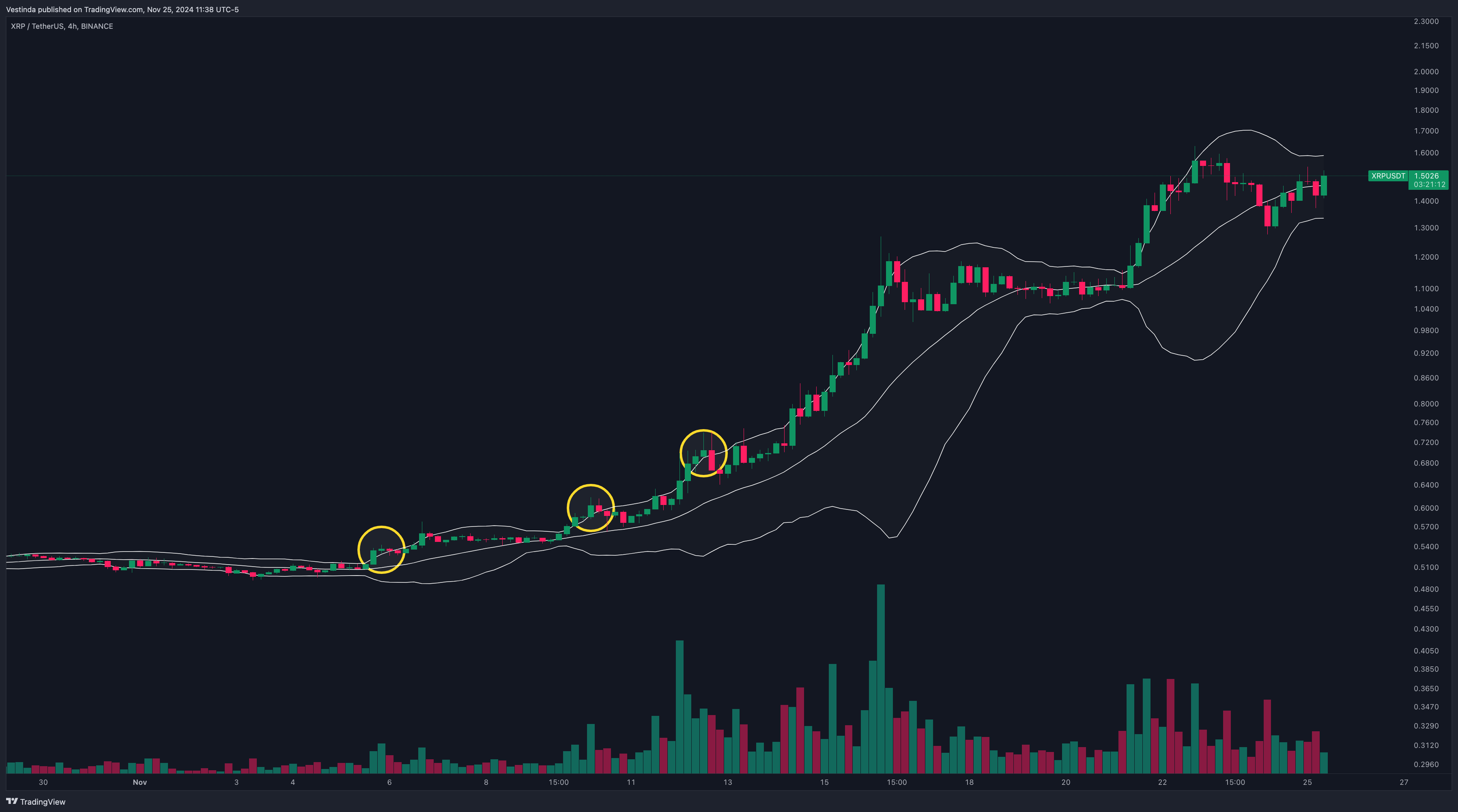
2. Breakout Trading with Bollinger Bands
Concept: Automate trades based on XRP price breaking out of Bollinger Bands.
Setup: Use a 20-period SMA with two standard deviations for the bands.
Entry/Exit Rules:
- Buy when XRP closes above the upper band and sell when it closes below the lower band.
Optimization Tip: Combine Bollinger Bands with volume analysis for more reliable breakouts.
3. Mean Reversion with RSI
Concept: Use the Relative Strength Index (RSI) to identify overbought and oversold conditions for reversal trades.
Setup: Apply a 14-period RSI and monitor levels below 30 (oversold) and above 70 (overbought).
Entry/Exit Rules:
- Enter long when RSI rises above 30 and exit or short when RSI falls below 70.
Optimization Tip: Pair RSI signals with candlestick patterns for improved accuracy.
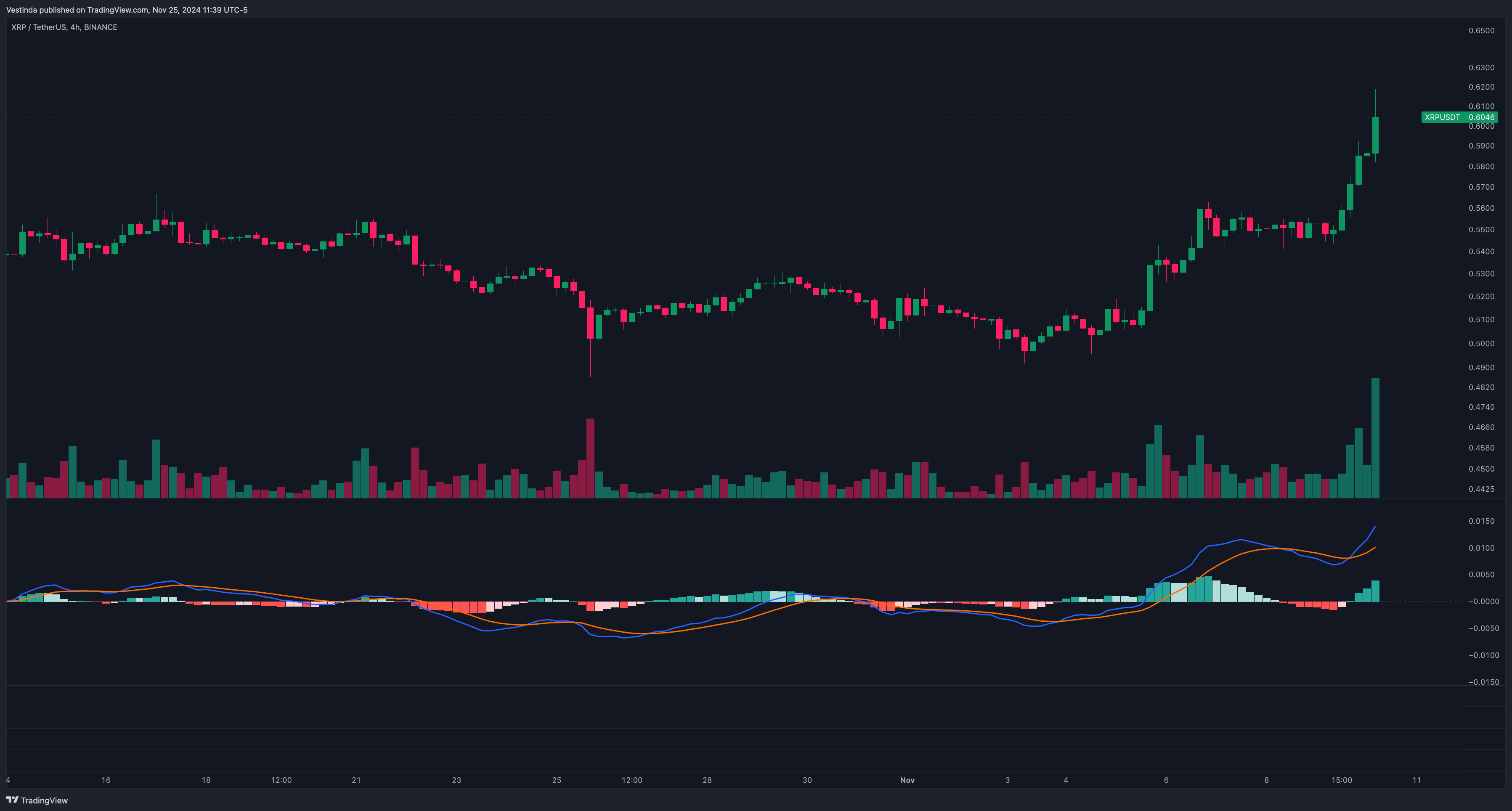
4. Momentum Strategy with MACD
Concept: Use the MACD indicator to capture momentum shifts in XRP’s price action.
Setup: Apply MACD (12, 26, 9) and monitor crossovers.
Entry/Exit Rules:
- Enter long on a bullish crossover and exit or short on a bearish crossover.
Optimization Tip: Use smaller MACD periods for quicker responses in volatile markets.
Building XRP Trading Algorithms
1. Defining Strategy Logic
Use clear conditional statements:
- IF RSI < 30 AND price above support level, THEN enter long.
- IF MACD crosses below signal line, THEN exit or short.
2. Backtesting Your Algorithm
Test strategies on historical XRP data to evaluate performance and refine parameters.
- Metrics to Monitor: Win rate, maximum drawdown, risk/reward ratio.
3. Choosing the Right Platform
Use algorithmic trading platforms like MetaTrader, TradingView with Pine Script, or Python-based tools like Backtrader.
Risk Management in XRP Algorithmic Trading
1. Position Sizing
Limit each trade to a fixed percentage of total account equity (e.g., 1-2%) to manage risk.
2. Automated Stop-Loss and Take-Profit
Set predefined stop-loss and take-profit levels for every trade to lock in profits and limit losses.
3. Dynamic Adjustments
Adjust position sizes and stop-loss levels based on market volatility (e.g., using ATR for stop placement).
Optimizing Algorithmic Strategies
1. Regular Performance Monitoring
Continuously monitor algorithm performance and make real-time adjustments.
2. Diversify Across Strategies
Combine multiple strategies (e.g., trend-following and mean reversion) to hedge risks.
3. Leverage Machine Learning
Use AI to analyze historical data and identify patterns for more advanced algorithmic setups.
Conclusion
Algorithmic trading offers XRP traders a competitive edge by automating complex strategies and enabling fast, data-driven decisions. By employing effective strategies like trend-following, breakout trading, and mean reversion, and implementing robust risk management, traders can optimize their performance and achieve consistent profitability in Ripple’s dynamic market.
Mastering Algorithmic Trading of Ripple (XRP)
- Choose a reliable algorithmic trading platform that supports trading XRP.
- Create an account on the platform and complete the necessary verification process.
- Link your trading account to an exchange where you can buy and sell XRP.
- Develop or select a winning algorithmic trading strategy specifically for XRP.
- Implement the algorithmic trading strategy on the platform, setting your desired parameters.
- Monitor the performance of the algorithm and make necessary adjustments as needed.
- Regularly review and analyze the trading results to optimize your algorithmic trading strategy.
Optimal Scalping Tactics for XRP Algorithmic Traders
Scalping strategies for XRP algorithmic traders can yield profitable results. By taking advantage of small price fluctuations, scalpers aim to make quick trades and earn small profits. These traders focus on short-term movements, using technical analysis and algorithms to identify patterns and make fast decisions. Scalping involves placing multiple trades within a short period, taking advantage of high liquidity and tight spreads in the XRP market. Successful scalping strategies require real-time monitoring, proper risk management, and quick execution. Traders can utilize various indicators and tools to identify entry and exit points, such as moving averages, oscillators, and support/resistance levels. However, it is crucial to note that scalping requires careful planning, discipline, and a stable internet connection to execute trades effectively.
Machine Learning Adaptations for Ripple Trading
Adapting machine learning strategies for XRP algorithmic trading can enhance investment decisions. By analyzing XRP market data, machine learning algorithms can identify patterns and make predictions. These algorithms can be trained to recognize trends, volatility, and other factors that influence XRP's price movement. As a result, traders can take advantage of these insights to generate profitable trades. Furthermore, machine learning can adapt to changing market conditions and adjust trading strategies accordingly. Ultimately, incorporating machine learning into XRP algorithmic trading can optimize performance and capitalize on market opportunities.
Costs of XRP Algorithmic Trading: Assessing Impact
The impact of transaction costs on XRP algorithmic trading can be significant. XRP, also known as Ripple, is a digital currency that utilizes a unique algorithmic trading system. The algorithmic trading strategy of XRP seeks to take advantage of market inefficiencies and capitalize on price discrepancies. However, transaction costs can erode the profits generated by these strategies. XRP algorithmic traders need to carefully consider the transaction costs associated with their trades, including fees, spreads, and slippage. These costs can vary depending on the trading platform used, order size, and market conditions. Minimizing transaction costs is crucial for maximizing profitability in XRP algorithmic trading. Traders may employ various techniques such as optimizing trade execution, using low-cost trading platforms, and monitoring market liquidity to reduce transaction costs. By minimizing these costs, XRP algorithmic traders can improve their profitability and overall trading performance.
-
100,000 available assets New
-
years of historical data
-
practice without risking money

Frequently Asked Questions
The performance of an algorithmic trading strategy can be evaluated using various metrics. Key factors include the strategy's risk-adjusted returns, consistency, and benchmark comparisons. A commonly used metric is the Sharpe ratio, which assesses the strategy's returns in relation to its volatility. Other metrics like maximum drawdown, average trade duration, and win-loss ratio also provide insights about strategy risk and profitability. Additionally, comparing the strategy's performance against a relevant benchmark helps determine its competitiveness. Regular monitoring and analysis of these metrics allow for ongoing improvement and assessment of an algorithmic trading strategy's effectiveness.
When choosing a time frame for algorithmic trading, consider the trading strategy and goals. Shorter time frames like minutes or seconds offer high-frequency trading opportunities with smaller profits per trade. Medium time frames like hours or days may suit swing trading strategies. Longer time frames like weeks or months are suitable for trend-following approaches. It's essential to balance trading frequency, profit potential, and the time you can dedicate to monitoring trades. Backtesting various time frames can help identify the most profitable and suitable one for your specific algorithmic trading strategy.
Yes, quants typically earn a substantial income. Their expertise in quantitative analysis and application of mathematical models is highly valued in industries such as finance, technology, and consulting. The salaries of quants vary depending on their experience, qualifications, and the specific field they work in. However, it is not uncommon for quants to earn salaries well above the average, often surpassing six-figure sums. Overall, the combination of their technical skills, specialized knowledge, and high demand in the job market contributes to quants earning a considerable amount of money.
Quantitative trading, also known as algorithmic trading or black-box trading, is a strategy that relies on mathematical and statistical models to make investment decisions. It involves using complex algorithms and computer programs to analyze large sets of data and execute trades automatically. The objective is to identify patterns, market inefficiencies, and profitable opportunities in financial markets to generate returns. This approach replaces human discretion with automated processes that can execute trades with speed, precision, and efficiency. Quantitative trading is widely used by hedge funds, institutional investors, and financial institutions to optimize investment decisions and increase trading profits.
Yes, algo trading is legal in India. The Securities and Exchange Board of India (SEBI) has allowed the use of algorithmic trading since 2008, introducing guidelines and regulations to govern its practice. These guidelines aim to ensure fair and orderly markets, prevent market manipulation, and maintain investor protection. SEBI mandates the registration of algo traders and requires them to comply with specific risk management, testing, and monitoring requirements. The regulatory framework in India promotes the use of technology to enhance market efficiency while maintaining transparency and integrity.
Algorithmic traders use technical analysis for XRP by applying mathematical models and statistical techniques to analyze price patterns, trends, and market indicators. They use historical price data and indicators like moving averages, Bollinger Bands, and MACD to identify potential buy or sell signals. These strategies are then programmed into algorithms that automatically execute trades based on predetermined rules. Technical analysis helps algorithmic traders to make informed decisions, exploit trading opportunities, and manage risk while trading XRP.
Conclusion
In conclusion, XRP Algorithmic Trading brings together the worlds of finance and technology, offering potential for quick and secure transactions in the cryptocurrency market. By leveraging algorithmic trading tools and strategies, investors can automate their trades and maximize profits while minimizing risks. Scalping strategies capitalize on short-term price fluctuations, while machine learning enhances investment decisions by analyzing market data. However, it is crucial to consider transaction costs, such as fees and spreads, in order to optimize profitability. With careful planning and the right tools, XRP Algorithmic Trading can be a valuable approach for traders in the crypto market.

Successful traders rely on backtesting to be profitable.
Be like them with our
Free Backtesting Guide