-
100,000 available assets New
-
years of historical data
-
practice without risking money

Trading bots & Backtesting results for SPY
Here are some SPY trading bots along with their past performance. You can validate these bots (and many more) for free on Vestinda across thousands of assets and many years of historical data.
Trading bot: CCI Trend Reversal Strategy on SPY
Based on the backtesting results from November 2, 2016 to November 2, 2023, the trading strategy exhibits promising statistics. The strategy has a profit factor of 1.55, indicating that for every dollar risked, the strategy generates 1.55 dollars in profit. The annualized return on investment (ROI) stands at a respectable 3.06%, while the average holding time for trades is approximately 4 weeks and 5 days. With an average of 0.1 trades per week, the strategy maintains a conservative trading frequency. The number of closed trades is 38, and the return on investment is reported at 21.85%. Notably, the winning trades percentage stands at 44.74%. Overall, these statistics suggest a consistent and moderately successful trading strategy over the specified period.
 SPY
SPY

Choose another period and try again.
Trading bot: Follow the trend on SPY
Based on the backtesting results for a trading strategy conducted between November 2, 2022, and November 2, 2023, several key statistics were identified. The strategy exhibited a profit factor of 2.46, indicating that for every dollar risked, the strategy generated $2.46 in profits. The annualized return on investment (ROI) was calculated at 6.87%, highlighting the average growth rate of the invested capital over the year. On average, trades were held for approximately 6 weeks and 5 days, indicating a medium-term holding period. With an average of 0.09 trades per week, it suggests a relatively conservative trading approach. Throughout the period, 5 trades were closed, and the winning trades percentage stood at 40%.
SPY
Choose another period and try again.
Unveiling Trading Bots: Insights and Operations
Trading bots are automated software programs that execute trades on behalf of investors. They use predetermined algorithms to analyze market data and make trading decisions. These bots are designed to capitalize on market trends and fluctuations in real-time. By utilizing complex mathematical models and technical indicators, trading bots can identify profitable trading opportunities. They can execute trades at speeds and frequencies that are impossible for humans to match. For instance, SPY trading bots can scan the market and execute trades on SPdr S&p 500 Etf Trust within milliseconds. They can also implement risk management strategies to reduce potential losses. Trading bots aim to maximize profits by taking advantage of market inefficiencies and opportunities.
SPY Trading Bot: Maximizing Returns with SPDR S&P 500 ETF Trust
Introduction
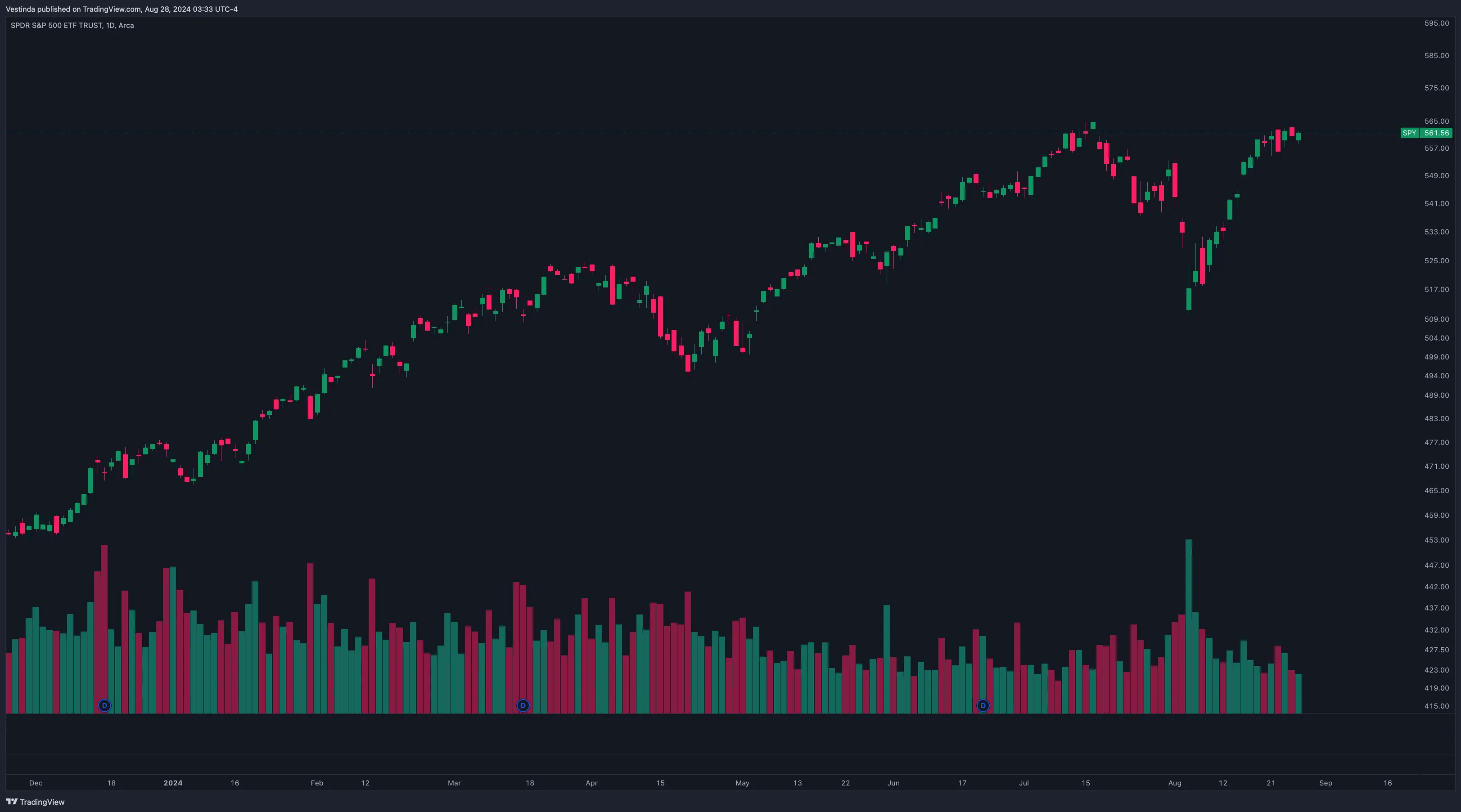
The SPDR S&P 500 ETF Trust (SPY) is one of the most popular and liquid exchange-traded funds (ETFs) in the world, offering exposure to the S&P 500 Index. For traders looking to maximize returns in this highly traded ETF, using an automated trading bot can be an effective strategy. In this article, we’ll explore how to build and use a SPY trading bot to optimize your trading performance, take advantage of market opportunities, and achieve consistent returns.
What is SPY?
Overview: SPY is an ETF that tracks the performance of the S&P 500 Index, representing the 500 largest publicly traded companies in the U.S. It is widely used by investors and traders for its liquidity, diversification, and consistent performance.
Why Trade SPY?
- High Liquidity: SPY is one of the most liquid ETFs, with tight bid-ask spreads, making it ideal for both day trading and long-term investing.
- Diversification: SPY offers exposure to a broad range of industries, reducing the risk associated with individual stocks.
- Consistent Performance: As a reflection of the S&P 500, SPY is known for its steady performance, making it a reliable asset for various trading strategies.
Why Use a SPY Trading Bot?
- Efficiency: A trading bot can monitor the market 24/7, executing trades based on predefined criteria without the need for constant manual oversight.
- Consistency: Automating your strategy ensures that trades are executed consistently, reducing the impact of human emotions and errors.
- Scalability: A SPY trading bot can be used to implement complex strategies across multiple timeframes, maximizing profit potential.
Building a SPY Trading Bot
Defining Your Strategy
Trend Following
Concept: Use moving averages or trend indicators to identify the direction of the trend and trade in that direction.
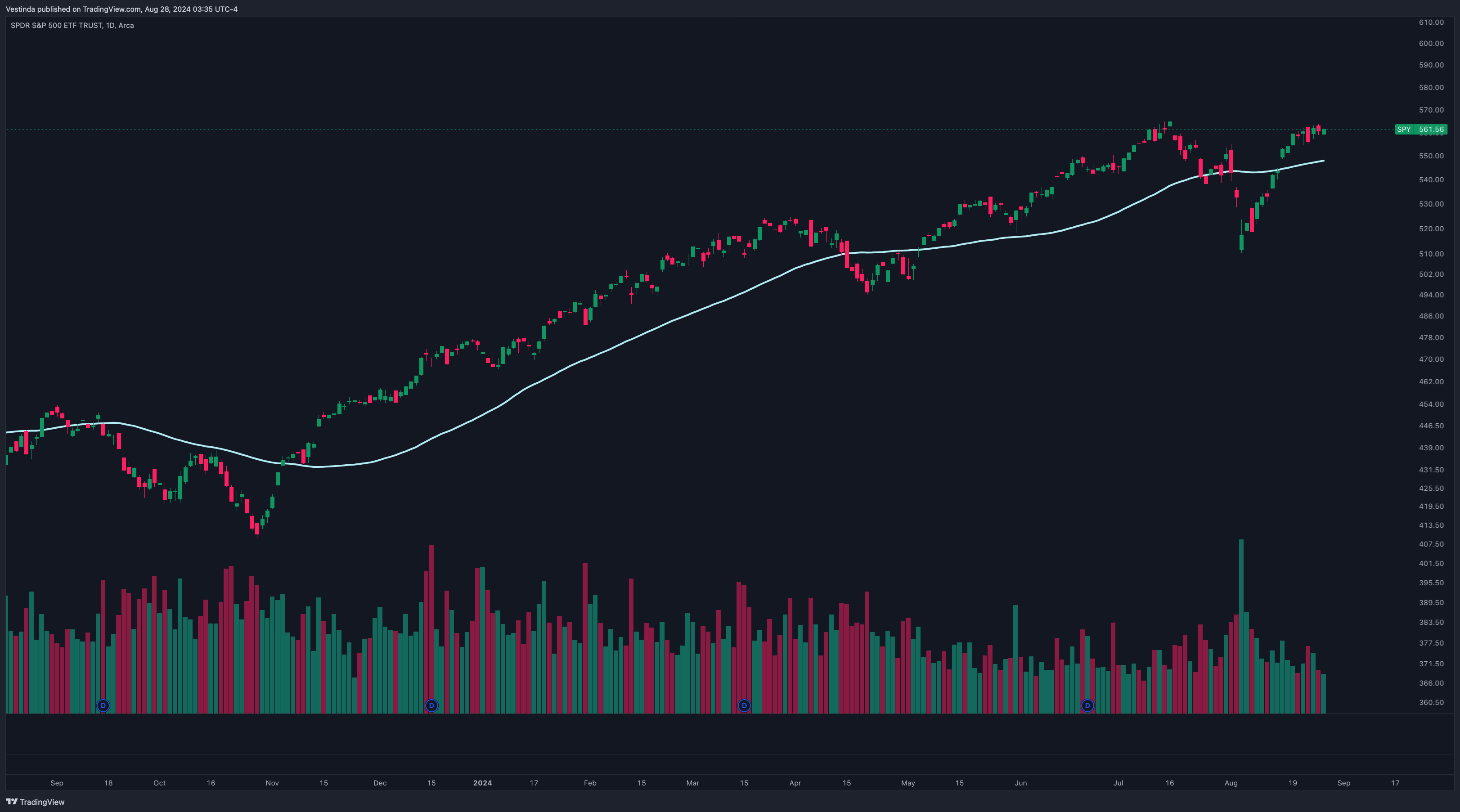
Buy Signal: Enter a long position when the SPY price crosses above a key moving average (e.g., 50-day SMA), indicating a potential uptrend.
Sell Signal: Enter a short position when the SPY price crosses below a key moving average, indicating a potential downtrend.
Automating the Strategy
Platform Selection
Choose a trading platform like Vestinda that supports automated trading and allows integration with technical indicators relevant to SPY.
Bot Configuration
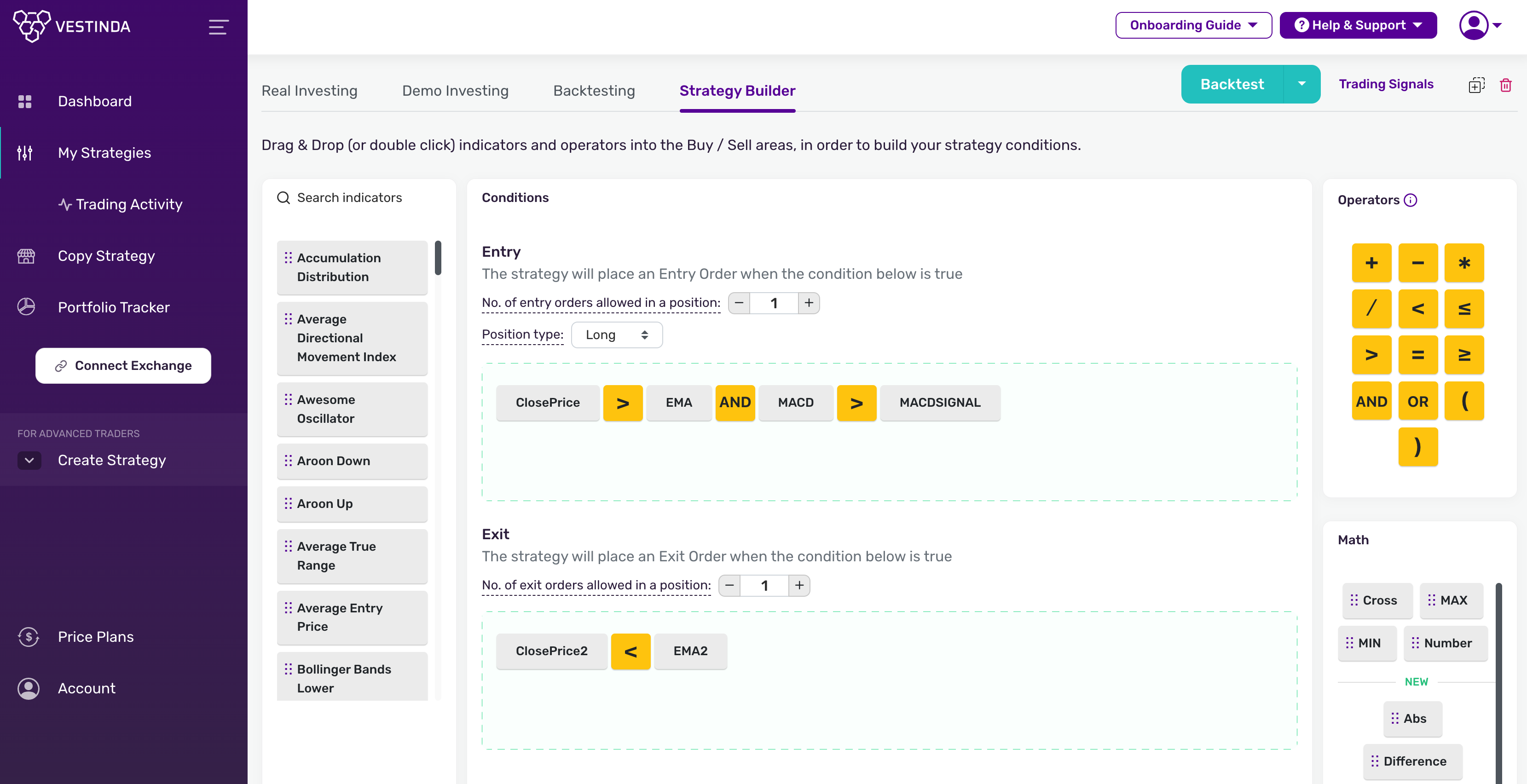
- Indicator Setup: Configure the moving averages or other indicators (e.g., RSI, MACD) used in your strategy.
- Programming Rules: Define the bot’s logic, including entry and exit signals, position sizing, and risk management rules.
- Risk Management: Implement stop-loss and take-profit levels to protect your capital and lock in gains.
Backtesting Your Bot
Why Backtest
Before deploying your SPY trading bot in live markets, backtest the strategy using historical data to ensure its effectiveness.
What to Test
- Test Periods: Run backtests over various market conditions (e.g., bull markets, bear markets, ranging periods) to assess the bot’s performance.
- Optimize Settings: Fine-tune the bot’s parameters based on backtest results to improve profitability and reduce drawdowns.
Deploying and Monitoring Your Bot
Deployment
Once satisfied with the backtesting results, deploy your SPY trading bot in live markets.
Continuous Monitoring
Regularly monitor the bot’s performance to ensure it operates as expected, making adjustments as necessary to adapt to changing market conditions.
Performance Review
Periodically review the bot’s performance, focusing on metrics such as win rate, average trade duration, and profit/loss ratio to identify areas for improvement.
Advanced Strategies for SPY Trading Bots
Pair Trading with SPY
Concept: Pair trading involves taking opposite positions in correlated assets to capitalize on divergences.
Implementation: Use a trading bot to simultaneously trade SPY and another highly correlated ETF (e.g., QQQ) based on the relative strength of each. For example, if SPY underperforms relative to QQQ, enter a long position in SPY and a short position in QQQ, expecting the gap to close.
Volatility-Based Trading
Concept: Use volatility indicators like the Bollinger Bands or ATR (Average True Range) to guide your trading decisions.
Implementation: Configure your trading bot to enter trades when SPY price breaks out of a volatility range (e.g., Bollinger Bands), anticipating strong price movement in the breakout direction.
RSI-Based Overbought/Oversold Strategy
Concept: Use the Relative Strength Index (RSI) to identify overbought or oversold conditions in SPY.
Implementation: Program your trading bot to buy SPY when RSI drops below 30 (oversold) and sell when RSI rises above 70 (overbought), expecting a reversal in price.
Insights on SPY Trading Bot Explained
The SPY Trading Bot is a computer program designed to trade the SPDR S&P 500 ETF Trust (SPY) automatically. It uses algorithms to analyze market data and execute trades based on predefined rules and strategies. The bot can be programmed to execute trades at any time of the day, even when the human trader is not available. This automated trading system aims to take advantage of short-term price fluctuations in the SPY to generate profits. Traders can set parameters for the bot, such as risk tolerance and profit targets, to customize its trading strategy. While the use of trading bots can offer potential benefits, it's important to thoroughly understand their algorithms and constantly monitor their performance to minimize risks.
SPY Trend Trading: Automated Generation of Profitable Strategies
Trend trading bots for SPY, short for Spdr S&p 500 Etf Trust, have gained popularity in recent years. These bots rely on algorithmic strategies to identify and take advantage of trends in the stock market. Using historical data and technical analysis, they track patterns and make predictions about price movements. This allows them to automatically execute trades based on the identified trends. By following the uptrends and downtrends of SPY, these bots aim to generate profits for investors. While no strategy is foolproof, trend trading bots offer a systematic approach that removes human emotions from the equation. This can be particularly beneficial in a volatile market like the S&P 500, where trends can change quickly.
Python SPY Trading Bot Development Guide
Building a trading bot for SPY in Python is a comprehensive yet rewarding experience. Start by importing required libraries like pandas, numpy, and alpaca. Acquire historical data for analysis, ensuring to include essential metrics such as volume and close prices. Employ technical indicators like moving averages to identify trends and market entry points. Backtest different strategies using historical data to assess their performance. Develop buy and sell signals based on your chosen strategy. Leverage Alpaca's API to execute trades automatically, ensuring to account for slippage and transaction costs. Implement risk management techniques like stop-loss orders and position sizing to minimize losses and optimize profits. Continuously monitor and analyze the bot's performance, making necessary adjustments to improve its trading outcomes. With dedication and constant refinement, your trading bot can become a valuable tool for SPY trading strategies.
-
 Create
account -
 Discover profitable
bots -
 Connect exchange
& start earning
Frequently Asked Questions
Yes, it is possible to generate passive income with trading bots. These automated programs can execute trades based on pre-defined strategies, taking advantage of market patterns and indicators. By continuously monitoring the market, trading bots can identify and seize profitable opportunities without requiring constant manual intervention. However, it is important to note that trading bots are not foolproof and market conditions can vary, affecting their performance. Proper research on the bot's strategy, risk management, and regular monitoring is essential to maximize the potential for passive income generation.
Learning algorithmic trading can be challenging, but it depends on an individual's background and dedication. Understanding the underlying concepts of markets, trading strategies, and programming is crucial. Traders need to learn programming languages, data analysis techniques, and mathematical modeling to develop effective algorithms. Additionally, keeping up with ever-evolving market dynamics and constantly refining strategies requires continuous learning. While it may be hard, the rewards can be significant, as algorithmic trading offers potential for automation, increased efficiency, and improved decision-making in financial markets.
When searching for a trading bot for SPY (the ETF that tracks the S&P 500 index), there are several key features to consider. First and foremost, robust technical analysis capabilities that can identify trends, patterns, and signals are crucial. Additionally, the bot should have real-time data integration, allowing it to react swiftly to market changes. Risk management tools, such as stop-loss and take-profit options, are essential for protecting investments. Finally, customization options that enable users to tailor the bot's strategies to their specific preferences are valuable. Overall, a dependable trading bot for SPY should possess strong technical analysis, real-time data integration, risk management features, and customization options.
Most traders lose money due to a lack of proper risk management, emotional decision-making, and a lack of knowledge or experience. Many traders fail to set stop-loss orders or have realistic profit targets, exposing themselves to substantial losses. Emotions such as fear and greed often lead to impulsive trading decisions, overriding rational analysis. Additionally, inadequate understanding of market trends and strategies can result in poor trade execution. Ultimately, successful trading requires discipline, a thorough understanding of markets, and the ability to control one's emotions.
Yes, ETF bots do work on Android. Several financial institutions and investment platforms offer ETF trading bots that are compatible with Android devices. These bots use algorithms to monitor the market, identify opportunities, and execute trades automatically. They provide users with real-time data, portfolio management tools, and customizable strategies. Android users can access and utilize these bots through dedicated mobile applications or web-based platforms, enabling them to seamlessly participate in ETF trading and investment activities on their Android devices.
Yes, trading bots can make losses. While these bots are designed to automate trading based on predetermined strategies and algorithms, they are still subject to market volatility, unexpected events, and inaccuracies in predictions. Factors such as sudden price fluctuations, lack of liquidity, and technical glitches can lead to losses even for the most sophisticated trading bots. Moreover, the bots' performance relies on the quality of the strategy they are built upon or the data they analyze. Regular monitoring, risk management, and fine-tuning of trading bots are essential to minimize losses and optimize their performance.
Conclusion
In conclusion, the SPY trading bot is an effective tool for automating ETF trading, specifically focusing on the SPDR S&P 500 ETF Trust (SPY). By utilizing technical analysis and backtesting results, this algorithmic trading bot offers a successful trading strategy with a proven performance history. Whether you're a novice or experienced trader, the SPY trading bot provides a convenient and reliable solution for enhancing your trading activities. With its ability to capitalize on market opportunities and eliminate the need for constant manual monitoring, this ETF bot is a valuable asset for investors.

Successful traders rely on backtesting to be profitable.
Be like them with our
Free Backtesting Guide