
-
 Create
account -
 Build trading strategies
with no code -
 Validate
& Backtest -
 Connect exchange
& start earning
Quantitative Strategies & Backtesting results for SPX
Here are some SPX trading strategies along with their past performance. You can validate these strategies (and many more) for free on Vestinda across thousands of assets and many years of historical data.
Quantitative Trading Strategy: Awesome Oscillator Momentum Strategy on SPX
Based on backtesting results from December 15, 2016, to December 15, 2023, the trading strategy shows promising statistics. The profit factor stands at 1.48, indicating that for every unit of risk taken, there was a 1.48 times return. The annualized return on investment (ROI) comes in at 2.87%, which suggests a steady growth over the examined period. On average, positions were held for 8 weeks, while the frequency of trades averaged 0.06 per week, demonstrating a patient and selective approach. With 25 closed trades, the strategy maintained a winning trades percentage of 40%. Overall, the return on investment reached a respectable 20.52%. These findings indicate the potential of the trading strategy during the backtested period.
 SPX
SPX

Choose another period and try again.
Quantitative Trading Strategy: Mass Index Crossover with RSI Entry on SPX
The backtesting results for the trading strategy from December 10, 2016, to December 10, 2023, revealed promising statistics. The strategy exhibited a profit factor of 3.16, indicating that for every dollar risked, a profit of $3.16 was generated. The annualized return on investment stood at 5.73%, which suggests steady growth over the testing period. On average, positions were held for approximately 18 weeks and 5 days, indicating a longer-term approach. With an average of 0.02 trades per week, the strategy focused on quality over quantity. Out of a total of 9 closed trades, an impressive 77.78% were profitable, resulting in a cumulative return on investment of 40.96%. These results offer encouraging evidence of the strategy's effectiveness.
SPX
Choose another period and try again.
SPX (S&P 500) Automated Trading: Boosting Profits With Algorithmic Strategies
Introduction
The S&P 500 (SPX) is one of the most widely tracked stock indices, representing 500 of the largest companies in the U.S. Automated trading systems, which allow for the execution of trades based on predefined strategies, have become increasingly popular among traders. This guide will explore how indicators such as Moving Averages, MACD, RSI, and Supertrend can be integrated into algorithmic strategies to enhance trading performance and boost profits when trading SPX.
Why Automate SPX Trading?
- Efficiency: Automated trading systems can execute trades faster than manual trading, capturing market opportunities as they arise.
- Emotion-Free Trading: Algorithms eliminate emotional decision-making, sticking to predefined rules for consistency.
- 24/7 Market Monitoring: Automated strategies continuously monitor the market, ensuring no opportunities are missed, especially when volatility strikes.
Key Indicators for Automated SPX Trading Strategies
Moving Averages (MA) Strategy
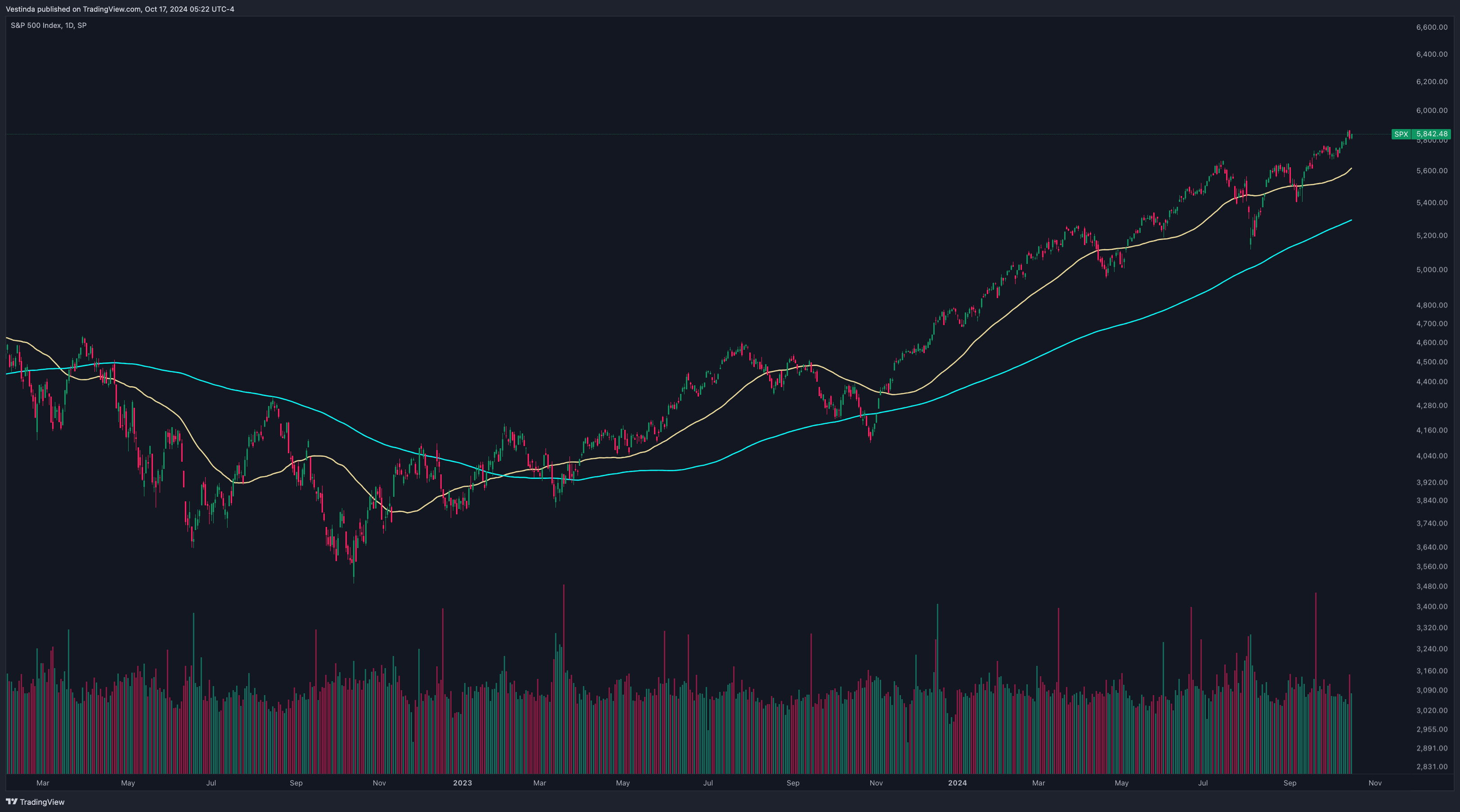
Concept: Moving Averages smooth out price data, helping traders identify trends and potential entry or exit points.
How to Implement:
- Indicators: Use a combination of short-term (e.g., 50-day) and long-term (e.g., 200-day) moving averages.
- Entry and Exit: Buy when the short-term moving average crosses above the long-term moving average (Golden Cross), signaling a potential uptrend. Sell when the short-term moving average crosses below the long-term moving average (Death Cross), indicating a possible downtrend.
- Automation: Automate the detection of these crossovers to enter long positions during uptrends and short positions during downtrends.
MACD (Moving Average Convergence Divergence) Strategy
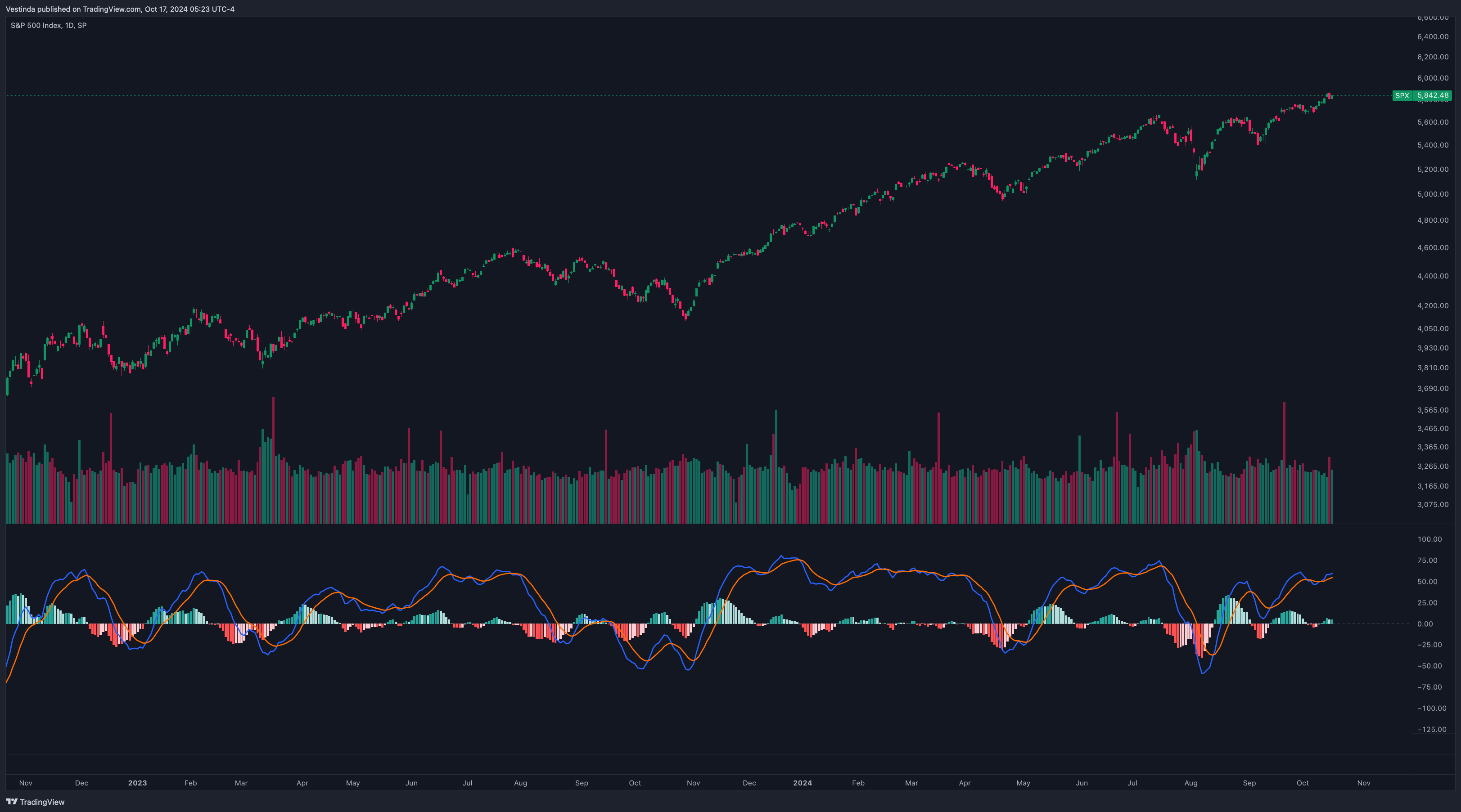
Concept: MACD is a momentum indicator that shows the relationship between two moving averages, helping traders spot trend changes and momentum shifts.
How to Implement:
- Indicators: Use the standard MACD settings (12, 26, 9).
- Entry and Exit: Buy when the MACD line crosses above the signal line, indicating bullish momentum. Sell when the MACD line crosses below the signal line, signaling bearish momentum.
- Automation: Set the system to automatically enter trades based on MACD crossovers, adjusting for any divergence between the MACD and price action.
RSI (Relative Strength Index) Strategy
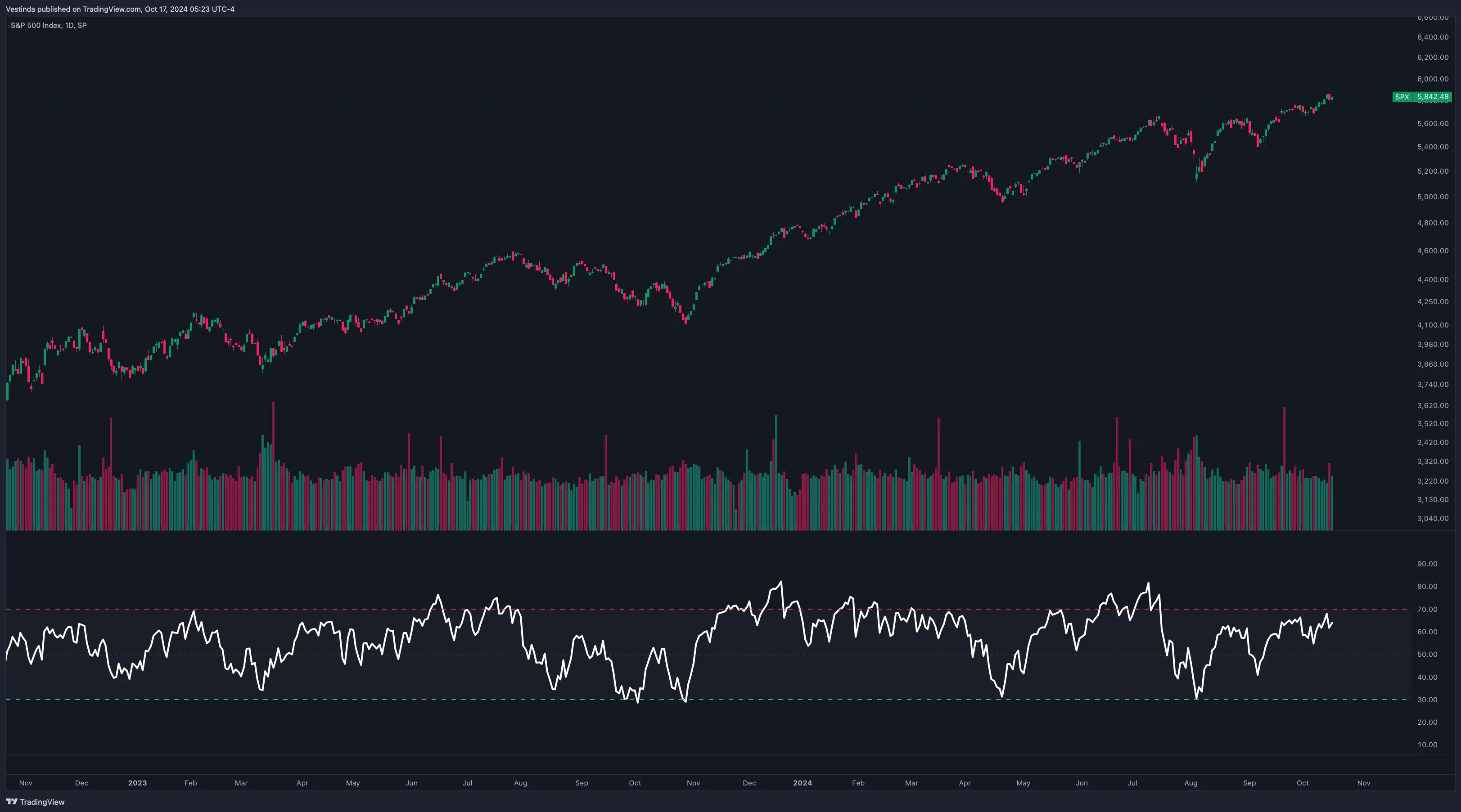
Concept: RSI is a momentum oscillator that measures the speed and change of price movements, identifying overbought and oversold conditions.
How to Implement:
- Indicators: Use RSI with a 14-period setting.
- Entry and Exit: Buy when RSI falls below 30, indicating an oversold condition, and sell when RSI rises above 70, signaling an overbought condition.
- Automation: Set your algorithm to automatically buy when RSI is below 30 and sell when it exceeds 70, taking advantage of market reversals.
Supertrend Strategy
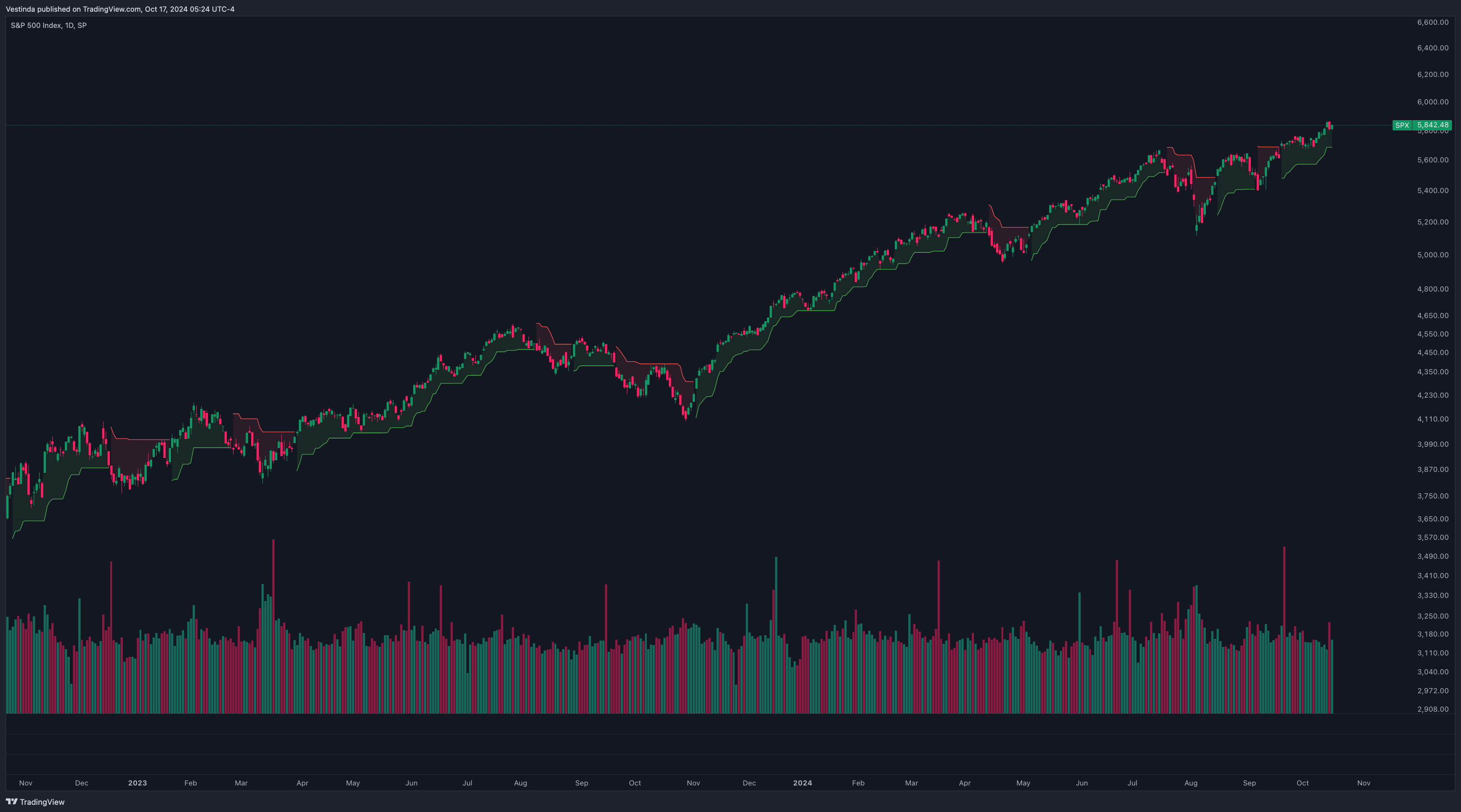
Concept: Supertrend is a trend-following indicator that provides easy-to-spot buy or sell signals, making it a great tool for automated trading.
How to Implement:
- Indicators: Set the Supertrend with default settings (ATR multiplier of 3 and period of 10).
- Entry and Exit: Buy when the Supertrend turns green, signaling an upward trend, and sell when it turns red, signaling a downtrend.
- Automation: Automate your system to enter and exit trades based on Supertrend signals, allowing the bot to follow the market's prevailing direction with ease.
How to Combine Indicators for Robust SPX Strategies
Combining multiple indicators can create a more robust trading strategy by confirming signals and filtering out false entries.
- Moving Averages + MACD: Use moving averages to identify the overall trend and confirm entries using MACD crossovers. For example, enter a trade when a Golden Cross forms, and MACD crosses above its signal line.
- RSI + Supertrend: Use Supertrend to follow the general market direction and RSI to spot potential reversal points within the trend. Enter trades when RSI signals oversold conditions while Supertrend is green and exit when RSI is overbought while Supertrend is red.
How to Implement Automated Trading for SPX
Backtesting Your Strategies
Why: Backtesting allows traders to simulate their strategy using historical SPX data to see how it would have performed.
How to Implement: Use historical price data to backtest your algorithmic strategy, adjusting indicators' parameters based on the results to improve performance.
Monitoring and Adjusting
Why: Markets evolve, and even the best algorithms need periodic adjustments to stay profitable.
How to Implement: Continuously monitor your algorithm's performance and make adjustments based on metrics such as win rate, average return, and maximum drawdown.
Risk Management Integration
Why: Automated trading can expose traders to frequent market movements, making risk management essential to protect capital.
How to Implement: Set stop-losses and take-profits to automatically exit trades when a certain price level is hit. Use proper position sizing to limit exposure and manage risk effectively.
Risk Management for SPX Automated Trading
Position Sizing
Concept: Limit exposure by risking only a small percentage of your portfolio on each trade.
How to Implement: Use position sizing rules that allocate 1-2% of your portfolio per trade to minimize risk in volatile markets.
Stop-Loss and Take-Profit Orders
Concept: Protect your capital by setting stop-losses to limit potential losses and take-profits to lock in gains.
How to Implement: Place stop-losses at recent support or resistance levels and set take-profit orders based on key levels or indicator targets (e.g., moving average crossovers).
Diversification
Concept: Spread risk across multiple strategies or assets to reduce the impact of any single market move.
How to Implement: Run multiple automated strategies simultaneously, combining trend-following and momentum-based strategies to diversify risk.
Mastering Automated SPX Trading Software: A Step-by-Step Approach
- Choose an automated trading software that is compatible with SPX.
- Open the software and create an account by providing necessary information.
- Connect your trading account to the software by entering the required credentials.
- Customize your trading preferences, such as risk tolerance and trade size.
- Set up the software to automatically generate trading signals based on your preferences.
- Monitor the software's performance and make adjustments if necessary.
- Sit back and let the automated trading software execute trades on your behalf.
Automated trading software can help you take advantage of SPX's market movements without constant monitoring.
Market Structure's Effect on Automated SPX Trading.
The market microstructure has a significant impact on automated trading of the S&P 500 (SPX). High-frequency trading strategies rely heavily on market microstructure factors such as bids, asks, and order book depth. These factors play a crucial role in determining the liquidity and execution quality in the market. Sub-millisecond market data is necessary for accurate order placement and identification of suitable execution opportunities. Market impact cost estimation and risk assessment are essential to mitigate adverse execution outcomes. Analyzing market microstructure helps traders adjust their strategies to optimize execution and minimize market impact. Understanding the impact of market microstructure on SPX automated trading allows traders to develop more efficient trading algorithms and improve overall performance.
Merging ML with SPX Trading Strategy
Machine learning plays a crucial role in SPX automated trading. It utilizes algorithms to analyze large volumes of data, including historical price patterns, market news, and economic indicators. These algorithms help identify potential trading opportunities and forecast market trends with high accuracy. By continuously learning from past data, machine learning models can adapt to changing market conditions and make real-time trading decisions. This ability to process and interpret complex information quickly gives traders a competitive edge in the fast-paced world of SPX automated trading. Furthermore, machine learning algorithms are capable of identifying patterns and relationships in the data that may not be apparent to human traders. Overall, the incorporation of machine learning techniques has revolutionized SPX automated trading, enabling traders to make informed decisions in a highly dynamic market environment.
Sophisticated Trading: Leveraging SPX Derivatives Automations
Using derivatives in automated trading on SPX can be highly beneficial for investors. These financial instruments provide opportunities for enhanced portfolio diversification and risk management. By trading derivative instruments such as futures or options on SPX, investors can gain exposure to the entire index without having to own every individual stock within it. This allows for a more efficient use of capital and reduces transaction costs. Automation in trading derivatives on SPX also enables complex trading strategies to be executed rapidly and without emotional bias. Furthermore, derivatives can be used to hedge against market volatility or to speculate on the direction of the market. Overall, incorporating derivatives into automated trading on SPX can help investors achieve their financial objectives more effectively and efficiently.
Optimizing SPX Trading: Automated Software Advantages
SPX automated trading software streamlines the process of trading S&P 500 futures. These advanced software platforms allow traders to execute trades quickly and efficiently. By utilizing powerful algorithms, SPX automated trading software can analyze vast amounts of market data in real time, enabling traders to make well-informed decisions. The software ensures precise order execution and minimizes human error. It also allows traders to backtest their strategies and optimize them for better performance. With the ability to set predefined trading rules, SPX automated trading software can execute trades automatically, even when the trader is not actively monitoring the markets. This feature provides flexibility and frees up time for traders to focus on other tasks. Moreover, these software platforms offer access to enhanced trading tools and indicators, empowering traders with comprehensive market insights. SPX automated trading software is suitable for both novice and experienced traders looking to trade the S&P 500 with efficiency and accuracy.
Sophisticated backtesting is not only possession of high-esteemed hedge funds anymore.
Impressive Team and support, Backtesting engine with detailed reports, The Strategy builder.

Great purchase!
I have always manually invested in stocks and cryptocurrencies, but after studying Vestinda, I must say it has enormous potential.

Mature platform for trading
Pro: Easy to use, Nice UX, A lot of customization for strategies, Back testing is an awesome tool, can check any strategy in history.

Frequently Asked Questions
Yes, there are user reviews available for various SPX automated trading platforms. These reviews provide valuable insights into the performance, reliability, and user experience of different platforms. Users often share their experiences, highlight the strengths and weaknesses of the platforms, and offer recommendations. These reviews can be found on various online platforms such as investment forums, review websites, and social media groups. Analyzing user reviews can help traders make informed decisions while selecting an SPX automated trading platform that aligns with their requirements and preferences.
When choosing the best SPX automated trading software, there are a few key factors to consider. Firstly, look for a reputable provider with a proven track record of success. Additionally, ensure the software offers customizable options and features that suit your trading strategy. It should also provide reliable and accurate real-time data, as well as efficient execution speed. Consider the software's user interface and ease of use, as well as any additional tools or analytics it offers. Lastly, compare pricing options and make sure the cost aligns with the value and benefits the software provides.
SPX automated trading software is a computer program designed to automatically execute trades on the SPX (S&P 500) index. It utilizes algorithmic trading strategies to analyze market data, identify trading opportunities, and execute trades without human intervention. This software can help investors capitalize on market trends, efficiently manage trades, and minimize emotions-driven decisions. Its automation eliminates the need for manual monitoring, allowing for faster and more precise execution. SPX automated trading software can be a valuable tool for both experienced and novice traders looking to optimize their trading approach.
Yes, automated trading software can be used for SPX (S&P 500 Index) prediction markets. These markets involve speculating on the future movements of the index based on economic factors, news events, and other indicators. Automated trading software can analyze vast amounts of data, apply complex algorithms, and execute trades quickly, allowing users to take advantage of market efficiencies and potentially make profits. However, it is important to note that predicting market movements is inherently risky, and careful research, analysis, and monitoring are necessary for successful trading.
Conclusion
In conclusion, SPX (S&P 500) Automated Trading Software offers traders an innovative solution to enhance their trading experience. By leveraging artificial intelligence (AI) technology, this software allows users to automate their SPX trading strategies efficiently. With advanced algorithms that analyze market data swiftly, traders can make well-informed decisions and capitalize on potential profit opportunities. Additionally, the incorporation of machine learning techniques revolutionizes SPX automated trading, providing traders with a competitive edge in the fast-paced market. By utilizing derivatives and streamlining the trading process, SPX automated trading software offers flexibility, accuracy, and efficiency for traders of all levels.

Successful traders rely on backtesting to be profitable.
Be like them with our
Free Backtesting Guide