
-
 Create
account -
 Build trading strategies
with no code -
 Validate
& Backtest -
 Connect exchange
& start earning
Automated Strategies & Backtesting results for SOL
Here are some SOL trading strategies along with their past performance. You can validate these strategies (and many more) for free on Vestinda across thousands of assets and many years of historical data.
Automated Trading Strategy: Keltner Breakout Strategy on SOL
During the period from October 1, 2022, to October 1, 2023, the backtesting results for a trading strategy revealed promising statistics. The strategy achieved a profit factor of 1.27, indicating a positive expectancy. With an annualized return on investment (ROI) of 20.88%, it outperformed the market significantly. On average, positions were held for approximately 5 days and 5 hours, while the frequency of trades stood at 0.42 per week. A total of 22 trades were closed during this period, with a winning trades percentage of 31.82%. Most notably, the strategy outperformed the buy and hold approach by generating excess returns of 87.92%.

 SOLEUR

Choose another period and try again.
Automated Trading Strategy: Lock and keep profits on SOL
Based on the backtesting results statistics for the trading strategy conducted from February 26, 2021, to November 5, 2023, several key insights can be derived. The strategy exhibited an impressive profit factor of 1.9, indicating a favorable risk-adjusted return. The annualized ROI stands at an astonishing 280%, showcasing the strategy's exceptional potential for generating consistent profits over time. On average, the holding time for trades was approximately 6 weeks and 5 days, indicating a moderate-term approach. With an average of 0.05 trades per week and a total of 8 closed trades, the strategy demonstrated a cautious and selective trading style. The return on investment amounted to an impressive 756.75%, reflecting the significant profitability of the strategy. While winning trades accounted for 50% of total trades, the strategy outperformed the buy-and-hold approach by generating excess returns of 174.65%.
 SOLUSDT
Choose another period and try again.
SOL (Solana) Swing Trading: Mastering Profitable Strategies
Introduction
Swing trading strikes a balance between long-term investing and day trading, focusing on capturing significant price swings over a few days to weeks. For Solana (SOL), a highly liquid and volatile cryptocurrency, swing trading offers excellent opportunities to maximize profits. This guide provides actionable strategies and tips to help traders succeed in mastering SOL swing trading.
Why Swing Trading is Ideal for Solana?
- High Volatility: Solana’s dynamic price movements allow traders to capture large swings.
- Flexible Timeframes: Swing trading doesn’t require constant monitoring, making it suitable for part-time traders.
- Technical Clarity: SOL’s consistent trading volume and clear price patterns enhance technical analysis reliability.
Core Swing Trading Strategies for SOL
1. Trend-Following Strategy with Moving Averages
Concept: Use moving averages to identify and follow SOL’s trend direction.
Setup: Apply a 20-period EMA (short-term) and a 100-period EMA (medium-term).

Execution Rules:
- Buy Signal: When the 20 EMA crosses above the 100 EMA during an uptrend.
- Sell Signal: When the 20 EMA crosses below the 100 EMA during a downtrend.
Optimization Tip: Combine with RSI to confirm entry points during pullbacks.
2. Support and Resistance Reversal Strategy
Concept: Identify key support and resistance levels and trade reversals.
Setup: Mark horizontal levels where SOL has consistently reversed or consolidated.
Execution Rules:
- Buy Signal: Enter long when SOL bounces off a support level with confirming bullish candlesticks.
- Sell Signal: Enter short when SOL rejects a resistance level with bearish confirmation.
Optimization Tip: Use volume spikes to validate reversals.
3. Breakout Trading Strategy
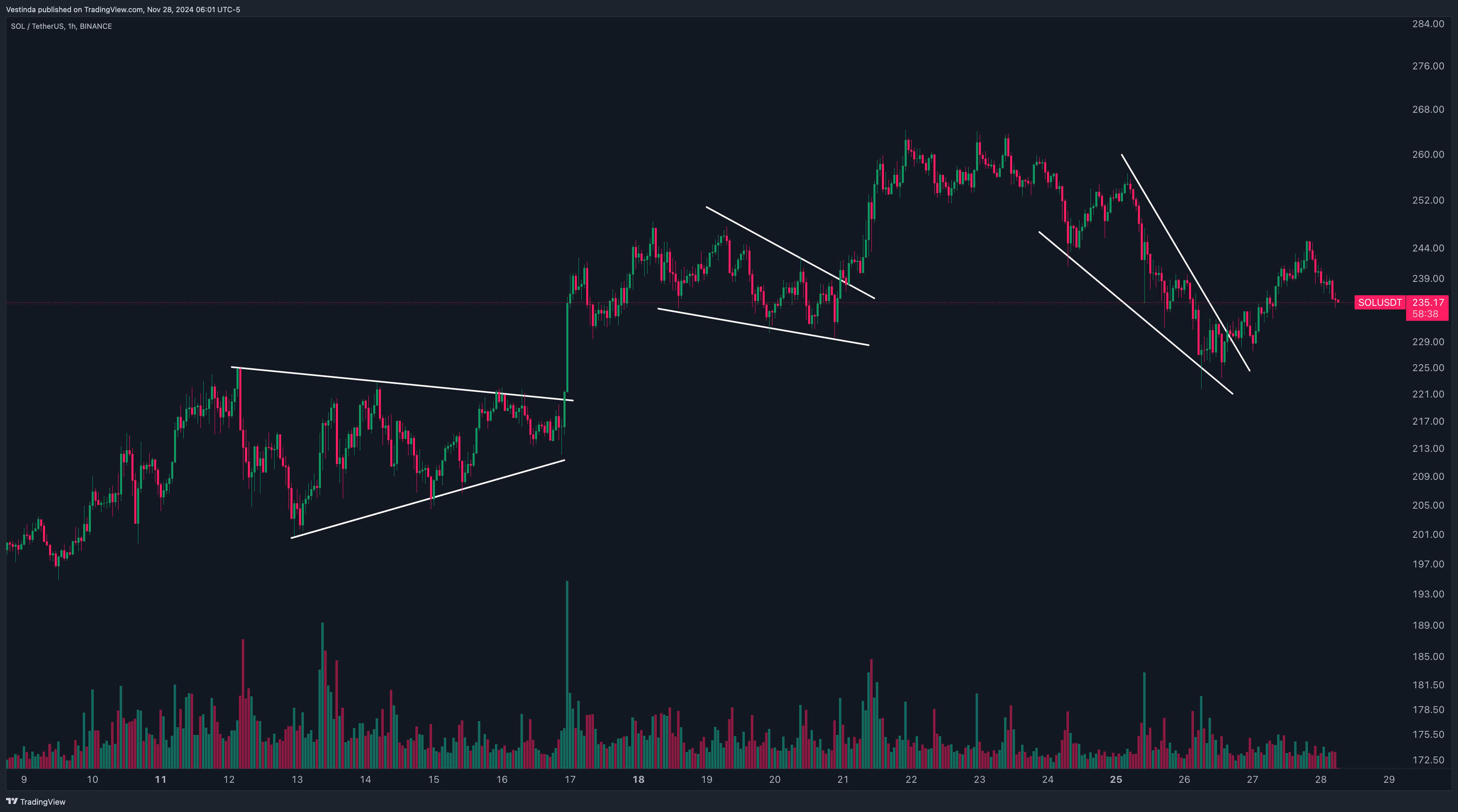
Concept: Capture momentum-driven price movements after SOL breaks out of consolidation.
Setup: Identify consolidation patterns such as triangles, flags, or rectangles.
Execution Rules:
- Buy Signal: Enter long when SOL breaks above the consolidation range with increasing volume.
- Sell Signal: Enter short when SOL breaks below the range with strong bearish momentum.
Optimization Tip: Set stop-loss just inside the breakout range to minimize risk.
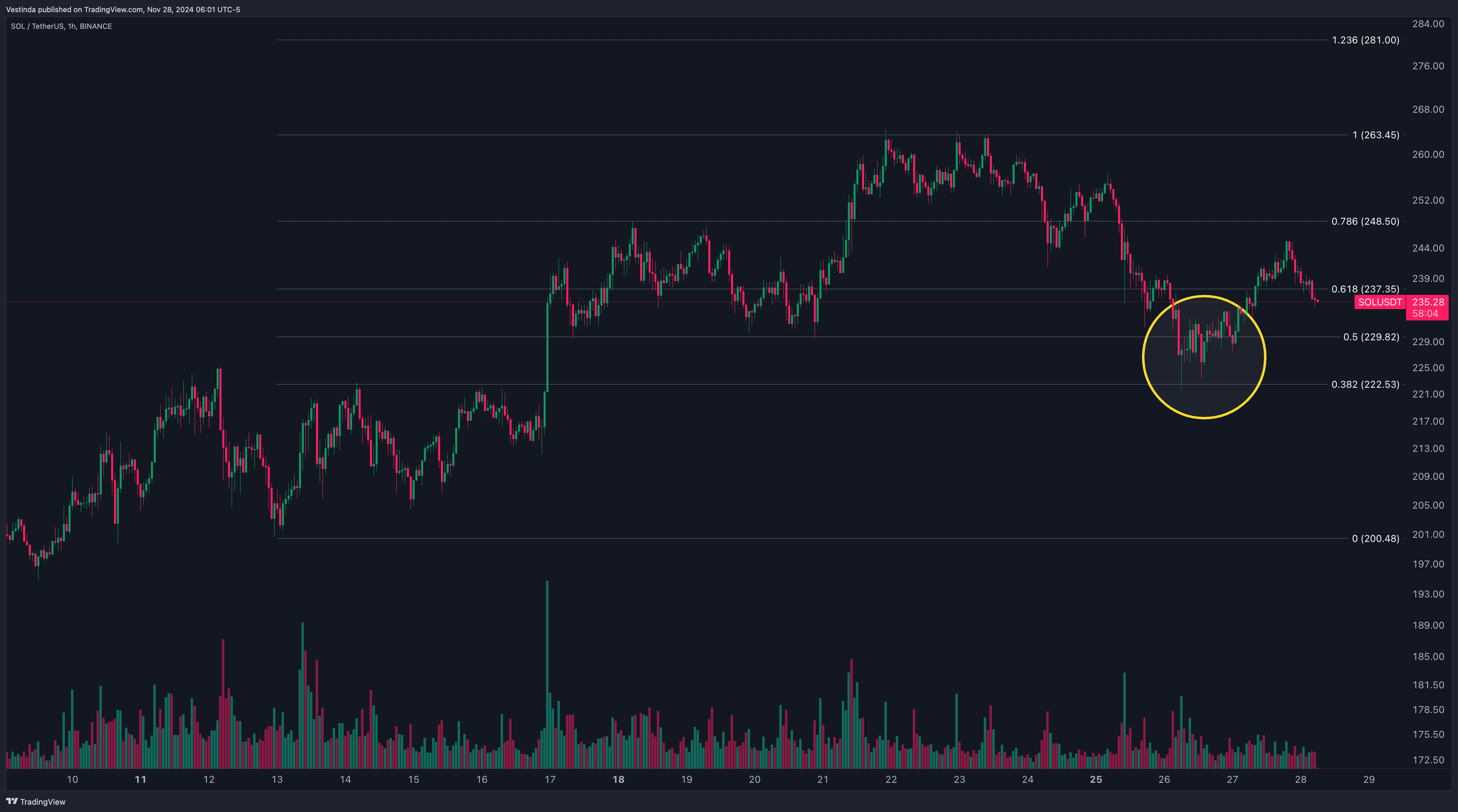
4. Swing Reversal with Fibonacci Retracements
Concept: Use Fibonacci levels to identify retracement zones for potential trend continuations or reversals.
Setup: Plot Fibonacci retracement levels from the swing high to the swing low.
Execution Rules:
- Buy Signal: Enter long at the 61.8% retracement level during an uptrend.
- Sell Signal: Enter short at the 38.2% retracement level during a downtrend.
Optimization Tip: Combine Fibonacci levels with MACD or RSI for stronger signals.
How to Execute Swing Trades on Solana
1. Timeframe Selection
Use the 4-hour or daily timeframe to identify trends and set trade entries. Switch to a 1-hour timeframe for precise entry and exit points.
2. Risk Management
Limit risk per trade to 1-2% of your portfolio. Use stop-loss orders to protect against unexpected reversals.
3. Set Clear Targets
Aim for a risk-to-reward ratio of at least 1:2. Place take-profit orders at the next significant support or resistance level.
4. Regular Monitoring
Review trade performance and adjust strategies based on market conditions.
Practical Example of SOL Swing Trading
Scenario:
Setup: SOL forms a bullish flag pattern on the 4-hour chart, and the 20 EMA is above the 100 EMA.
Entry: Enter long when SOL breaks above the flag’s resistance at $22.
Stop-Loss: Place a stop-loss at $21, below the flag’s support.
Take-Profit: Set a take-profit at $26, the height of the flag added to the breakout point.
Common Mistakes to Avoid
- Overtrading: Avoid chasing every price swing; focus on high-probability setups.
- Neglecting Risk Management: Always use stop-losses and position sizing to protect your capital.
- Ignoring Market Conditions: Adjust strategies during volatile or consolidating market phases.
Conclusion
Swing trading Solana provides a structured approach to capturing its dynamic price movements. By employing strategies such as trend-following, support/resistance reversals, and Fibonacci retracements, traders can optimize their entries and exits. Combining these techniques with disciplined risk management ensures consistent profitability in Solana’s market.
Mastering Swing Trading SOL: A Step-by-Step Approach
- Learn the basics of swing trading: study charts, trends, and key indicators.
- Set up a brokerage account and deposit funds for trading.
- Develop a solid trading strategy based on your analysis and risk tolerance.
- Identify potential swing trade opportunities in SOL using technical analysis.
- Enter trades with proper risk management, including stop-loss orders.
- Monitor your trades regularly and make adjustments as necessary.
- Take profits or cut losses based on your predetermined trading plan.
- Continue to educate yourself, review your trades, and refine your strategy.
Swing Trading: Pros and Cons
Swing trading offers numerous benefits for investors. First, it allows for potential profits in both upward and downward trending markets. Traders can take advantage of short-term price fluctuations to maximize returns. Second, it requires minimal time commitment compared to day trading, appealing to those with busy schedules. Third, swing trading provides the opportunity to diversify one's investment portfolio and reduce risk. Nevertheless, swing trading comes with inherent risks. The volatility of cryptocurrencies such as SOL can lead to substantial losses. Additionally, market timing plays a critical role, as a mistimed entry or exit can result in missed opportunities or financial setbacks. It is essential for swing traders to conduct thorough research and analysis to mitigate potential risks and maximize profits.
SOL Comparison: Swing Trading vs. Long-Term Investing
Swing trading and long-term investing are contrasting investment strategies with their own merits. Swing trading involves short-term trades, taking advantage of market fluctuations. It requires active monitoring and quick decision-making. On the other hand, long-term investing focuses on holding assets for extended periods, capitalizing on their potential growth. It emphasizes a "buy and hold" approach, enabling investors to ride out market volatility. Swing trading aims for shorter gains, while long-term investing seeks to accumulate significant returns over time. With its shorter time frame, swing trading may offer quicker profits, but it also carries higher risks. Long-term investing, in contrast, provides a more stable and predictable path for those willing to wait. In the realm of cryptocurrency, for instance, swing trading could involve actively trading SOL tokens based on market movements, while long-term investing would involve holding SOL to capitalize on its potential long-term growth. Ultimately, the choice between swing trading and long-term investing depends on an individual's risk tolerance, time commitment, and investment goals.
Profit-Taking Strategies for Maximizing SOL Gains
Taking profits is an essential part of any investment strategy. It allows investors to capitalize on gains and reduce their exposure to potential market fluctuations. When SOL reaches a price that meets your profit target, it may be a good time to sell. However, it's important to consider the overall market conditions and the potential for future growth. Taking profits doesn't mean abandoning the investment entirely. It means securing your gains and reassessing your portfolio. By selling a portion of your SOL holdings, you can lock in profits while still maintaining a position in the market in case the price continues to rise. Remember, taking profits is a personal decision and should align with your long-term investment goals.
-
100,000 available assets New
-
years of historical data
-
practice without risking money

Frequently Asked Questions
Yes, there are many rich traders in the world. Trading, especially in financial markets, can be extremely lucrative for those with the expertise and resources. Successful traders have amassed significant wealth through astute investment decisions, effective risk management, and market analysis. They often have access to advanced trading tools, technology, and powerful networks that enable them to make profitable trades. However, it's important to note that trading involves substantial risks, and not all traders achieve consistent success. The wealth and success of traders can vary greatly, and it is essential to carry out comprehensive research and education to maximize the chances of becoming a prosperous trader.
When using candlestick patterns in SOL swing trading, it's important to first familiarize yourself with various patterns such as doji, hammer, shooting star, etc. These patterns indicate potential trend reversals or continuation. Look for confirmation signals like strong volume, support or resistance levels, and trend lines. Once a reliable pattern is identified, use it as a signal to enter or exit trades. Remember to carefully manage risk and set appropriate stop-loss orders. Constantly analyze and adapt your strategy based on market conditions to increase the chances of successful SOL swing trading using candlestick patterns.
The secret to swing trading lies in its focus on short-term market movements. It involves identifying stocks or securities with potential price fluctuations within a set timeframe, typically a few days to a few weeks. The key lies in technical analysis, studying charts, patterns, and indicators to make informed trading decisions. Successful swing traders carefully select entry and exit points to capitalize on price swings, aiming for smaller profits in multiple trades rather than holding positions for long periods. It requires discipline, risk management, and constant evaluation of market trends to achieve consistent profitability.
To use Fibonacci retracement in SOL swing trading, follow these steps:
1. Identify the swing high and swing low points on the SOL price chart.
2. Draw the Fibonacci retracement levels (23.6%, 38.2%, 50%, 61.8%, and 78.6%) from the swing low to the swing high.
3. These retracement levels act as potential support or resistance zones.
4. When the SOL price retraces to one of these levels, it presents a buying or selling opportunity, depending on the prevailing trend.
5. Watch for price action and other technical indicators to confirm the potential reversal or continuation.
6. Set stop-loss orders below or above the retracement levels to manage risk.
7. Consider other factors like volume and market sentiment for better decision-making in SOL swing trading.
Conclusion
In conclusion, swing trading SOL (Solana) presents a lucrative opportunity for traders in the ever-changing cryptocurrency market. By learning the basics of swing trading, setting up a brokerage account, and developing a solid trading strategy, beginners can navigate the volatility of the SOL market with more confidence. However, it is essential to be aware of the risks associated with swing trading, including the potential for substantial losses due to the volatility of cryptocurrencies like SOL. By conducting thorough research, practicing proper risk management, and continuously refining your strategy, you can mitigate risks and maximize profits. Ultimately, the choice between swing trading and long-term investing depends on your risk tolerance, time commitment, and investment goals. Taking profits at the right time is crucial for any investment strategy, allowing you to capitalize on gains and protect your portfolio.

Successful traders rely on backtesting to be profitable.
Be like them with our
Free Backtesting Guide