
Sophisticated backtesting is not only possession of high-esteemed hedge funds anymore.
Impressive Team and support, Backtesting engine with detailed reports, The Strategy builder.

Great purchase!
I have always manually invested in stocks and cryptocurrencies, but after studying Vestinda, I must say it has enormous potential.

Mature platform for trading
Pro: Easy to use, Nice UX, A lot of customization for strategies, Back testing is an awesome tool, can check any strategy in history.

Automated Strategies & Backtesting results for SHIB
Here are some SHIB trading strategies along with their past performance. You can validate these strategies (and many more) for free on Vestinda across thousands of assets and many years of historical data.
Automated Trading Strategy: Lock and keep profits on SHIB
Based on the backtesting results from May 10, 2021, to October 20, 2023, the trading strategy has shown promising performance. The strategy indicates a profit factor of 1.47, suggesting that for every dollar invested, the strategy generated $1.47 in profit. The annualized return on investment stands at an impressive 42.39%, indicating the strategy's ability to consistently generate returns. On average, the holding time for trades was approximately 3 weeks and 5 days, and the strategy executed an average of 0.07 trades per week. With 9 closed trades in total, the strategy achieved a winning trades percentage of 33.33%. Furthermore, the strategy outperformed the buy-and-hold approach, generating excess returns of 795.23%. These backtesting results highlight the potential profitability and effectiveness of this trading strategy over the specified period.

 SHIBUSDT

Choose another period and try again.
Automated Trading Strategy: Keltner Channel and TEMA Trend-Following on SHIB
The backtesting results for the trading strategy from May 10, 2021, to October 20, 2023, reveal promising performance statistics. The strategy exhibited a profit factor of 5.34, indicating a healthy ratio between generated profits and incurred losses. Moreover, its annualized return on investment (ROI) stood impressively at 316.91%, signifying strong profitability over the specified period. On average, positions were held for approximately 2 days and 6 hours, while the strategy executed an average of 0.22 trades per week. With a total of 29 closed trades, the strategy demonstrated a winning trades percentage of 44.83%. Comparatively, it outperformed the buy and hold approach, generating excess returns of 3743.79%. Overall, these results highlight the strategy's potential for generating substantial profits and beating the market.
SHIBUSDT
Choose another period and try again.
SHIB (Shiba Inu) Trading Signals: Expert Analysis & Tips
Introduction
Trading signals play a crucial role in navigating Shiba Inu’s (SHIB) highly volatile market. By leveraging technical indicators, price action, and algorithmic tools, traders can gain actionable insights to make informed decisions. This guide delves into effective SHIB trading signals, strategies, and expert tips for consistent profitability.
What Are Trading Signals?
- Definition: Trading signals are alerts or cues generated by technical analysis, algorithms, or market events that guide traders in entering or exiting positions.
- Types of Signals:
- Indicator-Based Signals: Derived from technical indicators like RSI, MACD, or Supertrend.
- Price Action Signals: Based on candlestick patterns and key levels.
- Algorithmic Signals: Generated by automated systems analyzing market data.
Why Use Trading Signals for SHIB?
- Precision: Provides clear entry and exit points, reducing uncertainty.
- 24/7 Monitoring: Ensures trading opportunities are captured in SHIB’s always-active market.
- Emotion-Free Decisions: Encourages disciplined trading by relying on data-driven insights.
Effective SHIB Trading Signal Strategies:
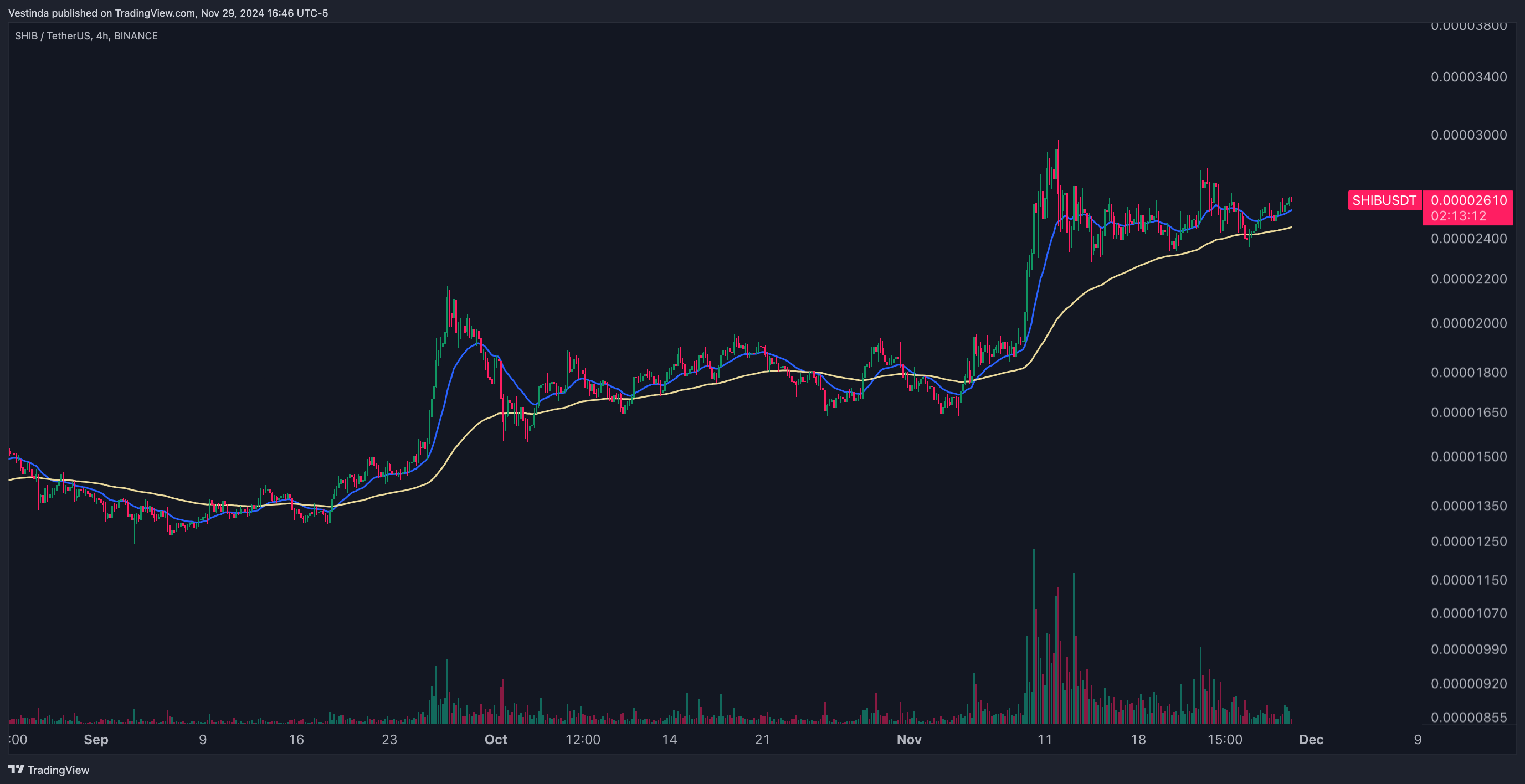
1. Trend-Following Signals with Moving Averages:
Concept: Use moving averages to identify and follow SHIB’s trend direction.
- Setup: Apply a 20-period EMA for short-term trends and a 100-period EMA for long-term trends.
- Execution Rules:
- Buy Signal: Enter long when SHIB price crosses above both EMAs, confirming an uptrend.
- Sell Signal: Exit when price falls below the 100 EMA, signaling a potential reversal.
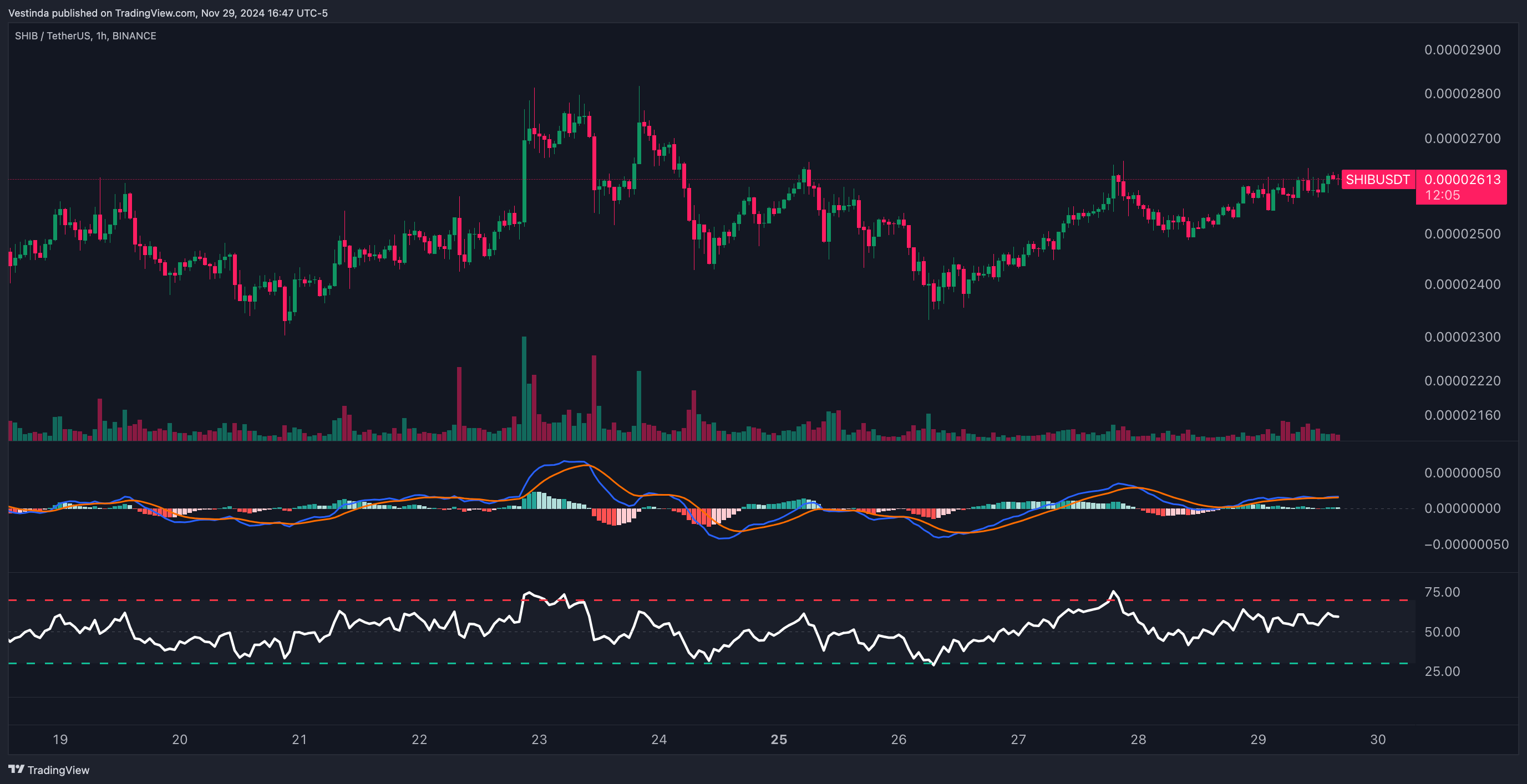
2. Reversal Signals with RSI and MACD:
Concept: Identify SHIB’s potential trend reversals using RSI and MACD indicators.
- Setup: Apply RSI (14) to detect overbought (>70) and oversold (<30) zones. Use MACD (12, 26, 9) to confirm momentum shifts.
- Execution Rules:
- Buy Signal: Enter long when RSI exits oversold, and MACD shows a bullish crossover.
- Sell Signal: Exit when RSI re-enters overbought or MACD turns bearish.
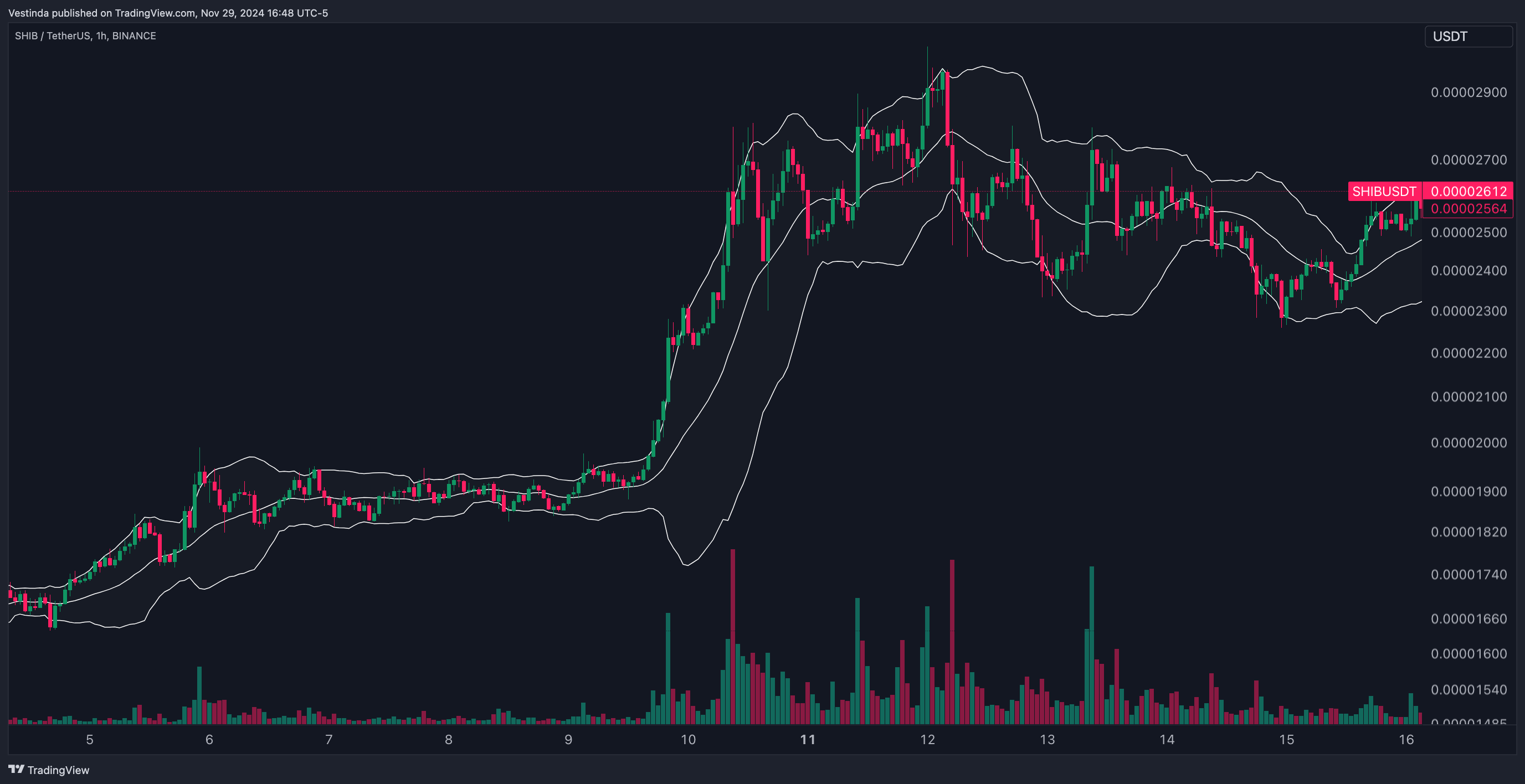
3. Breakout Signals with Bollinger Bands:
Concept: Capitalize on SHIB’s breakout moves from consolidation phases.
- Setup: Use Bollinger Bands with a 20-period SMA and a standard deviation of 2.
- Execution Rules:
- Buy Signal: Enter long when SHIB breaks above the upper band with increased volume.
- Sell Signal: Exit when price consolidates or falls back within the bands.
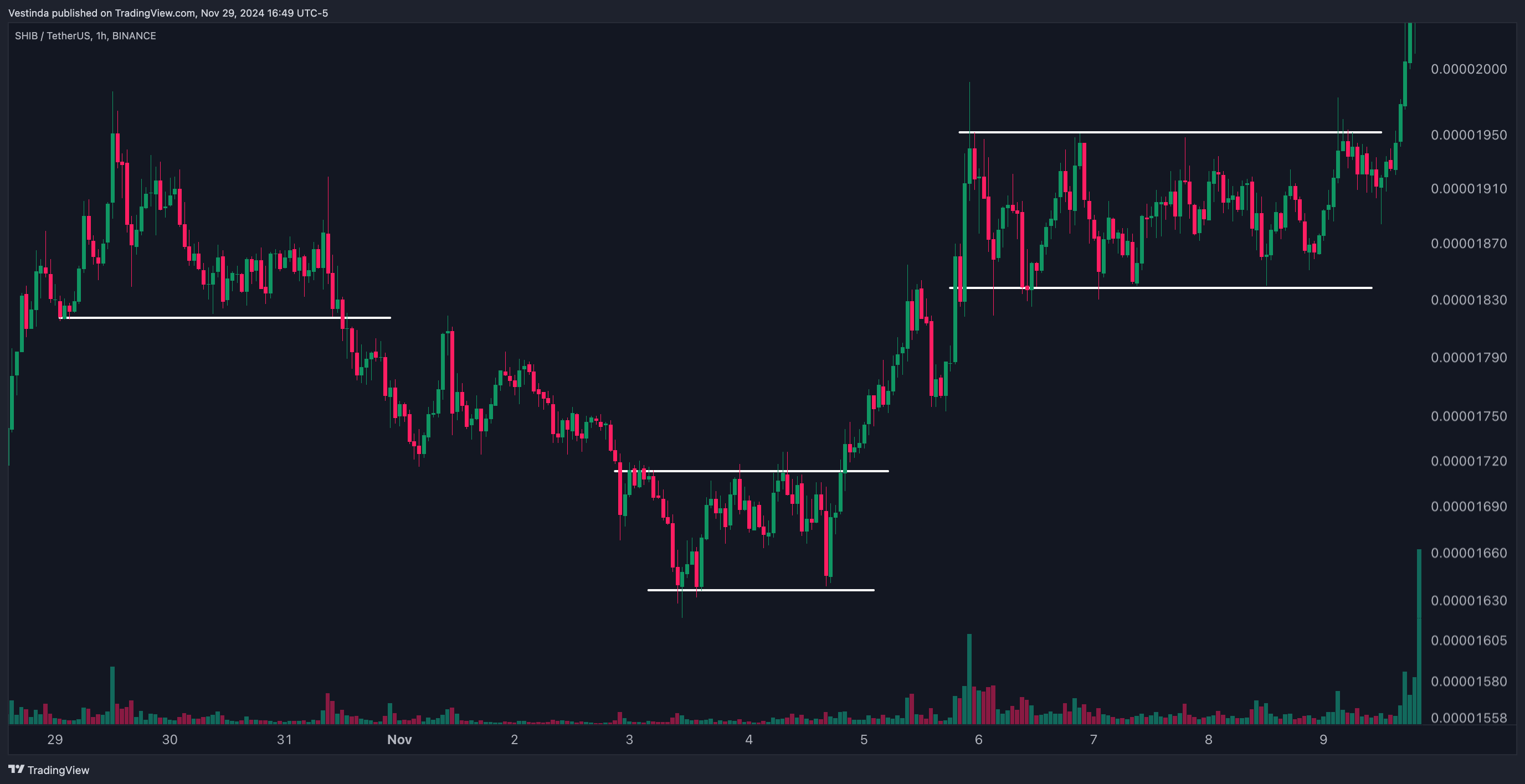
4. Support and Resistance Signals:
Concept: Trade SHIB’s price movements around key support and resistance levels.
- Setup: Identify horizontal support and resistance zones on your chart.
- Execution Rules:
- Buy Signal: Enter long when SHIB bounces off a support level with bullish confirmation (e.g., a bullish engulfing pattern).
- Sell Signal: Exit when price approaches resistance or shows signs of rejection.
How to Implement SHIB Trading Signals:
- Combine Signals for Confirmation: Use multiple indicators or tools to validate trading signals and reduce false positives.
- Example: Confirm a MACD bullish crossover with price breaking above resistance.
- Monitor Multiple Timeframes: Use higher timeframes (e.g., 4-hour or daily) for trend analysis and lower timeframes (e.g., 15-minute) for precise entries.
- Set Alerts: Automate signal notifications using trading platforms like TradingView to ensure timely execution.
Risk Management Tips:
- Position Sizing: Limit risk to 1-2% of your trading capital per position.
- Dynamic Stop-Loss Placement: Use ATR-based stop-losses to adjust for SHIB’s volatility.
- Profit Targets: Set realistic take-profit levels based on key resistance levels or a 1:2 risk/reward ratio.
Common Mistakes to Avoid:
- Ignoring Confirmation: Always wait for multiple signals or a confluence of factors before entering a trade.
- Overtrading: Focus on high-quality signals rather than chasing every opportunity.
- Neglecting Market Context: Consider broader market conditions and news events that may impact SHIB.
Conclusion:
Trading signals provide a structured approach to navigating Shiba Inu’s dynamic market. By incorporating strategies like trend-following, breakouts, and reversal signals, traders can unlock SHIB’s profit potential. Combine disciplined execution, risk management, and continuous learning to achieve consistent results.
Mastering SHIB Trading Signals: Your Comprehensive Walkthrough
- Research and sign up for a reputable trading signal provider for SHIB.
- Choose the type of signal you want to receive (buy/sell signals, alerts, etc).
- Set up your trading platform and connect it to the signal provider.
- Start receiving trading signals for SHIB on your preferred device (phone, email, etc).
- Analyze each trading signal to understand the suggested action.
- Take action based on the trading signal (buy, sell, or hold SHIB).
- Regularly monitor the performance of the trading signals and adjust accordingly.
SHIB Alert and Notification Updates
SHIB Signal Alerts and Notifications are essential for traders and investors in the SHIB market. These alerts and notifications provide real-time updates on market trends and price movements. By receiving these signals, users can stay ahead of the curve and make informed decisions. Whether it's a sudden spike in the price of SHIB or a potential market crash, these notifications will keep traders informed and prepared. Users can customize the alerts they receive based on their preferences and trading strategy. SHIB Signal Alerts and Notifications are a valuable tool for anyone looking to maximize their gains and minimize risks in the fast-paced world of cryptocurrency trading. Stay in the loop with SHIB Signal Alerts and make profitable moves with confidence.
Reliable Signals: Crucial for SHIB Trading
When trading SHIB, reliable signals are crucial for making informed decisions. These signals provide valuable insights into the market trends, allowing traders to anticipate potential price movements. Without reliable signals, traders may risk making poor investment choices and missing out on profitable opportunities. By using reliable signals, traders can identify potential entry and exit points, manage risks effectively, and maximize their profits. These signals provide clear indications of when to buy or sell SHIB, helping traders navigate the volatile cryptocurrency market. With the rapid changes and unpredictable nature of SHIB's price movements, having access to reliable signals is essential for successful trading. Traders should ensure they have access to accurate and trustworthy signal providers, enabling them to make informed decisions and stay ahead in the SHIB trading game.
Unleashing Volume Analysis for SHIB Insights
Volume analysis is a crucial tool when it comes to analyzing market signals for SHIB. By examining the trading volume, traders can gauge the strength and reliability of price movements. High trading volume often indicates a strong trend and increased market participation. Conversely, low trading volume suggests a lack of interest and potential price reversals. Traders can use this information to make informed decisions about entering or exiting positions. It is also essential to pay attention to volume spikes, which can indicate significant market events or news releases impacting SHIB. By incorporating volume analysis into their trading strategy, traders can gain valuable insights into the market sentiment and increase their chances of making profitable trades.
-
Track your
Crypto Portfolio -
Copy Crypto trading
strategies -
Build trading strategies
with no code
-
Backtest trading strategies
on Crypto, Forex, Stocks, etc. -
Demo Trading
Risk-free Paper Trading -
Automate trading strategies
with Live Trading
Frequently Asked Questions
Social media sentiment plays a significant role in SHIB trading signals as it reflects the opinions and emotions of the market participants. Traders closely monitor social media platforms to gauge the overall sentiment towards SHIB, which can influence their decision-making. Positive sentiment can drive more buying interest and potentially push the price higher, while negative sentiment can lead to selling pressure. However, it is important to consider other fundamental and technical factors in conjunction with social media sentiment to make informed trading decisions.
To incorporate economic indicators into your trading signals strategy, first, identify which indicators are relevant to your trading goals (e.g., GDP growth, inflation rates, employment data). Then, closely monitor these indicators and compare their actual values with market expectations. Based on the impact and relevance of each indicator, adjust your trading strategy accordingly. For example, if inflation data is higher than expected, consider adjusting positions to account for potential interest rate changes by central banks. By incorporating economic indicators, you can gain valuable insights that complement technical analysis and improve decision-making in your trading strategy.
To avoid subscription scams with trading signal services, it is crucial to conduct thorough research before committing to any subscription. Look for reliable and reputable providers with a proven track record and positive customer reviews. Avoid services that guarantee unrealistic returns or pressure you into making hasty decisions. Be cautious with free trial offers that require your payment information. Verify the legitimacy of the company, check if they are registered, and ensure they have clear terms and conditions. Finally, use a secure payment method and monitor your subscriptions carefully to detect any unauthorized charges promptly.
Interest rate changes can have a significant impact on trading signals. When interest rates are lowered, it typically stimulates economic growth and encourages borrowing, leading to increased investment and higher stock market valuations. In this scenario, trading signals may indicate favorable buying opportunities or increased market volatility. Conversely, when interest rates rise, it can dampen economic activity and decrease investor confidence, potentially causing trading signals to indicate sell signals or decreased market activity. Monitoring interest rate changes is crucial for traders as they can provide valuable insights into market trends and guide investment decisions.
Yes, you can use trading signals for SHIB day trading. Trading signals can provide valuable insights and information about potential buying or selling opportunities in the market, including SHIB. These signals are generated through technical analysis or algorithmic systems, helping traders make informed decisions. However, it's crucial to carefully evaluate and verify the accuracy and reliability of the trading signals before relying on them entirely. Additionally, it's important to combine signals with your research and analysis to make well-informed trading decisions.
Conclusion
In conclusion, SHIB (Shiba Inu) Trading Signals are an invaluable tool for navigating the cryptocurrency market. These signals provide real-time data and insights into market conditions, enabling traders to make informed decisions and capitalize on potential profit opportunities. By incorporating SHIB signals into their trading strategy, traders can gain an edge in this volatile landscape and maximize their gains while minimizing risks. Reliable signal providers and signal performance monitoring are crucial for successful trading. Additionally, volume analysis plays a significant role in understanding market trends and making profitable trades. With the rapid changes and unpredictable nature of SHIB's price movements, having access to accurate signals and utilizing volume analysis are essential for successful trading.

Successful traders rely on backtesting to be profitable.
Be like them with our
Free Backtesting Guide