
-
Track your
Crypto Portfolio -
Copy Crypto trading
strategies -
Build trading strategies
with no code
-
Backtest trading strategies
on Crypto, Forex, Stocks, etc. -
Demo Trading
Risk-free Paper Trading -
Automate trading strategies
with Live Trading
Automated Strategies & Backtesting results for SHIB
Here are some SHIB trading strategies along with their past performance. You can validate these strategies (and many more) for free on Vestinda across thousands of assets and many years of historical data.
Automated Trading Strategy: Keltner Channel and TEMA Trend-Following on SHIB
The backtesting results for the trading strategy from May 10, 2021, to October 20, 2023, reveal promising statistics. The strategy exhibits a profit factor of 5.34, indicating that it generated significant returns relative to the risk taken. The annualized Return on Investment (ROI) stands at an impressive 316.91%, implying the strategy was highly profitable over the evaluated period. The strategy's average holding time was approximately 2 days and 6 hours, with an average of 0.22 trades per week. The strategy closed 29 trades during this period, with a winning trades percentage of 44.83%. Furthermore, when compared to a buy and hold approach, this strategy outperformed significantly, generating excess returns of 3743.79%.

 SHIBUSDT

Choose another period and try again.
Automated Trading Strategy: VWAP and KAMA Confirmation on SHIB
Based on the backtesting results statistics for a trading strategy conducted from May 10, 2021, to October 20, 2023, several key observations can be made. The strategy demonstrated a profit factor of 1.62, indicating that for every unit risked, a profit of 1.62 units was achieved. The annualized return on investment (ROI) stood at an impressive 113.35%. On average, trades were held for approximately 6 days and 1 hour, while the frequency of trades reached 0.33 per week. Over the specified period, a total of 43 trades were closed, with a winning trades percentage of 20.93%. Comparatively, this trading strategy outperformed buy and hold, generating excess returns of 1557.46%. These results showcase the strategy's potential for generating substantial returns.
SHIBUSDT
Choose another period and try again.
SHIB Day Trading Tips: Optimize Profits with Shiba Inu
Introduction
Day trading Shiba Inu (SHIB) can be highly rewarding, given its volatility and active trading volume. To succeed, traders need precise strategies, disciplined execution, and a clear understanding of SHIB’s market behavior. This guide provides actionable tips and techniques to optimize your profits while day trading SHIB.
Why Day Trade Shiba Inu?
- High Volatility: SHIB’s frequent price swings offer multiple intraday trading opportunities.
- 24/7 Market: The crypto market never sleeps, making SHIB accessible anytime.
- Liquidity: SHIB’s popularity ensures ample liquidity for quick trade executions.
Key Strategies for Day Trading SHIB:
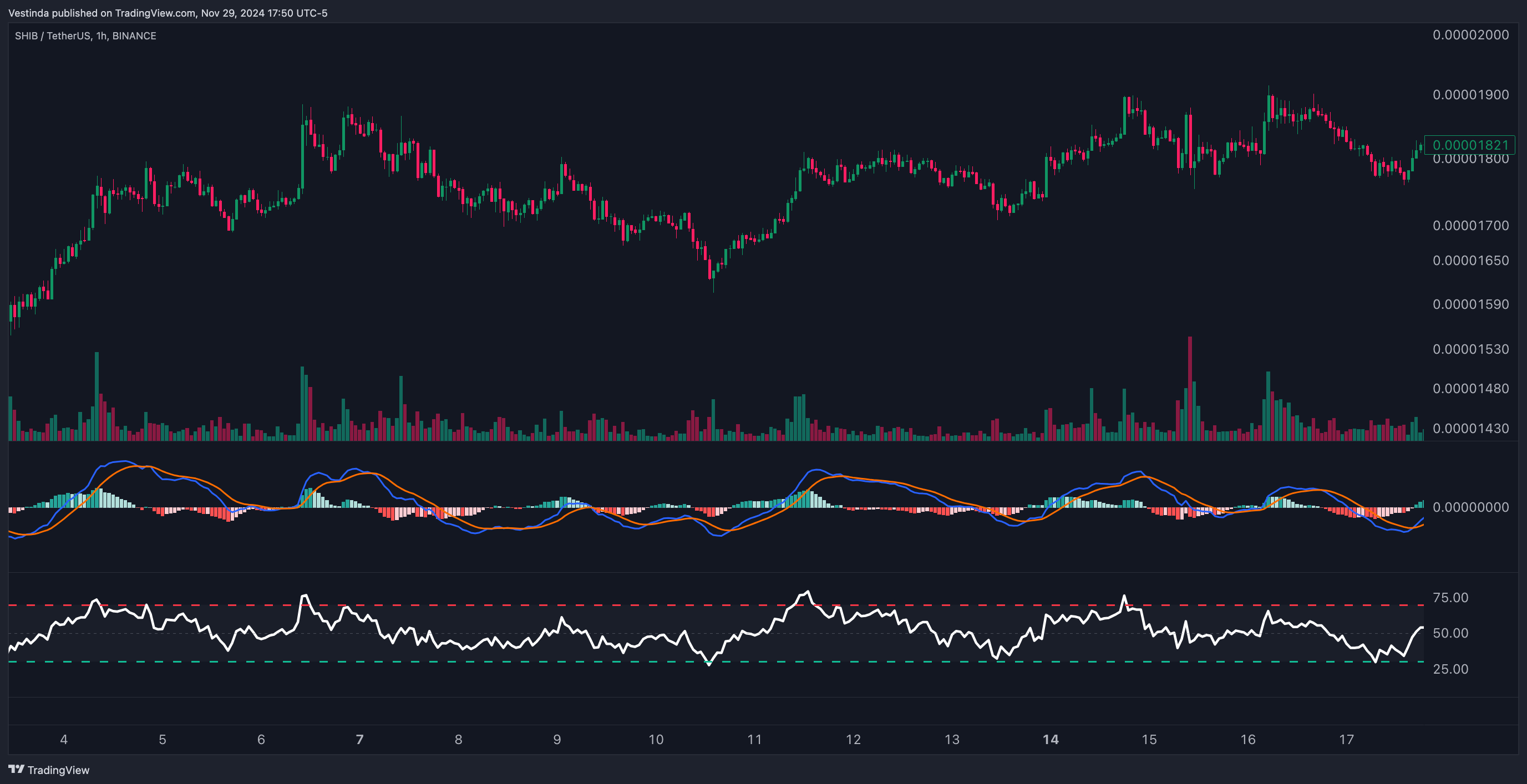
1. Momentum Trading with RSI and MACD:
Concept: Capture SHIB’s short-term momentum using RSI and MACD indicators.
- Setup: Apply RSI (14) to identify overbought and oversold conditions. Use MACD (12, 26, 9) to confirm momentum shifts.
- Execution Rules:
- Buy Signal: Enter long when RSI exits oversold and MACD shows a bullish crossover.
- Sell Signal: Exit when RSI enters overbought or MACD turns bearish.
- Best For: Intraday traders seeking quick entries and exits during volatile market hours.
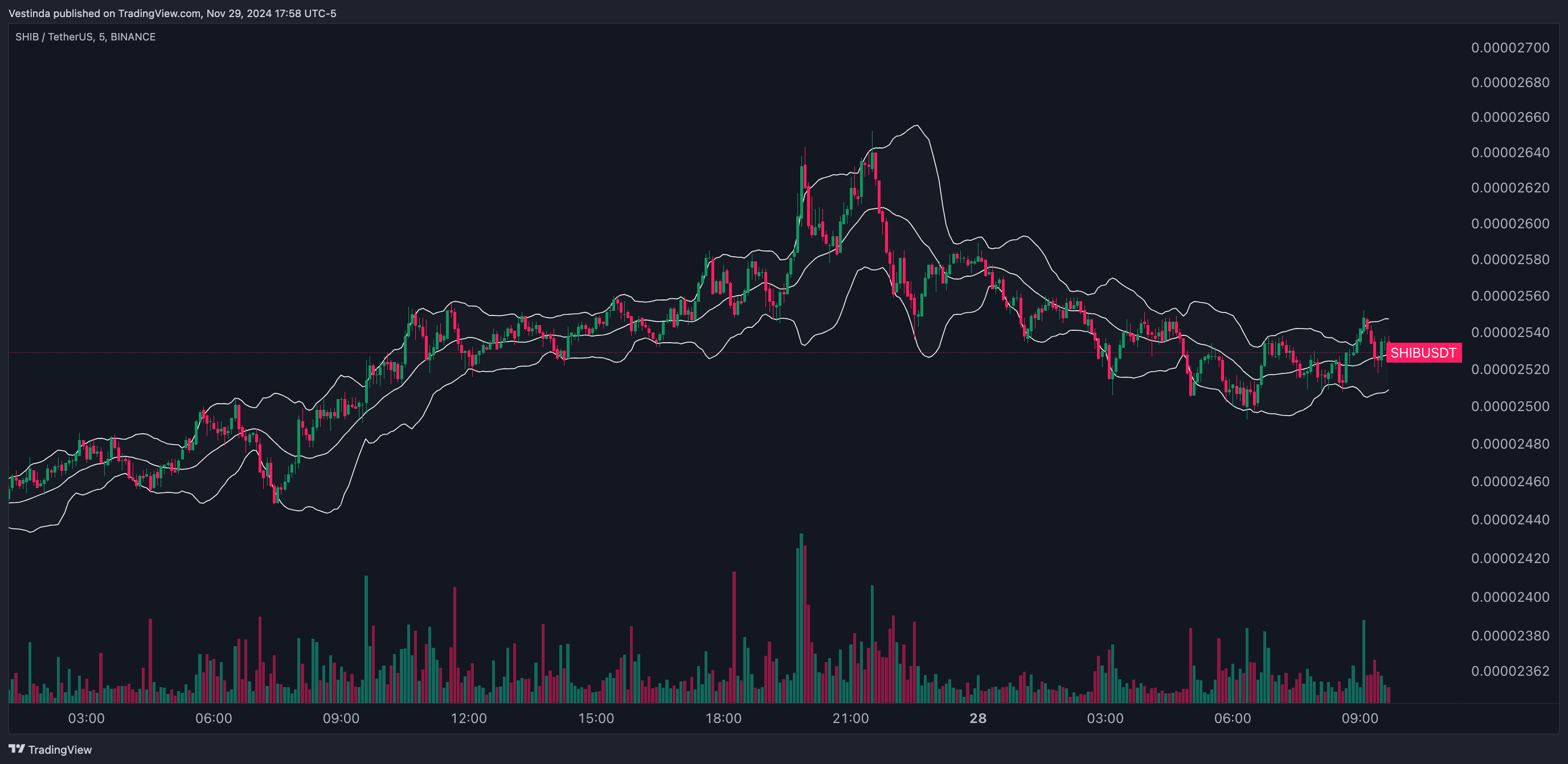
2. Breakout Trading with Bollinger Bands:
Concept: Identify and trade SHIB’s breakouts from consolidation phases.
- Setup: Use Bollinger Bands with a 20-period SMA and standard deviation of 2.
- Execution Rules:
- Buy Signal: Enter long when SHIB price breaks above the upper band with rising volume.
- Sell Signal: Exit when price consolidates or falls back within the bands.
- Enhancement: Confirm breakout strength with a volume spike or VWAP (Volume Weighted Average Price).
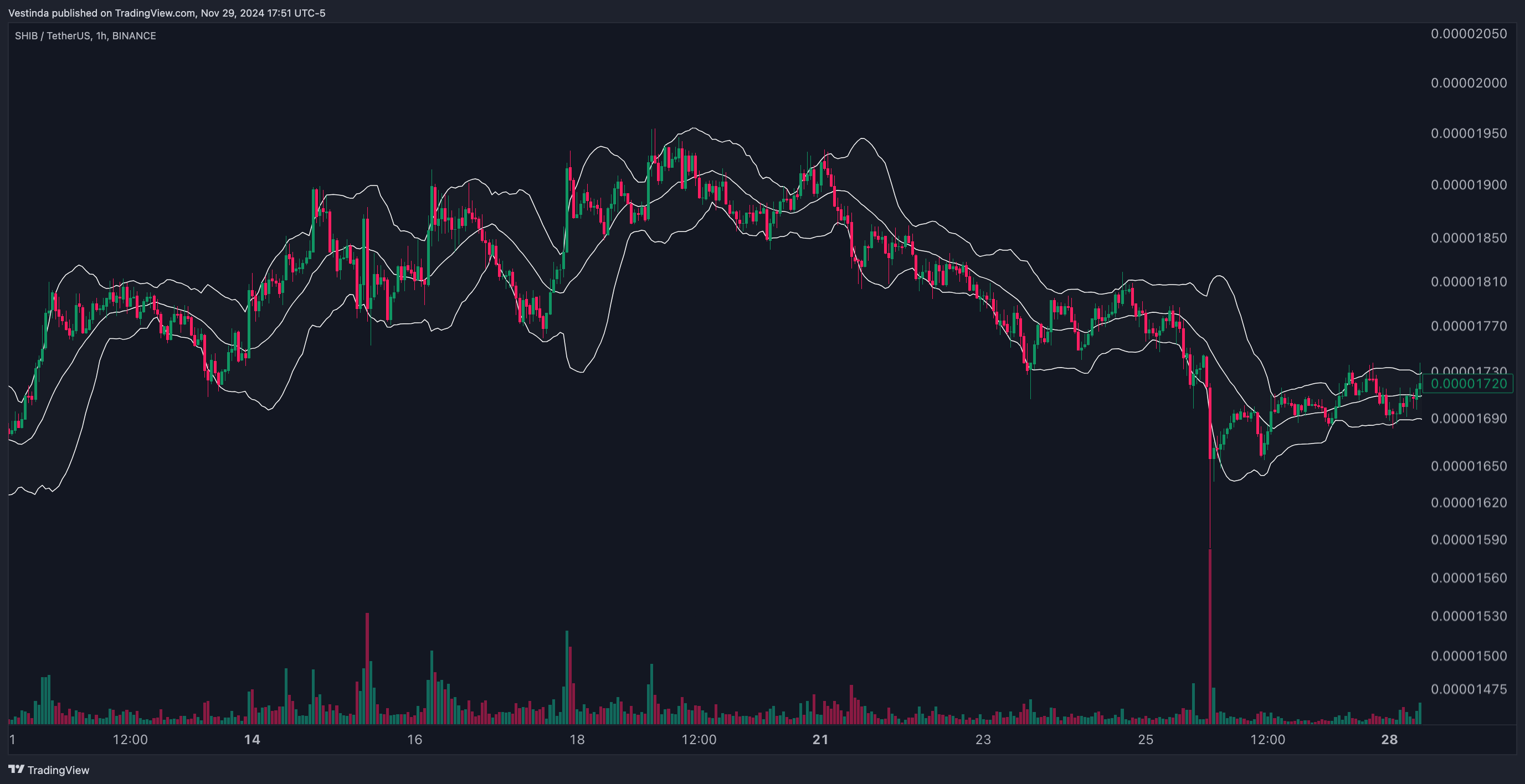
3. Scalping with Keltner Channels:
Concept: Execute multiple small trades by capitalizing on SHIB’s intraday price movements.
- Setup: Apply Keltner Channels with a 20-period EMA and ATR multiplier of 2.
- Execution Rules:
- Buy Signal: Enter long when SHIB price touches the lower channel and shows a reversal.
- Sell Signal: Exit near the upper channel or upon price weakening.
- Best For: Quick trades with tight stop-losses in highly volatile conditions.
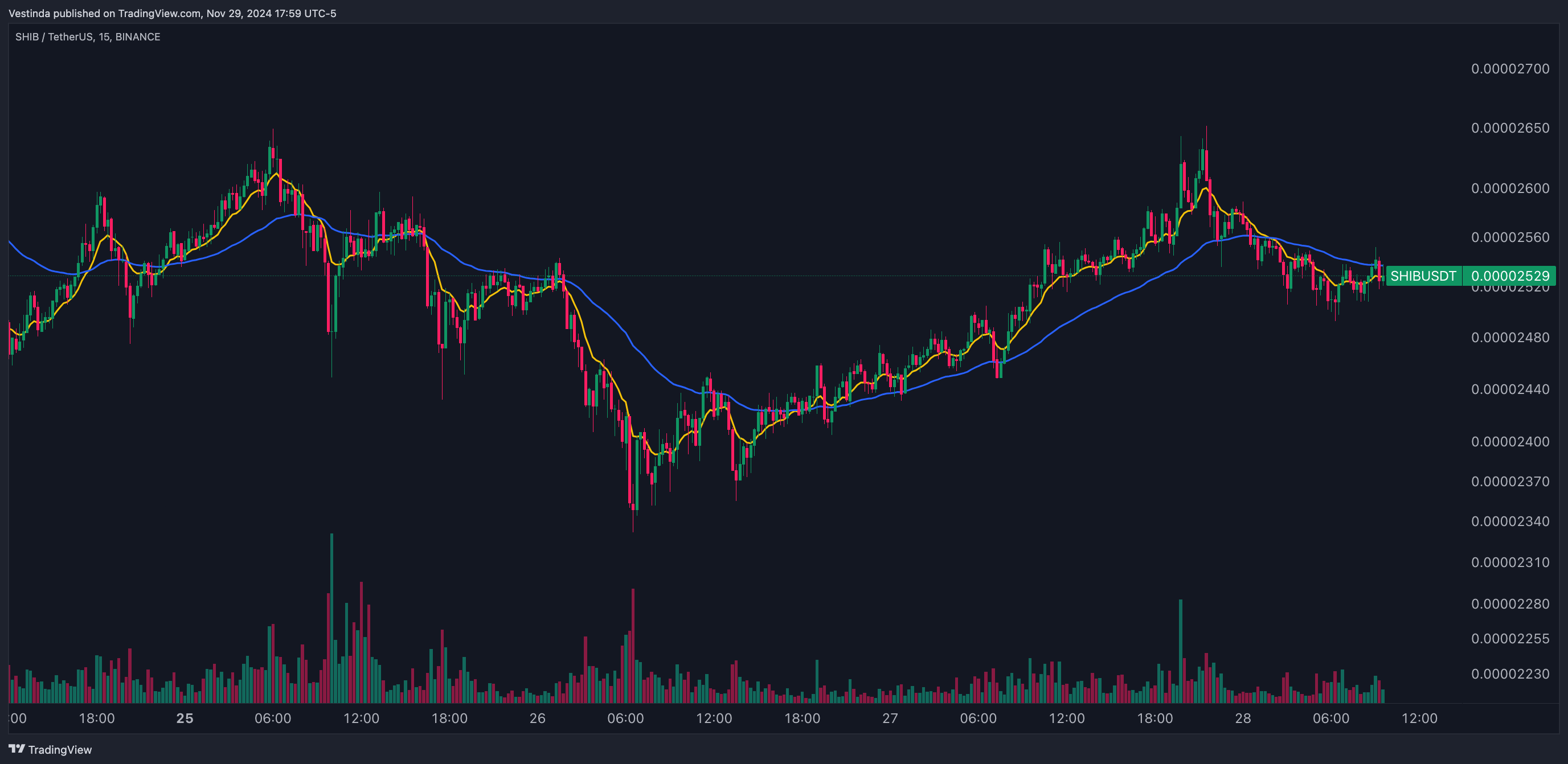
4. Trend-Following with Moving Averages:
Concept: Trade in the direction of SHIB’s short-term trend.
- Setup: Use a 10-period EMA (fast) and a 50-period EMA (slow).
- Execution Rules:
- Buy Signal: Enter long when the 10 EMA crosses above the 50 EMA.
- Sell Signal: Exit when the 10 EMA crosses below the 50 EMA.
- Enhancement: Use Supertrend to confirm trend direction.
Pro Tips for Successful SHIB Day Trading:
- Set Realistic Goals: Focus on consistent small profits rather than aiming for a single large win.
- Monitor Key Timeframes: Use a 5-minute or 15-minute chart for intraday analysis and execution.
- Stay Updated: Keep an eye on SHIB-related news and major crypto market developments.
- Leverage Technology: Use tools like automated trading bots to enhance speed and precision.
Risk Management for Day Trading SHIB:
- Define Your Risk Per Trade: Limit exposure to 1-2% of your trading capital per trade.
- Set Stop-Loss Orders: Place stop-losses just below support levels or based on ATR for volatility.
- Use Take-Profit Targets: Secure profits at predefined levels based on resistance zones or Fibonacci extensions.
Common Mistakes to Avoid:
- Overtrading: Avoid excessive trades driven by impulsive decisions. Stick to your strategy.
- Neglecting Market Conditions: Adapt your approach based on SHIB’s current trend, volume, and volatility.
- Ignoring Fees: Factor in trading fees when scalping, as frequent trades can add up.
Example Day Trading Routine:
- Pre-Market Analysis:
- Identify key support and resistance levels.
- Check indicators for potential setups.
- Trade Execution:
- Enter trades based on confirmed signals from your strategy.
- Use trailing stop-losses to lock in profits.
- Post-Market Review:
- Analyze your trades to identify areas for improvement.
Conclusion:
Day trading Shiba Inu offers immense potential for profit, but it requires discipline, a solid strategy, and effective risk management. By employing techniques like momentum trading, breakout setups, and trend-following, traders can navigate SHIB’s volatility with confidence. Continuous learning and refinement are key to achieving long-term success.
Mastering Day Trading Profitability: SHIB Edition
- Research and educate yourself about the basics of day trading and the cryptocurrency market. Understand the factors that influence the price movements of SHIB and develop a trading strategy.
- Open an account with a reputable cryptocurrency exchange that supports SHIB trading. Complete the necessary verification process and deposit funds into your account.
- Start by practicing with a demo account to familiarize yourself with the trading platform. Test your strategy and gain experience without risking real money.
- Identify potential entry and exit points for SHIB based on technical analysis and market trends. Set realistic profit targets and define your stop-loss levels to manage risk.
- Execute your trades confidently and stick to your strategy, avoiding impulsive decisions. Monitor the market closely and adjust your strategy if needed based on market conditions.
- Regularly evaluate your trading performance, identifying areas for improvement and adapting your strategy. Keep track of your profits and losses to make informed decisions in the future.
Mastering Day Trading: The Primary Rule Unveiled
The first rule of day trading is to manage risk effectively. This means setting stop-loss orders and sticking to them. It's important to have a clear exit strategy in place. Additionally, diversify your portfolio to reduce risk. One should also avoid emotional trading decisions and stick to a well-defined trading plan. When day trading SHIB or any other cryptocurrency, stay informed about market trends and news. However, don't be solely reliant on others' opinions or tips. Develop your own trading strategy and analyze the market yourself. Remember, it's crucial to stay disciplined and not let greed or fear drive your trading decisions.
Diverse Day Trading Strategies and Approaches: Explained
There are different types of day trading strategies that traders can use in the market. Momentum trading focuses on following the trends and buying stocks that are gaining upward momentum. Scalping involves making multiple quick trades throughout the day to capitalize on small price movements. Range trading involves trading within a specific price range and taking advantage of support and resistance levels. Breakout trading is when traders look for stocks that are breaking out of a specific price level with high volume. News trading involves taking positions based on market news and announcements. SHIB day trading strategies can include any of these types, depending on the trader's preference and risk tolerance. It is important to thoroughly research and understand the chosen strategy to increase the chances of success in day trading SHIB.
Mitigating SHIB day trading risks.
Risk management is crucial in SHIB day trading, given its volatility and unpredictability. Setting stop-loss orders is essential to limit potential losses in case the price moves against your position. Effective risk management also involves diversifying your portfolio to reduce reliance on a single asset. One way to achieve this is by allocating only a small portion of your overall trading capital to SHIB. Additionally, keeping an eye on the market and staying updated with news and developments related to SHIB can help in making informed trading decisions. Adequate risk management ensures that your trading strategy is not solely based on luck but is grounded in careful analysis and preparation. Therefore, it is vital to prioritize risk management in SHIB day trading to minimize potential losses and maximize chances of success.
-
 Create
account -
 Discover profitable
strategies -
 Connect exchange
& start earning
Frequently Asked Questions
Beginners can trade SHIB on various cryptocurrency exchanges by following a few steps. Firstly, they need to create an account on a reliable exchange that supports SHIB trading. After completing the account verification process, beginners can deposit funds into their account. They can then search for the SHIB trading pair, typically SHIB/USDT or SHIB/BTC. Beginners should analyze the market, set a desired buy or sell price, and enter the trade accordingly. It is advisable for beginners to start with small trades and gradually gain experience and understanding of the market before increasing their trading activity.
The average earnings of day traders can vary significantly and are influenced by various factors such as market conditions, trading strategies, and experience levels. While it is difficult to determine an exact figure, studies suggest that the majority of day traders do not consistently generate substantial profits. In fact, a significant portion of day traders may even incur losses. However, some seasoned and successful day traders have reported earning significant returns on their investments. It is important to recognize that day trading involves substantial risks, and potential earnings should be analyzed on an individual basis.
The four types of trading typically referenced are day trading, swing trading, position trading, and scalping. Day trading involves frequent buying and selling of financial instruments within the same trading day. Swing trading aims to capture shorter-term price movements over days or weeks. On the other hand, position trading focuses on long-term investments, holding positions for months or even years. Lastly, scalping involves quick trades to profit from small price movements. Each type of trading requires different strategies and time commitments, catering to different risk profiles and investment goals.
Day trading can be extremely challenging. It requires a deep understanding of market dynamics and technical analysis, as well as quick decision-making skills. Traders must constantly monitor multiple time frames and market indicators, making it mentally and emotionally draining. It demands significant time commitment, constant learning, and adapting to ever-changing market conditions. Additionally, day trading involves substantial risks, as markets can be volatile and unpredictable. It requires discipline to manage emotions and adhere to strategies. Success in day trading is not guaranteed and many individuals incur losses. Only those willing to dedicate substantial effort and handle the inherent challenges can thrive in this intense and demanding field.
The 11am rule in trading refers to a common belief among traders that the first hour of trading (9:30am to 10:30am) is characterized by volatility and erratic price movements. As a result, it is recommended to avoid making any major trades during this period. Instead, traders often wait until around 11am when the market tends to settle and exhibit more stable trends. This rule is followed to mitigate risks associated with potential false breakouts and sudden reversals that frequently occur during the early trading hours.
Conclusion
In conclusion, SHIB (Shiba Inu) day trading presents an exciting opportunity for traders, both novice and experienced. By understanding the basics of day trading and the cryptocurrency market, developing effective strategies, and utilizing day trading tools and software, traders can navigate the volatility of SHIB and capitalize on its price fluctuations. Managing risk effectively, staying disciplined, and staying informed about market trends and news are key elements of successful day trading. There are various strategies that traders can employ in SHIB day trading, such as momentum trading, scalping, range trading, breakout trading, and news trading. Thorough research and understanding of the chosen strategy, along with proper risk management, are essential for success in day trading SHIB.

Successful traders rely on backtesting to be profitable.
Be like them with our
Free Backtesting Guide