
-
 Create
account -
 Discover profitable
strategies -
 Connect exchange
& start earning
Automated Strategies & Backtesting results for NSEI
Here are some NSEI trading strategies along with their past performance. You can validate these strategies (and many more) for free on Vestinda across thousands of assets and many years of historical data.
Automated Trading Strategy: Medium Term Investment on NSEI
Based on the backtesting results statistics, the trading strategy implemented from October 2, 2023, to November 2, 2023, displayed a profit factor of 0.88. The annualized ROI was reported to be -1.95%, indicating a margin of negative returns over the specified period. On average, trades were held for 4 days and 8 hours, and the strategy conducted an average of 0.45 trades per week. With only 2 closed trades, the ROI stood at -0.17%. The winning trades percentage was reported at 50%, suggesting an equal distribution of successful and unsuccessful ventures. However, the strategy outperformed the buy-and-hold approach by generating excess returns of 2.69%.
 NSEI
NSEI

Choose another period and try again.
Automated Trading Strategy: Sell with Smart Money Supply with SL on NSEI
From October 2, 2023, to November 2, 2023, this trading strategy demonstrated promising results. With a profit factor of 1.77, it indicated a favorable risk-reward ratio. The annualized return on investment stood at 10.85%, suggesting a respectable performance over the given period. On average, each position was held for 3 days and 6 hours, indicating relatively short-term trades. With an average of 0.67 trades per week, the strategy displayed a conservative approach. Out of the 3 closed trades, only 33.33% were winning trades. However, despite this lower success rate, the strategy outperformed a simple buy and hold strategy by generating excess returns of 3.79%. Overall, these backtesting results indicate potential for future success.
NSEI
Choose another period and try again.
NSEI (Nifty 50) Swing Trading: Expert Strategies and Tips
Introduction:
The Nifty 50 (NSEI) is one of India’s most prominent stock indices, representing the top 50 companies listed on the National Stock Exchange (NSE). For traders looking to capitalize on medium-term price movements, swing trading the Nifty 50 can be a highly effective strategy. In this guide, we’ll explore expert strategies and tips for swing trading NSEI, helping you enhance your trading performance and achieve consistent profitability.
Why Swing Trade NSEI?
- Market Representation: NSEI offers exposure to a broad range of sectors within the Indian economy, making it a diversified trading instrument.
- Volatility and Liquidity: The Nifty 50 is known for its liquidity and moderate volatility, which are ideal conditions for swing trading.
- Technical Patterns: The Nifty 50 often adheres to technical patterns, providing clear opportunities for swing traders to profit from price movements.
Key Swing Trading Strategies for NSEI:
Trend Following:
Concept: Capture profits by trading in the direction of the prevailing trend.
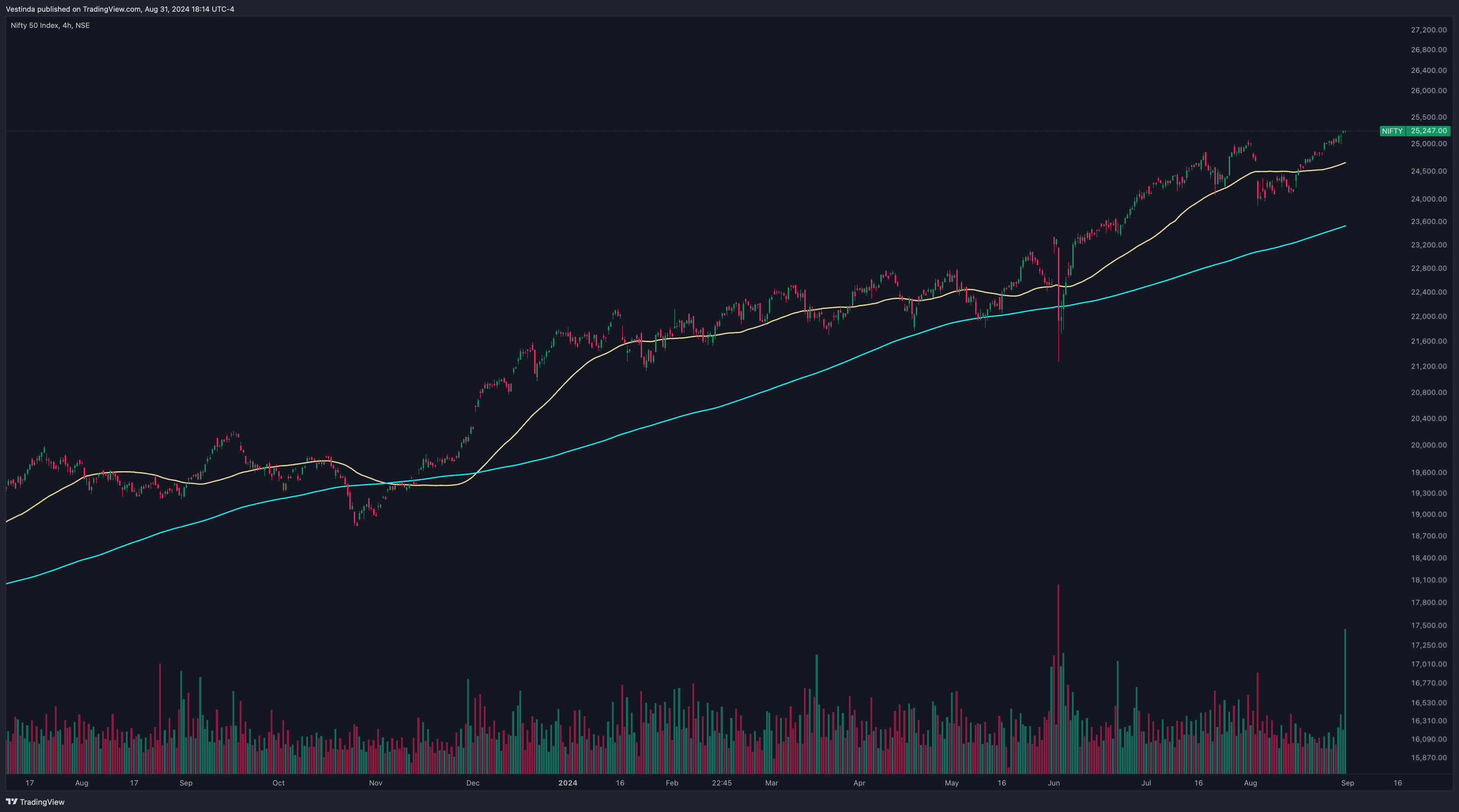
How to Implement:
- Indicators: Use moving averages (e.g., 50-day and 200-day) to identify the direction of the trend.
- Entry and Exit: Enter long positions when the Nifty 50 is in an uptrend, confirmed by the price staying above key moving averages. Exit when the trend shows signs of reversal, such as a moving average crossover or a bearish candlestick pattern.
Breakout Trading:
Concept: Trade the breakout of key support or resistance levels to capture strong price movements.
How to Implement:
- Chart Patterns: Identify consolidation patterns like triangles, rectangles, or flags that indicate a potential breakout.
- Volume Confirmation: Ensure the breakout is accompanied by strong volume, signaling a high probability of continuation.
- Entry and Exit: Enter the trade as soon as the price breaks out of the pattern, setting a stop-loss just below the breakout level to manage risk. Exit when the price reaches a significant resistance or support level.
Swing Trading with RSI:
Concept: Use the Relative Strength Index (RSI) to identify overbought or oversold conditions and anticipate potential reversals.
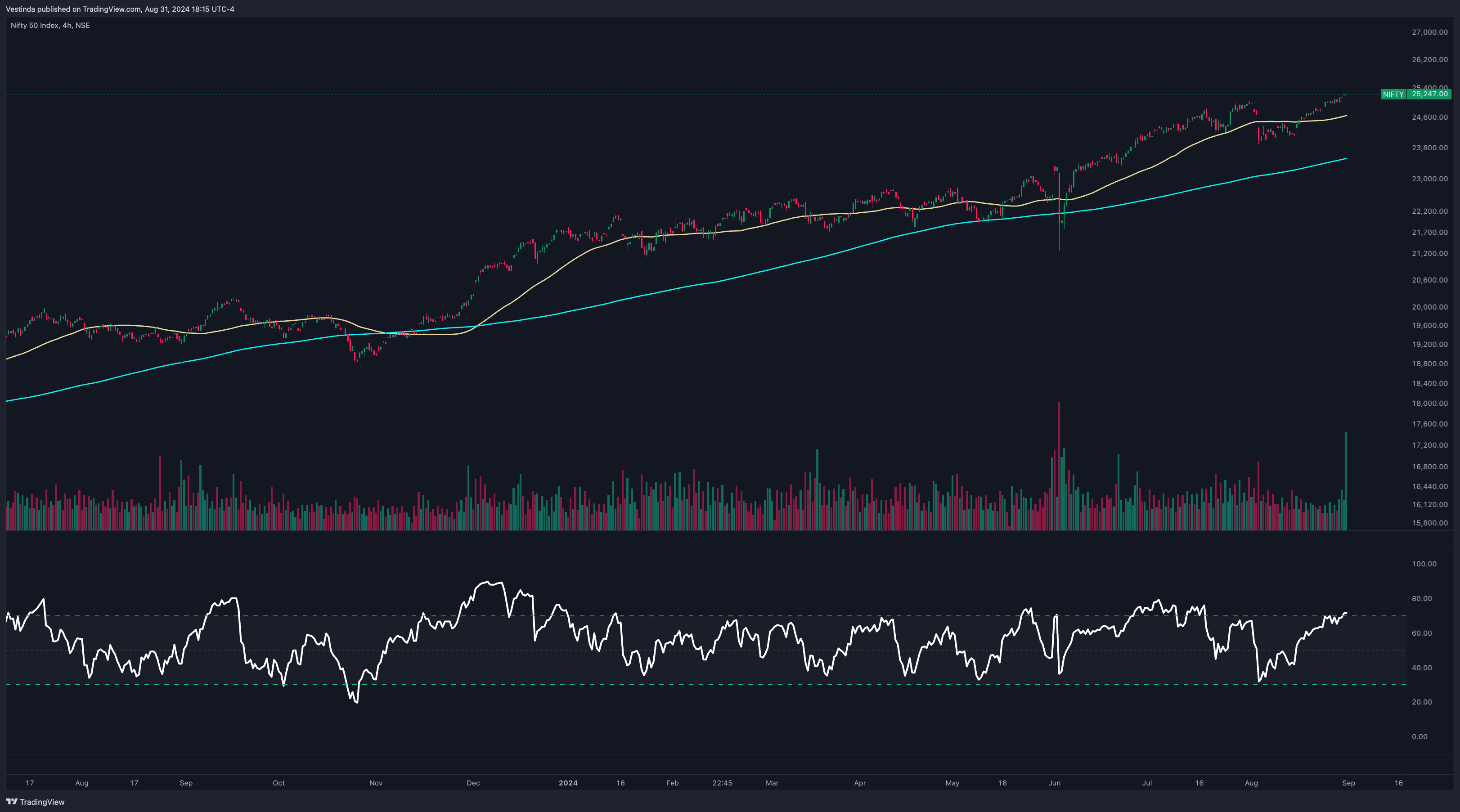
How to Implement:
- RSI Levels: Monitor RSI levels for overbought (above 70) or oversold (below 30) conditions.
- Entry and Exit: Enter long positions when RSI indicates oversold conditions and exit when RSI approaches overbought levels. For short positions, enter when RSI indicates overbought conditions and exit when RSI approaches oversold levels.
Fibonacci Retracement Strategy:
Concept: Use Fibonacci retracement levels to identify potential entry points during pullbacks within a larger trend.
How to Implement:
- Fibonacci Levels: Plot Fibonacci retracement levels (e.g., 38.2%, 50%, 61.8%) on a recent price swing. These levels often act as support or resistance during pullbacks.
- Combining with Moving Averages: Use moving averages to confirm entry points when the price retraces to a Fibonacci level.
- Entry and Exit: Enter trades at or near the Fibonacci levels with a stop-loss just below the level. Exit the trade as the price approaches the previous high (in an uptrend) or low (in a downtrend).
The RSI and Moving Average Crossover:
Incorporating both RSI and moving average crossovers can provide stronger signals for swing trading.

How to Use:
- Entry: Combine RSI signals with a moving average crossover. Enter a long position when the RSI indicates oversold conditions and the short-term moving average crosses above the long-term moving average.
- Exit: Exit when RSI approaches overbought levels or when the short-term moving average crosses back below the long-term moving average.
Tools and Indicators for Successful NSEI Swing Trading:
Timeframes:
Why: Swing trading typically involves holding positions for several days to weeks. Analyzing daily and weekly charts can help identify medium-term trends.
How to Use: Apply your preferred indicators on daily and weekly charts to spot potential swing trading opportunities.
Volume Analysis:
Why: Volume helps confirm the strength of price movements, especially during breakouts or trend reversals.
How to Use: Monitor volume spikes and trends in conjunction with your chosen indicators to validate trading signals.
Candlestick Patterns:
Why: Candlestick patterns like bullish engulfing, hammer, or doji can provide early signals of trend reversals or continuations.
How to Use: Combine candlestick patterns with OBV, RSI, or moving averages to enhance your entry and exit decisions.
Risk Management for NSEI Swing Trading:
Position Sizing:
Concept: Determine the size of each trade based on your overall risk tolerance and the distance to your stop-loss level.
How to Implement: Use a percentage of your trading capital (e.g., 1-2%) for each trade, ensuring that losses are kept within manageable limits.
Stop-Loss Orders:
Concept: Protect your capital by placing stop-loss orders to limit potential losses.
How to Implement: Set stop-loss levels below recent support (for long positions) or above recent resistance (for short positions) based on your chosen strategy.
Take-Profit Orders:
Concept: Lock in profits by using take-profit orders when price targets are reached.
How to Implement: Place take-profit orders at significant support or resistance levels, or use a trailing stop to capture more of the trend while protecting your gains.
Mastering Trend Analysis for Effective Swing Trading
Trend analysis is crucial in swing trading as it helps traders identify profitable opportunities. By analyzing the momentum and direction of the market, traders can make informed decisions regarding when to enter or exit a trade. This analysis involves studying various technical indicators and price patterns to identify trends. For example, a trader may use moving averages or trendlines to determine if the NSEI is in an uptrend or downtrend. Understanding the trend allows traders to align their positions with the prevailing market sentiment, increasing the probability of success. By consistently analyzing trends in the market, traders can adapt their strategies to changing market conditions and improve their overall trading performance.
Swing Trading Strategies for NSEI's Bull Market
Bull market swing trading refers to a short-term trading strategy that takes advantage of the upward momentum in a bull market. Traders who engage in this strategy aim to buy stocks or other financial instruments when they are trending higher and sell them when they start to decline. By capitalizing on the ebb and flow of a bull market, swing traders hope to generate profits. The NSEI, or Nifty 50, is a popular index for swing traders in the Indian stock market. Traders may use technical analysis tools, such as moving averages or chart patterns, to identify potential swing trading opportunities. Successful swing traders often have a disciplined approach, setting clear entry and exit points for their trades. It is important to note that swing trading can be risky, as markets can be unpredictable, but it can also be a potentially rewarding strategy for skilled traders.
Swing Trading Styles on the NSEI
Swing trading can be classified into different types based on the time frame used. The most common types are intraday swing trading, short-term swing trading, and long-term swing trading. Intraday swing trading involves holding positions for a few minutes to a few hours, usually taking advantage of short-term fluctuations in the market. Short-term swing trading aims to capture price movements over a period of a few days to a few weeks, depending on the particular stock or index being traded. On the other hand, long-term swing trading involves holding positions for several weeks to months, targeting larger price movements. Traders can choose the type of swing trading that aligns with their risk tolerance and investment goals. For instance, NSEI swing traders can focus on short-term swings in the Nifty 50 index to profit from market fluctuations.
Sophisticated backtesting is not only possession of high-esteemed hedge funds anymore.
Impressive Team and support, Backtesting engine with detailed reports, The Strategy builder.

Great purchase!
I have always manually invested in stocks and cryptocurrencies, but after studying Vestinda, I must say it has enormous potential.

Mature platform for trading
Pro: Easy to use, Nice UX, A lot of customization for strategies, Back testing is an awesome tool, can check any strategy in history.

Frequently Asked Questions
Yes, swing trading can be done on NSEI (National Stock Exchange of India) with a retirement account. However, it is essential to ensure that your retirement account allows for active trading and meets the necessary regulatory requirements. Additionally, swing trading involves short-term buying and selling of securities, which carries inherent risks. It is crucial to carefully consider your risk tolerance and investment goals before engaging in swing trading, especially within a retirement account. Seeking advice from a financial advisor or consulting your retirement account provider can provide further guidance on the suitability and feasibility of swing trading in your specific retirement account.
Yes, day trading on the NSEI (National Stock Exchange of India) is possible. NSEI is one of the major stock exchanges in India, offering a wide range of securities to trade. As a day trader, you can participate in intraday trading on the NSEI, taking advantage of short-term price movements to make profits. However, it is important to note that day trading involves significant risks and requires a thorough understanding of market dynamics, technical analysis, and risk management strategies. It is advisable to acquire knowledge, practice with a virtual account, and consult with financial experts before engaging in day trading.
To win at swing trading, you need a solid strategy and disciplined execution. First, identify stocks or other assets with strong price volatility and liquidity. Conduct thorough technical analysis to spot potential entry and exit points. Utilize indicators, chart patterns, and trends to make informed decisions. Implement effective risk management to protect capital. Set clear profit targets and stop-loss orders to secure gains and limit losses. Regularly review and adapt your trading plan to stay ahead of market changes. Remember, patience and discipline are key to achieving success in swing trading.
Swing trading is not illegal by itself. It is a legitimate and popular trading strategy used in the stock market. Swing traders aim to capture short-term price movements within a larger trend, typically holding their positions for a few days to weeks. However, it's important to comply with applicable laws and regulations while swing trading. This includes abiding by insider trading rules, avoiding market manipulation, and following any relevant restrictions set by regulatory bodies. As long as the trading is conducted within legal boundaries and adheres to regulations, swing trading is perfectly legal.
Swing trading on the NSEI, the National Stock Exchange of India, is primarily executed during regular market hours. Pre-market and after-hours trading opportunities are limited on the NSEI, as these sessions have lower liquidity and participation. Swing trading relies on capturing short to medium-term price swings, making it more favorable during regular market hours when there is higher volume and wider price fluctuations. While it may be possible to execute limited swing trades during pre-market or after-hours, it is not the ideal strategy for maximizing opportunities on the NSEI outside regular market hours.
Conclusion
In conclusion, NSEI swing trading is a dynamic and potentially rewarding strategy for traders interested in the Nifty 50 index and other indices. By developing a clear strategy, conducting thorough research, and implementing disciplined trade execution, traders can take advantage of short to medium-term price movements. Trend analysis is crucial in swing trading, as it helps identify profitable opportunities by analyzing market momentum and direction. Additionally, swing trading can be classified into different types based on the time frame used, allowing traders to choose a strategy that aligns with their risk tolerance and investment goals. Overall, NSEI swing trading offers exciting opportunities for traders to capitalize on market fluctuations and generate profits.

Successful traders rely on backtesting to be profitable.
Be like them with our
Free Backtesting Guide