-
100,000 available assets New
-
years of historical data
-
practice without risking money

Quantitative Strategies & Backtesting results for JPM
Here are some JPM trading strategies along with their past performance. You can validate these strategies (and many more) for free on Vestinda across thousands of assets and many years of historical data.
Quantitative Trading Strategy: Detrended Price Oscillations with ZLEMA and Shadows on JPM
Based on the backtesting results for the trading strategy during the period from November 6, 2022, to November 6, 2023, several key statistics emerge. The profit factor, calculated at 0.75, indicates that for every dollar risked, the strategy generated a profit of 75 cents. Moreover, the annualized return on investment (ROI) stands at -6.36%, signifying a loss. On average, the holding time for trades was approximately 3 days and 22 hours, while the strategy executed an average of 0.61 trades per week. The total number of closed trades amounted to 32, with winning trades constituting a mere 25% of the total. These statistics reveal a relatively unprofitable trading strategy with room for improvement.
 JPM
JPM

Choose another period and try again.
Quantitative Trading Strategy: Long term invest on JPM
Based on the backtesting results from November 6, 2016, to November 6, 2023, it can be seen that the trading strategy has shown positive performance. The profit factor stands at 1.36, indicating that for every dollar risked, the strategy generated $1.36 in profit. The annualized return on investment (ROI) is calculated at 4.68%, demonstrating steady growth over the testing period. The average holding time for trades was 11 weeks and 3 days, suggesting a long-term approach. With an average of 0.05 trades per week, the strategy was relatively conservative. Out of 19 closed trades, the winning trades accounted for 42.11%, resulting in a total return on investment of 33.41%.
JPM
Choose another period and try again.
JPM Algorithmic Trading Strategies for Long-Term Investments
Introduction
JPMorgan Chase & Co. (JPM) is one of the largest and most influential financial institutions globally, making it a popular choice for long-term investors. With the rise of algorithmic trading, investors can now automate their strategies to capture long-term growth opportunities while optimizing entry and exit points based on data-driven insights. This guide will explore how algorithmic trading strategies can be used to enhance long-term investments in JPM, providing a structured approach to maximizing returns over time.
Why Use Algorithmic Trading for Long-Term Investments in JPM?
- Efficiency: Algorithmic trading ensures that trades are executed precisely at optimal price levels, avoiding emotional decision-making and human error.
- Consistency: By automating a strategy, investors can ensure that their investment approach is consistently applied over time, even during volatile markets.
- Data-Driven Decisions: Algorithms are programmed to follow data and technical indicators, removing guesswork from the equation and enhancing the probability of success in long-term investing.
Key Algorithmic Trading Strategies for JPM Long-Term Investments:
Moving Average Crossover Strategy
Concept: This strategy uses moving averages to identify long-term trends, making it suitable for deciding when to enter or exit positions in JPM.
Why It Works: Moving averages smooth out price fluctuations and help identify the overall market direction, reducing noise and false signals.
How to Implement:
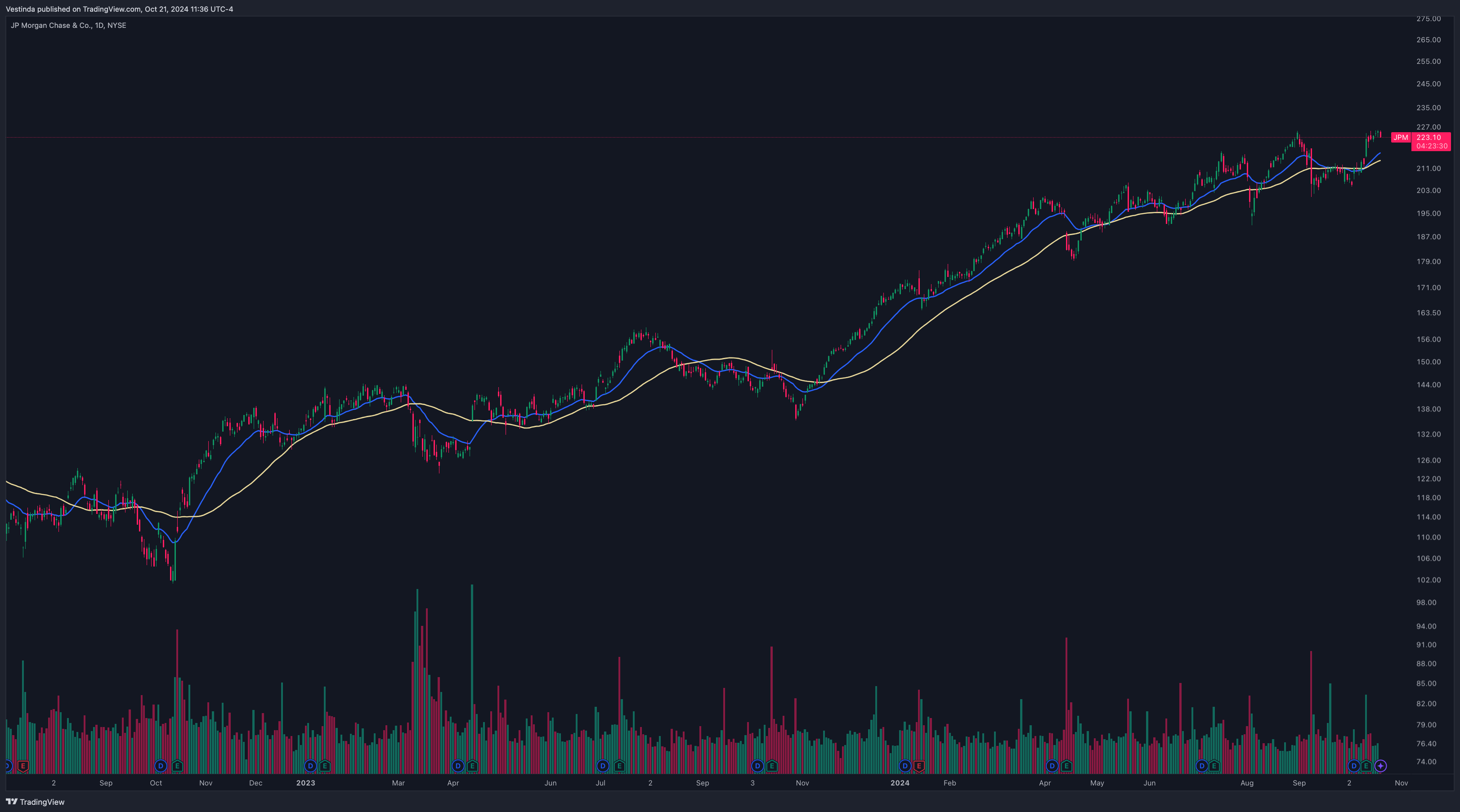
- Indicators: Use a 50-day moving average (short-term) and a 200-day moving average (long-term) to detect trend shifts.
- Entry and Exit: Automate the process to buy JPM when the 50-day MA crosses above the 200-day MA (Golden Cross) and sell when the 50-day MA crosses below the 200-day MA (Death Cross).
- Automation Tip: Set up your trading bot to detect these moving average crossovers and execute trades based on these signals, ensuring that you capture long-term trends without the need for constant monitoring.
RSI-Based Investment Strategy
Concept: The Relative Strength Index (RSI) is a momentum indicator used to identify overbought and oversold conditions, making it useful for timing long-term investment entries and exits.
Why It Works: RSI provides insight into market momentum, allowing investors to make informed decisions about when to enter JPM positions at more favorable prices.
How to Implement:
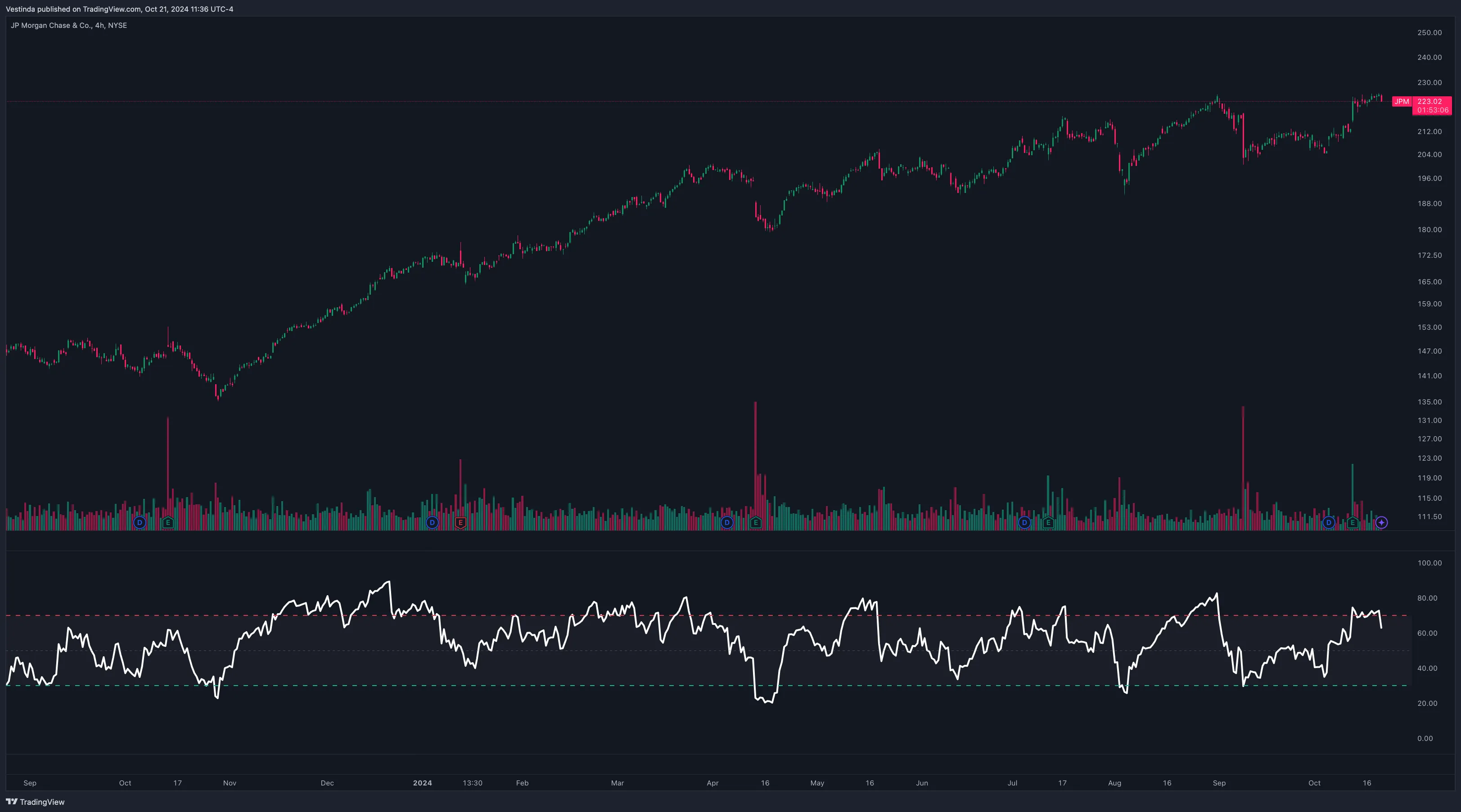
- Indicators: Use RSI with a 14-period setting to measure momentum.
- Entry and Exit: Buy JPM when RSI falls below 30 (indicating an oversold condition) and sell when RSI exceeds 70 (indicating an overbought condition).
- Automation Tip: Program your trading system to automatically enter trades when RSI levels signal oversold or overbought conditions, making it easier to time entries and exits during long-term holding periods.
MACD (Moving Average Convergence Divergence) Strategy
Concept: MACD is a momentum indicator that shows the relationship between two moving averages, helping to identify shifts in momentum and trend direction.
Why It Works: The MACD line crossing the signal line can indicate potential trend reversals or momentum changes, offering a more refined entry or exit point for long-term investors.
How to Implement:
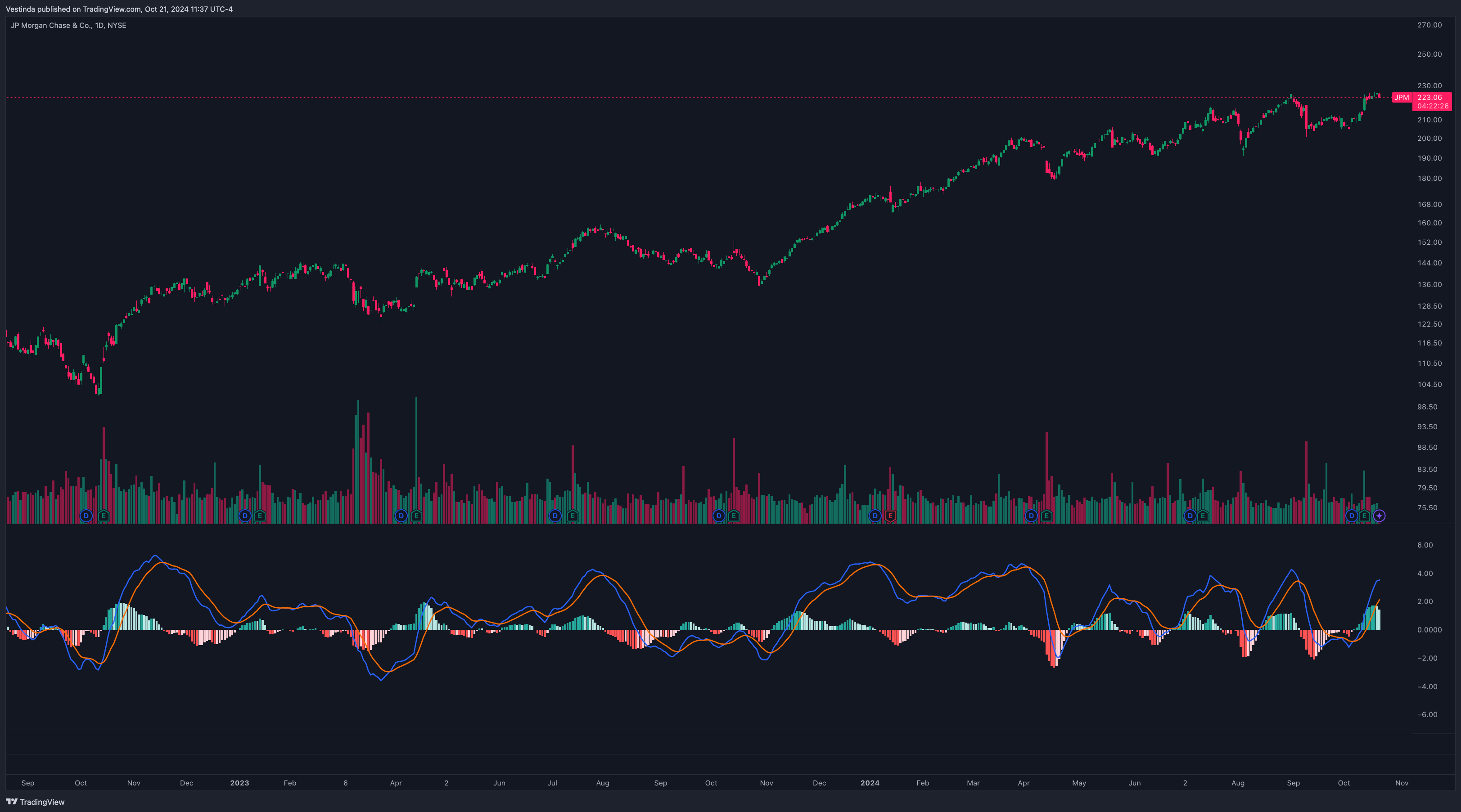
- Indicators: Use the MACD indicator with standard settings (12, 26, 9).
- Entry and Exit: Automate buy orders when the MACD line crosses above the signal line (bullish signal), and sell when it crosses below (bearish signal).
- Automation Tip: Set up your algorithm to detect MACD crossovers, ensuring timely entries and exits as market momentum shifts.
VWAP Strategy for Long-Term Investments
Concept: VWAP (Volume Weighted Average Price) reflects the average price of JPM based on its volume and price movements, helping long-term investors gauge the asset’s true market value.
Why It Works: VWAP can be used as a benchmark to determine if JPM is trading at a fair value. When the price is above VWAP, it may signal overvaluation, while a price below VWAP could indicate an undervalued entry point.
How to Implement:
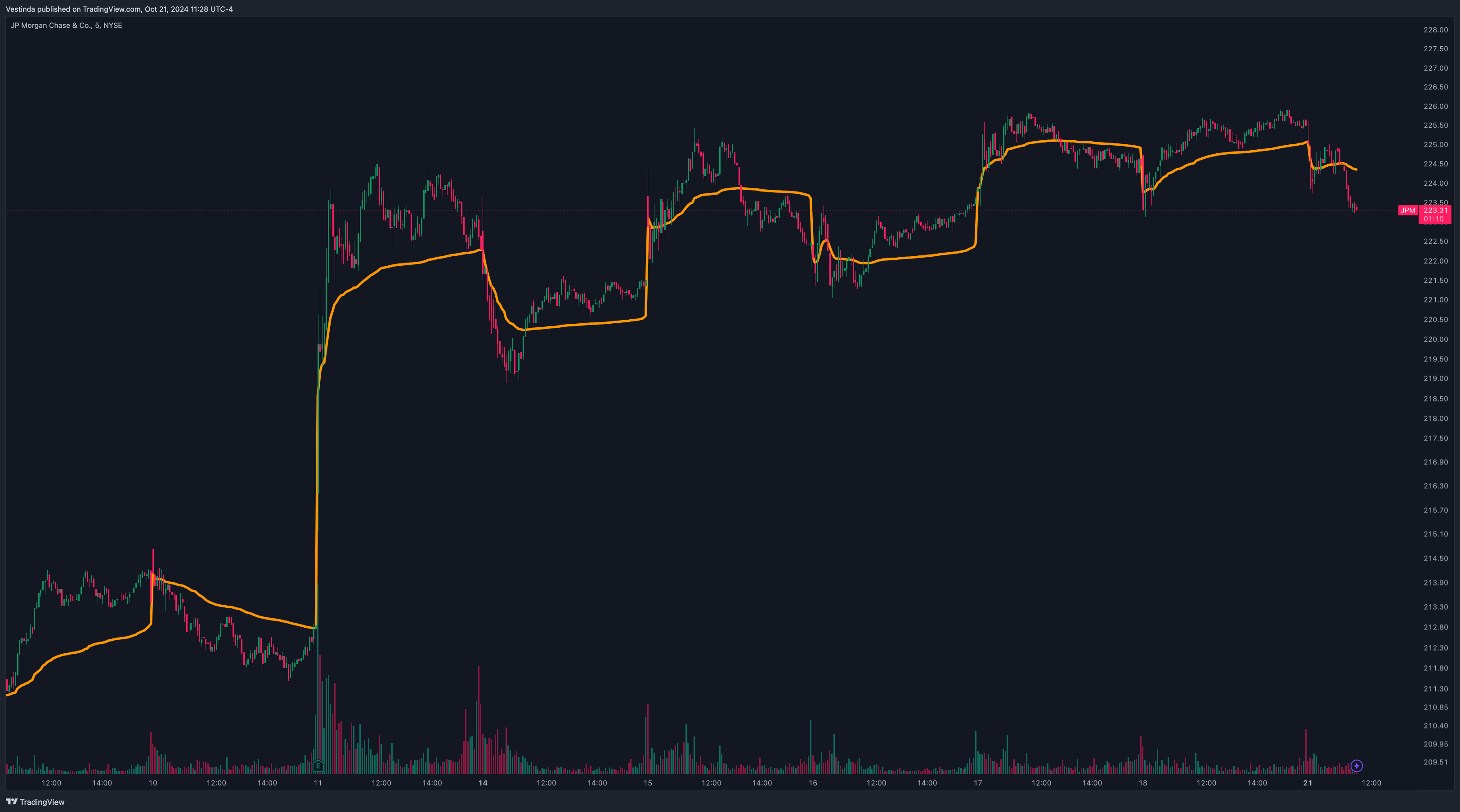
- Indicators: Use VWAP as a guiding indicator for identifying ideal buying and selling points based on the average volume-weighted price.
- Entry and Exit: Automate buys when the price is below VWAP (undervalued) and automate sells when the price is above VWAP (overvalued).
- Automation Tip: Program your algorithm to track VWAP continuously, adjusting entries and exits as the price deviates from the average.
Combining Indicators for Stronger Long-Term Strategies:
- Moving Averages + MACD: Use moving averages to identify the overall trend and combine it with MACD to confirm momentum changes. Automate buy entries when a Golden Cross forms and MACD is bullish, and sell when a Death Cross occurs with a bearish MACD signal.
- RSI + VWAP: Combine VWAP with RSI to identify ideal entry points when JPM is trading below VWAP and RSI indicates oversold conditions, enhancing your probability of entering at a favorable price.
Risk Management for Algorithmic Long-Term Investing in JPM:
Position Sizing:
Concept: Proper position sizing helps limit risk exposure by ensuring that no single trade overexposes your portfolio.
How to Implement: Automate position sizing by setting a fixed percentage (e.g., 1-2% of your portfolio per trade) based on the risk level of each trade.
Stop-Loss and Take-Profit Orders:
Concept: Stop-loss orders help protect your capital by automatically closing a position when it reaches a predefined loss level, while take-profit orders lock in gains.
How to Implement: Set stop-loss levels just below key support areas or use trailing stops to protect profits while allowing for long-term growth.
Rebalancing:
Concept: Regularly rebalance your portfolio to maintain your desired asset allocation and ensure no single position dominates.
How to Implement: Automate portfolio rebalancing based on specific intervals (e.g., quarterly or annually) or when certain allocation thresholds are breached.
Backtesting JPM Strategies:
Why: Backtesting allows you to test your algorithmic strategies on historical JPM data to see how they would have performed over time.
How to Implement: Use historical data to simulate your strategy’s performance, analyzing key metrics like return on investment, win rate, and maximum drawdown. Adjust parameters as needed before using the strategy in live markets.
Algorithmic trading offers a powerful way to enhance long-term investments in JPMorgan Chase & Co. By automating strategies based on moving averages, RSI, MACD, and VWAP, investors can optimize their entry and exit points while minimizing emotional biases. Combined with robust risk management practices and backtesting, algorithmic strategies provide a reliable framework for maximizing returns over the long term.
Mastering Algorithmic Trading for JPM Success
- Set up an algorithmic trading platform.
- Define clear investment objectives for JPM algorithmic trading.
- Gather historical and real-time data for JPM stock.
- Develop and backtest trading strategies using the collected data.
- Optimize the strategies by adjusting parameters and risk management techniques.
- Implement the chosen strategies and monitor their performance in real-time.
- Periodically review and refine the algorithms based on market conditions and outcomes.
JPM Market Arbitrage Insights
Arbitrage opportunities in the JPM market present lucrative possibilities for investors. JPM, Jpmorgan Chase & Co, is a well-established and prominent financial institution with a robust market presence. These opportunities arise due to discrepancies in prices and valuations across different platforms and markets. Traders can exploit these variations by buying low and selling high, benefiting from price differentials. By carefully monitoring and analyzing market trends, investors can identify these opportunities and swiftly execute trades to maximize their returns. However, it is important to note that arbitrage opportunities can be time-sensitive and short-lived. Therefore, investors must stay vigilant and employ efficient trading strategies to capitalize on these opportunities in the JPM market.
Navigating Regulatory Landscape: JPM Algorithmic Trading
When it comes to algorithmic trading, JPMorgan Chase & Co. (JPM) is no stranger to regulatory scrutiny. As one of the largest financial institutions in the world, JPM recognizes the importance of complying with various regulations to ensure market integrity and investor protection. These considerations are particularly important given the potential risks associated with algorithmic trading, such as market manipulation and systemic errors.
Under regulatory frameworks like MiFID II and Reg NMS, JPM must adhere to rules regarding market access, pre-trade risk controls, and post-trade transparency. To meet these requirements, JPM has established robust risk management systems and processes that carefully monitor the behavior of its algorithms. Additionally, the bank conducts thorough testing and simulation exercises to evaluate the performance and efficacy of its trading algorithms.
JPM remains committed to staying at the forefront of regulatory compliance in algorithmic trading and actively engages with regulatory bodies to shape industry best practices. Through these efforts, the bank aims to maintain a strong culture of compliance and deliver reliable and trustworthy algorithmic trading services to its clients.
JPM Algorithmic Trading Strategies for Long-Term Investments
Algorithmic trading has become increasingly popular for long-term investments in JPM due to its ability to quickly analyze complex market data. This automated trading strategy uses mathematical models to make informed trading decisions. By leveraging algorithms, investors can identify potential opportunities and execute trades at optimal prices. Algorithmic trading also minimizes human bias and emotions, allowing for a more systematic and disciplined approach to investing. It enables investors to diversify their portfolios and mitigate risk effectively. With the power of advanced technology, algorithmic trading in JPM maximizes efficiency and profitability, making it a valuable tool for long-term investment strategies.
-
 Create
account -
 Discover profitable
strategies -
 Connect exchange
& start earning
Frequently Asked Questions
In JPM algorithmic trading, slippage refers to the discrepancy between the expected price of a trade when it is entered and the actual price at which it is executed. It occurs due to various factors such as market volatility, liquidity, and order size. Slippage can be either positive or negative, resulting in the trade being executed at a higher or lower price than anticipated. Minimizing slippage is crucial for algorithmic trading strategies to ensure efficiency and profitability. JPM employs sophisticated algorithms and market analysis to mitigate slippage and enhance trading performance.
Some of the top algorithmic trading forums include r/algotrading (a popular Reddit community with active discussions and resources), Elite Trader Forum (covering a wide range of trading topics, including algorithmic strategies), and Trade2Win Forum (featuring a dedicated subforum for algorithmic trading). Additionally, the Quantopian Forum is a great resource for algorithmic trading enthusiasts, offering a platform for code-sharing, backtesting, and strategy development. These forums provide valuable insights, discussions, and support for traders, making them among the best algorithmic trading communities available.
Algorithmic trading offers numerous advantages in modern financial markets. Firstly, it allows for increased efficiency and speed in executing trades, minimizing human error and emotional biases. Additionally, algorithms enable trades to be executed at optimal prices, maximizing the potential for profit. Algorithmic trading also enhances liquidity by providing continuous market presence. Moreover, algorithms can analyze vast amounts of data and react swiftly to changing market conditions, enabling traders to seize profitable opportunities. Finally, algorithmic trading allows for improved risk management through the implementation of predefined rules and automated stop-loss mechanisms. Overall, algorithmic trading provides increased efficiency, speed, liquidity, profitability, and risk management capabilities.
Yes, individual investors can engage in algorithmic trading. Algorithmic trading involves the use of computer algorithms to make trading decisions and execute trades automatically. While it was initially prevalent among institutional investors, advancements in technology have made algorithmic trading accessible to individual investors as well. Several online brokerage firms provide platforms that allow individuals to build, test, and deploy their own trading algorithms. These platforms often offer a range of tools, data, and market connectivity, enabling individual investors to participate in algorithmic trading strategies. However, it is important for individual investors to have a thorough understanding of algorithmic trading principles and risks before getting involved.
The impact of regulation on algorithmic trading with JPM (JPMorgan Chase) is significant. As a major financial institution, JPM is subject to various regulations that aim to ensure market integrity, fair competition, and minimize systemic risks. Regulations such as MiFID II and Dodd-Frank Act impose stricter reporting requirements, algorithmic controls, and risk management procedures. While these regulations enhance transparency and reduce potential risks associated with algorithmic trading, they also increase compliance costs and implementation complexity. JPM must continuously adapt its algorithms and systems to meet regulatory standards, ultimately leading to a more stable but highly regulated algorithmic trading environment.
Conclusion
In conclusion, JPM Algorithmic Trading, utilized by Jpmorgan Chase & Co., is a powerful tool that enhances trading strategies by automating trade execution. By leveraging sophisticated algorithms and powerful tools, JPM is able to analyze vast amounts of data and capitalize on market inefficiencies. JPM remains committed to regulatory compliance, ensuring market integrity and investor protection. Algorithmic trading in JPM allows for quick analysis of complex market data, reducing human bias and emotions, and maximizing efficiency and profitability. It is a valuable tool for long-term investment strategies.

Successful traders rely on backtesting to be profitable.
Be like them with our
Free Backtesting Guide