-
100,000 available assets New
-
years of historical data
-
practice without risking money

Quantitative Strategies & Backtesting results for FET
Here are some FET trading strategies along with their past performance. You can validate these strategies (and many more) for free on Vestinda across thousands of assets and many years of historical data.
Quantitative Trading Strategy: Keltner Breakout Strategy on FET
Based on the backtesting results statistics for the trading strategy from June 7, 2019, to November 11, 2023, several key metrics have been observed. The strategy boasts a profit factor of 1.17, indicating a positive expectancy. Over this period, the annualized return on investment (ROI) stands at an impressive 77.61%. On average, positions were held for approximately one week, with 0.41 trades executed per week. With 95 closed trades, the strategy demonstrates an active approach. Despite a winning trades percentage of 35.79%, the strategy outperformed buy and hold, generating excess returns of 101.71%. These robust results highlight the potential effectiveness of the trading strategy during the given period.

 FETUSDT

Choose another period and try again.
FET (Fetch) Algorithmic Trading: A Comprehensive Beginner's Guide
Introduction
Algorithmic trading has revolutionized the way traders engage with the cryptocurrency market. For FET (Fetch.ai), algo trading offers an efficient, rule-based approach to capitalize on market movements. This beginner-friendly guide explores the essentials of algorithmic trading and provides actionable strategies to help you get started with FET trading.
What is Algorithmic Trading?
Algorithmic trading (or algo trading) uses pre-programmed rules to execute trades automatically. These rules are based on factors such as price, volume, and technical indicators, enabling traders to benefit from precision and speed.
Benefits of Algo Trading for FET:
- Speed and Efficiency: Executes trades instantly, minimizing delays.
- 24/7 Market Coverage: Operates around the clock to capture opportunities in the cryptocurrency market.
- Emotion-Free Trading: Eliminates the impact of emotions, ensuring consistent execution.
Getting Started with FET Algo Trading
1. Choose a Platform
- Popular Options: Binance or Bybit Bots, TradingView, Vestinda.
- Key Features to Look For:
- Integration with multiple indicators.
- Backtesting and simulation capabilities.
- User-friendly interfaces for strategy creation.
2. Understand the Basics of Indicators
Indicators are the foundation of algorithmic trading strategies. For FET, consider:
- Moving Averages (MA): Identifies trends over specific timeframes.
- Relative Strength Index (RSI): Measures momentum and overbought/oversold levels.
- VWAP (Volume Weighted Average Price): Tracks average price adjusted by volume.
3. Define Your Strategy
Set entry and exit conditions based on indicators.
Example: "Buy FET when RSI drops below 30 (oversold) and VWAP is trending upward."
4. Backtest and Optimize
Test your strategy using historical FET price data. Adjust parameters for optimal performance before deploying live.
Top Strategies for FET Algorithmic Trading
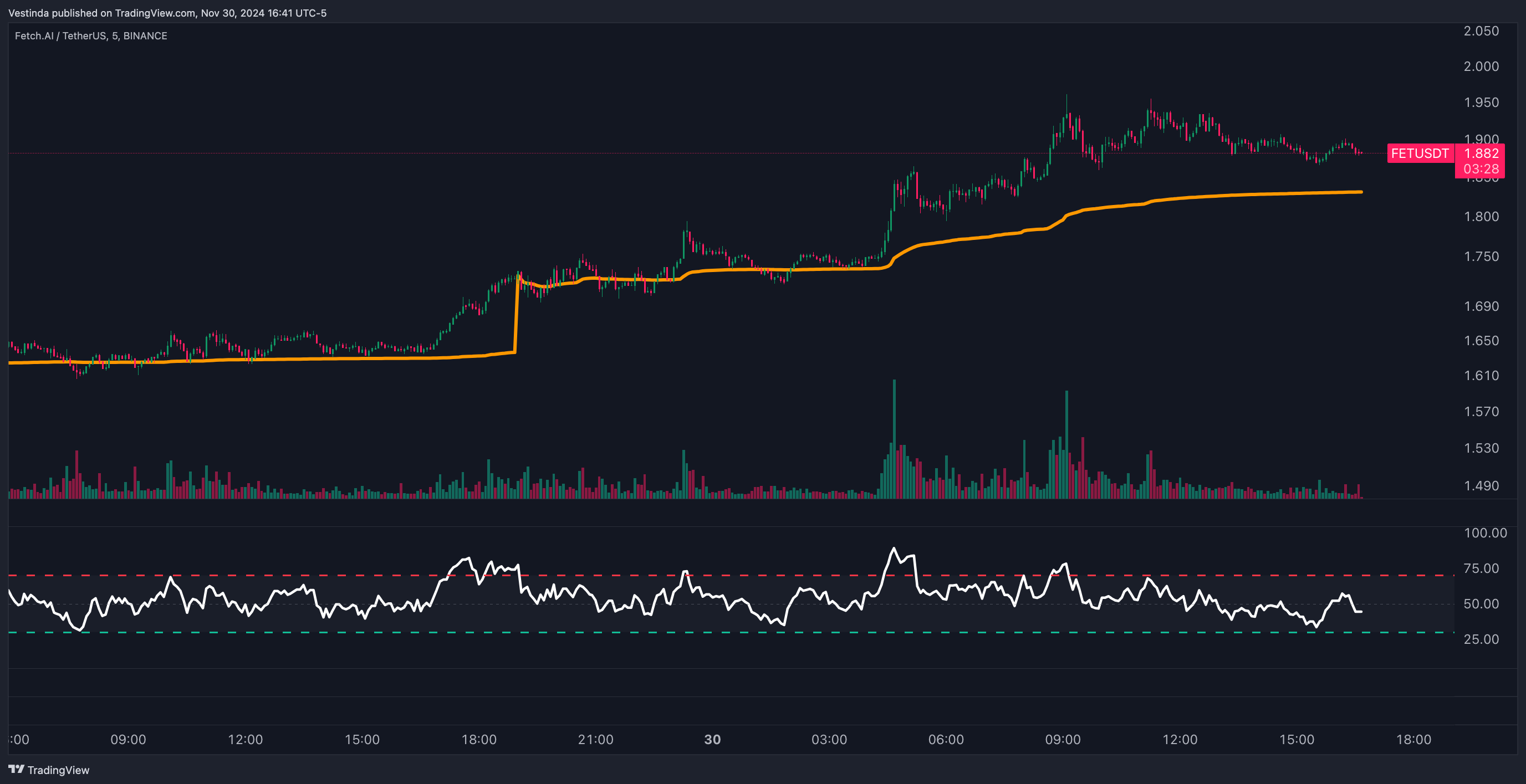
1. Momentum Trading with RSI and VWAP
Concept:
Leverage momentum to enter trades during price shifts.
Setup:
- RSI (14) for overbought/oversold conditions.
- VWAP to confirm average price trend.
Execution Rules:
- Buy Signal: Enter long when RSI exits oversold (<30) and price moves above VWAP.
- Sell Signal: Exit when RSI enters overbought (>70).
2. Trend-Following with Moving Averages
Concept:
Align trades with the prevailing trend.
Setup:
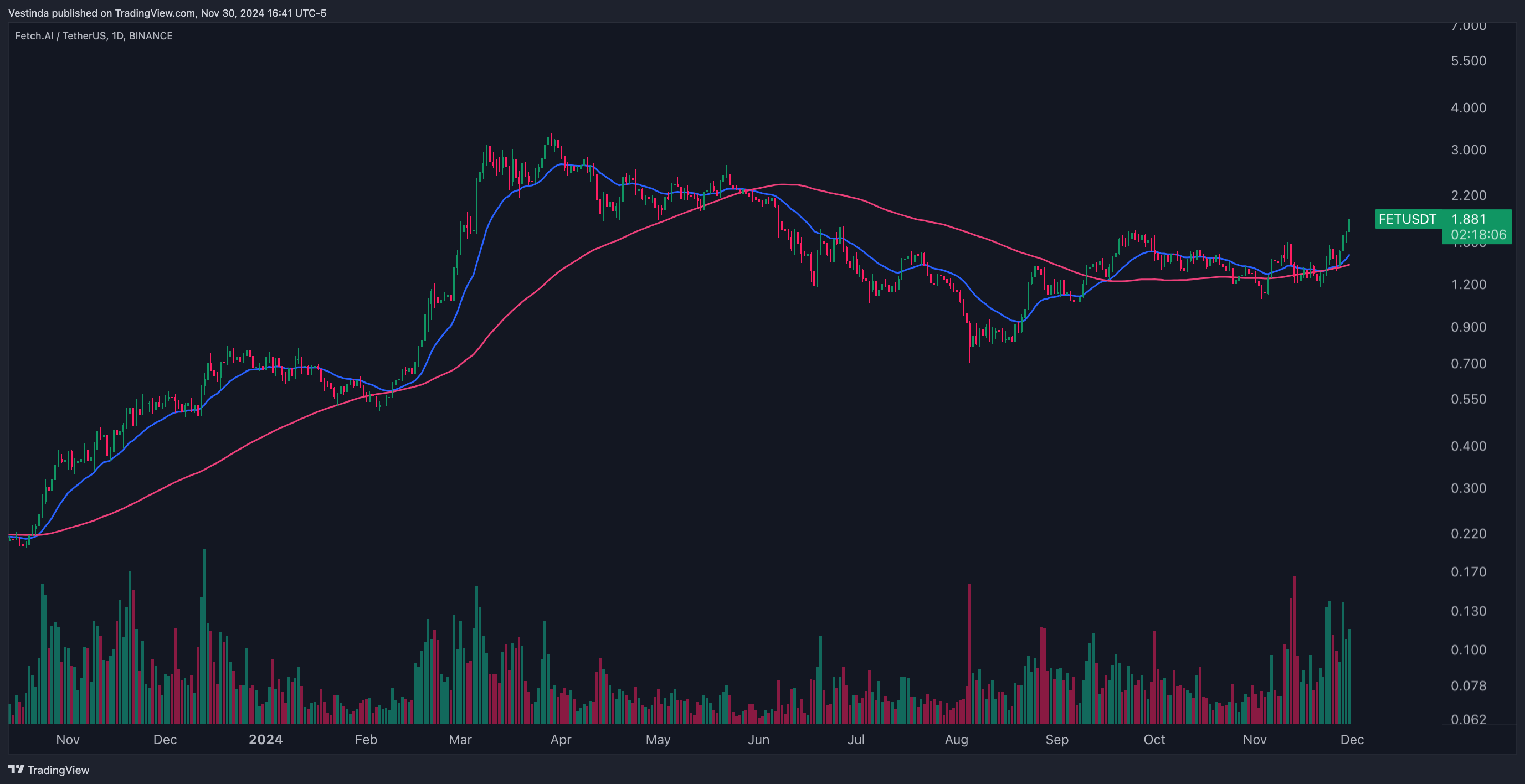
- Use a 20-period EMA (short-term) and a 100-period EMA (long-term).
Execution Rules:
- Buy Signal: Enter long when the 20 EMA crosses above the 100 EMA.
- Sell Signal: Exit when the 20 EMA crosses below the 100 EMA.
3. Range Trading with Bollinger Bands
Concept:
Exploit price oscillations within defined ranges.
Setup:
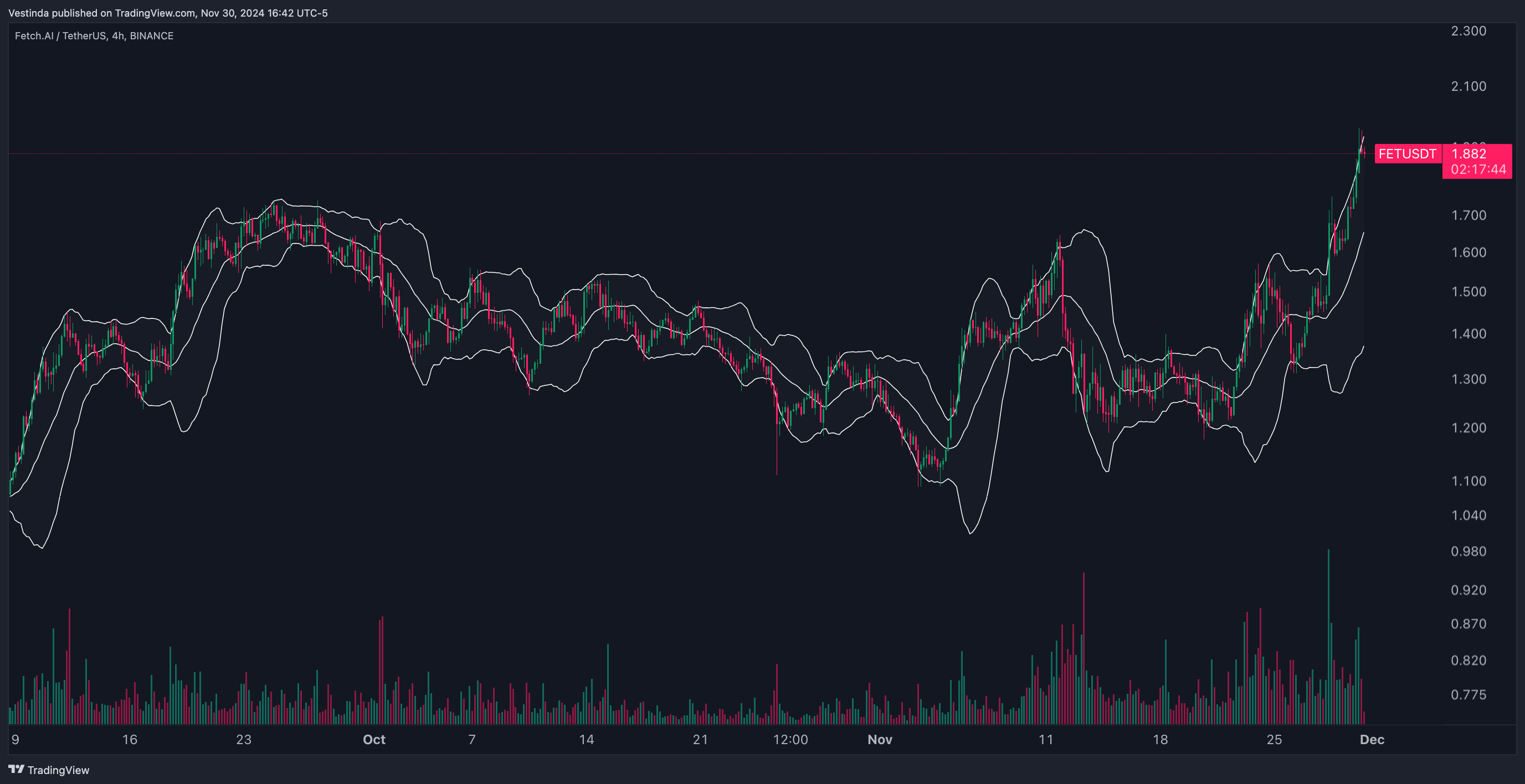
- Bollinger Bands (20, 2) to identify upper and lower price boundaries.
Execution Rules:
- Buy Signal: Enter long when price touches the lower Bollinger Band.
- Sell Signal: Exit near the upper Bollinger Band.
Risk Management Tips
- Position Sizing: Risk no more than 1-2% of your portfolio on a single trade.
- Stop-Loss Orders: Set stop-loss levels based on volatility indicators like ATR.
- Diversification: Avoid over-reliance on a single strategy; test multiple approaches.
Advantages of Algorithmic Trading for Beginners
- Ease of Execution: Simplifies complex strategies into automated rules.
- Time Efficiency: Operates in the background, requiring minimal manual intervention.
- Improved Discipline: Removes the risk of emotional decision-making.
Common Mistakes to Avoid
- Over-Optimization: Avoid creating overly complex strategies that only work in backtesting.
- Ignoring Market Conditions: Adapt your algo strategy to changing trends and volatility.
- Neglecting Regular Monitoring: Review bot performance and refine strategies periodically.
Conclusion
Algorithmic trading offers an exciting pathway for traders looking to optimize their FET trading strategies. By incorporating tools like RSI, VWAP, and Bollinger Bands, beginners can create effective and consistent strategies. With a focus on risk management and ongoing refinement, algo trading can become a cornerstone of success in the cryptocurrency market.
Mastering Algorithmic Trading with Fetch (FET)
- Research and select a reliable algorithmic trading platform that supports FET trading.
- Open an account with the chosen platform by providing necessary personal information.
- Fund your trading account by depositing the desired amount of capital.
- Develop or choose a pre-built algorithmic trading strategy specifically designed for FET.
- Configure your chosen strategy on the trading platform by setting parameters and risk management rules.
- Monitor the algorithmic trading system regularly to ensure it is functioning properly.
- Evaluate the performance of your algorithmic trading strategy and make necessary adjustments if required.
AI's Influence on FET Trading Algorithms
Artificial intelligence plays a crucial role in FET trading algorithms, revolutionizing the financial market. These algorithms utilize AI to analyze vast amounts of data, uncover patterns, and predict market movements. By employing machine learning algorithms, FET traders can make more informed decisions and execute trades with precision. Through AI, FET trading algorithms adapt and learn from real-time market data, enhancing their accuracy and effectiveness over time. This technology also enables traders to automate their strategies, reducing the need for manual intervention. AI-powered FET trading algorithms have the potential to minimize risks, increase efficiency, and generate higher returns in the dynamic world of financial trading. As AI continues to evolve, its integration in FET trading algorithms will undoubtedly shape the future of the financial industry.
FET Algorithmic Trading Risk Management
Managing Risk in FET algorithmic trading is crucial for successful and sustainable trading outcomes. Risk management involves implementing measures to minimize potential losses and protect capital.
Traders should carefully assess the risk associated with each trading strategy and continuously monitor the market conditions.
This includes setting stop-loss orders, which automatically execute trades once a predefined price level is reached.
Diversifying the trading portfolio is another key risk management technique, as it helps spread risk across different assets.
Furthermore, understanding and analyzing the market trends and historical data can aid in making informed trading decisions and reducing potential risks.
Regularly reviewing and adjusting risk management strategies is essential, as markets are dynamic and unpredictable.
Overall, effective risk management is crucial to mitigating losses and ensuring long-term profitability in FET algorithmic trading.
Optimizing Portfolio Diversity Using FET Algorithmic Trading
When it comes to building a diversified portfolio, utilizing the FET algorithmic trading system can be a game-changer. With FET, short for Fetch, investors can diversify their investments and maximize their returns. The algorithm uses advanced data analysis and machine learning to identify profitable opportunities in various markets. By utilizing FET, investors can trade across multiple asset classes, such as stocks, commodities, and cryptocurrencies. This allows for a balanced and risk-managed approach to investing. FET algorithmic trading also takes into account market trends, news sentiment, and historical data to make informed trading decisions. With FET, investors can achieve a well-rounded portfolio that can weather the ups and downs of the market while ultimately aiming for long-term success.






Frequently Asked Questions
In algorithmic trading, technical analysis is used to analyze historical price data and identify patterns or trends that can inform trading decisions. Traders utilize various technical indicators such as moving averages, Bollinger Bands, or RSI to generate trading signals. These signals can be programmed into an algorithm that automatically executes trades based on predetermined rules. The algorithm continuously monitors the market, adjusts positions, and executes trades accordingly, allowing for efficient and systematic trading based on technical analysis. By integrating technical analysis into algorithmic trading strategies, traders can potentially capitalize on market movements and reduce the impact of human bias and emotions.
Yes, algorithmic trading can be used for FET (Foreign Exchange Trading) scalping. Scalping involves making quick trades to profit from small price fluctuations. Algorithmic trading allows for fast and automated execution of trades based on predetermined rules and algorithms. By using algorithms to analyze market data, identify patterns, and execute trades, algorithmic trading can help capture opportunities for scalping in the FET market efficiently. Implementing algorithms can enable traders to take advantage of high-speed execution and optimize trading strategies to maximize profit potential in the scalping approach.
Yes, individual investors can engage in algorithmic trading. With advances in technology and the availability of online trading platforms, individual investors now have access to algorithmic trading strategies. They can develop or purchase algorithms that automatically execute trades based on predefined rules, allowing for faster and more efficient trading. However, it's important for individual investors to understand the risks and complexities associated with algorithmic trading and to have a good understanding of programming and market dynamics to make informed decisions.
Yes, Python is sufficient for algorithmic trading. Python’s ease of use, extensive libraries, and strong community support make it an excellent choice for developing trading strategies. Its libraries like NumPy, Pandas, and Matplotlib provide efficient data analysis and visualization capabilities. Additionally, Python's integration with brokers and data providers simplifies the process of accessing market data and executing trades. While other programming languages can also be used for algo trading, Python's simplicity and versatility make it a popular choice among traders and developers alike.
Conclusion
In conclusion, FET Algorithmic Trading, powered by advanced algorithms and artificial intelligence, offers a revolutionary approach to trading. By automating trading strategies and utilizing AI-powered algorithms, investors can optimize their trading performance and potentially achieve greater financial success. Risk management is crucial in FET algorithmic trading, and traders should continuously monitor market conditions and implement measures to minimize potential losses. Furthermore, by utilizing the FET algorithmic trading system, investors can diversify their portfolio and maximize their returns across various asset classes. Overall, FET Algorithmic Trading provides a comprehensive and efficient way to navigate the dynamic world of financial trading.

Successful traders rely on backtesting to be profitable.
Be like them with our
Free Backtesting Guide