-
Track your
Crypto Portfolio -
Copy Crypto trading
bots -
Build trading bots
with no code
-
Backtest trading bots
on Crypto, Forex, Stocks, etc. -
Demo Trading
Risk-free Paper Trading -
Automate trading bots
with Live Trading
Trading bots & Backtesting results using Accumulation Distribution
Discover below a selection of trading bots based on the Accumulation Distribution indicator and how they have performed in backtesting. You can test all these bots (and many more) for free on thousands of assets, using their complete historical data.
Trading bot: Accumulation Distribution Crossover on TSLA
Based on the backtesting results for the trading strategy from November 20, 2016, to November 20, 2023, several key statistics stand out. The profit factor, at 2.11, suggests a relatively profitable approach. The annualized return on investment (ROI) of 76.4% indicates significant growth over the tested period. The average holding time of 2 weeks and 6 days implies that trades were usually held for a relatively short timeframe. With an average of 0.18 trades per week, the strategy appears to be somewhat conservative in terms of frequency. Out of a total of 68 closed trades, only 19.12% were winning trades. However, the overall return on investment was an impressive 545.71%.
 TSLA
TSLA

Choose another period and try again.
Trading bot: Accumulation Distribution Crossover on GRBK
The backtesting results for this trading strategy, spanning from November 7, 2016, to November 7, 2023, showcase promising statistics. The profit factor stands at a commendable 2.06, indicating that for every dollar invested, a profit of $2.06 was achieved. With an annualized return on investment (ROI) of 25.28%, the strategy has outperformed typical market returns. On average, positions were held for about 3 weeks and 2 days, while the frequency of trades averaged around 0.18 per week. Over the seven-year period, 67 trades were closed. Impressively, the return on investment amounted to a significant 180.58%. However, winning trades constituted only 20.9% of the total.
 GRBK
GRBK
Choose another period and try again.
Accumulation Distribution Trading Bot: Leveraging the Accumulation Distribution Indicator for Automated Trading
Introduction
The Accumulation Distribution Indicator (A/D) is a volume-based indicator that helps traders determine the flow of money into or out of an asset. It combines price and volume data to provide insights into the underlying strength of a trend, making it a powerful tool for traders. In this article, we’ll explore how to build and use an Accumulation Distribution Trading Bot to automate your trading strategies, optimize decision-making, and enhance your trading performance.
What is the Accumulation Distribution Indicator?
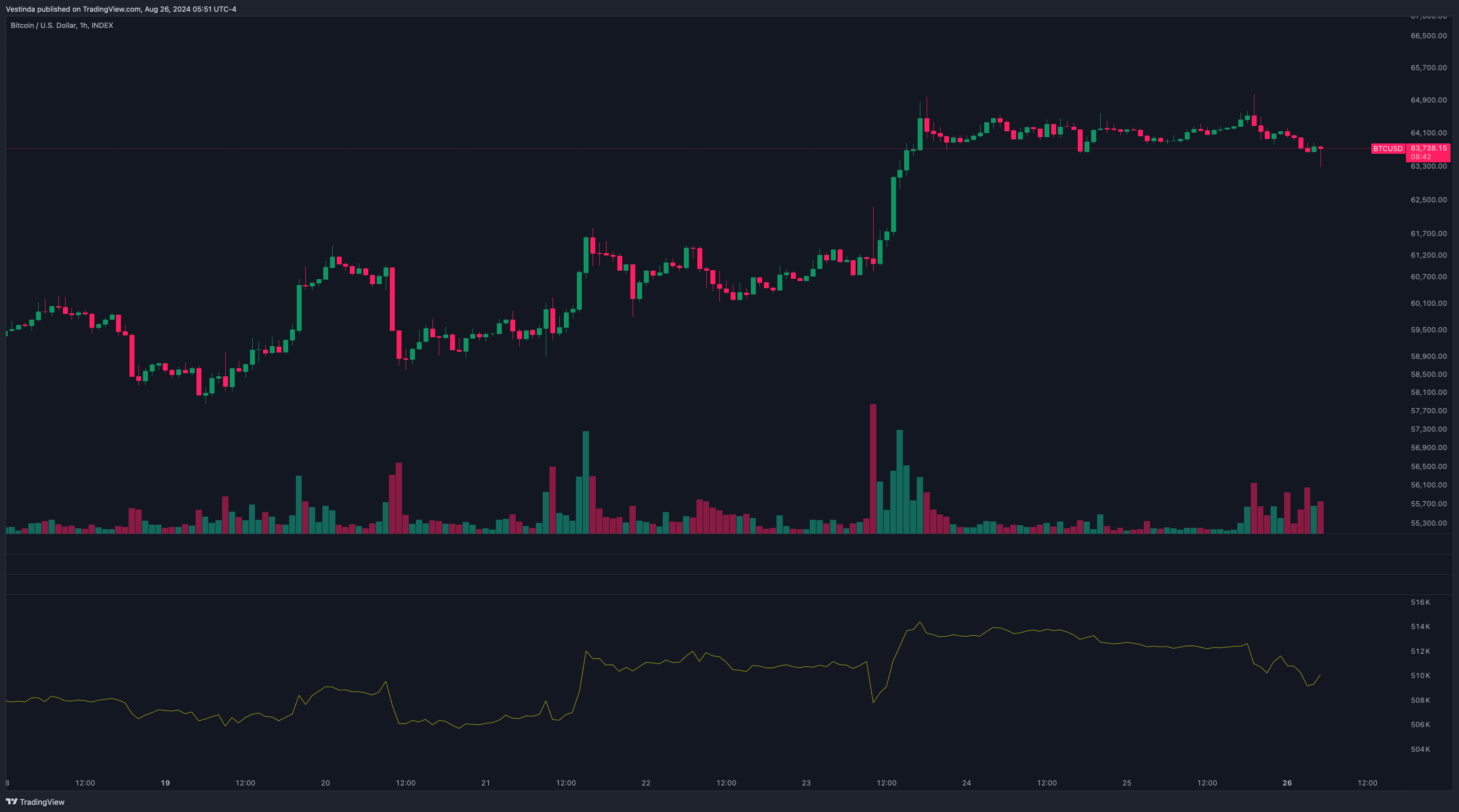
Overview: The Accumulation Distribution Indicator is designed to measure the cumulative flow of money into and out of an asset. It helps traders identify whether an asset is being accumulated (bought) or distributed (sold), providing early signals of potential price reversals or trend continuations.
Calculation: The A/D Indicator is calculated using the following formula:

Interpretation:
- Rising A/D Line: Indicates accumulation or buying pressure, suggesting potential upward momentum.
- Falling A/D Line: Indicates distribution or selling pressure, suggesting potential downward momentum.
Why Use an Accumulation Distribution Trading Bot?
- Enhanced Decision-Making: Automating the Accumulation Distribution strategy ensures timely and consistent execution of trades, taking advantage of A/D signals without the delay or emotional bias that can affect manual trading.
- Efficiency: A trading bot can monitor multiple assets simultaneously, executing trades based on predefined criteria, allowing you to capitalize on more opportunities.
- 24/7 Trading: The bot can operate continuously, ensuring you never miss a trading opportunity, especially in markets that trade around the clock, such as forex and cryptocurrencies.
Building an Accumulation Distribution Trading Bot
Defining Your Strategy
- Trend Following:
- Concept: Use the A/D line to confirm the strength of a trend and trade in the direction of the trend.
- Buy Signal: Enter a long position when the A/D line is rising and confirms an upward trend in price.
- Sell Signal: Enter a short position when the A/D line is falling and confirms a downward trend in price.
- Divergence Trading:
- Concept: Identify divergences between the A/D line and price action to anticipate potential trend reversals.
- Bullish Divergence: Occurs when the price makes lower lows, but the A/D line makes higher lows, indicating that buying pressure is building despite the price decline.
- Bearish Divergence: Occurs when the price makes higher highs, but the A/D line makes lower highs, indicating that selling pressure is increasing despite the price rise.
Automating the Strategy
- Platform Selection: Choose a trading platform like Vestinda that supports automated trading and allows integration with the Accumulation Distribution Indicator.
- Bot Configuration:
- Indicator Setup: Configure the A/D indicator on your chosen platform.
- Programming Rules: Define the bot’s logic based on A/D signals, such as entering or exiting trades when the A/D line crosses specific thresholds or confirms price movements.
- Risk Management: Implement stop-loss and take-profit levels based on the A/D signals and your risk tolerance to protect your capital.

Backtesting Your Bot
Why Backtest: Before deploying your A/D trading bot in live markets, backtest the strategy using historical data to evaluate its effectiveness and refine its parameters.
What to Test:
- Test Periods: Run backtests across different market conditions to ensure the bot performs well in both trending and ranging markets.
- Optimize Settings: Fine-tune the bot’s parameters based on backtest results, such as adjusting thresholds for entering and exiting trades to improve profitability and reduce drawdowns.
Deploying and Monitoring Your Bot
- Deployment: Once satisfied with the backtesting results, deploy your Accumulation Distribution trading bot in live markets.
- Continuous Monitoring: Regularly monitor the bot’s performance to ensure it operates as expected, making adjustments as necessary to adapt to changing market conditions.
- Performance Review: Periodically review the bot’s performance, focusing on key metrics like win rate, average trade duration, and profit/loss ratio, to identify areas for improvement.
Advantages of Using an Accumulation Distribution Trading Bot
- Consistency: Automating your strategy ensures that trades are executed consistently according to the A/D signals, reducing the impact of human emotions and errors.
- Scalability: A trading bot can monitor and trade multiple assets or timeframes simultaneously, increasing your potential for profit.
- Timely Execution: The bot can react instantly to A/D signals, ensuring trades are executed at the optimal time without delay.
Swing Bot: Harnessing Accumulation Distribution for Optimal Trading
It is used to measure the flow of money in and out of a security. The indicator is based on the concept that the volume of trades during a price move can provide valuable information. The Accumulation Distribution Swing Trading Bot is a program that utilizes this indicator to automate trading decisions. It identifies potential entry and exit points based on the divergence between price and volume. The bot monitors the Accumulation Distribution line and executes trades accordingly. By using this automated system, traders can take advantage of potential profit opportunities without constantly monitoring the market. This swing trading bot allows traders to implement their strategies with precision and efficiency, maximizing their profit potential.
Optimizing Trading with Accumulation Distribution Bots
It is used to measure the buying and selling pressure in a market. Trading bots can be programmed to use the Accumulation Distribution indicator to make trade decisions automatically.
These bots analyze the volume and price movements to determine when there is an accumulation or distribution of assets. They can then execute trades based on these signals, either buying or selling the asset.
To use Accumulation Distribution trading bots effectively, it is important to set the right parameters and strategies. Traders can customize the bot's settings to match their trading style and risk tolerance.
It is also crucial to regularly monitor and analyze the bot's performance to ensure it is generating the desired results. Additionally, incorporating other technical indicators and market analysis can enhance the accuracy of the bot's trading decisions.
Overall, Accumulation Distribution trading bots provide an automated and efficient way to trade based on the buying and selling pressure in the market.
AD Arb-bot: Capitalizing on Accumulation Distribution Indicator
It measures the accumulation and distribution of volume in a given asset. By analyzing the relationship between the price and volume, it helps traders identify possible trend reversals or continuations. Accumulation Distribution Arbitrage Trading Bot utilizes this indicator to automate trading decisions. The bot scans multiple markets, analyzing the accumulation and distribution patterns. It identifies potential arbitrage opportunities based on these patterns and executes trades accordingly. With its algorithm, the bot aims to capitalize on price discrepancies caused by volume imbalances. This trading strategy allows traders to take advantage of market inefficiencies and potentially generate consistent profits. By automating the process, the bot saves time and eliminates human emotion from the trading equation, enhancing efficiency and potentially improving results.
-
 Create
account -
 Build trading bots
with no code -
 Validate
& Backtest -
 Connect exchange
& start earning
Frequently Asked Questions
Trading robots can potentially make money, but their success largely depends on various factors, such as the strategy employed, market conditions, and the quality of the robot itself. While some trading robots may generate profits in certain market conditions, others might be less successful or even result in losses. It is important to thoroughly research and test any trading robot before using it, as well as to regularly monitor and adjust its settings. Ultimately, a trading robot's ability to make money is not guaranteed and cautious evaluation is essential before considering its deployment.
Auto trading can be profitable if utilized properly. It offers advantages like removing emotions and human error from trading decisions and enabling trades to be executed swiftly. However, profitability is not guaranteed, and it depends on various factors such as the strategy employed and market conditions. Successful auto trading requires thorough research, testing, and continuous monitoring. Traders should also be cautious of scams and choose reliable platforms. Ultimately, profitability in auto trading is contingent upon the individual's knowledge, skills, and ability to adapt to changing market dynamics.
Yes, it is possible to make a living off trading bots. Trading bots are automated software programs that execute trades based on pre-defined algorithms. They can analyze market data, identify patterns, and make rapid decisions. If properly developed and implemented, trading bots can generate consistent profits. However, it requires extensive knowledge of trading strategies, risk management, and constant monitoring of market conditions. Success also depends on adapting to changing market dynamics and refining the trading bot over time. While it is possible to make a living off trading bots, it is important to recognize the risks involved and continuously improve the bot's performance to remain profitable.
Yes, it is possible to use a trading bot for Accumulation Distribution on multiple exchanges simultaneously. However, the feasibility depends on the specific trading bot being used. Some trading bots offer the ability to connect and trade on multiple exchanges, allowing users to capitalize on opportunities across different markets. It is essential to choose a trading bot that supports simultaneous trading on various exchanges and supports the Accumulation Distribution indicator for accurate analysis and execution of trades.
To excel in algorithmic trading, a strong grasp of mathematical concepts is essential. Proficiency in probability theory, statistics, calculus, and linear algebra lays the foundation for developing and implementing trading strategies. Probability theory helps analyze market movements and assess potential risks, while statistics aids in understanding and interpreting financial data. Calculus is crucial for modeling asset prices and optimization, while linear algebra facilitates matrix operations required for portfolio analysis and risk management. Moreover, knowledge of stochastic processes, optimization methods, and numerical analysis further enhances algorithmic trading skills.
Yes, trading bots can fail. They are programmed algorithms that execute trades based on predefined criteria, and their success heavily relies on these criteria. However, market conditions can change rapidly, and if bots are not regularly updated to adapt, they may fail to execute profitable trades. Additionally, bots can be affected by technical glitches, connectivity issues, or inaccurate data, leading to potential failures. Human errors in programming or configuring the bot can also contribute to failure. While trading bots can be effective in automating trading processes, they are not immune to failures and require ongoing monitoring and adjustments.
Conclusion
In conclusion, the Accumulation Distribution trading bot is a powerful tool that allows traders to harness the potential of the Accumulation Distribution indicator. By automating the trading process, this bot optimizes profits and provides greater efficiency and precision in taking advantage of market opportunities. With extensive backtesting and cutting-edge technology, this bot ensures accurate and reliable results. Traders can customize their settings and strategies to match their trading style and monitor and analyze the bot's performance for optimization. By incorporating other technical indicators and market analysis, traders can enhance the accuracy of the bot's trading decisions. Overall, the Accumulation Distribution trading bot is a game-changing tool that revolutionizes the future of trading.

Successful traders rely on backtesting to be profitable.
Be like them with our
Free Backtesting Guide