

The concept of staking has become one of the most discussed aspects of cryptocurrency, offering a unique way to earn rewards while supporting blockchain networks. With its environmentally friendly approach and promise of passive income, Proof-of-Stake (PoS) has gained significant traction as an alternative to the traditional Proof-of-Work (PoW) consensus mechanism.
However, despite the clear advantages, not all cryptocurrencies can or will switch to staking. Bitcoin, for instance, remains firmly tied to its PoW roots. In this article, we’ll dive into the crypto staking challenges, exploring why not every cryptocurrency can transition to Proof-of-Stake and the underlying technical, economic, and philosophical hurdles.
Article summary
Understanding Proof-of-Work and Proof-of-Stake
Proof-of-Work (PoW): The Foundation of Bitcoin
Bitcoin pioneered blockchain technology using the Proof-of-Work consensus mechanism. PoW secures the network by requiring participants (miners) to solve complex mathematical puzzles. The process consumes significant computational power and energy, but it ensures the network remains secure and decentralized.
While PoW has proven effective, it comes with notable drawbacks, including:
- Energy consumption: Mining Bitcoin consumes enormous amounts of electricity.
- Centralization risk: Specialized hardware (ASICs) has made mining accessible primarily to large operations.
- Scalability issues: PoW struggles to handle large transaction volumes efficiently.
These limitations have led to the rise of Proof-of-Stake, yet crypto staking challenges remain a significant barrier to universal adoption.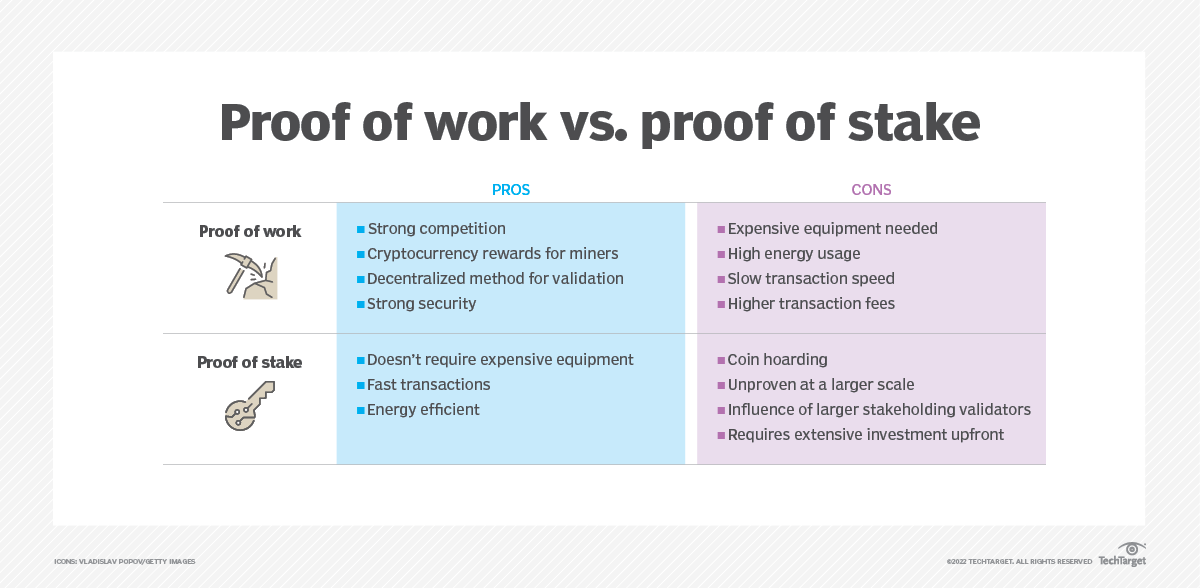
Proof-of-Stake (PoS): A Modern Alternative
PoS aims to address the shortcomings of PoW by reducing energy consumption and increasing scalability. Instead of solving puzzles, validators in PoS networks are chosen to create new blocks based on the number of tokens they hold and are willing to “stake.”
Start earning 60% a year with automated trading Free Sign UpBenefits of PoS:
- Energy-efficient: No need for high-power mining hardware.
- Scalable: Faster transaction processing.
- Lower entry barrier: Anyone can stake tokens and participate in securing the network.
Despite these advantages, crypto staking challenges present hurdles that cannot be ignored.
Key Crypto Staking Challenges
1. Security and Trust
Bitcoin’s PoW system has been battle-tested over more than a decade, proving resilient against attacks. PoS, while promising, is still relatively new and less proven on large-scale networks.
A single vulnerability in a PoS system could result in significant financial losses, making established PoW networks hesitant to switch.
2. Initial Token Distribution
For PoS to function effectively, an initial token distribution is essential. Bitcoin started with open mining, where anyone could participate. In PoS systems, the wealthiest token holders often dominate staking rewards, leading to potential centralization.
This dynamic creates an economic imbalance, one of the central crypto staking challenges that undermines decentralization.
3. Monopoly of Wealthy Stakeholders
In a PoS system, those with the largest stakes have the most influence. This creates a risk where wealthy stakeholders can manipulate network governance, enforce biased rules, or even conduct a 51% attack, controlling the network’s transactions.
As a result, crypto staking challenges extend beyond technical barriers and touch on governance and fairness.
4. The “Nothing at Stake” Problem
One of the classic crypto staking challenges is the “Nothing at Stake” problem. During a blockchain fork, validators in PoS systems face no financial risk if they support both chains. This lack of accountability can lead to network instability and conflicts.
Without proper deterrents, malicious validators can exploit this flaw and disrupt blockchain integrity.
5. Governance Disparities
Many PoS systems rely on token-weighted voting for governance decisions. This approach often consolidates power among early adopters or wealthy participants, reducing the inclusivity and fairness of the network’s decision-making process.
This inequality is one of the persistent crypto staking challenges that developers continue to address.
Why Bitcoin is Unlikely to Switch to Staking
Bitcoin’s network is built around PoW, and the ecosystem has been carefully optimized for security and decentralization. Here’s why a transition seems improbable:
- Battle-Tested Security: Bitcoin’s PoW has successfully resisted attacks for over a decade, securing billions in value.
- Community Resistance: Bitcoin’s technical community remains conservative and values stability over experimentation.
- High Transition Costs: Moving Bitcoin to a PoS system would require massive technical overhauls and community consensus.
- Philosophical Differences: Bitcoin was designed as a decentralized, permissionless network. PoS introduces power imbalances that conflict with these principles.
While discussions around PoS continue, Bitcoin’s resilience lies in its adherence to PoW, showcasing how crypto staking challenges make a switch highly unlikely.
The Energy Debate: PoW vs. PoS
One of the key criticisms of PoW is its energy consumption. However, recent studies show that nearly 39% of Bitcoin mining energy comes from renewable sources, a figure higher than in many traditional industries.
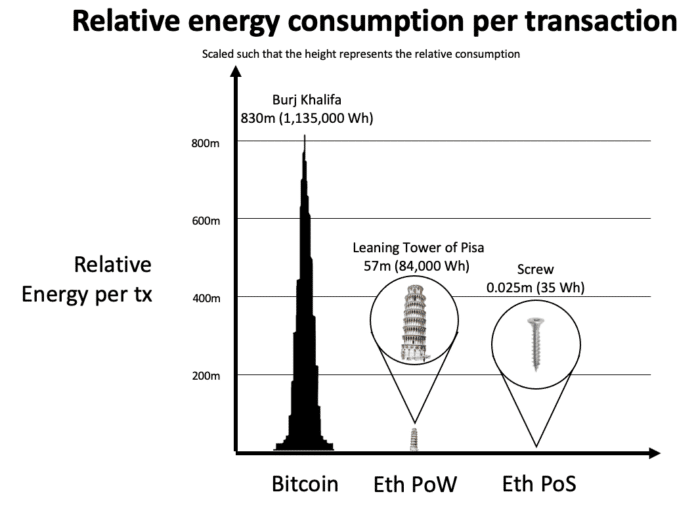 While PoS undeniably consumes less energy, the question remains whether the trade-off in decentralization and security is worth it.
Ultimately, crypto staking challenges highlight that neither system is universally superior. Instead, each has its unique strengths and weaknesses tailored to different blockchain goals.
The Future of Consensus Mechanisms
While PoS continues to gain traction with blockchains like Ethereum successfully migrating, PoW remains a critical pillar for networks prioritizing resilience and decentralization.
Potential Future Scenarios:
- Hybrid Models: A mix of PoW and PoS mechanisms may emerge to balance security and efficiency.
- Improved PoS Algorithms: Future advancements could resolve current PoS vulnerabilities.
- Sustainability Initiatives: Increased focus on renewable energy may reduce PoW’s environmental impact.
Bitcoin’s steadfast commitment to PoW reflects its role as a digital gold standard, while other networks explore innovative staking models.
Final Thoughts
The debate between PoW and PoS represents a clash between tradition and innovation in the crypto space. While staking offers undeniable benefits, crypto staking challenges prevent a one-size-fits-all approach.
Bitcoin is unlikely to adopt staking anytime soon, prioritizing security and decentralization over energy efficiency. Meanwhile, other blockchain networks will continue to experiment with PoS, driving the next phase of crypto evolution.
Understanding these challenges is crucial for investors, developers, and stakeholders aiming to navigate the complex world of blockchain consensus mechanisms.

With over seven years of experience in trading since 2017, I specialize in cryptocurrency markets while sharing insights through engaging content. Proud to rank among the top 100 most popular analysts on TradingView of all time, I bring a blend of expertise, passion, and actionable strategies to the trading community.