
The cryptocurrency market offers immense opportunities, but it also harbors risks, particularly with fraudulent tokens and scams. Verifying token legitimacy has become a vital skill for crypto investors to protect their assets and ensure they contribute to a healthy ecosystem. In this guide, you’ll learn how to evaluate tokens using systematic steps, ensuring you identify credible projects while avoiding scams.
Article summary
Why Verifying Token Legitimacy Matters
Investing in illegitimate tokens can result in severe financial losses, as seen in infamous cases like the Bitconnect Ponzi scheme and the Squid Game Token rug pull. The rise in cryptocurrency scams emphasizes the need for due diligence. By carefully evaluating tokens, investors can safeguard their assets, avoid fraud, and build trust in the crypto ecosystem.
Steps to Verifying Token Legitimacy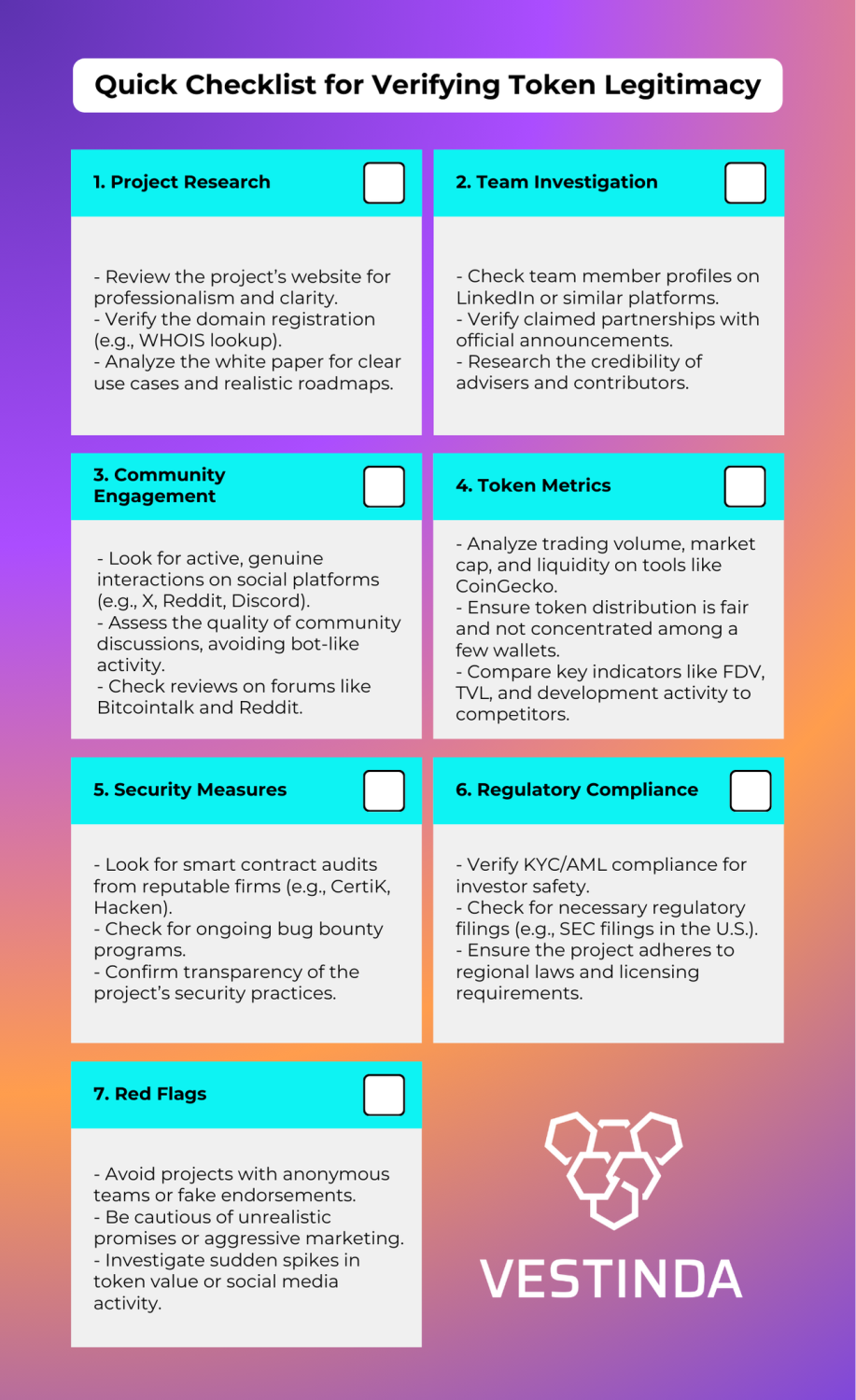

Step 1: Research the Project
Website and White Paper Analysis
- Website: A professional website with detailed information reflects legitimacy. Look for high-quality graphics, structured content, and domain details via WHOIS tools.
- White Paper: A comprehensive white paper explains the project’s purpose, goals, and technical details. Avoid projects with vague or overly ambitious claims.
Example: Projects like Ethereum present extensive documentation and transparent goals, serving as benchmarks of credibility.
Step 2: Investigate the Team
Team Transparency
- Check LinkedIn and other profiles to verify team credentials and past experience.
- Anonymous teams or unverifiable claims are significant red flags.
Advisers and Partnerships
- Cross-check partnerships and endorsements across official channels. Legitimate projects announce partnerships on both parties’ platforms.
Step 3: Analyze Community Engagement
Social Media Presence
- Active and meaningful interactions on platforms like X (Twitter), Discord, and Telegram indicate a vibrant community.
- Avoid projects with bot-like followers or generic comments.
Community Feedback
- Explore reviews and discussions on forums like Reddit or Bitcointalk for balanced insights into the project.
Step 4: Assess Token Metrics
Market Data
- Use tools like CoinMarketCap or CoinGecko to examine trading volume, liquidity, and market cap. Low volumes and extreme volatility may indicate manipulation.
Token Distribution
- Ensure fair distribution to avoid whale-driven price manipulation. Projects with concentrated token holdings pose significant risks.
Step 5: Verify Security Measures
Smart Contract Audits
- Look for audit reports from reputable firms like CertiK or Hacken.
- Projects without audits or unresolved issues in reports are risky.
Bug Bounty Programs
- Check if the project offers incentives for identifying vulnerabilities, showcasing a commitment to security.
Step 6: Evaluate Regulatory Compliance
Legal Compliance
- Verify the project’s registration, licensing, and adherence to KYC/AML policies.
- Projects operating without proper compliance face higher regulatory risks.
Regulatory Filings
- Assess filings with relevant authorities, such as the SEC for projects in the U.S.
Step 7: Common Red Flags in Token Legitimacy
- Unrealistic promises, aggressive marketing, and fake endorsements are common signs of fraud.
- Anonymous teams or unverifiable claims about partnerships should be approached with caution.
What to Do if You’ve Been Scammed
- Secure Accounts: Change passwords and enable two-factor authentication.
- Report to Authorities: File reports with local law enforcement and regulatory bodies.
- Document Everything: Keep detailed records of transactions and communication with scammers.
- Alert the Community: Share your experience on forums to warn others.
- Strengthen Future Security: Use secure wallets and conduct due diligence for future investments.
Closing Thoughts: Stay Vigilant and Informed
As the cryptocurrency market grows, so do the risks of fraudulent tokens. Verifying token legitimacy requires a proactive approach, from assessing the project’s background to identifying red flags and ensuring security measures. By following these steps, you can navigate the crypto landscape safely and make informed investment decisions.

With over seven years of experience in trading since 2017, I specialize in cryptocurrency markets while sharing insights through engaging content. Proud to rank among the top 100 most popular analysts on TradingView of all time, I bring a blend of expertise, passion, and actionable strategies to the trading community.
Start earning 60% a year with automated trading Free Sign Up