
-
100,000 available assets New
-
years of historical data
-
practice without risking money

Trading bots & Backtesting results for SHIB
Here are some SHIB trading bots along with their past performance. You can validate these bots (and many more) for free on Vestinda across thousands of assets and many years of historical data.
Trading bot: VWAP and KAMA Confirmation on SHIB
Based on the backtesting results statistics for a trading strategy conducted from May 10, 2021, to October 20, 2023, several key findings emerge. The strategy exhibits a profit factor of 1.62, suggesting a favorable risk-to-reward ratio. An impressive annualized return on investment (ROI) of 113.35% indicates the strategy's effectiveness over the evaluated period. On average, trades were held for approximately 6 days and 1 hour, reflecting a relatively short-term approach. With an average of 0.33 trades per week and 43 closed trades, the frequency of trading remained modest. Despite a winning trades percentage of 20.93%, the strategy outperformed the buy and hold approach, generating excess returns of 1557.46%. Overall, these statistics reveal a potentially promising trading strategy.

 SHIBUSDT

Choose another period and try again.
Trading bot: Keltner Channel and TEMA Trend-Following on SHIB
Based on the backtesting results from May 10, 2021 to October 20, 2023, the trading strategy demonstrated impressive performance. With a profit factor of 5.34 and an annualized ROI of 316.91%, the strategy significantly outperformed the market. On average, each trade was held for 2 days and 6 hours, and there were approximately 0.22 trades per week. The number of closed trades during this period was 29. The return on investment stood at a remarkable 772.94%, while the percentage of winning trades reached 44.83%. Notably, the strategy proved to be significantly better than the buy-and-hold approach, generating excess returns of 3743.79%. These results highlight the strategy's ability to generate substantial profits and outperform traditional investment strategies.
SHIBUSDT
Choose another period and try again.
SHIB (Shiba Inu) Trading Bot: Maximizing Profits & Efficiency
Introduction
Shiba Inu (SHIB) has captured traders' attention due to its high volatility and active market dynamics. Automated trading bots provide an edge by executing strategies with speed and precision, ensuring traders capitalize on SHIB’s opportunities around the clock. This guide explores effective ways to maximize profits and efficiency using a SHIB trading bot.
What is a Trading Bot?
- Definition: A trading bot is a software tool that automates trading decisions based on predefined algorithms.
- Key Features:
- Speed: Executes trades faster than manual methods.
- Consistency: Follows predefined rules without emotional interference.
- 24/7 Operation: Monitors SHIB’s market activity continuously.
Why Use a Trading Bot for SHIB?
- High Volatility: SHIB’s frequent price swings create numerous opportunities for bots to act.
- Emotion-Free Execution: Ensures logical decision-making based on data.
- Efficient Resource Use: Saves time by automating repetitive tasks.
Top Strategies for SHIB Trading Bots:
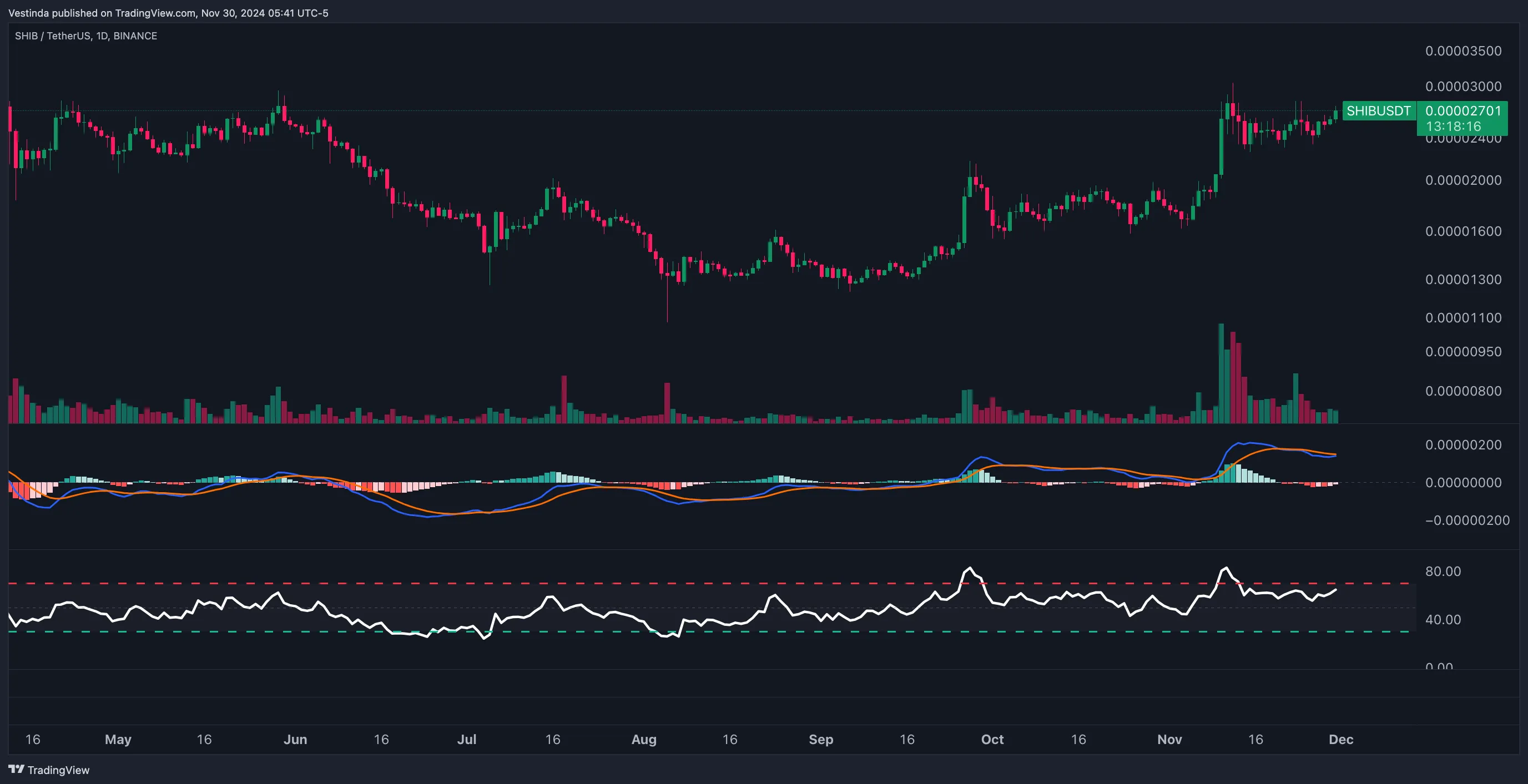
1. Momentum Trading with MACD and RSI:
Concept: Use a bot to identify and act on SHIB’s momentum shifts.
- Setup: Include MACD (12, 26, 9) for trend-following signals. Add RSI (14) to detect overbought and oversold conditions.
- Execution Rules:
- Buy Signal: Enter long when MACD shows a bullish crossover, and RSI crosses above 50.
- Sell Signal: Exit when MACD turns bearish or RSI crosses below 50.
- Best For: Markets with directional momentum.
2. Breakout Strategy with Bollinger Bands:
Concept: Automate trades based on SHIB’s breakouts from consolidation phases.
- Setup: Add Bollinger Bands with a 20-period SMA and a standard deviation of 2.

- Execution Rules:
- Buy Signal: Enter long when SHIB price breaks above the upper band, confirmed by rising volume.
- Sell Signal: Exit when price falls back into the bands or shows signs of consolidation.
- Best For: Volatile market conditions.
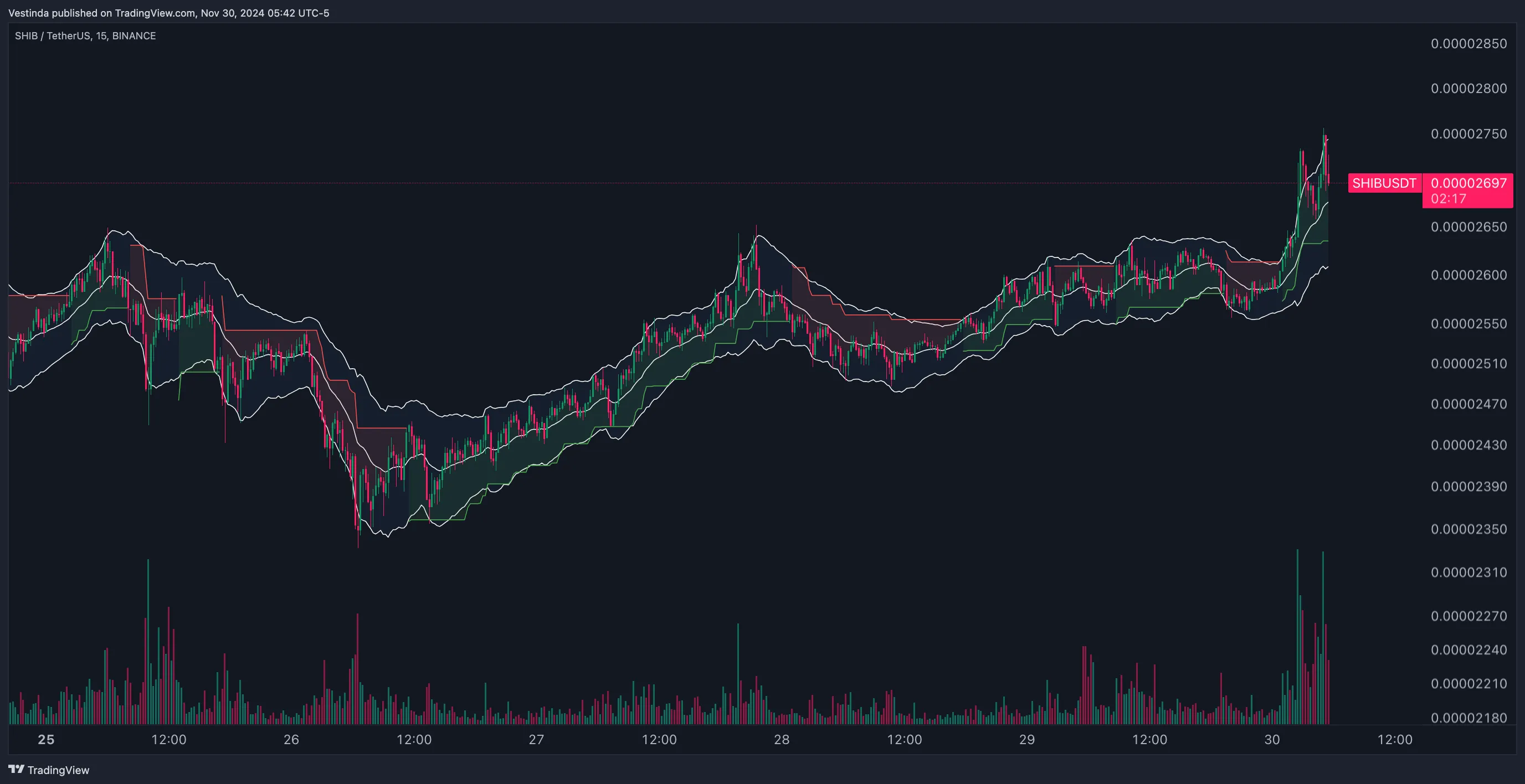
3. Scalping with Keltner Channels and Supertrend:
Concept: Capture small price movements using dynamic channels and trend confirmation.
- Setup: Use Keltner Channels with a 20-period EMA and ATR multiplier of 1.5. Add Supertrend with a multiplier of 2 and a period of 10.
- Execution Rules:
- Buy Signal: Enter long when SHIB price bounces off the lower Keltner Channel, confirmed by a bullish Supertrend.
- Sell Signal: Exit when Supertrend flips bearish or price touches the upper channel.
- Best For: High-frequency trading setups.
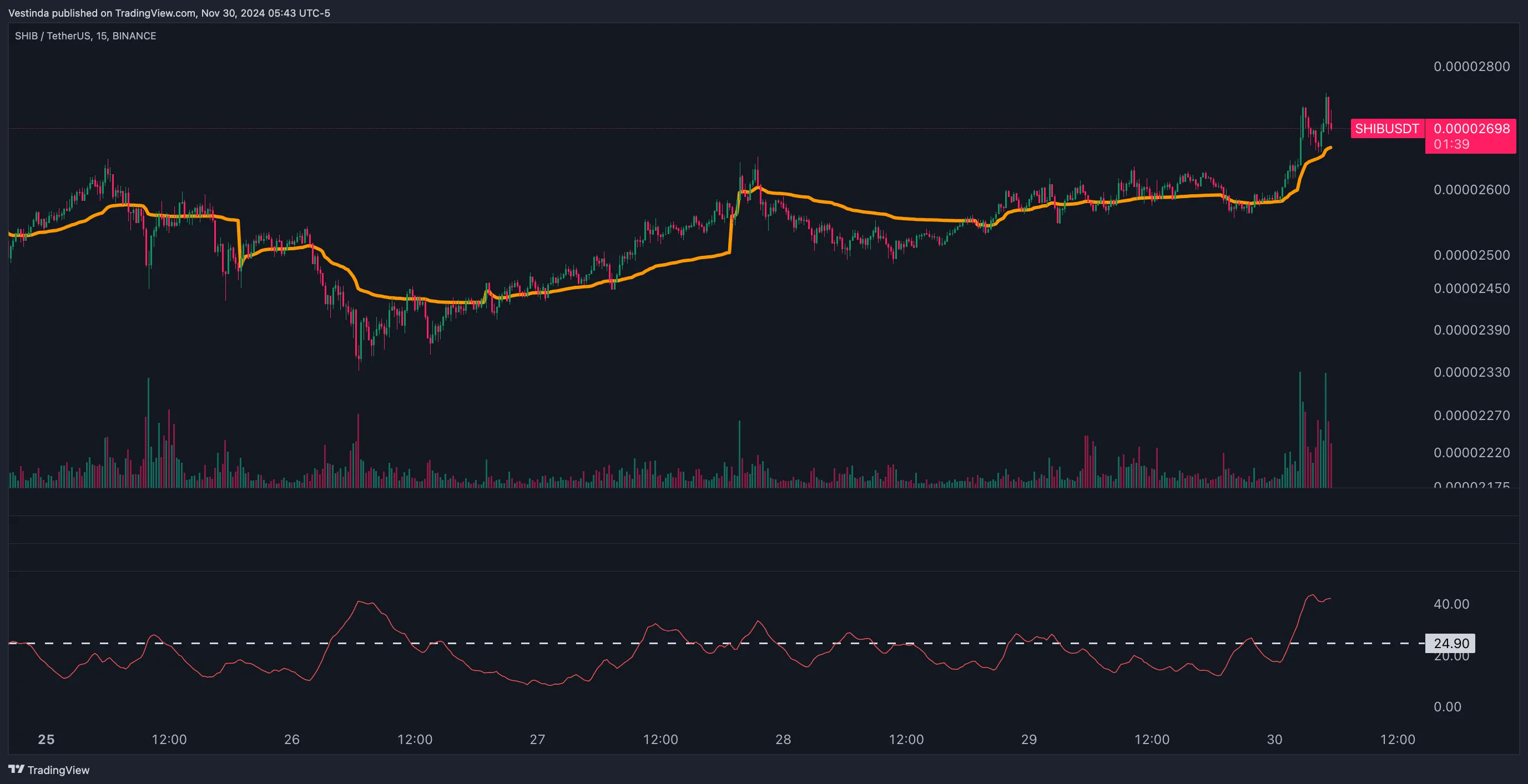
4. Reversal Trading with VWAP and ADX:
Concept: Automate trades at key reversal points using VWAP and trend strength indicators.
- Setup: Apply VWAP as the baseline trend indicator. Use ADX (14) to confirm trend strength (values >25 indicate strong trends).
- Execution Rules:
- Buy Signal: Enter long when SHIB price dips below VWAP and ADX signals an uptrend.
- Sell Signal: Exit when price rises significantly above VWAP or ADX weakens.
- Best For: Swing trades in trending markets.
Steps to Implement a SHIB Trading Bot:
- Choose a Reliable Platform: Platforms like TradingView, Binance API, or custom Python-based solutions support bot integrations.
- Define Strategy Rules: Use clear "if-then" logic for entry, exit, and risk management. Example: “If MACD bullish crossover and RSI > 50, then buy.”
- Backtest Thoroughly: Test strategies on historical SHIB data to evaluate their effectiveness.
- Deploy on Live Markets: Start with a demo or small allocation to validate the bot’s performance.
Risk Management for SHIB Trading Bots:
- Dynamic Stop-Loss Placement: Use ATR or recent swing levels to set adaptive stop-losses.
- Position Sizing: Limit risk to 1-2% of your capital per trade.
- Diversify Strategies: Run multiple strategies on different timeframes to hedge risks.
Advantages of Using a SHIB Trading Bot:
- Efficiency: Handles complex calculations and rapid execution beyond human capability.
- Consistency: Adheres to rules, eliminating emotional biases.
- Scalability: Manages multiple strategies and trading pairs simultaneously.
Common Mistakes to Avoid:
- Overfitting Strategies: Avoid creating bots too specific to past data, as they may underperform in live markets.
- Ignoring Market Context: Ensure strategies align with broader market conditions.
- Neglecting Monitoring: Periodically review bot performance to make necessary adjustments.
Conclusion:
SHIB trading bots offer an efficient and profitable approach to navigating the cryptocurrency’s dynamic market. By implementing strategies like momentum trading, breakout setups, and scalping, traders can maximize their returns. Combine disciplined execution, thorough backtesting, and effective risk management for sustained success in automated SHIB trading.
Unveiling the Mechanics of Trading Bots
Trading bots are automated software programs that execute trades on behalf of investors. They are designed to analyze market data and make trading decisions based on predetermined parameters. These bots use algorithms to identify trading opportunities and execute trades without the need for human intervention. They can monitor various indicators, such as price movements, trading volume, and trends, to identify potentially profitable trades. When the set conditions are met, trading bots automatically place buy or sell orders on cryptocurrency exchanges. They can execute orders faster than humans, taking advantage of market fluctuations and maximizing potential profit. However, it is important to note that trading bots are only as effective as the strategies and parameters they are programmed with. Traders must carefully consider their trading goals and risk tolerance when using these bots to ensure optimal results. With the increasing popularity of cryptocurrencies like SHIB, trading bots have become a valuable tool in the trading community.
Mastering SHIB Trading Bots: Step-by-Step Guide
- Choose a reliable cryptocurrency exchange that supports SHIB trading.
- Create an account on the selected exchange and complete the necessary KYC process.
- Select a reputable trading bot platform that is compatible with your chosen exchange.
- Connect your exchange account to the trading bot platform and set up API keys.
- Configure the trading bot according to your desired strategies and risk preferences.
- Monitor the bot's performance regularly and make necessary adjustments if needed.
- Keep track of market trends and news that may impact SHIB's price to optimize bot settings.
Automated SHIB Trading with Technical Analysis
Trading bot for SHIB using Technical Analysis
Using a trading bot for SHIB utilizing technical analysis can provide traders with a powerful tool to navigate the volatile market. These bots are programmed to analyze price charts, identify patterns, and execute trades based on predefined strategies. By leveraging technical indicators such as moving averages, Fibonacci retracements, and relative strength index (RSI), the bot aims to identify favorable entry and exit points. It continuously monitors the market, freeing traders from the need to constantly track price movements. With SHIB's highly speculative nature, a trading bot employing technical analysis can help traders make informed decisions, potentially optimizing profits while minimizing risks. However, it's crucial for traders to thoroughly test and adjust the bot's parameters to ensure accurate performance in the ever-changing SHIB market conditions.
SHIB HFT Bot: Streamlined Trading for Shiba Inu
High-frequency trading bots have gained popularity for trading SHIB, the cryptocurrency inspired by the Shiba Inu dog breed. These bots execute trades at lightning-fast speeds, taking advantage of small price fluctuations. They analyze market data and use complex algorithms to make rapid buying and selling decisions. The high speed of execution allows them to capitalize on short-term market movements and potentially generate profits. However, the volatile nature of SHIB poses risks, as price swings can be unpredictable. Traders should exercise caution and set clear risk management strategies when engaging with high-frequency trading bots for SHIB.
-
 Create
account -
 Build trading bots
with no code -
 Validate
& Backtest -
 Connect exchange
& start earning
Frequently Asked Questions
Yes, bots can be used for trading. Trading bots are computer programs that execute trades based on predefined criteria and algorithms. They can analyze market data, monitor price movements, and execute trades faster than humans. Bots can be programmed to follow different trading strategies, such as trend following or arbitrage, and can operate in various financial markets. These automated systems aim to remove emotional biases and ensure disciplined trading. However, it is important to note that trading bots are not foolproof and require careful configuration, monitoring, and adjustment to adapt to changing market conditions.
The best trading pair for bots depends on various factors such as market volatility, liquidity, and bot strategy. However, some commonly traded pairs include BTC/USD, ETH/USD, and XRP/USD. These pairs are widely supported and offer sufficient trading opportunities. Additionally, they have high trading volumes and reliable price feeds, allowing bots to execute orders effectively. Ultimately, the best trading pair for bots may differ based on individual preferences and specific bot functionalities. It is crucial to thoroughly research and backtest different pairs to determine the most optimal choice for a particular bot.
The amount of money you can make from a trading bot is highly variable and dependent on various factors. It depends on the efficiency and accuracy of the bot's algorithms, market conditions, the amount of capital invested, and the level of risk tolerance. While some traders have reported substantial profits using trading bots, there is also a risk of financial loss. It is important to thoroughly research and test a bot before implementation, set realistic expectations, and actively monitor its performance. Overall, the potential earnings from a trading bot can vary significantly and are not guaranteed.
The success rate of traders can vary widely depending on various factors such as individual skill, experience, and market conditions. While it is difficult to provide an exact figure, studies suggest that a significant majority of retail traders struggle to achieve consistent profitability. Estimates range from 10% to 20% of traders being consistently successful, with the remaining majority either breaking even or losing money. However, it is important to note that success is subjective, and some traders may define it differently, such as achieving consistent returns or simply learning and improving their skills.
Yes, you can backtest your SHIB trading bot's strategies using historical market data. Backtesting allows you to simulate your bot's performance by applying its strategies to past market conditions. By analyzing the results, you can assess the effectiveness of your bot's strategies and make any necessary adjustments. Consider using a backtesting platform or writing custom code to perform this analysis. Remember to select a suitable time period and data quality for accurate results.
Conclusion
In conclusion, the SHIB trading bot is a game-changer in the crypto trading world, providing investors the ability to automate their trading strategies and maximize profits. With its focus on Shiba Inu (SHIB), this algorithmic trading bot leverages technical analysis to execute trades and offers backtesting results for evaluating performance history. Trading bots, in general, have become valuable tools in the trading community, providing efficient and convenient ways to navigate the volatile crypto market. However, traders should carefully consider their goals and risk tolerance when utilizing these bots. Furthermore, utilizing technical analysis and high-frequency trading bots can potentially optimize profits while mitigating risks in the ever-changing SHIB market conditions.

Successful traders rely on backtesting to be profitable.
Be like them with our
Free Backtesting Guide