-
Track your
Crypto Portfolio -
Copy Crypto trading
strategies -
Build trading strategies
with no code
-
Backtest trading strategies
on Crypto, Forex, Stocks, etc. -
Demo Trading
Risk-free Paper Trading -
Automate trading strategies
with Live Trading
Automated Strategies & Backtesting results for NEO
Here are some NEO trading strategies along with their past performance. You can validate these strategies (and many more) for free on Vestinda across thousands of assets and many years of historical data.
Automated Trading Strategy: Play the breakout on NEO
During the period from December 15, 2020, to December 15, 2023, the backtesting results for a trading strategy indicate promising outcomes. With a profit factor of 1.28, the strategy exhibits a higher potential for profitability. The annualized return on investment (ROI) stands at an impressive 33.32%, surpassing most traditional investment options. On average, each position was held for approximately 3 weeks and 4 days, providing a glimpse into the strategy's holding approach. Despite a relatively low average of 0.07 trades per week, the strategy managed to close 12 profitable trades. Winning trades accounted for 41.67% of the total, showcasing a respectable success rate. Furthermore, when compared to a buy-and-hold strategy, this trading strategy outperformed, generating excess returns of 167.74%.

 NEOUSDT

Choose another period and try again.
Automated Trading Strategy: Follow the trend on NEO
Based on the backtesting results from December 15, 2020 to December 15, 2023, the trading strategy demonstrated promising performance. The strategy showcased a profit factor of 1.42, indicating that for every dollar risked, a profit of $1.42 was generated. The annualized return on investment stood impressively at 89.81%, suggesting strong growth over the three-year period. The average holding time for trades was approximately 1 week, with an average of 0.37 trades per week. With a total of 58 closed trades, the strategy displayed a winning trades percentage of 32.76%. Significantly, it outperformed the buy and hold approach, generating excess returns of 395.74%, highlighting its potential as a profitable trading strategy.
NEOUSDT
Choose another period and try again.
NEO (NEOUSDT) Paper Trading: Unlocking Risk-Free Cryptocurrency Investments
Introduction
Paper trading allows cryptocurrency traders to practice strategies in a simulated environment without risking real capital. For NEO (NEOUSDT), paper trading provides a valuable opportunity to test trading setups, understand market behavior, and build confidence before committing funds. This guide delves into the benefits and steps for unlocking the potential of paper trading for NEO.
Why Paper Trade NEO?
- Risk-Free Practice: Learn and refine strategies without financial consequences.
- Understand Market Behavior: Gain insights into NEO’s volatility, liquidity, and price movements.
- Test Strategies: Experiment with various indicators and approaches before live trading.
Key Benefits of Paper Trading
- Skill Development: Practice executing trades and setting stop-loss and take-profit levels.
- Strategy Optimization: Backtest and forward-test strategies using live market data in a simulated setup.
- Confidence Building: Familiarize yourself with trading platforms and tools without pressure.
Getting Started with NEO Paper Trading
1. Choose a Platform
- Recommendations: Platforms like TradingView, Binance, or specific demo accounts offered by brokers.
- What to Look For: Realistic market data simulation, indicator support, and ease of use.
2. Set Up Your Trading Environment
- Select NEO (NEOUSDT) as your primary trading pair.
- Configure your account with a simulated balance similar to your intended live trading capital.
3. Define Your Trading Goals
- Specify whether you aim to practice scalping, swing trading, or long-term strategies.
- Set clear risk management rules (e.g., 1% risk per trade).
Top Paper Trading Strategies for NEO
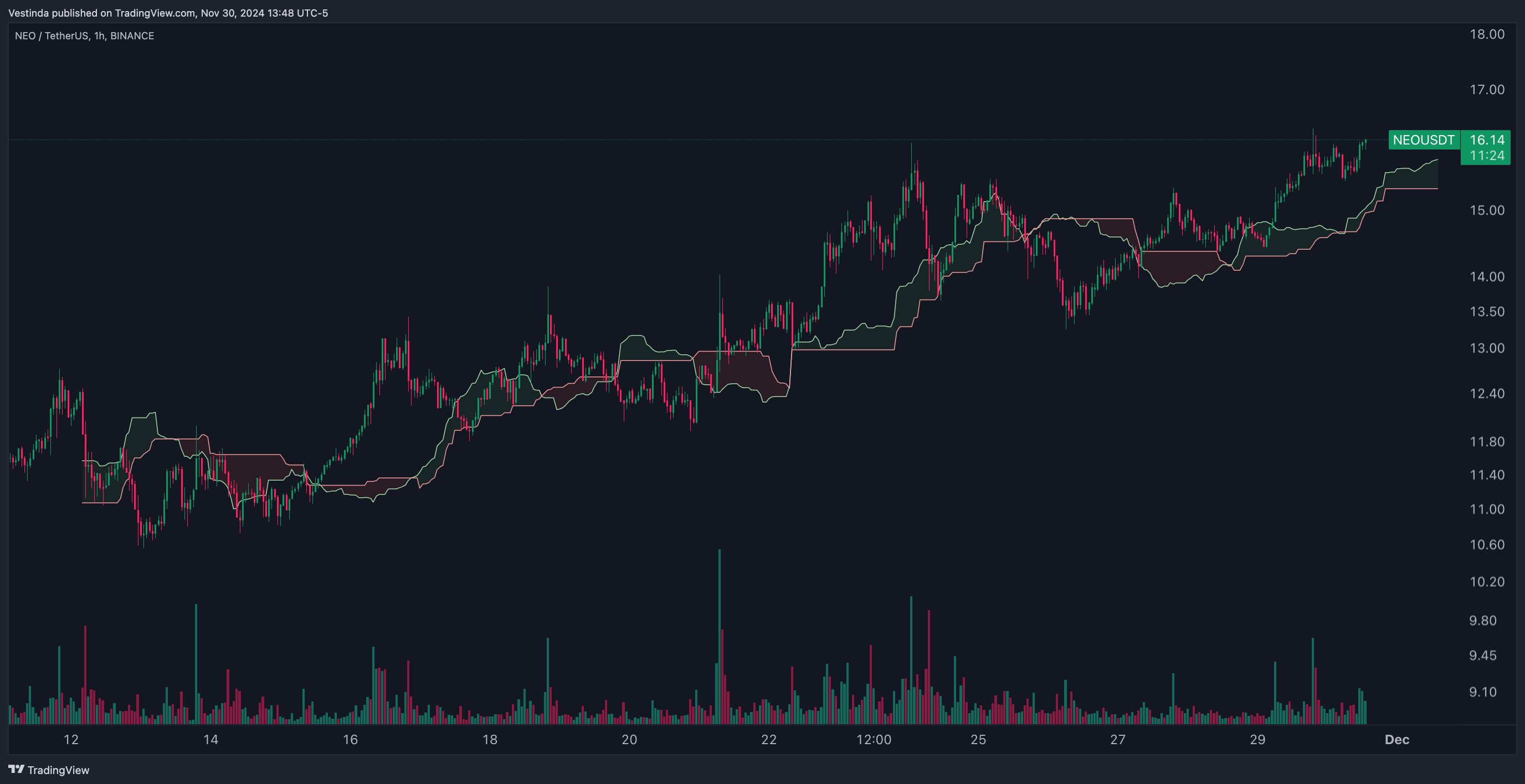
1. Trend-Following with Ichimoku Cloud
Concept:
Align trades with NEO’s prevailing trend.
Setup:
- Use Ichimoku Cloud to identify support/resistance and trend direction.
Execution Rules:
- Buy Signal: Enter long when price breaks above the cloud and the conversion line crosses above the baseline.
- Sell Signal: Exit when price re-enters the cloud.
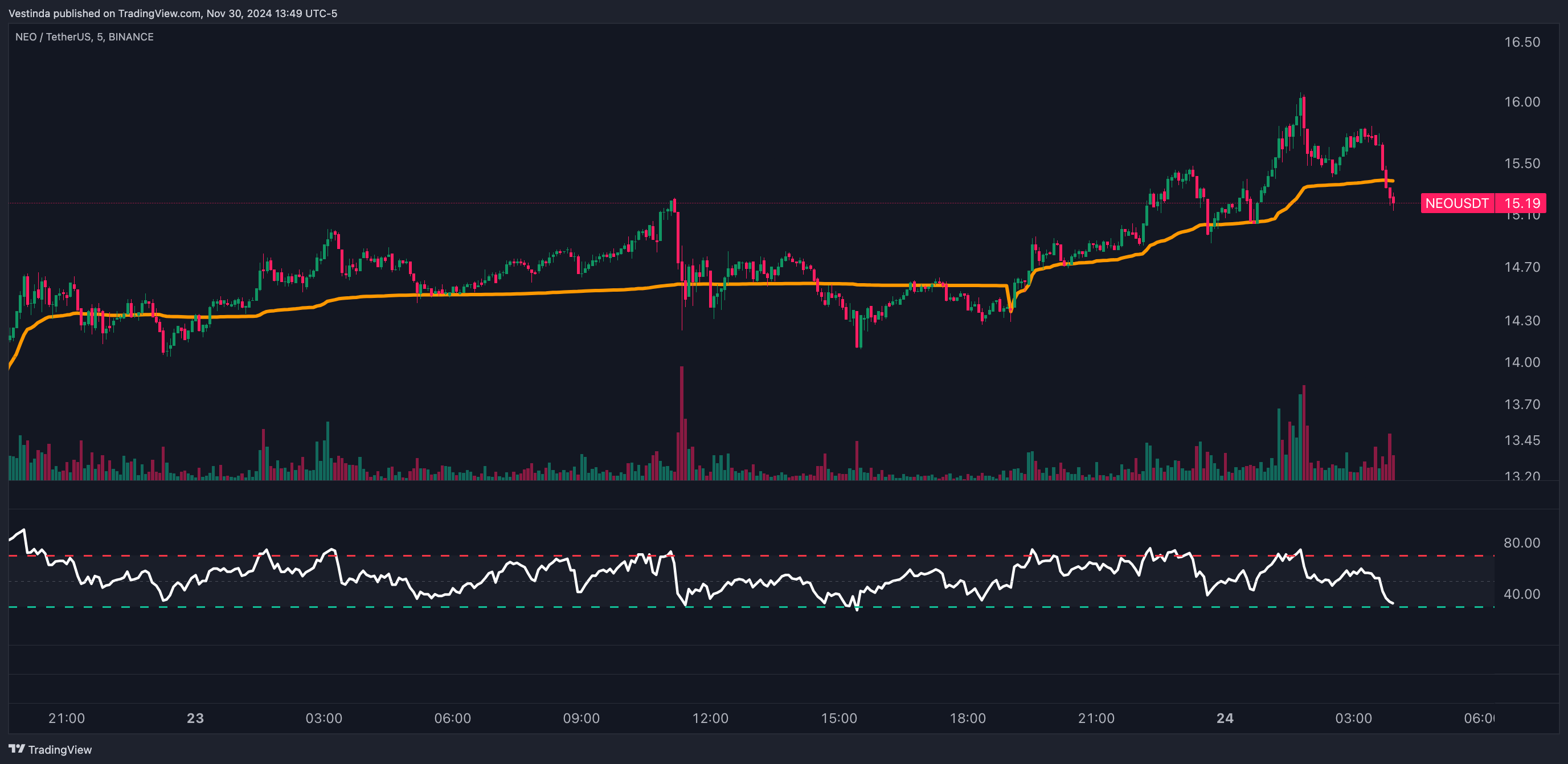
2. Scalping with VWAP and RSI
Concept:
Capture short-term price movements during active market hours.
Setup:
- Use VWAP to identify fair value zones.
- Combine with RSI (14) to confirm momentum shifts.
Execution Rules:
- Buy Signal: Enter long near VWAP support, with RSI exiting oversold (<30).
- Sell Signal: Exit near VWAP resistance or RSI entering overbought (>70).
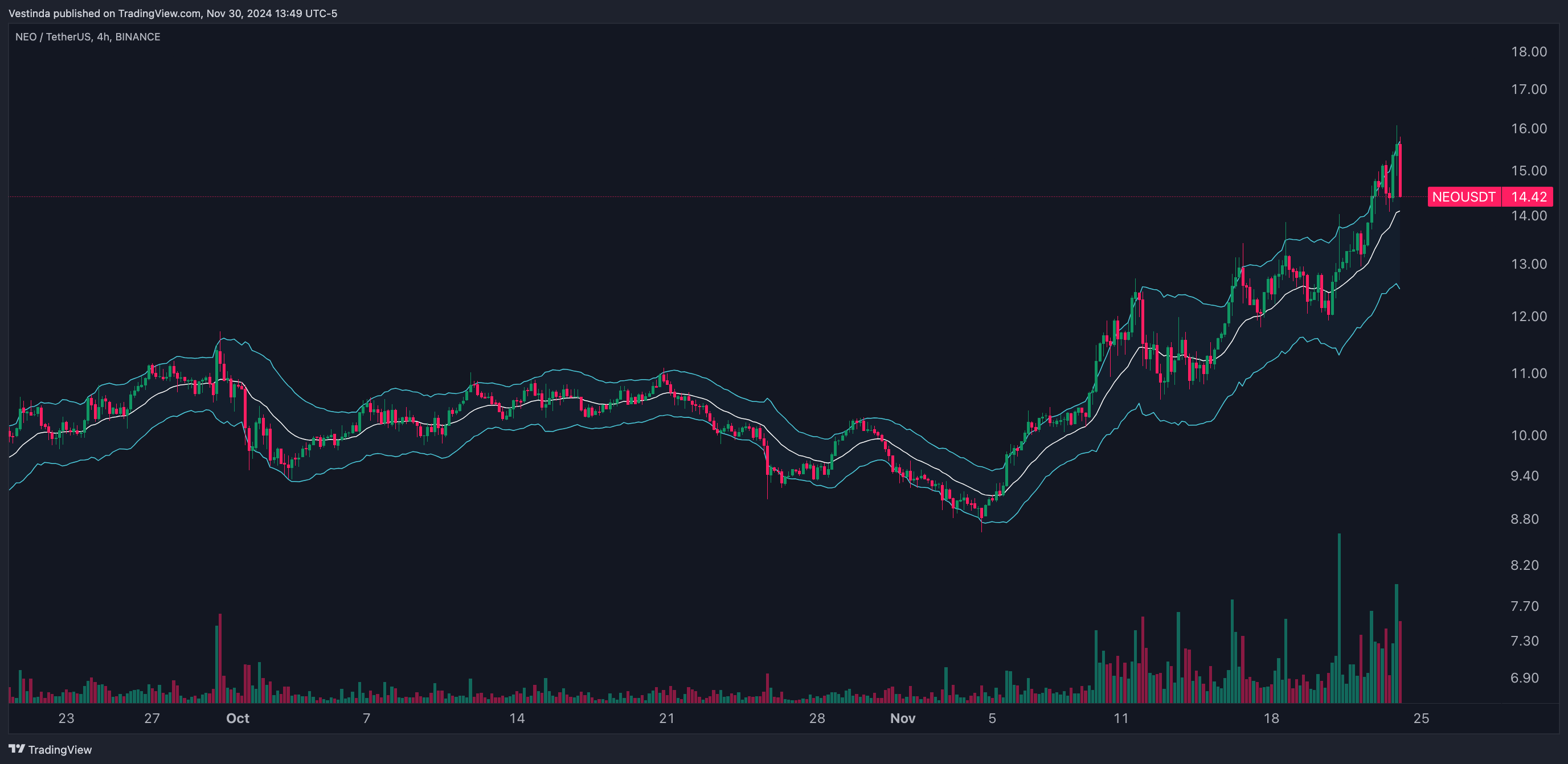
3. Range Trading with Keltner Channels
Concept:
Exploit price oscillations within predictable ranges.
Setup:
- Apply Keltner Channels (20 EMA, multiplier: 2) to define dynamic support/resistance levels.
Execution Rules:
- Buy Signal: Enter long near the lower channel boundary.
- Sell Signal: Exit near the upper channel boundary.
Tips for Effective Paper Trading
- Treat It Like Real Trading: Set realistic goals and manage trades as if real money is at stake.
- Document Every Trade: Maintain a trading journal to analyze successes and mistakes.
- Test Multiple Strategies: Experiment with trend-following, breakout, and range-bound strategies to find what suits you best.
Common Mistakes to Avoid
- Overtrading: Avoid excessive trades; focus on high-probability setups.
- Ignoring Risk Management: Even in a simulated environment, practice strict risk control.
- Failing to Review Performance: Regularly analyze trades to identify areas of improvement.
Transitioning from Paper to Live Trading
- Start Small: Gradually allocate funds and test strategies on smaller positions.
- Use Proven Strategies: Implement strategies refined during paper trading.
- Stay Disciplined: Adhere to the same rules and processes established in practice.
Conclusion
NEO (NEOUSDT) paper trading offers a safe and effective way to master trading strategies without financial risk. By combining tools like Ichimoku Cloud, VWAP, RSI, and Keltner Channels, traders can refine their approach and build confidence. With consistent practice and disciplined risk management, paper trading can pave the way for long-term success in live markets.
Neo Futures: Virtual Trading for Derivative Products
Paper trading NEO futures and derivatives allows traders to practice trading strategies without risking real money. By using a simulated environment, traders can gain experience and develop skills in trading NEO derivatives. This method is especially beneficial for beginners who want to familiarize themselves with NEO derivatives and their associated risks and rewards. Paper trading also allows traders to test different strategies and analyze market behavior without the pressure of real financial consequences. Additionally, it provides an opportunity to learn from mistakes and refine trading techniques. Ultimately, paper trading NEO futures and derivatives can help traders gain confidence and improve their overall trading abilities before entering the live market.
Community Forums: Sharing Neo Trading Strategies
Community forums play a crucial role in discussing NEO paper trading strategies. These forums provide an interactive platform for traders and enthusiasts to exchange ideas, tips, and experiences. Users can share their strategies, insights, and analysis, fostering a collaborative learning environment. The discussions cover various aspects of paper trading, including specific techniques, indicators, and market trends. The forums act as a hub for like-minded individuals to connect and learn from one another. By participating in these discussions, traders gain exposure to different perspectives and approaches, enhancing their own trading strategies. Moreover, community forums often attract experienced traders who generously share their expertise, offering valuable guidance to newcomers. The collective knowledge shared within these forums creates a supportive ecosystem that nurtures skill development and empowers traders to make informed decisions.
Effective Scalping Techniques on Paper for NEO
Scalping strategies for paper trading NEO can be a profitable approach. Start by analyzing price patterns and volume indicators to identify short-term fluctuations. Aim for quick trades, capitalizing on small price differences. Use technical analysis tools like moving averages and oscillators to spot entry and exit points. Implement tight stop-loss orders to protect against sudden price reversals. Monitor NEO news and developments to anticipate market sentiments. Keep emotions in check and stick to your plan while taking advantage of rapid price movements. Lastly, practice patience and discipline when executing scalping strategies for paper trading NEO.
NEO Paper Trading's Liquidity Simulation
Market liquidity is a crucial factor in trading, especially in highly volatile markets like cryptocurrencies. To address this issue, NEO has introduced a paper trading feature that allows users to simulate market liquidity. This feature allows users to test their trading strategies and gauge the impact of their trades on market liquidity. By creating a realistic trading environment, users can gain valuable experience and make informed decisions when trading with real assets. The simulations are designed to closely mimic the market conditions, providing users with an accurate representation of the depth and breadth of the market. The NEO paper trading feature is a valuable tool for both novice and experienced traders, enabling them to fine-tune their trading strategies and improve their overall performance in a risk-free environment before entering the actual market.
-
 Create
account -
 Build trading strategies
with no code -
 Validate
& Backtest -
 Connect exchange
& start earning
Frequently Asked Questions
Yes, you can practice swing trading NEO through paper trading. Paper trading allows you to simulate real-time trading without using real money. It enables you to test various swing trading strategies, understand market trends, and evaluate the potential profitability of your trades. By practicing swing trading NEO through paper trading, you can gain valuable experience, identify patterns, and fine-tune your trading skills, helping you make better-informed decisions when you start trading with real money.
Paper trading NEO can help in developing a trading strategy by providing a risk-free environment to test various approaches. It allows traders to simulate buying and selling NEO without actually using real money. Through paper trading, traders can analyze their performance, identify strengths, and evaluate weaknesses in their strategy. This practice helps in refining and adjusting the trading plan without the fear of financial losses. Ultimately, paper trading NEO aids in gaining experience, building confidence, and optimizing a strategy before implementing it in real trading scenarios.
The duration of paper trading depends on individual goals and proficiency. For beginners, it is advisable to paper trade for a minimum of 3-6 months to understand the market, practice strategies, and gain confidence. Intermediate traders might require 1-2 months to test new methods and refine their approaches. Experienced traders may opt for shorter periods, such as a couple of weeks, to fine-tune specific tactics. Remember, the purpose is to simulate real trading conditions and analyze performance. The ultimate goal is to transition to live trading when consistently profitable and comfortable with the chosen strategy.
The accuracy of simulations in paper trading NEO CRYPTO can vary depending on the platform and the underlying algorithms used. While paper trading can provide a valuable learning experience, it may not perfectly replicate the real market conditions. Factors such as liquidity, slippage, and latency can influence the accuracy of the simulations. It's essential to approach paper trading as a tool for gaining familiarity rather than relying solely on its results. Transitioning to real trading with real risks will provide a more accurate reflection of market dynamics.
Conclusion
In conclusion, paper trading NEO (Neo) offers a risk-free environment for crypto enthusiasts to practice and refine their trading skills. By using simulation trading apps, users can gain experience and test their strategies using historical market data. The NEO paper trading community provides a platform for traders to share ideas and learn from one another, fostering a collaborative learning environment. Scalping strategies can be profitable in paper trading NEO, and it is important to analyze price patterns, use technical analysis tools, and stay updated with NEO news. Lastly, NEO's paper trading feature enables users to simulate market liquidity, providing a realistic trading experience before entering the live market.

Successful traders rely on backtesting to be profitable.
Be like them with our
Free Backtesting Guide