
-
100,000 available assets New
-
years of historical data
-
practice without risking money

Quant Strategies & Backtesting results for NDX
Here are some NDX trading strategies along with their past performance. You can validate these strategies (and many more) for free on Vestinda across thousands of assets and many years of historical data.
Quant Trading Strategy: Detrended Price Oscillations with Keltner Channel and Shadows on NDX
Based on the backtesting results statistics for the trading strategy from November 2, 2022, to November 2, 2023, the profit factor obtained was 1.15, indicating that the strategy generated a positive return. The annualized return on investment (ROI) for this period amounted to 3%, suggesting a decent performance over the year. The average holding time for trades was approximately 4 days and 15 hours, indicating that the strategy typically held positions for a moderate duration. With an average of 0.49 trades per week and a total of 26 closed trades during the period, the trading frequency was relatively low. Furthermore, the strategy achieved a 50% success rate in winning trades, further validating its effectiveness.
 NDX
NDX

Choose another period and try again.
Quant Trading Strategy: Play the swings and profit when markets are trending up on NDX
The backtesting results for the trading strategy from April 18, 2022, to December 9, 2023, showcase promising statistics. The strategy exhibited a profit factor of 3.26, indicating that for every dollar risked, the strategy generated $3.26 in profit. The annualized return on investment (ROI) stood at 7.73%, highlighting a steady growth rate over the tested period. The average holding time for trades was approximately 1 week and 3 days, suggesting a medium-term approach. Averaging 0.1 trades per week, the strategy remained relatively low frequency. With 9 closed trades, the overall return on investment amounted to 12.67%. Impressively, the strategy boasted a 77.78% success rate in winning trades, signifying a strong edge in market direction prediction.
NDX
Choose another period and try again.
Scalping NQ Futures: Strategies and Tips
Why Scalping NQ?
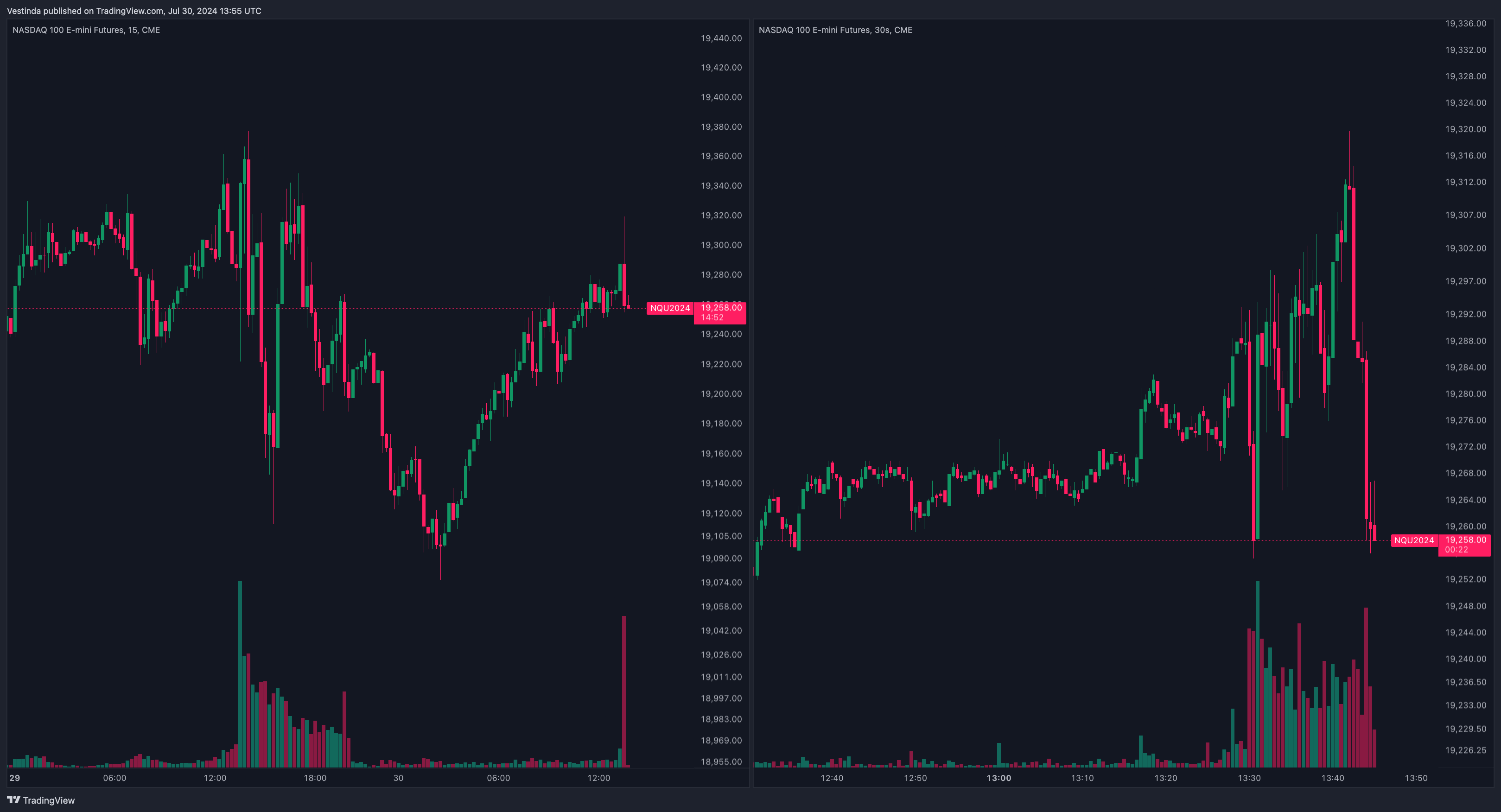
- High Volatility: NQ offers numerous trading opportunities due to its significant intraday price movements.
- Liquidity: High trading volume ensures tight bid-ask spreads and efficient trade execution.
- Leverage: Futures contracts provide leverage, allowing traders to control large positions with relatively small capital.
- Extended Trading Hours: NQ Futures trade almost 24 hours a day, offering more opportunities for intraday trades.
- Lower Capital Requirements: Compared to trading the NDX index directly, NQ Futures require less capital due to the leverage provided by futures contracts.
Essential Indicators for Scalping NQ
Moving Averages (MA)
Exponential Moving Average (EMA): Identify short-term trends and potential entry/exit points.
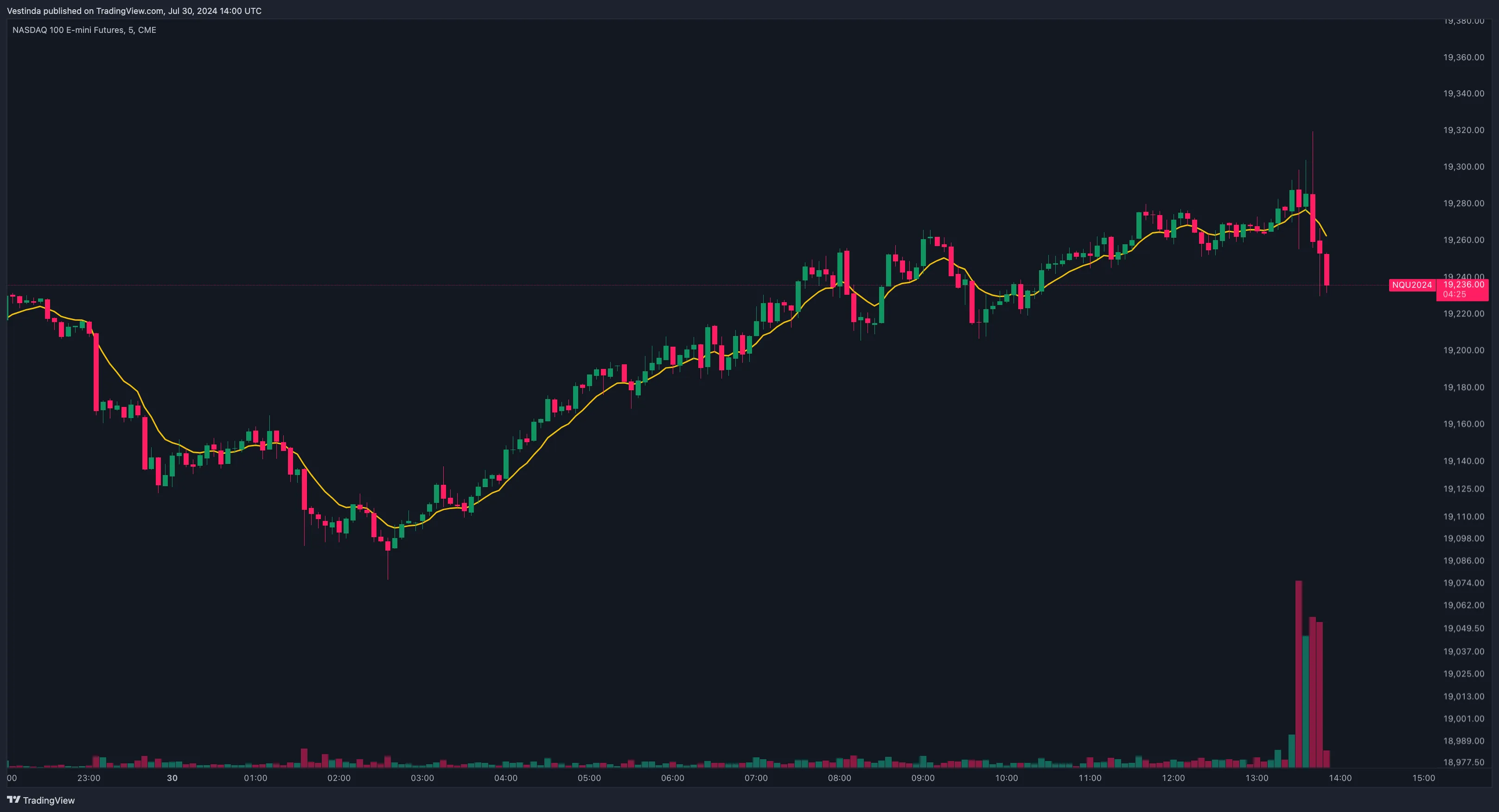
Example Setup: 9-period EMA for quick trend detection.
Relative Strength Index (RSI)
Usage: Identify overbought or oversold conditions.
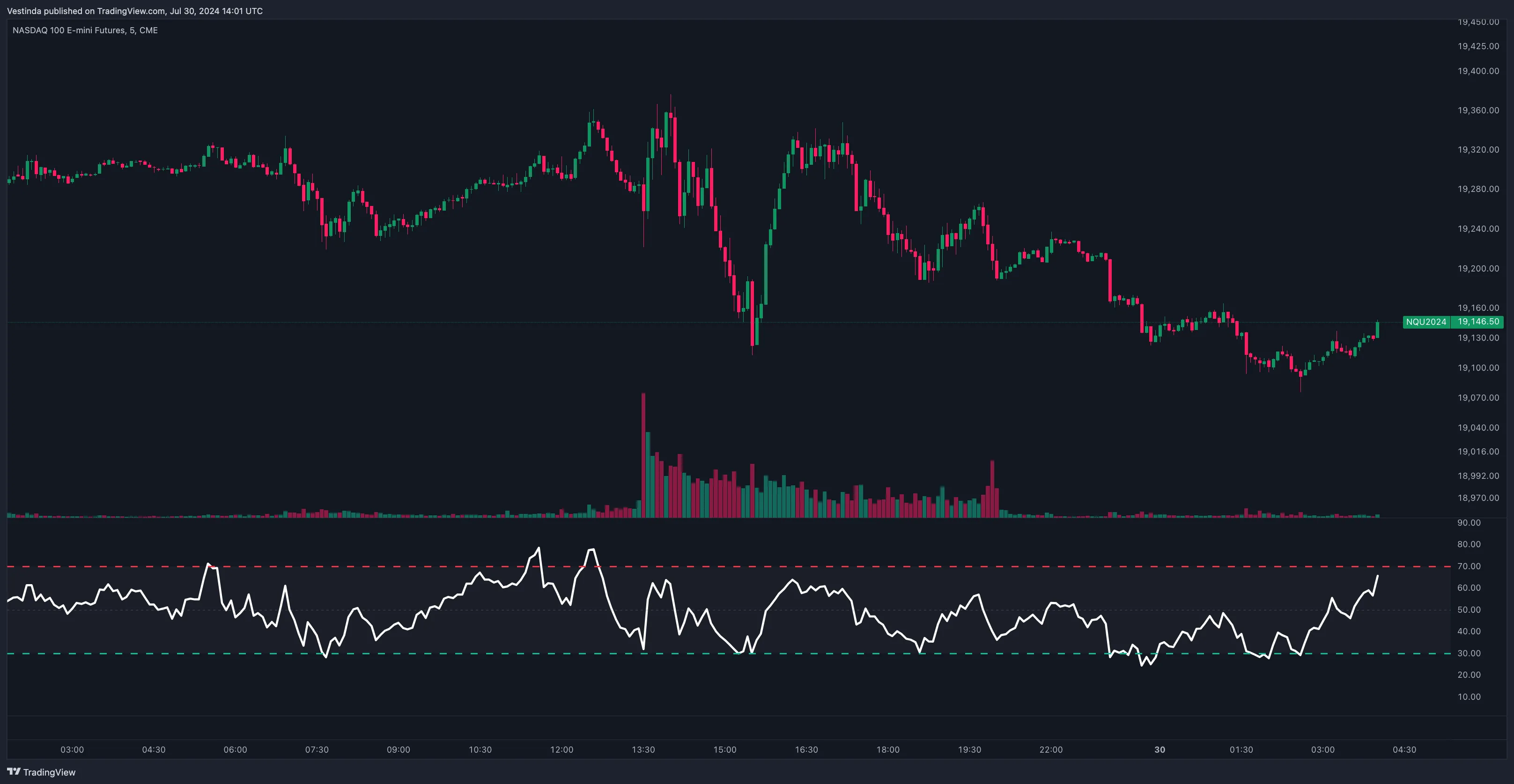
Example Setup: RSI above 70 indicates overbought conditions (sell signal), RSI below 30 indicates oversold conditions (buy signal).
Moving Average Convergence Divergence (MACD)
Usage: Identify momentum and trend changes.
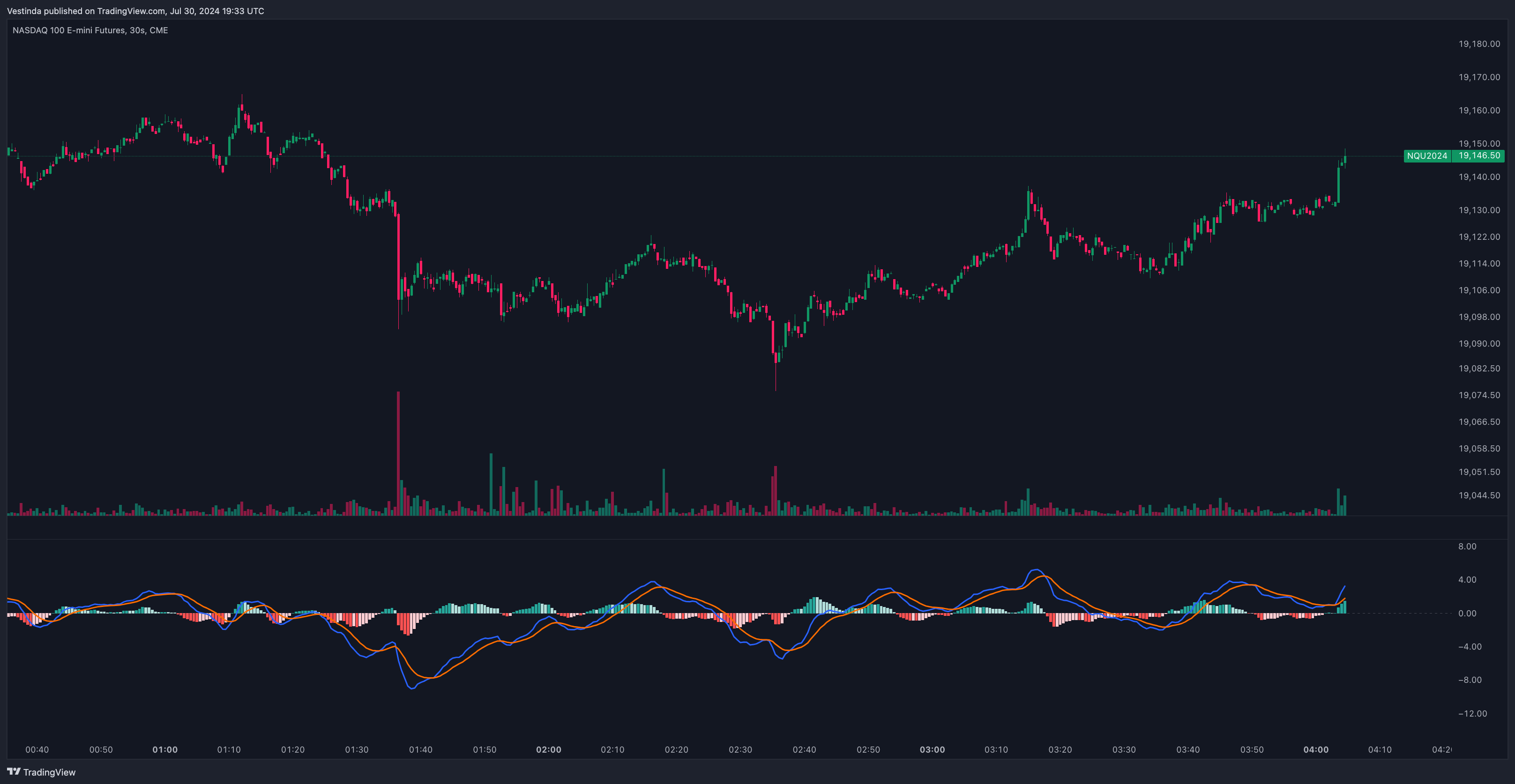
Example Setup: MACD line crossing above the signal line (buy signal), MACD line crossing below the signal line (sell signal).
Bollinger Bands
Usage: Identify volatility and potential breakout points.

Example Setup: Price touching the upper band indicates overbought conditions, price touching the lower band indicates oversold conditions.
Volume Profile
Usage: Identify key price levels where high trading volumes occur.

Example Setup: Use volume profile to detect support and resistance levels.
Best Timeframes for Scalping NQ
1-Minute Chart
Ideal for high-frequency trading and capturing small price movements. Useful for quick entries and exits.
5-Minute Chart
Provides a balance between capturing price movements and managing trade execution. Commonly used by scalpers to confirm trends and signals.
Scalping Strategies for NQ
EMA Crossover Strategy
Concept: Trade based on short-term EMA crossovers.
Setup:
- Use the 1-minute chart.
- Apply 9-period and 21-period EMAs.
- Buy Signal: When the 9-period EMA crosses above the 21-period EMA.
- Sell Signal: When the 9-period EMA crosses below the 21-period EMA.
Bollinger Bands Reversal
Concept: Trade reversals at the upper and lower Bollinger Bands.
Setup:
- Use the 1-minute chart.
- Apply Bollinger Bands with a standard deviation of 2.
- Buy Signal: When the price touches the lower band and RSI is below 30.
- Sell Signal: When the price touches the upper band and RSI is above 70.
MACD Momentum
Concept: Trade based on MACD crossovers and momentum.
Setup:
- Use the 1-minute chart.
- Apply MACD with standard settings (12, 26, 9).
- Buy Signal: When the MACD line crosses above the signal line.
- Sell Signal: When the MACD line crosses below the signal line.
Risk Management
Set Stop-Loss Orders
- Place stop-loss orders to limit potential losses (e.g., 2 points below entry price).
- Adjust stop-loss levels as the trade moves in your favor.
Set Take-Profit Orders
- Define take-profit levels to secure gains (e.g., 4 points above entry price).
- Use trailing stop-loss orders to lock in profits as the price moves in your favor.
Limit Position Size
- Avoid risking more than a small percentage of your trading capital on a single trade.
- Diversify trades to spread risk.
Tips for Successful NQ Scalping
Stay Informed
- Keep up with market news and developments that may impact the Nasdaq 100.
- Monitor economic data releases and earnings reports.
Use Pre-Market Analysis
Analyze pre-market trading activity to gauge market sentiment and identify potential trading opportunities.
Keep a Trading Journal
- Document your trades, including entry and exit points, reasons for the trade, and outcomes.
- Review your journal regularly to identify patterns and improve your strategy.
Be Disciplined
- Stick to your trading plan and avoid impulsive decisions.
- Follow your risk management rules strictly.
Tools for Scalping NQ
TradingView
Features: Advanced charting tools, numerous indicators, and custom script capabilities.
Usage: Use TradingView for detailed technical analysis and to monitor your scalping trades.
Vestinda
Features: User-friendly platform for creating, backtesting, and deploying automated trading strategies.
Usage: Use Vestinda to automate your scalping strategies and backtest them with historical data to optimize performance.
Example: Create a strategy that buys NQ when the 9-period EMA crosses above the 21-period EMA and backtest it over the past month.
Other Platforms
Consider other platforms like NinjaTrader or MetaTrader for additional analysis and trading capabilities.
Conclusion
Scalping NQ can be highly rewarding due to its volatility and liquidity. By using the right indicators and strategies, you can capitalize on intraday price movements and manage risk effectively. Whether you're using EMA crossovers, Bollinger Bands reversals, or MACD momentum, always ensure you have a solid risk management plan in place.
Additional Resources
- Tools: Platforms like TradingView and Vestinda for advanced charting, automation, and backtesting.
- Further Reading: Books and articles on technical analysis and scalping strategies.
- Video Tutorials: Step-by-step guides on setting up and optimizing trading strategies.
Efficient Slippage Management for NDX Scalping
Managing slippage is crucial in NDX scalping due to the fast-paced nature of this trading strategy. Slippage occurs when the execution price differs from the expected price, leading to potential losses. Traders should closely monitor market liquidity and volatility, as these factors greatly impact slippage. Utilizing limit orders helps mitigate slippage by allowing traders to specify their desired price for execution. Additionally, setting realistic profit targets and stop-loss levels helps traders manage slippage effectively. Monitoring bid-ask spreads and order book depth can provide valuable insights into the level of slippage to expect. Traders should also consider using advanced trading tools and technologies that provide real-time slippage data to enhance their decision-making process. Overall, managing slippage is vital for successful NDX scalping and can be achieved through careful observation and strategic order placement.
NDX Scalping: The Vital Role of Liquidity
Liquidity is crucial when it comes to NDX scalping. It ensures ease of buying and selling stocks. High liquidity allows for faster execution of trades. This is particularly important for scalpers who aim to profit from small price fluctuations. With a liquid market, scalpers can enter and exit positions quickly. Moreover, liquidity reduces the risk of price slippage, a common issue in illiquid markets. Scalpers rely on consistent price movement, and liquid markets provide just that. It allows traders to get in and out of trades without significantly impacting the stock price. Therefore, understanding the importance of liquidity is crucial for successful NDX scalping.
Weekend Scalping: NDX Advantage and Drawbacks
Scalping on weekends can be a mixed bag with both pros and cons. On one hand, the lack of trading volume can make it difficult to find profitable opportunities. Furthermore, with fewer market participants, spreads can widen, making it harder to execute trades efficiently. However, the weekend can also present unique opportunities. Prices can be more stable, providing scalpers with more predictable patterns to exploit. In addition, news flow is typically lighter, reducing the risk of unexpected market-moving events. NDX, being an index comprised of large technology stocks, can provide ample trading opportunities for scalpers during weekends. Ultimately, the decision to scalp on weekends should be based on careful evaluation of the prevailing market conditions and individual risk tolerance.
Sophisticated backtesting is not only possession of high-esteemed hedge funds anymore.
Impressive Team and support, Backtesting engine with detailed reports, The Strategy builder.

Great purchase!
I have always manually invested in stocks and cryptocurrencies, but after studying Vestinda, I must say it has enormous potential.

Mature platform for trading
Pro: Easy to use, Nice UX, A lot of customization for strategies, Back testing is an awesome tool, can check any strategy in history.

Frequently Asked Questions
Yes, scalping NDX using moving averages can be effective. By using short-term moving averages like the 5 and 10-day ones, traders can identify short-term trends and make quick trades accordingly. They can enter positions when the price crosses above the moving averages and exit when it crosses below. However, it is essential to use other supporting indicators and perform thorough analysis to increase the chances of success. Successful scalping also requires discipline, strict risk management, and continuous monitoring of market conditions.
Scalping and day trading are both active trading strategies, but they differ in their approach and timeframe. Scalping involves making quick trades with small profit targets, exploiting short-term price movements. It requires constant monitoring of charts and executing trades swiftly. On the other hand, day trading involves taking advantage of daily price fluctuations and can provide more opportunities for profit throughout the day. While scalping may appear less complex due to its shorter timeframes and smaller profit targets, it requires precision, discipline, and the ability to handle increased transaction costs. Ultimately, the answer to whether scalping is easier than day trading depends on an individual's skills, preference, and ability to handle the inherent challenges of each strategy.
The amount of capital needed for NDX scalping can vary depending on personal risk appetite and trading strategy. As a high-risk trading technique, it is generally recommended to have a substantial capital base. Scalping requires quick execution and frequent trades, thereby necessitating sufficient funds to cover potential losses, commission fees, and margin requirements. Traders should consider implementing strict risk management practices and maintaining a sizeable trading account to handle the inherent volatility and potential market fluctuations. It is crucial to consult with a financial advisor and thoroughly understand the risks before engaging in NDX scalping.
Automated NDX scalping offers several advantages. Firstly, it eliminates human emotions and biases from trading decisions, ensuring consistent and disciplined execution. Secondly, it allows for high-speed trading, taking advantage of small price fluctuations in the NDX. Additionally, automation enables traders to execute multiple trades simultaneously and take advantage of various market conditions. It also reduces the need for manual monitoring, saving time and effort. Overall, automated NDX scalping provides increased efficiency, better risk management, and the potential for higher returns in the fast-paced trading environment.
Scalping is risky due to its reliance on quick market fluctuations. This high-frequency trading strategy involves opening and closing positions rapidly to capture small profits. However, its fast-paced nature amplifies the impact of slightest price changes and increases the risk of losses. Scalpers are more susceptible to slippage, where their order is executed at a different price than expected, leading to potential financial harm. Additionally, scalping requires robust technical analysis skills and strict discipline, as emotions can hinder decision-making. Unpredictable market movements and limited timeframes further contribute to the inherent risk associated with scalping.
Conclusion
In conclusion, NDX Scalping is a popular trading strategy that seeks to capitalize on small price fluctuations in the Nasdaq 100 index. By utilizing automated and algorithmic trading techniques, such as AI scalping bots, traders can execute trades quickly and efficiently. Proper management of slippage and understanding the importance of liquidity are crucial for successful NDX scalping. While scalping on weekends can present challenges, it can also offer unique opportunities for traders. Ultimately, careful evaluation of market conditions and individual risk tolerance should guide the decision to scalp on weekends. Overall, NDX Scalping has the potential to provide quick returns for traders willing to employ this strategy.

Successful traders rely on backtesting to be profitable.
Be like them with our
Free Backtesting Guide