
-
 Create
account -
 Build trading strategies
with no code -
 Validate
& Backtest -
 Connect exchange
& start earning
Quant Strategies & Backtesting results for XRP
Here are some XRP trading strategies along with their past performance. You can validate these strategies (and many more) for free on Vestinda across thousands of assets and many years of historical data.
Quant Trading Strategy: Play the swings and profit when markets are trending up on XRP
The backtesting results for the trading strategy from March 16, 2022, to November 6, 2023, show promising statistics. The strategy has a profit factor of 1.2, indicating that for every dollar risked, it generated a profit of $1.20. The annualized return on investment (ROI) stands at 18.67%, outperforming passive investment options. On average, trades were held for around 3 days and 19 hours, and the strategy executed an average of 0.58 trades per week. With 50 closed trades in total, the strategy boasted a winning trade percentage of 62%. Notably, it outperformed the buy-and-hold strategy, generating excess returns of 43.58%. Overall, these statistics suggest that the trading strategy has displayed promising results during the given period.

 XRPUSDT

Choose another period and try again.
Quant Trading Strategy: Keltner Breakout Strategy on XRP
According to the backtesting results for the trading strategy from August 17, 2021, to November 10, 2023, the strategy demonstrated a profit factor of 1.03, indicating that for every dollar risked, a profit of $1.03 was generated. The annualized return on investment (ROI) was 1.72%, suggesting that the strategy yielded modest but steady returns over the analyzed period. The average holding time for trades was 5 days and 13 hours, indicating that positions were typically held for a relatively short duration. With an average of 0.39 trades per week, the strategy exhibited a relatively low trade frequency. There were a total of 46 closed trades during the period, out of which 43.48% were winning trades. This suggests that the strategy had a moderate success rate. Notably, the strategy outperformed a buy-and-hold approach, generating excess returns of 83.92%.
XRPUSDT
Choose another period and try again.
Swing Trading Success with Ripple (XRP): A Comprehensive Guide
Introduction
Ripple (XRP) is one of the most well-known cryptocurrencies, often making headlines due to its price volatility and strong market presence. For traders looking to capitalize on short- to medium-term price movements, swing trading can be a highly effective strategy. In this guide, we’ll explore how to achieve swing trading success with Ripple (XRP), offering insights into key strategies, tools, and best practices to enhance your trading performance.
What is Swing Trading?
Overview: Swing trading involves capturing short- to medium-term gains in a stock or cryptocurrency over a few days to several weeks. Unlike day trading, swing trading doesn’t require constant market monitoring, making it accessible for both new and experienced traders.
Why Swing Trade Ripple (XRP)?
- Volatility: XRP’s price tends to fluctuate significantly, providing ample opportunities for swing traders to capture profits.
- Market Sentiment: Ripple’s involvement in various partnerships and legal developments often influences its price, creating swing trading opportunities.
- Liquidity: XRP is one of the most liquid cryptocurrencies, ensuring that trades can be executed quickly with minimal slippage.
Key Swing Trading Strategies for Ripple (XRP)
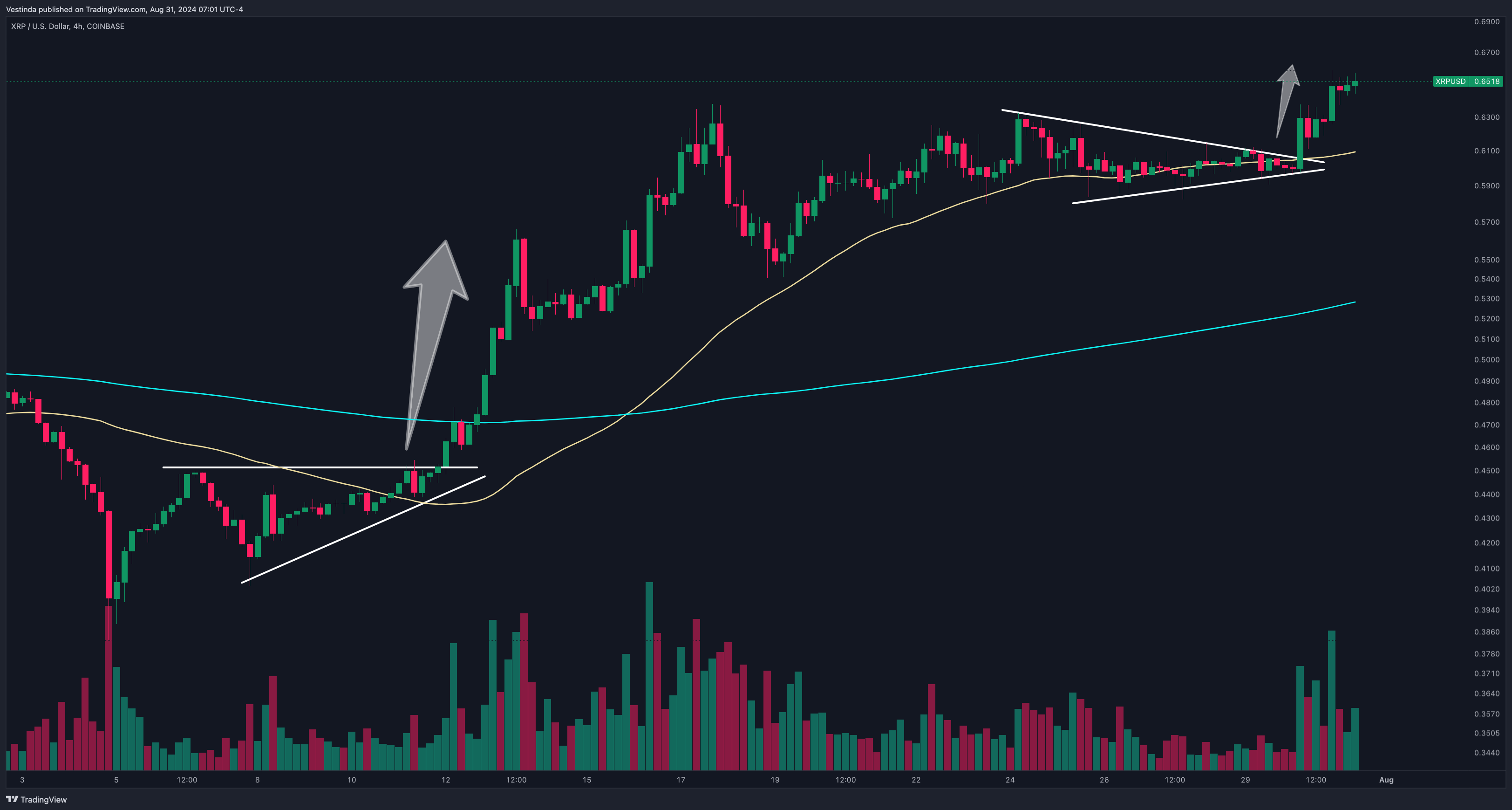
Breakout Trading
Concept: Trade the breakout of key support or resistance levels to capture strong price movements.
How to Implement:
- Chart Patterns: Look for chart patterns like triangles, rectangles, or head and shoulders that indicate potential breakouts.
- Volume Confirmation: Use volume as a confirming indicator—strong volume during a breakout suggests that the move is likely to continue.
- Entry and Exit: Enter the trade as soon as the price breaks out of the pattern, setting a stop-loss just below the breakout level to manage risk. Exit when the price reaches a significant resistance or support level.
Fibonacci Retracement Strategy
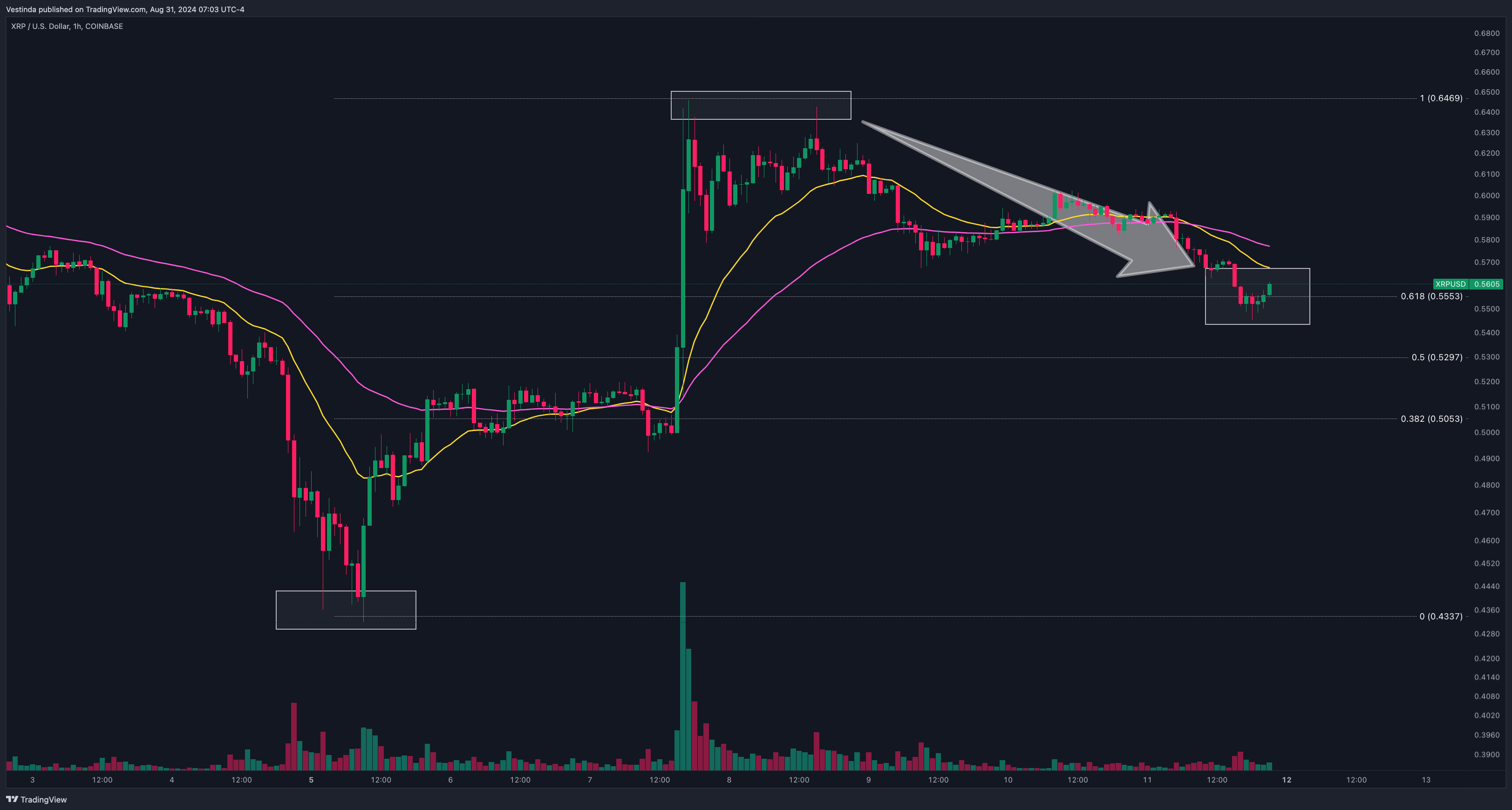
Concept: Use Fibonacci retracement levels to identify potential entry points during a pullback within a larger trend.
How to Implement:
- Fibonacci Levels: Plot Fibonacci retracement levels (e.g., 38.2%, 50%, 61.8%) on a recent price swing. These levels often act as support or resistance during pullbacks.
- Combining with RSI: Use the Relative Strength Index (RSI) to confirm entry points—an oversold RSI at a Fibonacci level suggests a potential buying opportunity.
- Entry and Exit: Enter trades at or near the Fibonacci levels with a stop-loss just below the level. Exit the trade as the price approaches the previous high (in an uptrend) or low (in a downtrend).
RSI Divergence Strategy
Concept: Identify divergences between the price and the RSI indicator to anticipate potential reversals.
How to Implement:
- Bullish Divergence: Occurs when the price makes lower lows, but the RSI makes higher lows, indicating a potential upward reversal.
- Bearish Divergence: Occurs when the price makes higher highs, but the RSI makes lower highs, indicating a potential downward reversal.
- Entry and Exit: Enter the trade when a divergence is confirmed and exit when the price moves significantly in the expected direction or when the RSI reaches overbought or oversold levels.
Tools and Indicators for Successful Swing Trading
Moving Averages
Why: Moving averages smooth out price data, helping to identify the direction of the trend and potential entry/exit points.
How to Use:
Apply the 50-day and 200-day moving averages to identify trend direction and use crossovers as potential signals for entering or exiting trades.
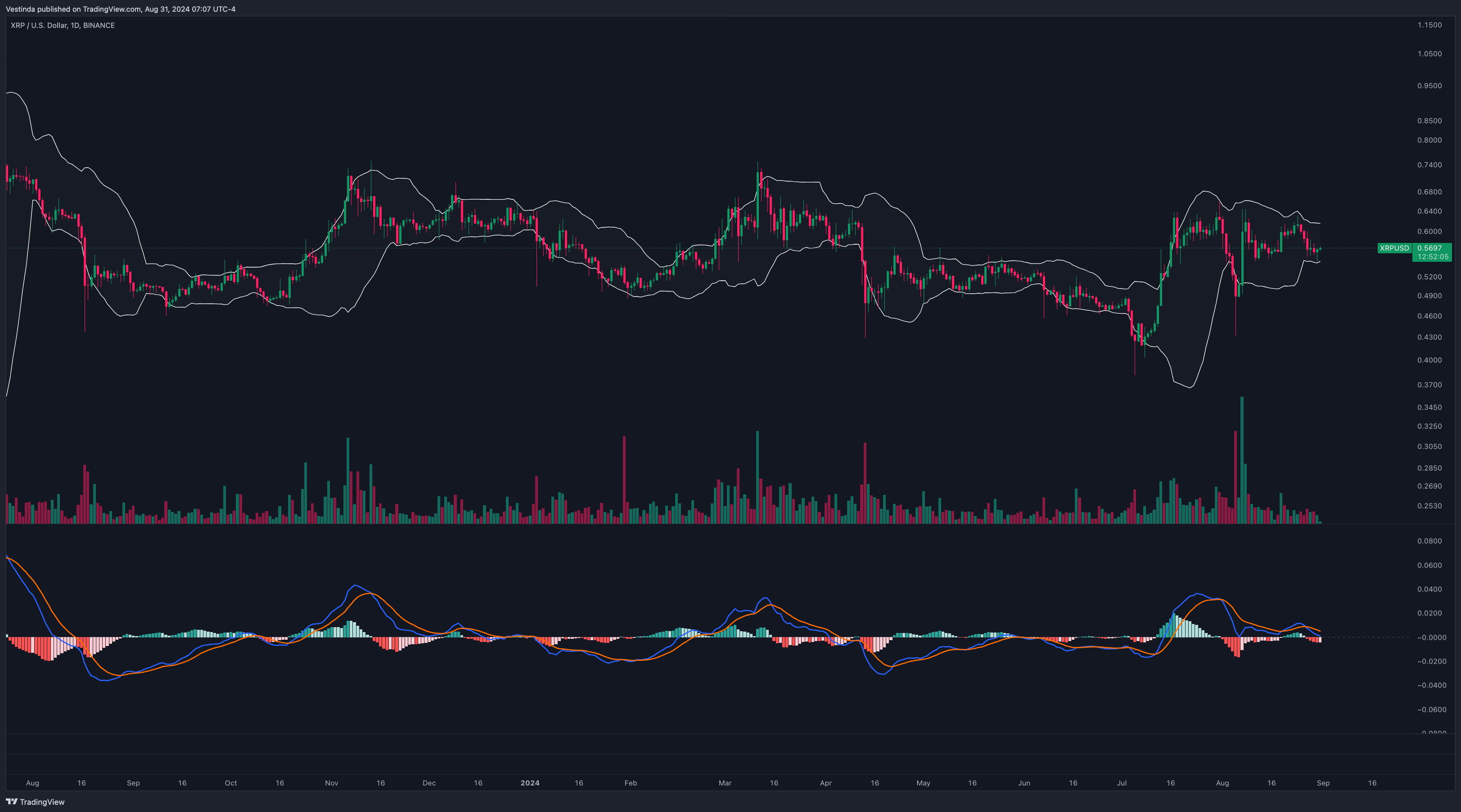
Bollinger Bands
Why: Bollinger Bands help identify overbought and oversold conditions, providing entry points during periods of high volatility.
How to Use:
Enter trades when the price touches the lower band in an uptrend or the upper band in a downtrend. Exit when the price moves back toward the middle band.
MACD (Moving Average Convergence Divergence)
Why: The MACD is a momentum indicator that shows the relationship between two moving averages, helping to confirm trends and potential reversals.
How to Use:
Enter trades when the MACD line crosses above the signal line in an uptrend or below it in a downtrend.
Risk Management for Swing Trading Ripple (XRP)
Position Sizing
Concept: Determine the size of each trade based on your overall risk tolerance and the distance to your stop-loss level.
How to Implement:
Use a percentage of your trading capital (e.g., 1-2%) for each trade, ensuring that losses are kept within manageable limits.
Stop-Loss Orders
Concept: Use stop-loss orders to protect your capital and limit potential losses.
How to Implement:
Set stop-loss levels below key support levels (for long positions) or above resistance levels (for short positions) to automatically exit trades that move against you.
Take-Profit Orders
Concept: Set take-profit levels to lock in gains when the price reaches a predetermined target.
How to Implement:
Place take-profit orders at significant resistance levels in an uptrend or support levels in a downtrend to secure profits before the price reverses.
Unleashing XRP Potential: Mastering Swing Trading Trends
In swing trading, trend analysis plays a crucial role in identifying and capitalizing on market opportunities. By analyzing the price movements and patterns of XRP, traders can make informed decisions and improve their chances of successful trades. Trend analysis helps identify the overall direction of XRP's price movement, whether it's an uptrend, downtrend, or a sideways trend. This information enables traders to anticipate potential reversals or continuation of trends. By understanding the trend, traders can align their trades with the prevailing market sentiment, increasing the probability of profit. Additionally, trend analysis can aid in determining entry and exit points, helping traders to optimize their risk-to-reward ratios. Overall, a comprehensive trend analysis is crucial for swing traders looking to maximize their trading profits in XRP.
S&R Analysis for Swing Trading with XRP
Support and resistance levels play a crucial role in swing trading strategies. The support level is the price point at which buying pressure is strong enough to halt or reverse a downward trend. It acts as a floor, preventing the price from falling further. On the other hand, the resistance level is the price point at which selling pressure is strong enough to halt or reverse an upward trend. It acts as a ceiling, preventing the price from rising further.
Identifying these levels can provide swing traders with key decision points for entering or exiting trades. When the price approaches a support level, traders may look for bullish signals to enter long positions. Conversely, when the price approaches a resistance level, traders may consider taking profits or even entering short positions if there are bearish indications.
In swing trading, understanding and utilizing support and resistance levels can enhance trade setups and help traders identify potential profit-taking or risk management levels.
Profit & Protection: Swing Trading Strategies with XRP
In swing trading, understanding take profit and stop loss is crucial for managing risk. Taking profit involves setting a target price at which you want to sell your position to lock in gains. This helps capitalize on upward price movements. On the other hand, stop loss is a predetermined price level where you want to sell or exit the trade to limit potential losses. It acts as a safety net, protecting your capital if the price moves in the opposite direction. Both take profit and stop loss levels should be determined based on careful analysis of market trends and individual trade setups. As with any trading strategy, it's important to remember that swing trading carries risks, and setting appropriate take profit and stop loss levels can help mitigate some of these risks. When swing trading XRP, it's particularly important to stay updated with Ripple news and market trends.
Swing Trading Strategies: Exploring Varying Approaches
There are several types of swing trading strategies that traders can utilize. One common type is trend following, where traders aim to identify and ride the momentum of a particular trend. Another type is mean reversion, which involves taking advantage of price movements that deviate from the average.
Breakout trading is another popular strategy used in swing trading. Traders look for chart patterns or levels of support and resistance that indicate a potential breakout in either direction. Range trading is also a common approach, where traders identify price ranges and buy at the bottom and sell at the top.
Additionally, technical analysis is often employed by swing traders to identify patterns and trends in the markets. This involves analyzing price and volume data, as well as using indicators such as moving averages and oscillators to make trading decisions. Overall, swing trading offers a variety of strategies that traders can employ to try and profit from short-term price movements in the market.
Sophisticated backtesting is not only possession of high-esteemed hedge funds anymore.
Impressive Team and support, Backtesting engine with detailed reports, The Strategy builder.

Great purchase!
I have always manually invested in stocks and cryptocurrencies, but after studying Vestinda, I must say it has enormous potential.

Mature platform for trading
Pro: Easy to use, Nice UX, A lot of customization for strategies, Back testing is an awesome tool, can check any strategy in history.

Frequently Asked Questions
Swing trading XRP can be influenced by market sector analysis to some extent. Analyzing the cryptocurrency market sector can provide insights into overall trends and potential price movements. However, swing trading primarily involves analyzing XRP's price action, technical indicators, and trading patterns to make short-term trades. While market sector analysis can provide a broader context, swing traders typically rely more on specific XRP chart analysis for decision-making. Both approaches can complement each other but swing trading XRP is primarily driven by analyzing XRP's individual dynamics rather than a broad market sector analysis.
Yes, swing trading can be done on XRP using economic indicators. Traders can analyze economic indicators such as inflation rates, GDP growth, and interest rates to identify potential swing trading opportunities in XRP. These indicators can provide valuable insights into the overall economic health, market sentiment, and potential price movements of XRP. By carefully analyzing and interpreting these indicators, swing traders can make informed trading decisions to capitalize on short-term price fluctuations in XRP.
There is no definitive answer to the question of the best hour for swing trading as it largely depends on the market being traded. However, many swing traders prefer to focus on the first hour after the opening bell or the last hour before the market closes. These periods often exhibit increased volatility and trading volume, offering greater potential for price swings and profits. Additionally, traders may analyze historical data to identify patterns and trends specific to their chosen market, which can help determine the most opportune hours for swing trading. Ultimately, it is crucial to thoroughly research and test strategies to find the best hour suited to individual trading preferences and goals.
Trendlines can be powerful tools in XRP swing trading. To use them effectively, identify the overall trend by connecting the highs or lows. Use an upward sloping trendline as a buy signal, entering positions when prices touch or bounce off the trendline. Conversely, a downward sloping trendline signals a potential sell opportunity as prices touch or break below it. Remember to confirm trendlines with other indicators or chart patterns. Setting stop-loss orders and taking profits near trendline resistance or support levels can help manage risk and maximize gains. Constantly reevaluating and adjusting trendlines is crucial as the market evolves.
Swing trading crypto can be challenging but not necessarily easy. It requires a sound understanding of technical analysis, risk management, and market trends. Success depends on the trader's ability to identify short-term price movements and make timely and accurate decisions. Crypto markets can be highly volatile, making swing trading even more complex. Traders need to constantly monitor the market, stay updated with news, and adapt to changing conditions. While it is possible to profit from swing trading, it requires significant skill, experience, and discipline. Beginners should be cautious and consider gaining more knowledge before engaging in swing trading crypto.
Conclusion
In conclusion, XRP swing trading is a dynamic and potentially profitable strategy for traders interested in the cryptocurrency market. By understanding swing trading principles and implementing effective strategies, traders can take advantage of XRP's price fluctuations and potentially increase their profits. Trend analysis, support and resistance levels, risk management, and the use of various swing trading strategies are all crucial elements to consider when engaging in XRP swing trading. It's important to continuously monitor the market, stay updated with Ripple news, and learn from trading experiences to continuously improve skills and maximize trading profits.

Successful traders rely on backtesting to be profitable.
Be like them with our
Free Backtesting Guide