-
100,000 available assets New
-
years of historical data
-
practice without risking money

Algorithmic Strategies & Backtesting results for NEO
Here are some NEO trading strategies along with their past performance. You can validate these strategies (and many more) for free on Vestinda across thousands of assets and many years of historical data.
Algorithmic Trading Strategy: Follow the trend on NEO
Based on the backtesting results from December 15, 2020, to December 15, 2023, the trading strategy demonstrated promising performance. The strategy exhibited a profit factor of 1.42, indicating that the total profits generated were 42% higher than the total losses incurred. The annualized return on investment (ROI) reached an impressive 89.81%, suggesting substantial growth over the examined period. On average, trades were held for one week, with approximately 0.37 trades conducted per week. A total of 58 trades were closed during the period, with a winning trades percentage of 32.76%. Moreover, the strategy outperformed a simple buy and hold approach, generating excess returns of 395.74%. These statistics highlight the potential effectiveness of the trading strategy.

 NEOUSDT

Choose another period and try again.
Algorithmic Trading Strategy: Play the breakout on NEO
Based on the backtesting results from December 15, 2020, to December 15, 2023, the trading strategy showcased promising statistics. The profit factor amounted to 1.28, indicating a moderate level of profitability. The annualized return on investment (ROI) stood at an impressive 33.32%, suggesting a substantial growth in capital over the tested period. On average, positions were held for approximately 3 weeks and 4 days, reflecting a medium-term trading approach. With an average of 0.07 trades per week, the strategy maintained a relatively low trading frequency. Despite the limited number of closed trades (12), the strategy yielded a noteworthy return of 100.98%. Moreover, the winning trades accounted for 41.67% of the total, demonstrating the potential for successful outcomes. Notably, the strategy outperformed the buy-and-hold approach, generating excess returns of 167.74%. These results validate the effectiveness of the trading strategy during the specified period.
NEOUSDT
Choose another period and try again.
Algo Trading Software for NEO (NEOUSDT): Boost Your Trading Success
Introduction
Algorithmic trading software has become a cornerstone for successful trading in dynamic markets like NEO (NEOUSDT). By combining advanced indicators such as VWAP, MACD, RSI, Stochastic, Keltner Channels, and Ichimoku Cloud, traders can build effective and reliable strategies. This guide highlights three top strategies utilizing these indicators to maximize trading success.
Why Use Algo Trading Software for NEO?
- Efficiency and Speed: Executes trades in real-time, faster than manual trading.
- Precision: Makes data-driven decisions, minimizing emotional biases.
- 24/7 Monitoring: Ensures continuous engagement with the market for timely trades.
Top Strategies for NEO Algo Trading
1. Trend-Following Strategy with Ichimoku Cloud and MACD
Concept:
Identify and capitalize on prevailing trends using trend and momentum indicators.
Setup:
- Apply the Ichimoku Cloud to visualize support/resistance and trend direction.
- Add MACD (12, 26, 9) for momentum confirmation.

Execution Rules:
- Buy Signal: Enter long when price breaks above the Ichimoku Cloud, and MACD line crosses above the signal line.
- Sell Signal: Exit when price enters the cloud or MACD turns bearish.
Best For: Medium-term trading in trending markets.
2. Momentum Scalping with VWAP and RSI
Concept:
Exploit short-term momentum shifts by combining volume-based and oscillator indicators.
Setup:
- Use VWAP to identify the average price and confirm trend direction.
- Add RSI (14) to detect overbought and oversold levels.

Execution Rules:
- Buy Signal: Enter long when price is above VWAP, and RSI exits oversold territory (<30).
- Sell Signal: Exit when price drops below VWAP or RSI nears overbought levels (>70).
Best For: High-frequency trades during active market hours.
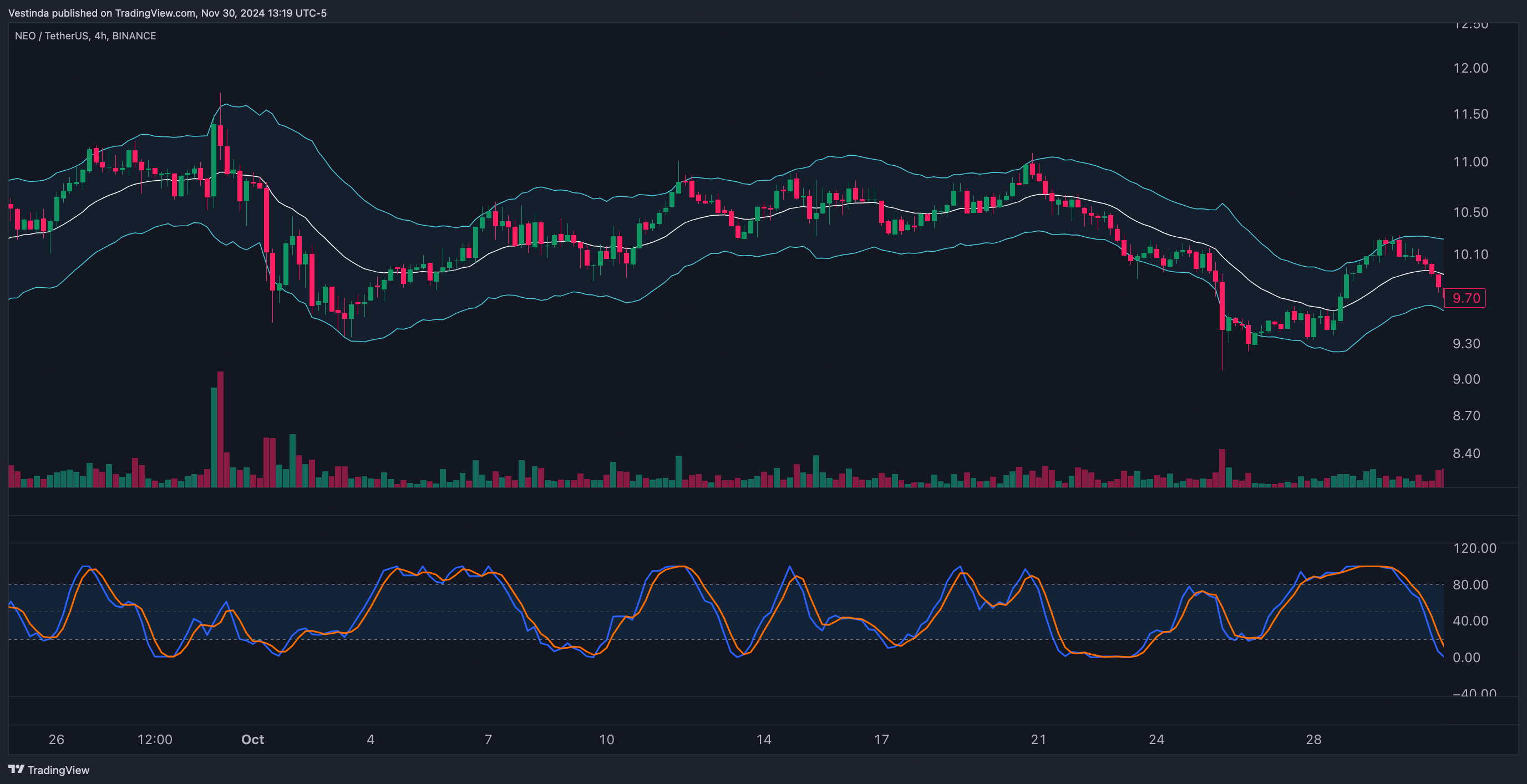
3. Range Trading with Keltner Channels and Stochastic Oscillator
Concept:
Capture profits within a defined range by combining volatility bands with a momentum oscillator.
Setup:
- Apply Keltner Channels with a 20-period EMA and multiplier of 2.
- Use Stochastic Oscillator (14, 3, 3) to confirm reversal points.
Execution Rules:
- Buy Signal: Enter long when price touches the lower Keltner Channel, and Stochastic exits oversold (<20).
- Sell Signal: Exit near the upper Keltner Channel or when Stochastic enters overbought (>80).
Best For: Sideways markets with clear boundaries.
Risk Management for Algo Trading
- Dynamic Stop-Loss: Use ATR or volatility-based stops to adapt to changing market conditions.
- Position Sizing: Risk no more than 1-2% of your total capital on a single trade.
- Diversification: Employ multiple strategies to hedge risks and improve consistency.
Advantages of Using These Strategies
- Flexibility: Suitable for trending, ranging, and volatile markets.
- Enhanced Accuracy: Combines leading and lagging indicators for robust decision-making.
- Scalability: Can be applied to multiple assets and timeframes.
Common Mistakes to Avoid
- Ignoring Volume Confirmation: Always validate breakouts and momentum shifts with volume indicators like VWAP.
- Over-Optimization: Avoid tailoring strategies too closely to historical data, which may reduce live performance.
- Neglecting Monitoring: Regularly review bot performance and refine settings as necessary.
Conclusion
By integrating advanced indicators like Ichimoku Cloud, VWAP, RSI, Stochastic Oscillator, and Keltner Channels, traders can design highly effective algo trading strategies for NEO. These strategies, combined with disciplined risk management, provide a competitive edge in NEO’s dynamic market. Start small, refine your approach, and let automation work to maximize your success.
Mastering NEO Algo Trading Software: Step-by-Step Guide
1. Install the Neo algo trading software on your computer or device.
2. Launch the software and create a new account or log in if you already have one.
3. Connect your Neo trading account or exchange API with the software.
4. Set your desired trading parameters and strategy within the software.
5. Start the algo trading software and let it automatically execute trades on your behalf.
6. Monitor the performance of your trades and make adjustments to your strategy as needed.
7. Use the software's portfolio and risk management tools to manage your investments effectively.
8. Stay updated with market news and trends to optimize your algo trading strategy.
Anticipatory Algorithms: Enhancing Trading with NEO's Predictive Modeling
Predictive modeling is an integral part of NEO Algo Trading Software.
It utilizes advanced algorithms to forecast future market movements accurately.
By analyzing historical data and trends, the software can identify patterns and make predictions.
This helps traders make informed decisions and execute profitable trades with high precision.
The predictive modeling feature in NEO Algo Trading Software filters out noise and focuses on important data, ensuring accurate predictions.
The software continuously learns and adapts to market conditions, enhancing its predictive capabilities over time.
Traders can rely on this feature to optimize their trading strategies and increase profitability.
With NEO Algo Trading Software, predictive modeling becomes an invaluable tool for successful trading.
Compliance Challenges for Neo Exchanges' Algorithmic Trading
Algo trading, also known as algorithmic trading, is gaining popularity in the cryptocurrency market, including NEO exchanges. These automated trading systems use complex algorithms to execute trades at high speeds and volumes. However, with the rise of algo trading, regulatory compliance becomes crucial. NEO exchanges must adhere to regulations to ensure market integrity, transparency, and investor protection. Compliance measures include comprehensive risk management frameworks, monitoring and surveillance systems, and robust reporting mechanisms. By implementing these systems, NEO exchanges can mitigate potential issues such as market manipulation, insider trading, and unauthorized access. Compliance with regulatory requirements not only safeguards the exchange's reputation but also maintains investor trust in the rapidly evolving and dynamic world of cryptocurrency trading.
Crypto Exchange Selection for Algo Trading: Optimizing NEO Integration
When selecting a cryptocurrency exchange for algo trading software, it is crucial to carefully consider several factors. Firstly, the reliability and security of the exchange should be a top priority. The platform should have a strong track record of safeguarding user funds and employing robust security measures. Additionally, the liquidity and trading volume of the exchange are important aspects to consider. High liquidity ensures that trades can be executed quickly and efficiently, while a decent trading volume indicates a vibrant market. It is also worth examining the range of cryptocurrencies supported by the exchange, as well as any potential fees involved. NEO, a popular cryptocurrency, may be one of the coins that traders want to consider when selecting an exchange for algo trading software. By considering these factors, traders can make an informed decision about which exchange is best suited for their algo trading needs.
-
 Create
account -
 Build trading strategies
with no code -
 Validate
& Backtest -
 Automate
& start earning
Frequently Asked Questions
Handling data quality issues in algo trading is crucial for accurate decision-making and reliable performance. Start by implementing rigorous data validation and cleaning processes to identify and rectify anomalies, outliers, and missing values. Regularly monitor data sources to ensure they are up to date and reliable. Adopting robust data normalization techniques and using multiple data sources can help mitigate some quality concerns. Additionally, employing statistical models to detect and address data issues in real-time, and conducting thorough backtesting and stress testing, can further enhance the accuracy and reliability of algorithmic trading strategies.
Algo trading refers to the use of automated algorithms to execute trades in financial markets. In the context of NEO decentralized finance (DeFi), it entails utilizing algorithmic strategies to facilitate trading activities on the NEO blockchain. Algo trading in NEO DeFi enables users to execute trades, manage their portfolios, and hedge risks automatically and efficiently. These algorithms can be programmed to analyze market data, execute trades based on predefined rules, and adapt to changing market conditions. It enhances liquidity and ensures faster, more accurate transactions within the NEO DeFi ecosystem.
To be an algo trader, certain skills are crucial. Firstly, advanced programming skills are essential to develop, test, and implement algorithmic trading strategies. Proficiency in coding languages like Python, R, or Java, as well as knowledge of statistical analysis and data manipulation, is crucial. Additionally, strong quantitative and mathematical skills are necessary to understand complex financial models and effectively analyze market data. A deep understanding of finance, specifically trading concepts, is vital to design profitable strategies. Finally, an algo trader must possess problem-solving ability, adaptability, and a keen eye for detail to optimize algorithms and react swiftly to evolving market conditions.
One of the challenges of algorithmic trading with NEO is the limited number of available trading strategies and tools compared to more established platforms like Ethereum or Bitcoin. NEO's ecosystem is still developing, which means that there are fewer pre-built algorithms and technical indicators to utilize. This scarcity of resources can make it more difficult for traders to implement complex trading strategies and optimize their performance. Additionally, NEO's relatively lower liquidity may also pose challenges when executing large orders or implementing high-frequency trading strategies. Traders need to carefully consider these limitations and adapt their strategies accordingly when trading with NEO.
The key factors for success in algo trading include robust strategy development, thorough backtesting, efficient execution, risk management, and continuous monitoring. Developing a well-defined trading strategy that is based on solid market research and analysis is crucial. Backtesting the strategy using historical data helps validate its effectiveness before deploying it in live trading. Efficient execution involves minimizing latency and slippage while processing orders. Implementing effective risk management techniques, such as setting appropriate stop losses and position sizing, helps mitigate potential losses. Regularly monitoring and adapting the algorithm to changing market conditions ensures its continued success.
Conclusion
In conclusion, Algo Trading Software for NEO offers traders a powerful and efficient solution for automating their trading activities on the NEO platform. With its advanced tools and predictive modeling capabilities, this software allows traders to make informed decisions and execute profitable trades with high precision. Additionally, compliance with regulatory requirements is crucial for NEO exchanges to maintain market integrity and investor trust. When selecting an exchange for algo trading software, traders should consider factors such as reliability, security, liquidity, trading volume, supported cryptocurrencies, and fees. By carefully considering these factors, traders can choose the best exchange to optimize their algo trading experience on NEO.

Successful traders rely on backtesting to be profitable.
Be like them with our
Free Backtesting Guide