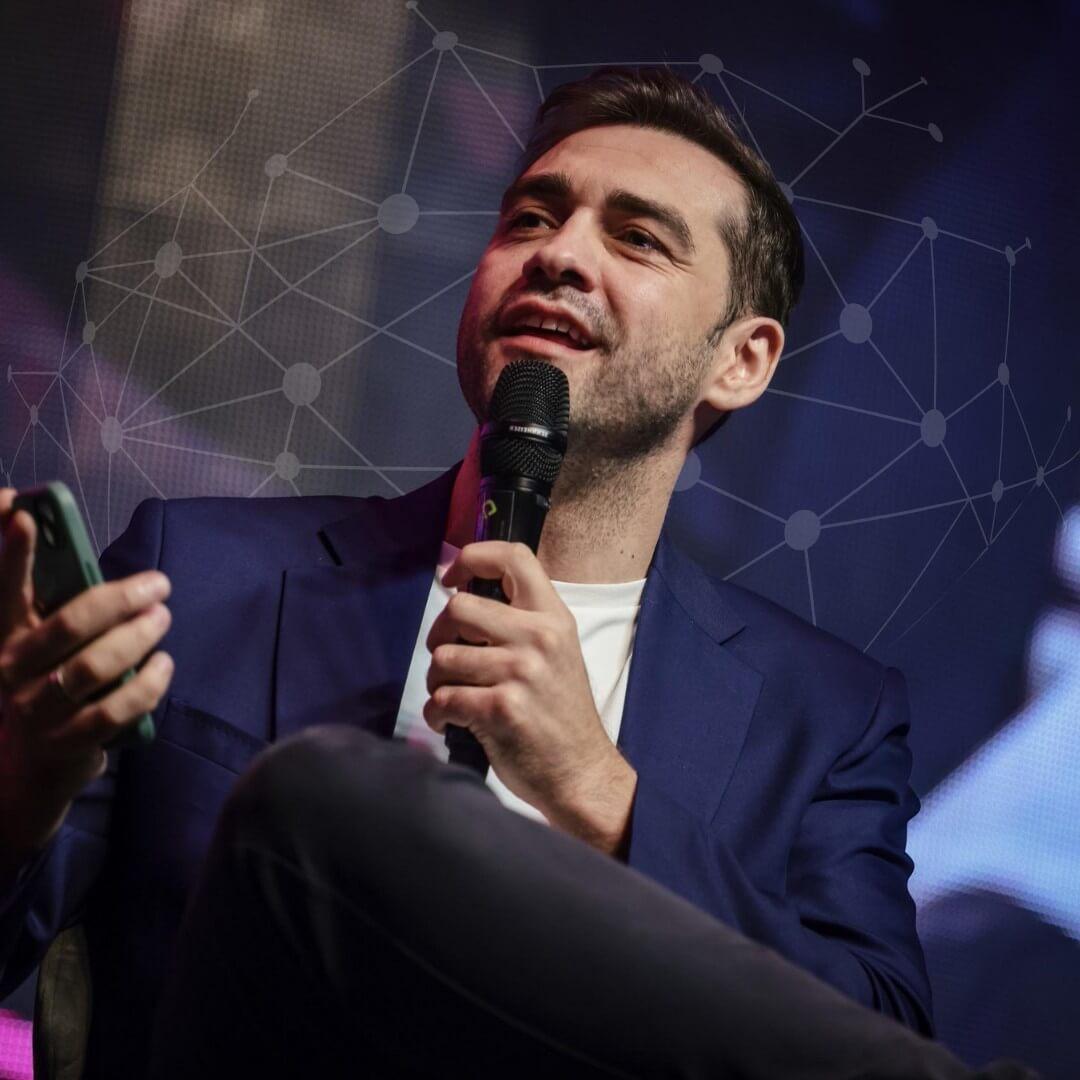
In October 2024, two AI pioneers won a Nobel Prize in the same week. Geoffrey Hinton got the Nobel in physics for the ideas behind the AI in your phone. Demis Hassabis, the head of Google DeepMind, got the Nobel in chemistry for a program that predicted the shape of proteins, the building blocks of the human body.
Same technology. Two completely different views of where it goes. Hinton says AI could end up controlling us. Hassabis says AI could cure every disease.
A recent video collected what the people building AI have said in public and ranked twelve possible endings, from the worst to the best. I went through all of them and kept what matters for your money. My conclusion is simple: whichever future wins, the person who already has money set aside and invested will have more freedom than the person who does not.
The dark future: what the worried experts say
One of the fathers of AI gives a 10-20% chance we lose control
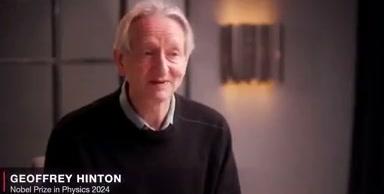
Geoffrey Hinton is often called "the godfather of AI". In a 2025 interview with CBS, he said he sees a 10-20% chance that AI takes control from humans. He also thinks an AI as smart as a person at almost everything could arrive in ten years or less.
Think about it this way: you would not board a plane if you knew one in ten crashes. Hinton calls the number a rough guess and says nobody can calculate it exactly. But a Nobel laureate saying it out loud tells you how seriously the field takes the risk.
For your money, the lesson is smaller and more practical than the end of the world: the future can arrive faster and look stranger than we expect. You need money that carries you even if you lose your salary sooner than you planned.
Young people feel it first
Elon Musk said it on stage at VivaTech in Paris, in May 2024: "Probably none of us will have a job." He sees it as a good future, where robots and AI do the work and people receive a "universal high income", money given to everyone so they can live without working.
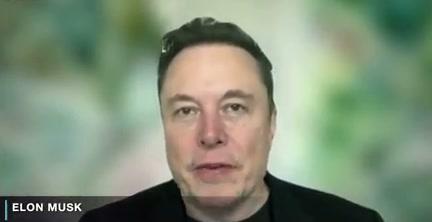
Picture what that means. You would live on an amount someone else decides to give you. Musk did not say who pays for it or how much it would be.
And for young people, researchers already see a shift. The Digital Economy Lab at Stanford University tracks payroll data from ADP, one of the largest payroll companies in the US. In August 2026 they showed that 22-25 year-olds in the jobs AI does best have about 19% fewer jobs than they would have if they had kept pace with young people in jobs AI touches less. Companies are not firing them. They are simply hiring fewer young people. Experienced people in the same jobs have not lost out so far. The researchers say they cannot yet prove that AI is the cause.
What it means for your money: today's salary is not a guarantee for the next twenty years. If you already have a portfolio, all your investments in one place, you have a second source of money that does not depend on a boss or an algorithm.
A few people decide for everyone
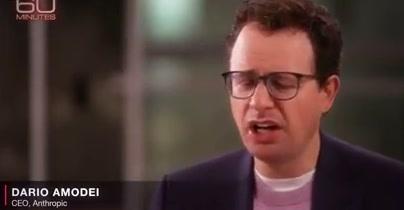
Dario Amodei runs Anthropic, one of the three or four companies building the most powerful AI in the world. In November 2025, on CBS's 60 Minutes, Anderson Cooper asked him who elected him and Sam Altman, the head of OpenAI, to make these decisions for everyone. Amodei answered: "No one. Honestly, no one." He added that he is "deeply uncomfortable" with it.
When power concentrates in a few hands, the person who does not depend on them for every dollar is in the best position. A cash cushion, money set aside for bad days, and a portfolio do not protect you from everything. They give you time to choose, instead of accepting what you are offered.
The bubble can burst and the technology can still win
The big US tech companies are spending huge sums this year on data centers, the buildings full of computers where AI runs. On 13 October 2026, the International Monetary Fund (IMF, the institution that watches the stability of the world economy) wrote in its financial stability report that a sharp fall in AI-linked stocks is one of the things that could shake markets in the period ahead. The IMF calls the fall possible, not certain, and wants the system ready.
We have seen this before. In 2000, the dot-com bubble burst and many companies disappeared. The internet took over the world anyway, and some survivors became giants. Amazon's stock fell more than 90% back then, and it is now one of the largest companies on the planet.
What it means for your money: a big market drop is only a disaster for someone who is forced to sell. For someone with a cash cushion, it can be the moment to buy cheaper. I come back to this below, with the rule I use myself.
The bright future: what the hopeful experts say
The end of disease, maybe within a decade
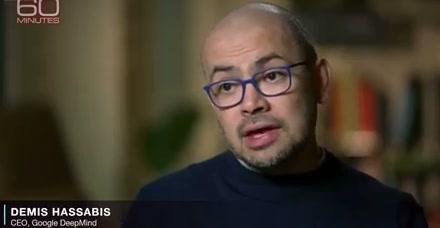
In April 2025, on 60 Minutes, Demis Hassabis was asked whether AI could end disease. His answer: "I think that's within reach. Maybe within the next decade or so, I don't see why not." He also explained the optimism: today a new drug takes around ten years and billions of dollars to reach patients, and AI could cut that from years to months.
Cancer, Alzheimer's, blindness. If Hassabis is right, many of the diseases that take the people we love become problems science can solve.
A life twice as long
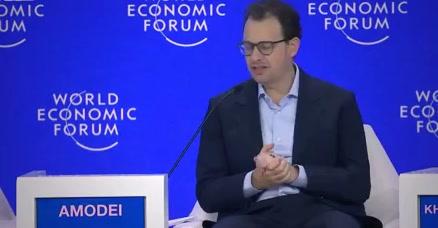
In January 2025, at the World Economic Forum in Davos, Dario Amodei said AI could compress a hundred years of progress in biology into five to ten years, and that this could double the human lifespan within five to ten years, if we get the technology right.
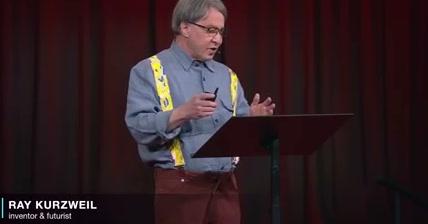
Ray Kurzweil, an inventor and one of the best-known technology forecasters, went further at TED in 2024. He believes that somewhere between 2029 and 2035, science will add more than a year to your life every year.
Many doctors and researchers say these timelines are far too optimistic. The direction matters more than the exact date: if you live longer, you need money for more years.
Intelligence so cheap you stop measuring it
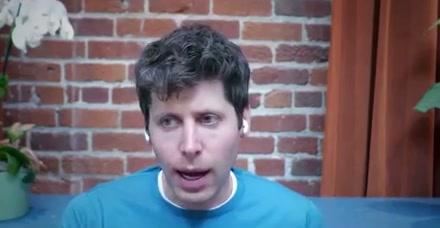
Sam Altman, the head of OpenAI, the company behind ChatGPT, says we are heading to a world where intelligence becomes "too cheap to meter". Demis Hassabis has his own name for that world: radical abundance. Houses built by robots, very cheap energy, food, medicine and education that cost less and less.
In that world, the question "how do I pay rent?" gives way to another one: "what do I want to do with my time?"
If you live twice as long, will you want to work twice as long?
Everyone asks whether AI will take our jobs. Fewer people ask what happens to their money if the good future actually arrives. If you live to 120, the money you have after 65 has to last 55 years, longer than you worked. And state pensions are mostly paid from the taxes of the people working today. In the US, Social Security's own trustees project that its trust funds run out in 2034; after that, the taxes still coming in would cover only about 83% of scheduled benefits. Most public pensions in OECD countries, Europe included, are also paid from what people working today contribute. If AI does a bigger share of the work, the money flowing into those systems can shrink.
So in the dark future you need money so you do not depend on others. In the bright future you need money to enjoy the extra years without working until the very end. Two different reasons, same answer.
The gains of the good future go first to the people who own pieces of the companies building it. When you buy a share, you buy a small piece of a company and get part of its profit. If you have a portfolio, you take part in the gains AI brings too.
What both futures have in common: a cash cushion and a portfolio
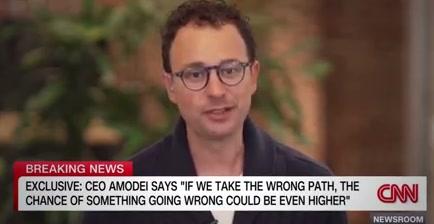
Dario Amodei gives a 25% chance that things go "really, really badly" and 75% that they go "really, really well". In a CNN interview he added that the odds are not fate: "If we take the wrong paths, then the chance of something going wrong could be even higher." The same holds for your money: you choose how the future finds you, whichever one it is.
In practice, two things:
1. A cash cushion. An emergency fund you can also use when the market falls: money kept separate and easy to reach. With it, you are not forced to sell your investments at the worst time, when you lose an income or the market is down. My own rule for this cash: when the world stock index (the largest companies on the planet in one number) falls 10% below its high, I take money from the cash cushion and buy double my usual amount that month.
2. A portfolio. The foundation is ETFs, funds that buy hundreds or thousands of companies at once and trade on the stock market like a single share. With one ETF on the world index you own a piece of the largest companies on the planet, including the ones building AI. On top of that foundation you can add, with a smaller part of your money, shares of quality companies you have analyzed yourself.
Timing matters too. With compound interest, where your returns are added to the amount and earn returns of their own the next year, every extra year invested makes a big difference at the end.
Where you live changes the details
Currency. Most ETFs on the world index trade in dollars or euros. If you earn in another currency, the exchange rate changes what your investment is worth in your own money. Over ten or twenty years, that effect matters less than how long you stay invested.
Time horizon. Money you need in the next two or three years belongs in the cash cushion. Put on the stock market only money you can leave there for at least five years, so you can ride out a fall without being forced to sell.
Your own rules. Decide now how much you invest every month and what you do when the market falls. When the fall comes, you will not be deciding with fear in your stomach.
Taxes. Taxes on investments depend on where you live, so check your own country's rules. In the US, federal tax on gains from shares and ETFs you held for more than a year is 0%, 15% or 20%, depending on your income (some states add their own), and gains on positions held a year or less at your ordinary income rate. Accounts like a 401(k) or an IRA delay or remove that tax. In Europe every country has its own rules. Germany, for example, takes a flat 25% on investment gains plus a 5.5% solidarity surcharge on that tax, and the first 1,000 euros of investment income a year are tax-free per person (2,000 for a married couple filing jointly). In the UK, you can put up to 20,000 pounds a tax year into ISAs, a stocks and shares ISA included, and pay no tax on the gains inside them.
The predictions quoted here are the views of the people who made them, and other experts dispute some of them.
Two steps to start
First you open an account with a broker, the company you buy shares and ETFs through. Then you build your portfolio, all your investments in one place.
Step 1
Open an account with a broker
Pick a broker regulated where you live. Compare the fees, the taxes it handles for you and how your money is protected if it goes under.
Step 2
Build your portfolio with Vestinda AI
Vestinda AI is our research app. It shows which ETFs and stocks fit you and how much to put in each.
Build my portfolio with Vestinda AIEducation and research, not investment advice. What the market returned in the past does not guarantee what it returns in the future.
Sources
- Matt Madigan, YouTube: MIT on All Singularity Endings (source of the screenshots and of the Kurzweil and Altman quotes), accessed 20.11.2026
- CBS News: Geoffrey Hinton: AI could take control from humans, accessed 20.11.2026
- Fortune: Geoffrey Hinton and the 10-20% estimate, accessed 21.11.2026
- Fox Business: Elon Musk at VivaTech 2024: "universal high income", accessed 20.11.2026
- Fortune: Elon Musk on the future of work, May 2024, accessed 20.11.2026
- Stanford Digital Economy Lab: "Canaries in the Coal Mine?", revision of 12 August 2026, accessed 21.11.2026
- Fortune: Dario Amodei on 60 Minutes: "deeply uncomfortable", accessed 20.11.2026
- CBS News: Anthropic on 60 Minutes, November 2025, accessed 20.11.2026
- Axios: Dario Amodei: 25% chance things go really badly, 75% really well, accessed 20.11.2026
- PYMNTS: Dario Amodei at Davos on doubling the human lifespan, accessed 20.11.2026
- CBS News: Demis Hassabis on 60 Minutes, April 2025, accessed 20.11.2026
- Computing: IMF: a fall in AI-linked stocks could shake markets (October 2026), accessed 20.11.2026
- U.S. Social Security Administration: 2026 Trustees Report: combined trust funds depleted in 2034, 83% of scheduled benefits payable, accessed 21.11.2026
- Kiplinger: Capital gains tax rates 2026: 0%, 15% and 20% thresholds from the IRS, accessed 21.11.2026
- PwC Worldwide Tax Summaries: Germany: taxation of investment income (25% flat tax plus solidarity surcharge, 1,000 euro allowance), accessed 21.11.2026
- GOV.UK: Individual Savings Accounts (ISAs): 20,000 pound annual allowance, accessed 21.11.2026
- OECD: Pensions Outlook 2018: pay-as-you-go defined benefit is the most common public pension, accessed 21.11.2026
- IRS: Individual Retirement Arrangements (IRAs), accessed 21.11.2026